


The mystery capitulation that denied F1’s ultimate enigma title glory
One of the defining Formula 1 drivers of his era, the late Carlos Reutemann should also have been a world champion. The reasons for the 1981 title slipping out of his grasp remain the subject of impassioned debate to this very day. GP Racing investigates…
In many ways, Carlos Reutemann came to be emblematic of an era in Formula 1.
The Argentine, who died aged 79 on 7 July after a long battle with cancer, was not the most famous driver of his time. He didn’t become world champion. His career was not as dramatic as Niki Lauda’s. He was not a notorious playboy in the manner of James Hunt; nor as outspoken and high-profile as Mario Andretti.
But with his film-star looks, his sublime ability, and an enigmatic personality, he was an especially glamorous and evocative figure. In the complexity of his appeal, talented but mysterious, handsome and unknowable, few have come closer to the popular image of a racing driver than Reutemann.
Tall and lean, with striking blue eyes, dark skin, dimpled chin and smile full of brilliant white teeth, Reutemann was gorgeous to behold. And at his best, his driving was the same.
For a man with a reputation for being brilliant on his day, but anonymous if things were not quite as he wanted them, his was a remarkably successful career in an especially competitive time. Spanning the decade from 1972-82, Reutemann won 12 grands prix – as many as the 1978 and 1980 world champions Andretti and Alan Jones, and more than the 1976 and 1979 title winners Hunt and Jody Scheckter.

Reutemann's Las Vegas collapse in 1981 was a sad coda to a career that had established him as a national hero
Photo by: David Phipps
Reutemann was one of only two men in history to put a car on pole for his maiden grand prix. He drove for Brabham, Ferrari, Lotus and Williams, all the leading teams of his era, and was runner-up in the world championship once, and third three times.
Reutemann should, too, have been world champion, and the season in which he just missed out – 1981 – serves as an effective microcosm of his entire career. Driving for Williams, alongside reigning world champion Jones, Reutemann lost out by a single point to Brabham driver Nelson Piquet.
Their battle came down to a final-race showdown in Las Vegas, on a circuit constructed in the car park of the Caesars Palace casino. And from Reutemann’s point of view, it was, on the face of it, one of the most incredible capitulations in Formula 1 history.
"He’d sort of split the circuit up into thirds or quarters and he’d run full speed through section one and then just slow down and think about what the car was doing and how he had to drive differently and what he might need to change on the car, and then slowly move around the circuit" Neil Oatley
Starting from pole, Reutemann was down to fourth by the first corner, and finished the first lap fifth. By lap 17, Piquet, too, was past him. And although the Brazilian was semi-conscious in the car for the last part of the race, his head lolling in the cockpit as heat exhaustion took hold, he finished fifth. Reutemann was eighth, lapped by the winner – Jones, his team-mate.
It was one of the most puzzling performances by an F1 driver there has ever been, and it came at the end of a year full of drama, intrigue, controversy and tragedy, in the midst of arguably the most turbulent time in Formula 1’s history.
Reutemann had joined Williams for the 1980 season, not long before turning 38. He had long been one of the sport’s leading men, but he signed a contract that gave Jones priority. The personal bond between Frank Williams, Patrick Head and Jones was strong, and although Williams held his new driver in the highest regard, the team’s owners and founders were determined to shepherd their friend to the world title.
Reutemann was initially happy to play along. For the team, getting to know him took time. At Monaco, Head was watching the two Williams drivers in practice, and was somewhat perplexed.
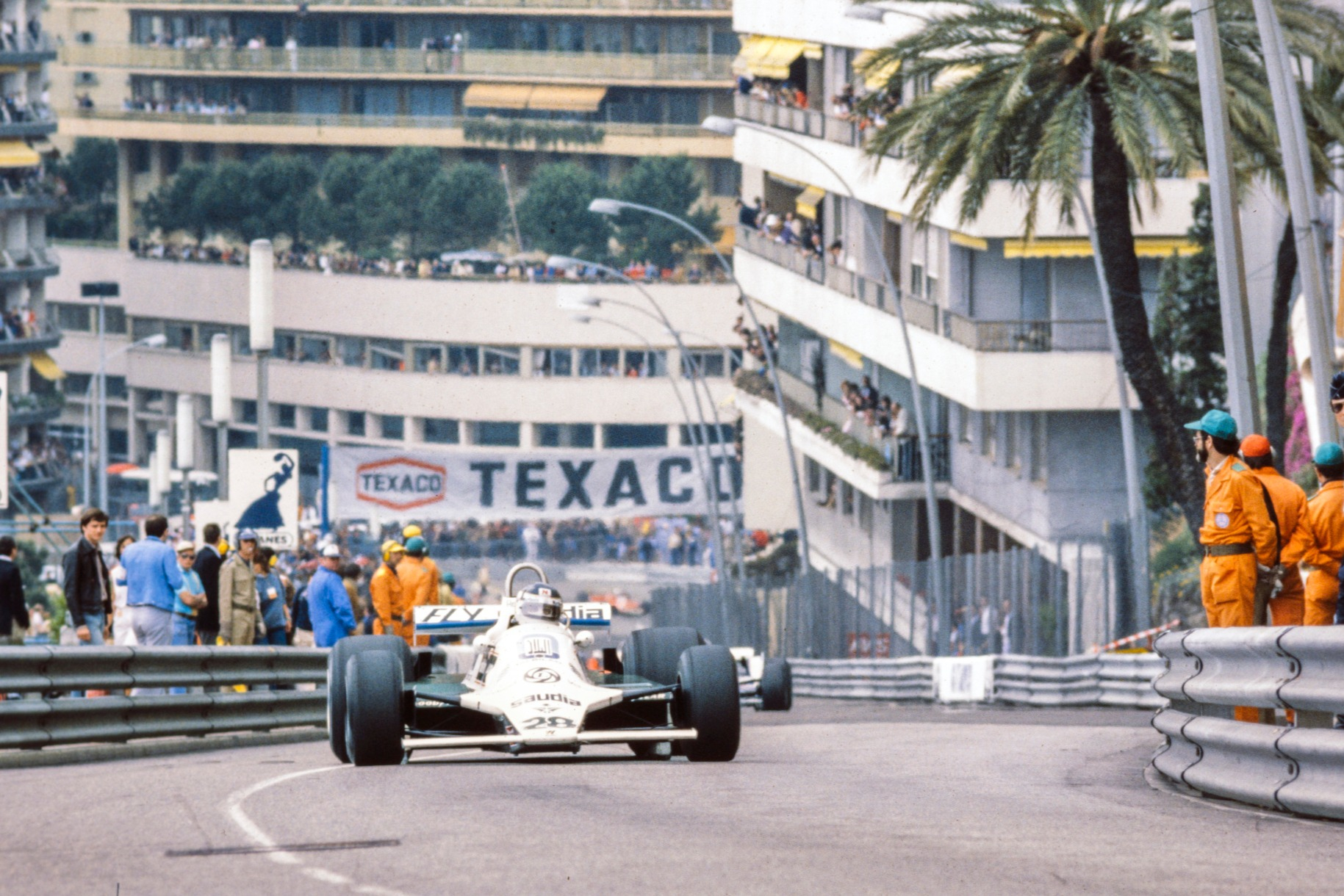
Reutemann's approach to building speed perplexed Head, but delivered results
Photo by: Motorsport Images
“Carlos never really put a lap together,” Head recalls, “and whereas Alan was pounding around near the top of the timesheets all the time, Carlos was sort of running around the bottom.
“I remember going down and talking to Neil [Oatley, Reutemann’s race engineer] and saying: ‘Tell your driver to get on with it, Neil.’ And Neil in his quiet way said: ‘Oh, I think Carlos knows what he’s doing.’ And then when we came to qualifying, bang, Carlos put it P1 straight away and for most of practice he was P1, and I think somebody pipped him right at the end.”
Reutemann qualified second, beaten only by Ligier’s Didier Pironi by just 0.069s, but 0.32s ahead of Jones in third.
Oatley, now director of motorsport research at McLaren, where he has had a long and successful career at the top of the design department, recalls: “Something that used to frustrate Patrick, but which was quite interesting, was that when we went to a circuit that perhaps we hadn’t tested on, Carlos would go out in practice and he’d be doing lap times that were perhaps 10 or 15 seconds off the pace.
“He’d sort of split the circuit up into thirds or quarters and he’d run full speed through section one and then just slow down and think about what the car was doing and how he had to drive differently and what he might need to change on the car, and then slowly move around the circuit.
“Then suddenly he’d just put one lap in that was a stunning time when he’d linked them all together. Things like that were a fairly unique way of operating that I’d never come across.”
Reutemann duly won in Monaco. It was his only win that year, as Jones took five and clinched the title. The following season, the same contracts were in place, but Reutemann was done playing second fiddle.
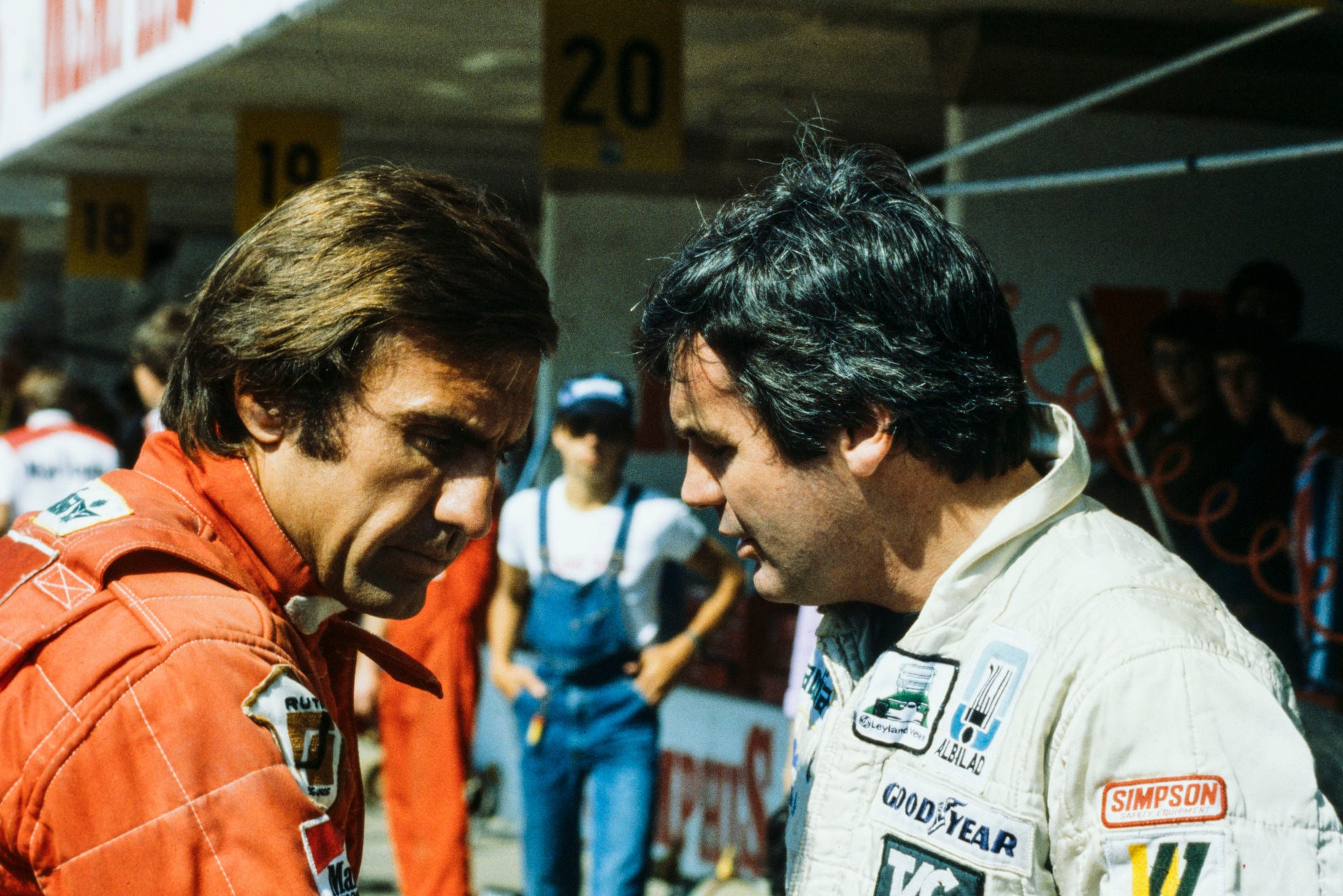
Reutemann and Jones never had the best of relationships, which came to a head at the Brazilian GP in 1981
Photo by: Motorsport Images
The first race of 1981, in South Africa, was held in the middle of the political stand-off between the governing body and the British teams known as the FISA-FOCA war. As the off-track arguments raged, the manufacturer teams – Ferrari, Renault, Alfa Romeo and a couple of others – backed FISA, and pulled out of South Africa. The race went ahead as a non-championship event.
On the grid, Reutemann asked both Williams and Bernie Ecclestone if it would ultimately count for the championship. Both assured him it would. He won brilliantly, having gambled on starting in the wet on slicks, correctly predicting the track would dry. He never got those points back. With them, he would have been champion.
Jones won the next race, the first round proper, in Long Beach, with Reutemann second, losing the lead when he was delayed behind a back marker. Then, in Brazil, came a turning point.
For the first half of the season, Reutemann excelled, and no performance was better than in Belgium. For Oatley, it was one of his most outstanding drives
In another wet race, Reutemann led comfortably from the start, and, well in control, paced himself throughout. Jones, behind, expected to be let through, but Reutemann decided that his days of subservience were over. A pit board was hung out, saying: “Jones-Reut”, indicating the drivers should swap places. But Reutemann crossed the line first, and the relationship between the two, never warm, was irrevocably broken.
For the first half of the season, Reutemann excelled, and no performance was better than in Belgium. On Saturday, he had been driving down the cramped Zolder pitlane when a mechanic from the Osella team lost his footing and fell into his path. The young man sustained a fractured skull, and died in hospital the day after the race.
Reutemann was gravely upset by the incident, but not only did he put the Williams on pole by the huge margin of 0.85s, he took a dominant victory the next day, winning by 36 seconds. For Oatley, it was one of his most outstanding drives.
“The accident in the pitlane on the previous day put him in a very difficult frame of mind,” Oatley says, “and to overcome that and still perform to a very high level was a fairly unique situation. Not many people have had to go through that sort of experience before racing.”
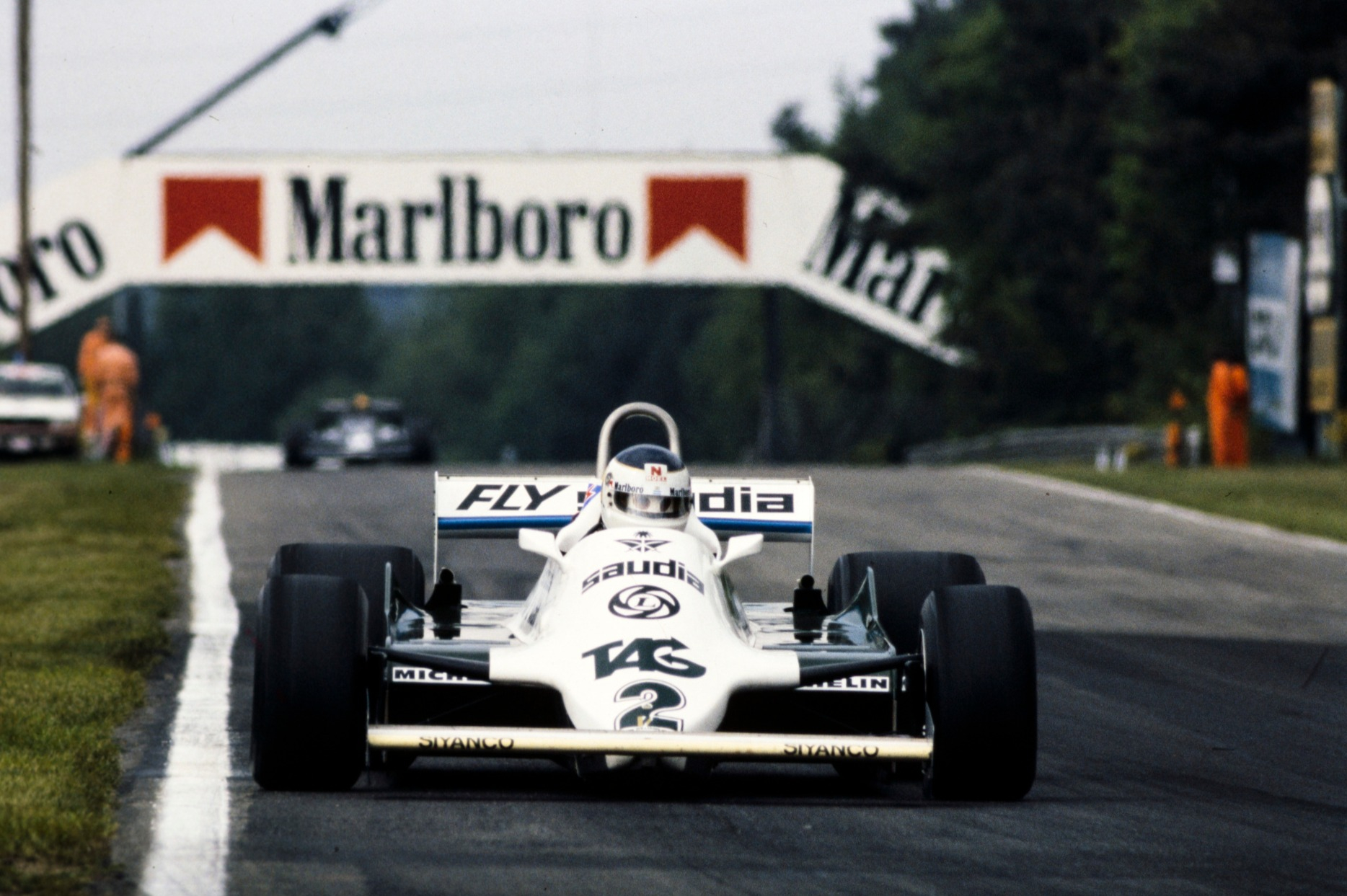
Engineer Oatley cites Zolder 1981 win after tragic paddock accident the previous day as one of Reutemann's finest drives
Photo by: Motorsport Images
Four races later, after finishing second in the British Grand Prix, Reutemann had a 17-point lead over Piquet, in the old 9-6-4-3-2-1 scoring system, with six races to go. The title looked his for the taking. But after the race at Silverstone, he was, in Head’s words, “incredibly negative”.
“He came back into the motorhome,” Head recalls, “and he said: ‘That’s it, we’ll never win another race.’”
Reutemann’s concern was tyres. Williams had moved to Michelin for 1981 after Goodyear pulled out at the end of 1980. But for the French Grand Prix, one before Silverstone, Goodyear returned, and Williams – and Brabham – went back to them, much to Reutemann’s dismay.
Oatley explains: “Carlos had run Michelin tyres at Ferrari in 1977 and 1978 and done a lot of testing for them, and he had a great empathy with the people at Michelin and the way the tyres behaved. They were quite different to Goodyears.
“We weren’t pitstopping in those days and the tyres had to do the whole race, and you had to look after them to get the best out of them.
“Goodyear tyres weren’t bad and they obviously didn’t do Piquet any harm, but Carlos’s empathy with the Michelin tyres and perhaps slightly quirky characteristics and slightly quirky people, they just seemed to be at one with each other. And I think he enjoyed being back in that position again in 1981.
“I don’t think it was a handling characteristic. It was how the rubber came in and lasted through the race and how you looked after them. It was more the race performance than the one-lap performance. He scored 49 points that year, and 37 were scored on Michelins in the first half of the year and 12 on Goodyears in the second half. Whether he willed that to happen subconsciously, I don’t know.”
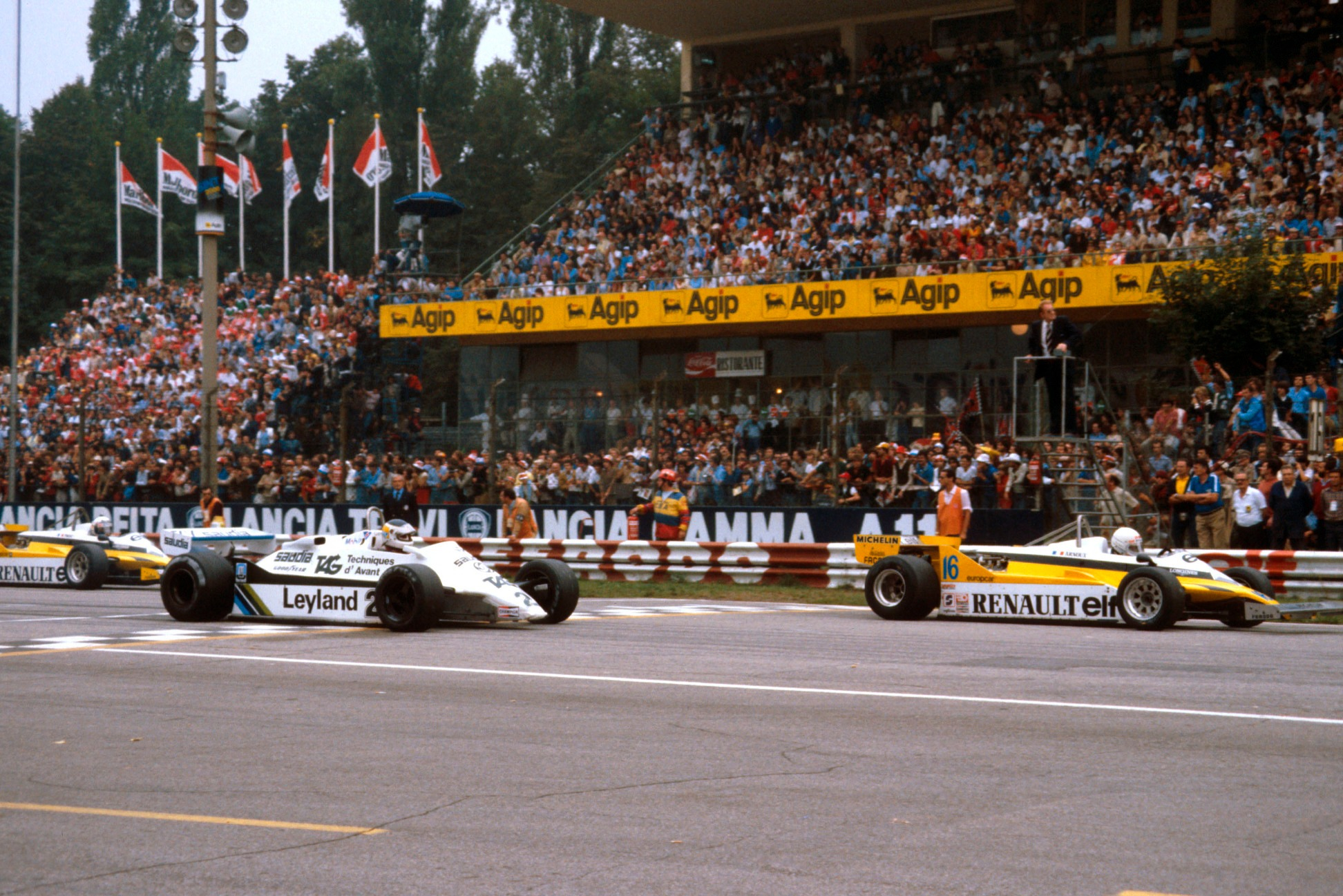
Qualifying effort to split the turbo-charged Renaults at Monza showed champion pedigree, but he struggled in the race
Photo by: Motorsport Images
Unhappy with the tyres he might have been, but there was still room for another defining performance. At the Italian Grand Prix, Reutemann produced possibly the lap of the season, putting the Williams on the front row, splitting the much more powerful turbocharged Renaults, nearly 1s faster than the next quickest naturally aspirated car, and 1.2s ahead of Jones.
“Carlos had a tremendous knowledge of what had happened to the car in the past,” Oatley says, “so he could probably tell you exactly what gear he’d taken every corner on every race track he’d ever driven. And Carlos had a great bandwidth for storing information and how he could bring that back to use to go forward.
“We did a test at Monza in the middle of August, a few weeks before the Italian Grand Prix. It was just Williams there, with one car, and we had Alan Jones for the first day and Carlos for the second and, being August, the place was packed with spectators. There were probably 25,000 people watching just us run round.
“We did a normal test day with Alan and when Carlos took over we were really short of tyres. So the night before I just worked with Carlos, and worked out a big matrix of things we wanted to test. It was an incredible amount of work.
At the Italian Grand Prix, Reutemann produced possibly the lap of the season, putting the Williams on the front row
“As we were the only team there, Carlos would go out and do one flying lap and as soon as he went past our timing line, he’d hit the brakes, do a U-turn on the track, and come back in the pit entrance and off he’d go again. This massive, precise test programme we had, we managed to achieve by just doing that.
“He was willing to run through this whole gamut of different suspension and aerodynamic set-ups. Then when we came back for the race we were on the front row, in the turbo era when Renault and Ferrari would normally be way, way stronger than us at that circuit. He did a stunning lap where he was really at one with the car.
“It was really, really light downforce but such a good balance that we were able to keep a good corner speed without such a high wing level, right on the edge but it just suited his style. Unfortunately, when we were on the grid for the race, it just started to sprinkle with rain and that completely threw him. He completely lost confidence because it was such light downforce and he just felt really uncomfortable. Alan had a fight with someone in Chiswick High Road a couple of days before and broke his finger and he was driving with one finger sticking out but he still beat Carlos in the race.”
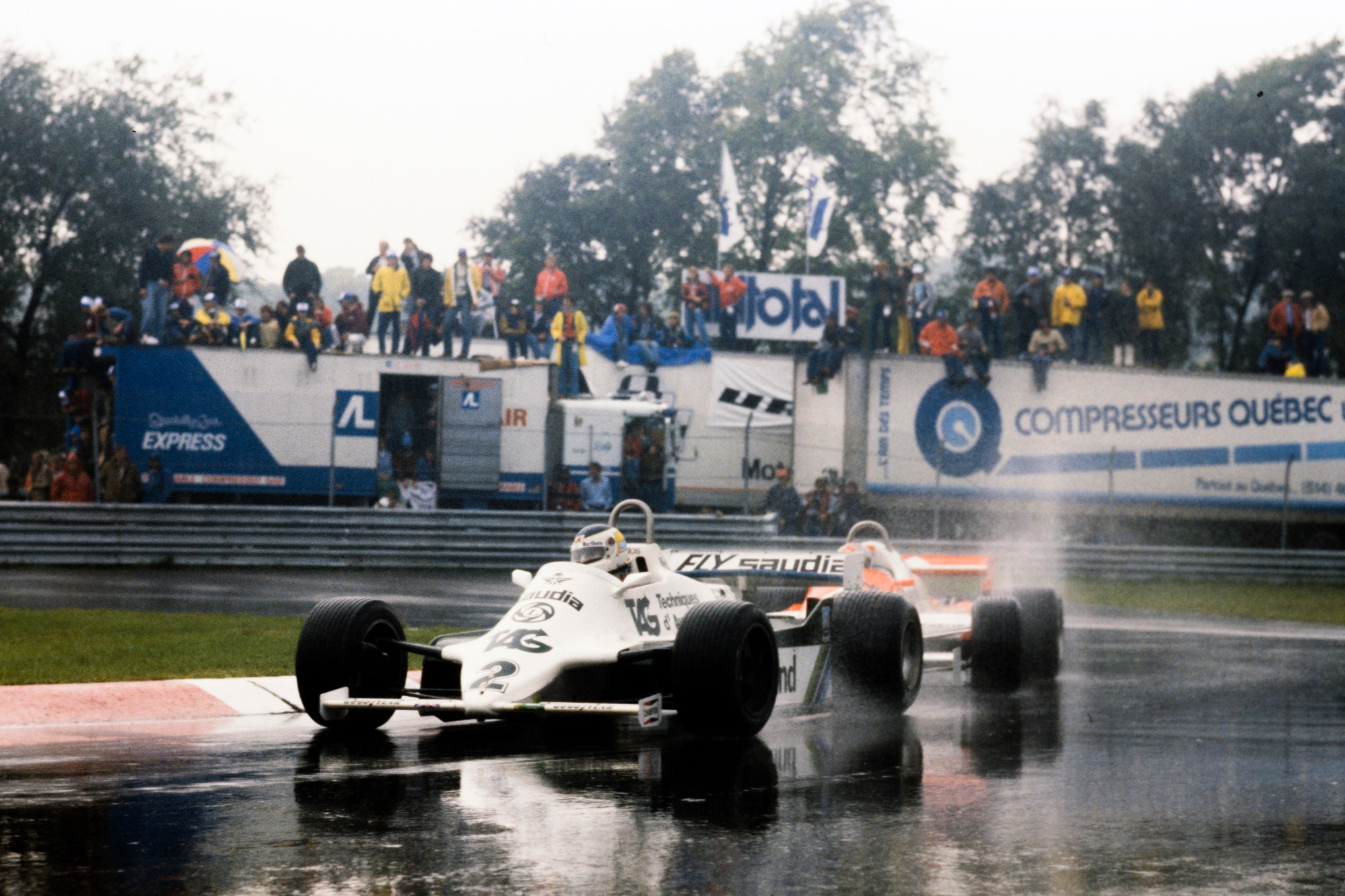
Lacking confidence on the Goodyears, Reutemann again finished outside the points in Canada
Photo by: Motorsport Images
There were two races to go. In Canada, Reutemann was again on the front row, but in the race it was raining, and the Michelins were much stronger in the wet. But Piquet still managed to salvage fifth, while Reutemann slumped to 10th and out of the points. And then Vegas.
Head says: “Carlos was on pole, Alan second. Carlos was saying: ‘That’s it. It’s a waste of time. I’m not going to win.’ Unbelievably negative.”
How to explain his steady drop through the field? Reutemann complained of gear-selection issues. Head says when they took the car apart “everything was in immaculate condition, so it was very difficult to understand, quite honestly”.
Oatley, too, is mystified, if more forgiving: “He was having a little bit of gear-change trouble, which may have been exaggerated on that circuit where there are loads of hairpins and you are going up and down through the gearbox a lot.
“Maybe we made an error on the race set-up. The car raced as it qualified and we had stiffer springs on Carlos’s car compared to Alan’s, and maybe over the course of a race distance, stiffer springs were not so easy to drive to be consistent. I don’t know. That could be one factor.”
After the race, Carlos slipped off to his hotel and then back to his farm in Argentina. Williams talked him into returning in 1982, when he was approaching 40, alongside new signing Keke Rosberg. He lasted two races.
In the first, he took a brilliant second place at Kyalami, splitting the turbo Renaults on a power circuit and finishing 17 seconds ahead of the next naturally aspirated car. But after retiring in Brazil following a collision with another car, he was gone. The looming Falklands War was an influence, but Reutemann had just had enough.
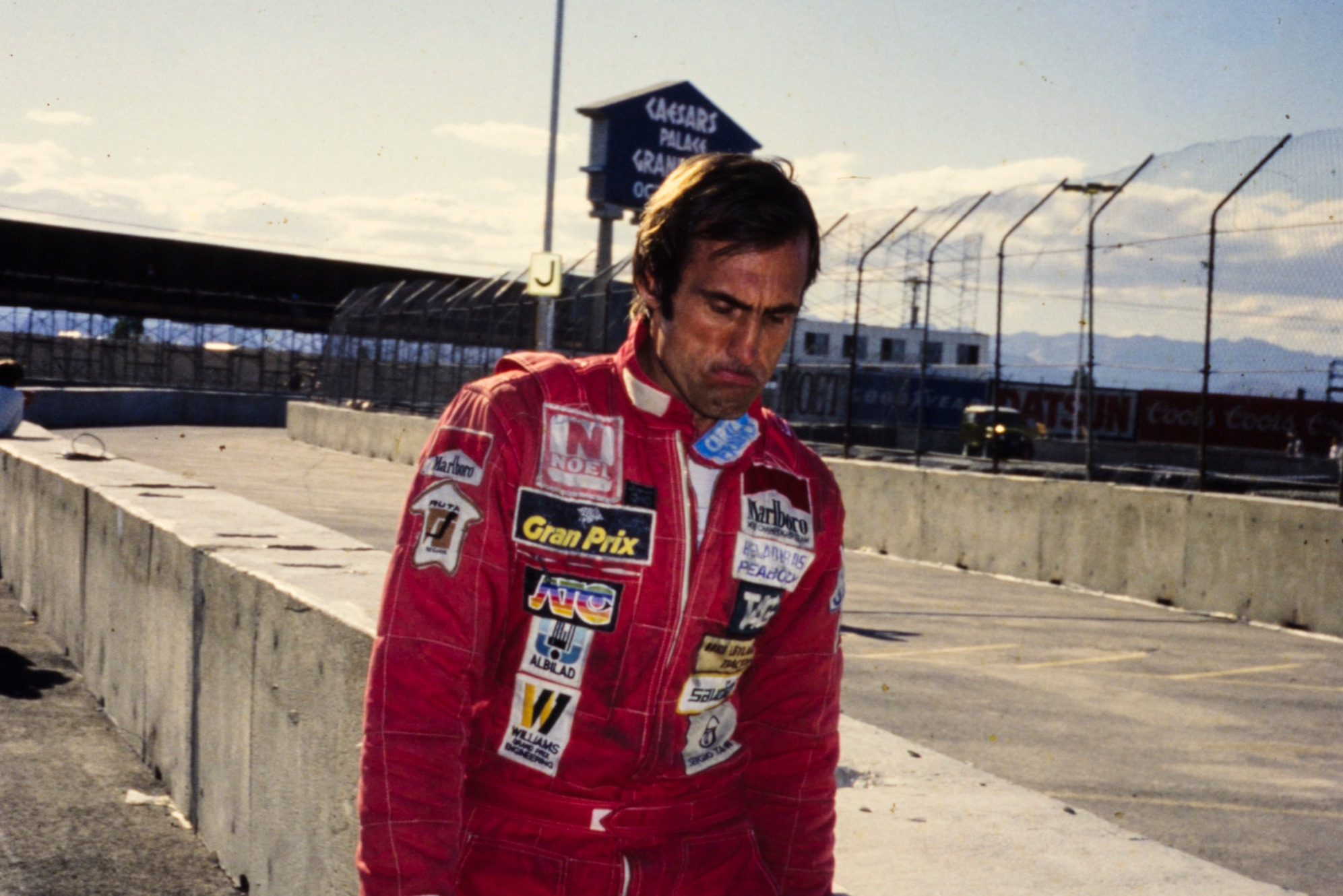
The Caesar Palace slump remains the ultimate F1 capitulation, and has never been satisfactorily explained
Photo by: Motorsport Images
“He had fallen out of love with it,” Head says, “and the war gave him a… it would have been difficult with his country and England at war, driving for an English team, so I can understand him while the war was going on not driving.”
Reutemann returned to his farm in Santa Fe, and became a leading politician in his home country for the final 30 years of his life.
Head remembers “an absolute gent”. “Carlos was incredibly quick, if he wanted to be,” he says. “But if his psychology wasn’t with it, he would not be that way, so he was difficult… he was not like a normal driver, a very unusual person.”
"Occasionally, if things weren’t quite right, he had a slightly non-linear reduction in performance. There certainly would always be a technical explanation, but perhaps the effect of the technical issue had a psychological effect as well, which would increase the margins. One influenced the other" Neil Oatley
Head and Oatley both fondly recall a driver of rare talent. “He was a fairly singular individual,” Oatley adds. “Very much his own man. He was incredibly quick a lot of the time, but not all the time. Occasionally, if things weren’t quite right, he had a slightly non-linear reduction in performance. Which is not unusual, actually. A lot of drivers could fall into that category.
“There certainly would always be a technical explanation, but perhaps the effect of the technical issue had a psychological effect as well, which would increase the margins. One influenced the other.”
And was it true, as some have said, that when he was at his best, he was “Senna-like”?
“Probably,” Oatley says. “But not as frequently. Which was probably the problem.”
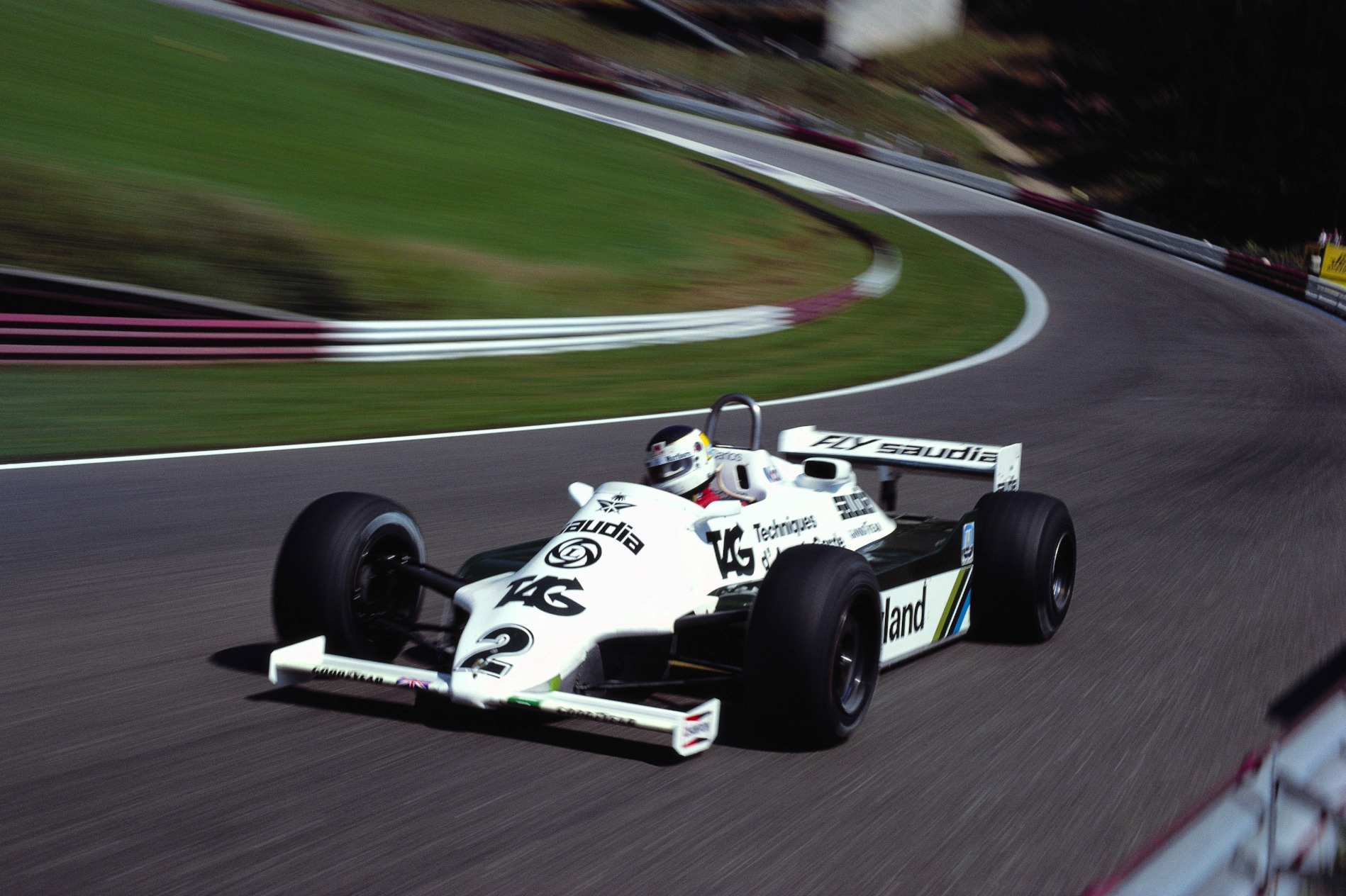
Reutemann's legacy is one of an enigmatic individual capable of moments of brilliance
Photo by: Motorsport Images

How Ratzenberger beat the odds to realise his cruelly short-lived F1 dream

F1 uncovered: A weekend behind the scenes with a chief mechanic

When McLaren was pipped by Red Bull in a modern F1 classic

The big opportunity Sainz’s Williams switch affords to F1’s latest centurion

Inside the science of F1 fuel

How F1’s plan for rotating races could look in practice

The early decisions that set Sauber’s rookie for success

How F1 media coverage has evolved in line with its subject

What to expect from WEC's Barcelona debut

Acosta proposes new idea for monitoring tyre pressure in MotoGP

Horner's inside story of how Red Bull built its own F1 engine

Exclusive video: Christian Horner interview on his Red Bull exit, Mercedes rivalry and more
Subscribe and access Autosport.com with your ad-blocker.
From Formula 1 to MotoGP we report straight from the paddock because we love our sport, just like you. In order to keep delivering our expert journalism, our website uses advertising. Still, we want to give you the opportunity to enjoy an ad-free and tracker-free website and to continue using your adblocker.


Top Comments