


The gradual decline and demise of F1's greatest innovator
Following the death of founder Colin Chapman, Team Lotus briefly revived before sliding towards oblivion – but what a glorious time this was, inducting Ayrton Senna into the pantheon of grand prix winners. DAMIEN SMITH describes the legendary team’s final seasons
Is there a photograph that better captures the euphoria of victory than Steven Tee’s black and white image snapped at the 1985 Portuguese Grand Prix? The image, one of Formula 1’s finest, is seared into the fabric of grand prix racing folklore, as Peter Warr – wearing signature Peter Sellers specs, flat cap, black JPS jacket and an expression of exuberant jubilation – opens his arms wide to welcome home his conquering hero.
It’s tipping down, but who cares? Certainly not Ayrton Senna – at least not now the hard work is done. The belts have been thrown off so he can shoot an arm into the air and mirror Warr’s celebration. You never forget the first time.
Thirty-six years later, the most vivid images of Senna we carry in our hearts tend to be in Marlboro McLarens. But it was in JPS black and gold, then in vivid Camel yellow, that the great Brazilian truly came of age, and it wouldn’t have taken much for him to have created more moments like this for Team Lotus and be crowned its sixth world champion after Jim Clark, Graham Hill, Jochen Rindt, Emerson Fittipaldi and Mario Andretti.
The cars were quick enough and so indubitably was the driver, already the fastest on the grid. If only reliability had matched the speed, mid-80s history might have been very different. Instead, the last great era of Team Lotus wasn’t anywhere near as great as it should have been.
The key to the Lotus 1980s revival was Warr’s canny decision to hire charismatic Frenchman Gerard Ducarouge to design his cars. Still reeling from the loss in December 1982 of founder and totemic leader Colin Chapman, Team Lotus was creaking when ‘Duca’ arrived mid-1983, burned by a painful experience at Alfa Romeo. He worked all hours to create the 94T in time for the British GP, using monocoque and suspension from the Type 91 but with improved weight distribution and on stiffer Pirelli tyres.
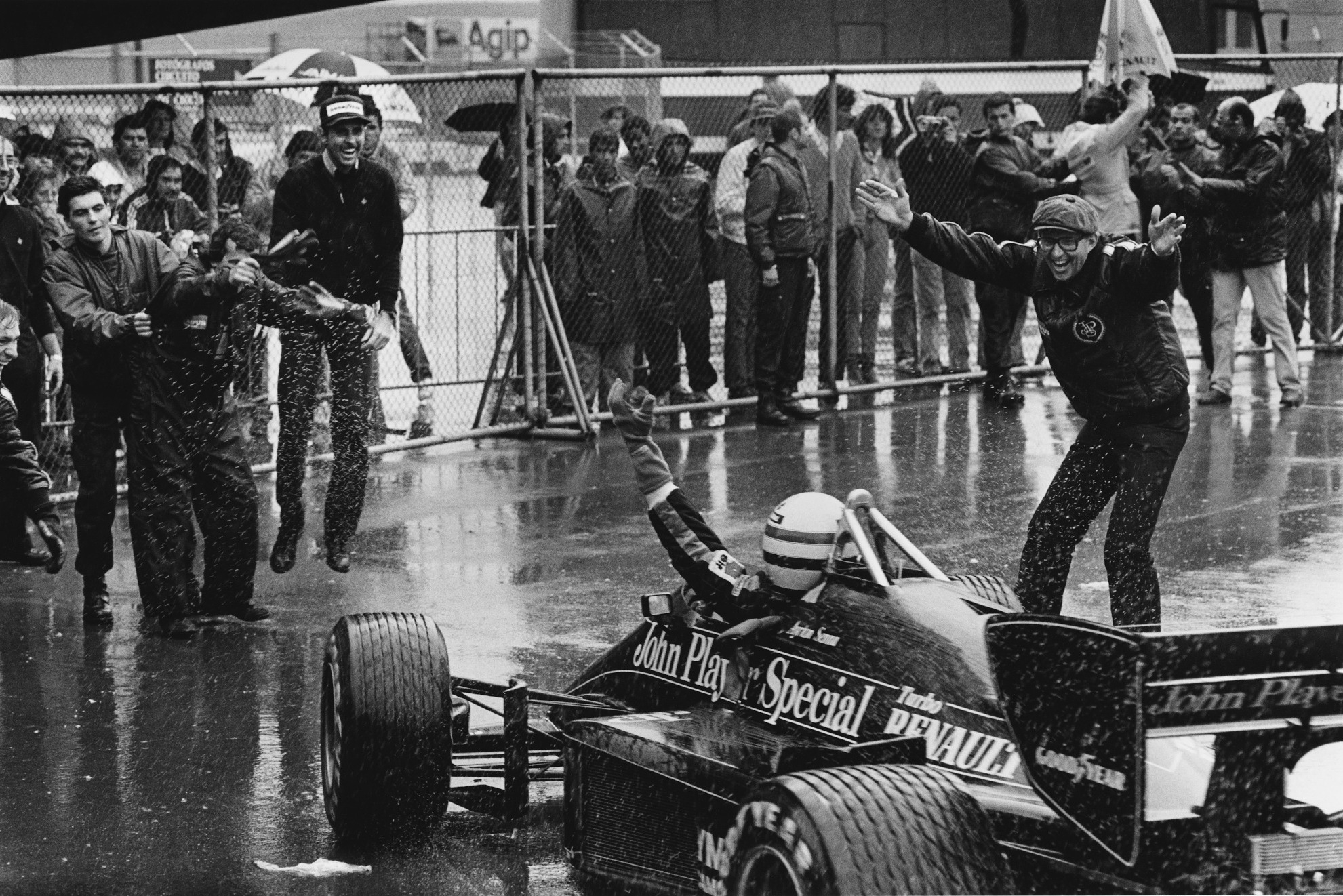
Warr's signing of Senna for 1985 yielded victory at only the second time of asking when the Brazilian scored his first and, arguably, finest win in the wet at Estoril
Photo by: Motorsport Images
Its impact on team fortunes was immediate and positive: Elio de Angelis qualified fourth at Silverstone only for his Renault turbo to blow on lap two. But team-mate Nigel Mansell, in his first start with turbo power, finished fourth and then scored a podium with third at Brands Hatch’s European GP, where de Angelis stuck the new car on pole position.
But still the Lotus revival stuttered. Neither de Angelis nor Mansell managed a win in 1984 in the 95T, even though the Italian finished a distant best-of-the-rest third behind McLaren’s Niki Lauda and Alain Prost. It took Senna’s arrival in 1985, plucked from Toleman as replacement for Williams-bound Mansell, to really kickstart the final hurrah over three eventful seasons.
Warr had tried to sign the new sensation straight out of Formula 3, only for John Player Special to insist on Mansell’s retention because he was British. Given Warr’s open antipathy for Chapman’s last protege, it hardly made for a harmonious season. But Warr got his man – for a much higher price – a year later.
As in his maiden season in black and gold, Senna was the king of qualifying, scoring eight more pole positions including at each of the first three races, but Renault’s inferior fuel consumption to the Williams-Hondas and McLaren-TAGs compromised his race days
His chase was more than justified as Senna scored seven pole positions, that unforgettable maiden victory at a sopping Estoril in one of the greatest wet-weather performances, plus another masterclass win at Spa. He led more laps than anyone, including first-time world champion Prost – and yet poor reliability contrived to leave Senna just fourth in the final standings. In a nutshell, the story of Ayrton’s Lotus life.
PLUS: Ayrton Senna's 10 greatest F1 races
Pity poor de Angelis who, with hindsight, stacked up pretty well to the maestro in 1985, then ended his six-year Lotus spell and left for Brabham. Renault’s withdrawal as a team entrant effectively left Lotus as the French giant’s works team for 1986, which surely boded well – only for Senna to rattle Warr’s chain.
The team chief had been delighted to secure JPS-pleasing Renault refugee Derek Warwick, but Ayrton baulked. He saw the fellow ex-Toleman driver as a threat – an Englishman coming into an English team, and a quick one too – and it says everything about his growing influence and power that Warr, hardly a pushover, eventually relented.
Newcomer Johnny Dumfries, Senna’s dominant British F3 successor whose promise outshone his privileged background, signed instead – and sunk without trace as the team focused on its A-list star.
Archive: How Dumfries’s Lotus F1 dream turned into a nightmare
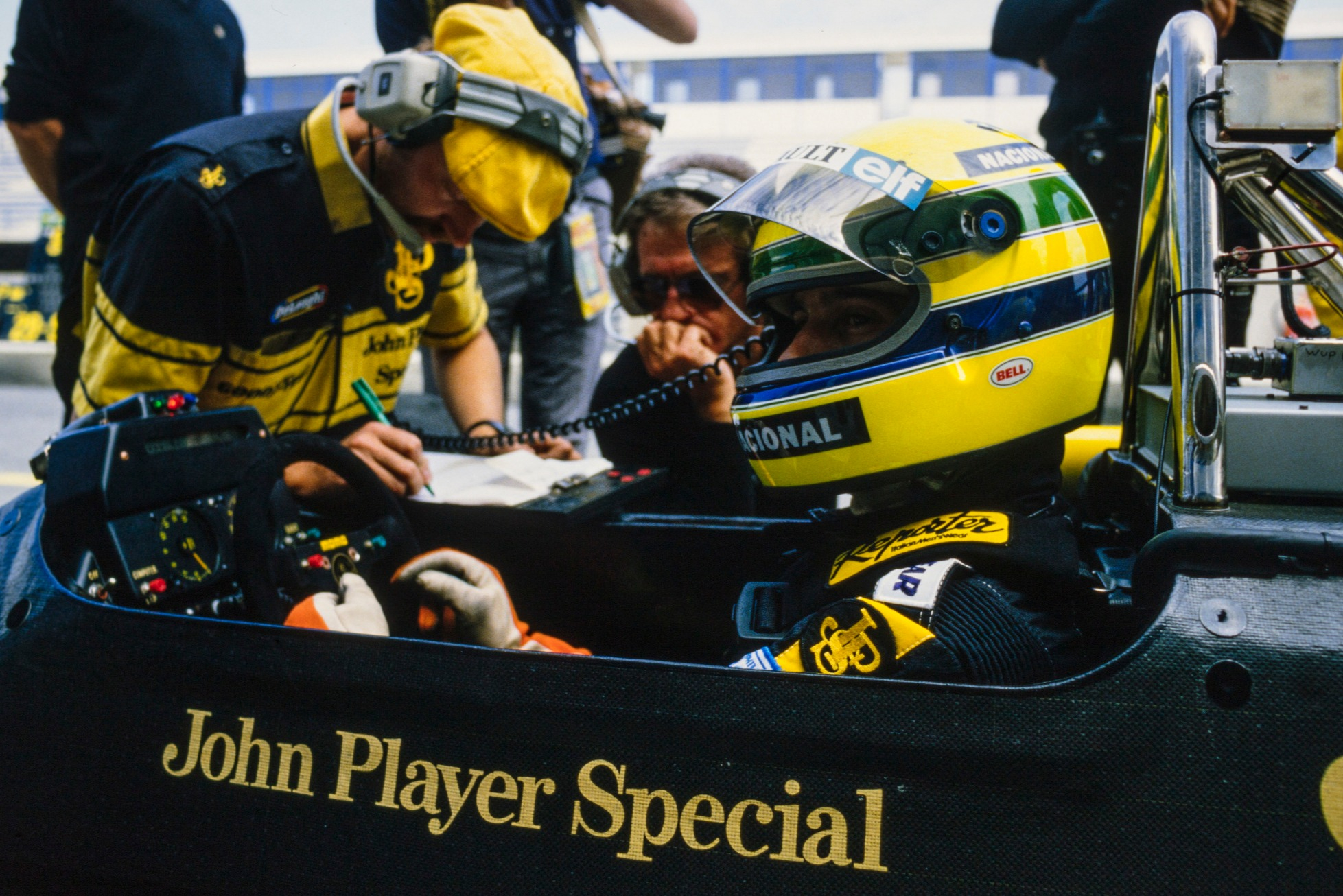
Poor reliability frequently hindered Senna at Lotus, although his talent was clear for all to see and earned him a career-defining move to McLaren
Photo by: Motorsport Images
As in his maiden season in black and gold, Senna was the king of qualifying, scoring eight more pole positions including at each of the first three races, but Renault’s inferior fuel consumption to the Williams-Hondas and McLaren-TAGs compromised his race days. Sure, there were golden highlights: beating Mansell by just 0.014s on a drag to the line at Jerez; a fine street-circuit win in Detroit where he stormed back after a puncture. But again Team Lotus ultimately let him down, despite the speed of Ducarouge’s lovely 98T.
One last chance. But this time with Honda power and in lairy Camel yellow after JPS ‘got the hump’ (sorry) over the lack of a British driver in the 1987 line-up and walked away from Ayrton Senna wearing its colours. Thus ended one of the great F1 sponsor partnerships.
Senna was the hub around which everything revolved. Frustrated by Renault’s failings, he demanded Warr land a supply of Honda turbos – and again the chief relented, welching on the solid deal he had with Viry-Chatillon, a move he would later claim to be a personal career lowlight.
Still Senna wanted more, demanding a pay rise that Player’s refused to meet. That was the beginning of the end for JPS, but then when Warr struck a big-money deal with Camel’s parent company RJ Reynolds over the winter, Senna returned from Brazil and claimed the change of title sponsor made his new Lotus contract null and void. Back to the negotiating table, where Warr was forced to cede the extra budget from Camel straight to the star driver’s pocket. It would have been better spent on the 99T.
Japanese Formula 2 racer Satoru Nakajima lined up with Senna courtesy of that Honda deal, another nail for the JPS coffin, and he was never going to threaten Senna in nine months of Sundays. But, even with the power of Honda’s RA166E V6, plus computer-controlled active suspension devised by ‘father of F1 ground effects’ Peter Wright, Senna still lacked what he needed to challenge for the title his talent clearly demanded.
The first of his six Monaco victories was a notable maiden for active suspension and he won again in Detroit with a canny tyre-conserving non-stop run to the chequer – it was never just about brute speed with Senna – to take the championship lead.
But his hopes spluttered through a disappointing summer and autumn, as he lined up a career-defining switch to McLaren. After everything Warr had done to try and keep him happy… although the chief saw it coming and snapped up Nelson Piquet, disenchanted by Williams despite the third world title that was coming his way. Senna was furious to be replaced by his mortal enemy.
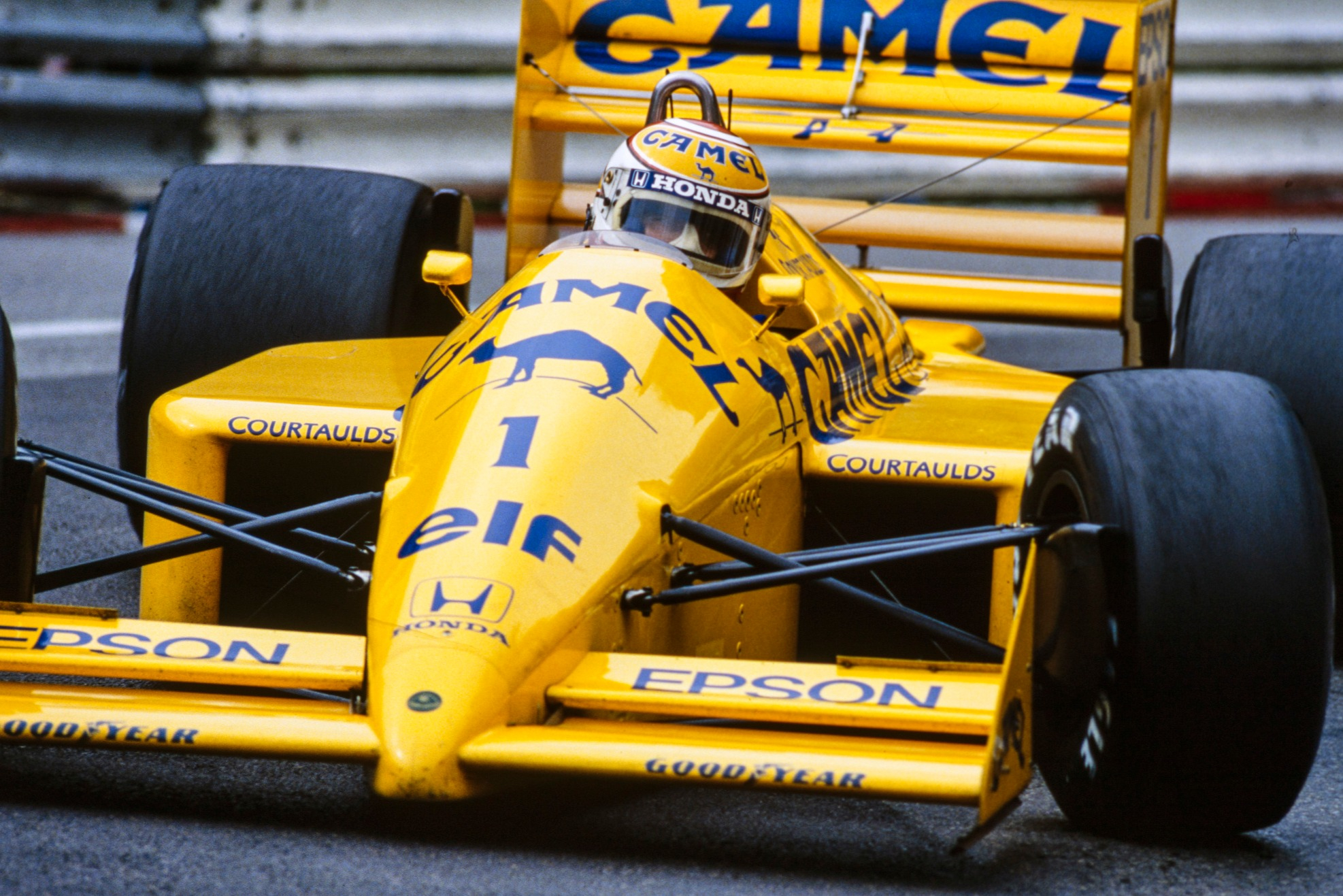
Piquet brought the #1 with him from Williams for 1988, but it wasn't befitting of Lotus's place in the pecking order
Photo by: Motorsport Images
Still, Lotus had equal Honda power to McLaren for 1988. There’d be life after Ayrton, surely? Barely. As Senna, Prost and McLaren swept to 15 out of 16 wins, Lotus and the reigning world champion, who carried the number one on his 100T’s nose like some bad joke, managed just 22 points, Nakajima adding one more in Rio.
Nothing seemed quite right at Lotus any more. The active suspension was gone, to allow Lotus Engineering to focus on road car applications (somewhere Chapman must have been spinning), and rumours started to circulate of a sale. Chief mechanic Nigel Stepney left for Benetton, long-time designer Martin Ogilvie moved away from F1 and up into Group Lotus – and then Ducarouge quit before the Japanese GP. Just to cap it all, Honda walked too in favour of an exclusive (and entirely justified) strengthened relationship with McLaren.
For one time only, in 1987, F1 had adopted the Jim Clark Cup for drivers and the Colin Chapman Cup for constructors as recognition for those running back-in-vogue (class B) normally aspirated engines – another acknowledgement of Team Lotus’s indelible F1 imprint. But now turbos were outlawed, it was a painful irony that the team which had shone more than any other in the old Cosworth DFV days was left with no option but to fall back on a modest Judd V8 supply. At least Camel stuck around – for now.
Lacking puff from the Judd, Piquet’s mojo appeared to vanish completely. He and Nakajima managed 15 points between them, and the Brazilian’s subsequent Indian Summer at Benetton surprised just about everyone who had worked with him in Norfolk
Mid-summer 1989, having stepped back from day-to-day operations, Warr was working on new sponsor deals with Coca-Cola and BP when devastating news broke that Fred Bushell, long-time Lotus money-man and a loyal Chapman ally dating all the way back to the Hornsey days, had been arrested for conspiring to defraud. The full depth of controversy that the DeLorean affair had plunged Chapman into during his final years was only just starting to emerge.
Bushell eventually served time – as the Old Man surely would had he lived – and Warr called time. For seven years following Chapman’s sudden death, he’d done all he could to maintain the Team Lotus way. In Ducarouge and Senna, Warr had hired superbly well, but he’d been fighting uphill for most of the way. Now it was time for others to put shoulder to the wheel.
In the big technical chair, Frank Dernie moved from Williams and did all he could in place of ‘Duca’ with Mike Coughlan as chief designer as they conceived the workmanlike 101, while veteran Tony Rudd steadied the ship. But lacking puff from the Judd, Piquet’s mojo appeared to vanish completely. He and Nakajima managed 15 points between them, and the Brazilian’s subsequent Indian Summer at Benetton surprised just about everyone who had worked with him in Norfolk. Turns out he still had it in him after all.
But, amid the gloom, there’s nearly always a flicker of hope. A new supply of Lamborghini V12s for the evolutionary 102 promised a revival, especially now Warwick was on board, five years after Senna had blocked him. Bad timing, Derek – as usual. Beside him was highly promising Northern Irishman Martin Donnelly, fresh out of Formula 3000.
PLUS: Martin Donnelly’s succesful F3000 gamble
But, for both drivers, 1990 was marked by two seismic accidents. Warwick shrugged his off. Donnelly wasn’t so lucky.
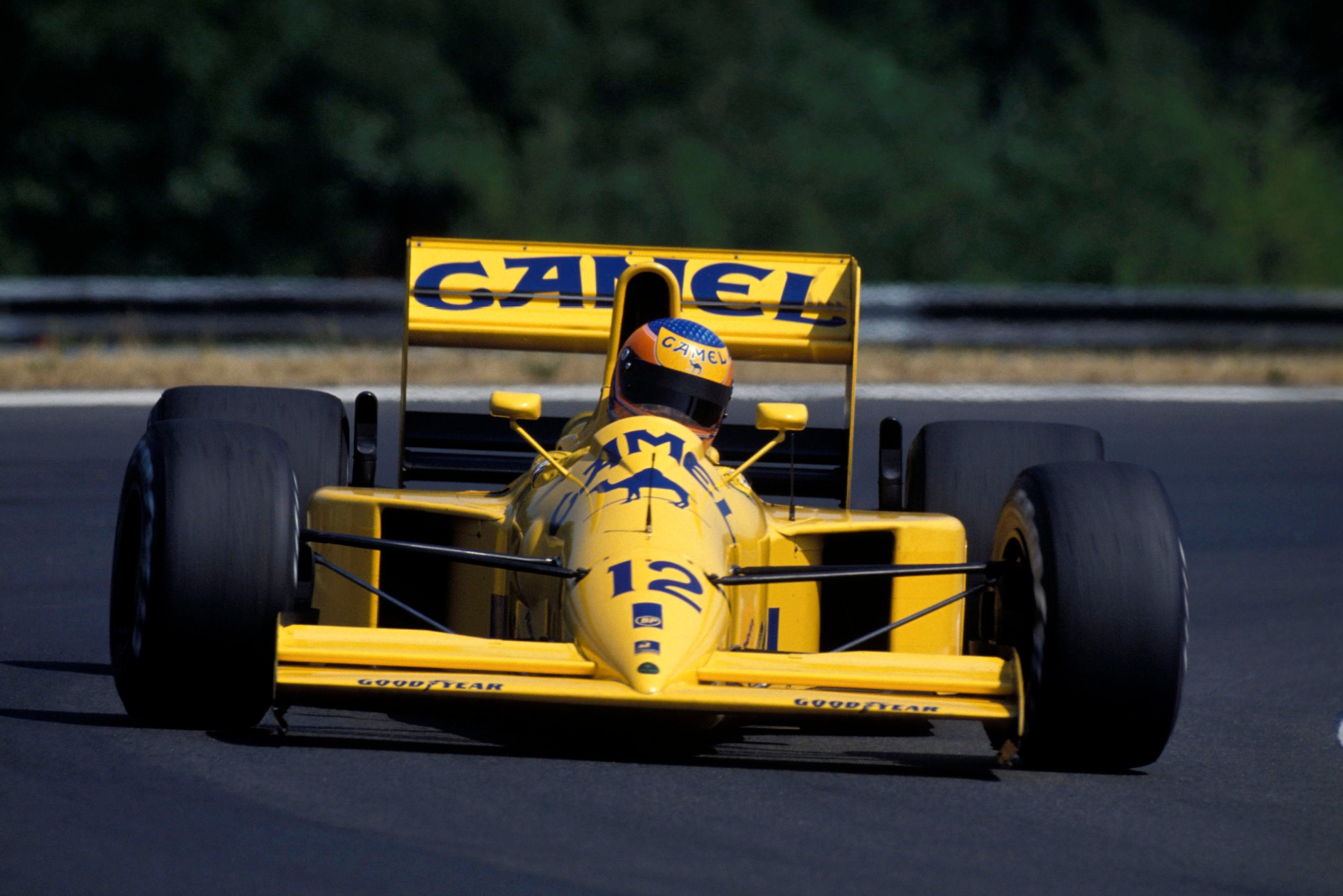
Donnelly showed promise in his short period as an F1 driver before the front-suspension failure at Jerez sent him headlong into the wall
Photo by: Motorsport Images
At Monza, Derek charged out of Parabolica on lap one, lost downforce, understeered into the barrier and ended up sliding down the track on his head. His only thought was to get back to the pits for the spare and the restart – which remarkably he took, in a fresh helmet and after a check-over from F1 doctor Professor Sid Watkins, despite a sizeable headache.
But, at Jerez, the Prof had a little more to do. On the Friday morning, Donnelly signed an option to stay at Lotus for 1991 and was handed a sizeable cheque to guarantee his services; in the afternoon, in the closing minutes of qualifying, he was left in a broken heap in the middle of the track, still strapped to his seat.
Collapsed left-front suspension led to a head-on 140mph accident that should have killed him. That it didn’t was largely down to the Prof’s fast actions. They make them tough in Northern Ireland: Donnelly rebuilt his life as a team owner on British racing’s junior slopes and today remains in service to Lotus as a popular driver coach at Hethel. But his chances of an F1 return were always slim to none.
In his place stepped up fellow ‘Rat Pack’ graduate and another with a sizeable hobble. Johnny Herbert completed the 1990 season, then returned mid-1991 as old mentor Peter Collins partnered up with Peter Wright to take the Lotus helm.
Australian Collins was a Lotus veteran who had landed a dream job in the halcyon 1978 season only to fall out with Chapman and leave in the early 1980s. He’d earned respect for his assertive leadership of Benetton from mid-1985 until finding himself turfed by smooth-talking (if indecipherable) Flavio Briatore, and now found himself well placed to give something back to a team that meant everything to him.
Collins did all he could between 1991 and 1994, just like Warr before him. But the uphill battle had become a mountain climb as Team Lotus lost its footing, not to mention the Camel sponsorship to those pesky Benettons.
Again, hope springs eternal. That year another promising F3 graduate stepped into the breach, in the form of a shy Finn called Mika Hakkinen, at first partnered by the talented but unfashionable Julian Bailey until Collins brought in Herbert (just as he had at Benetton!). The blond-haired duo, in 102s now powered by Judd V8s (them again), became F1’s favourite underdogs – not exactly Lotus as we’d known it but, as Collins hustled to keep the team afloat, goodwill was sometimes all that was left.
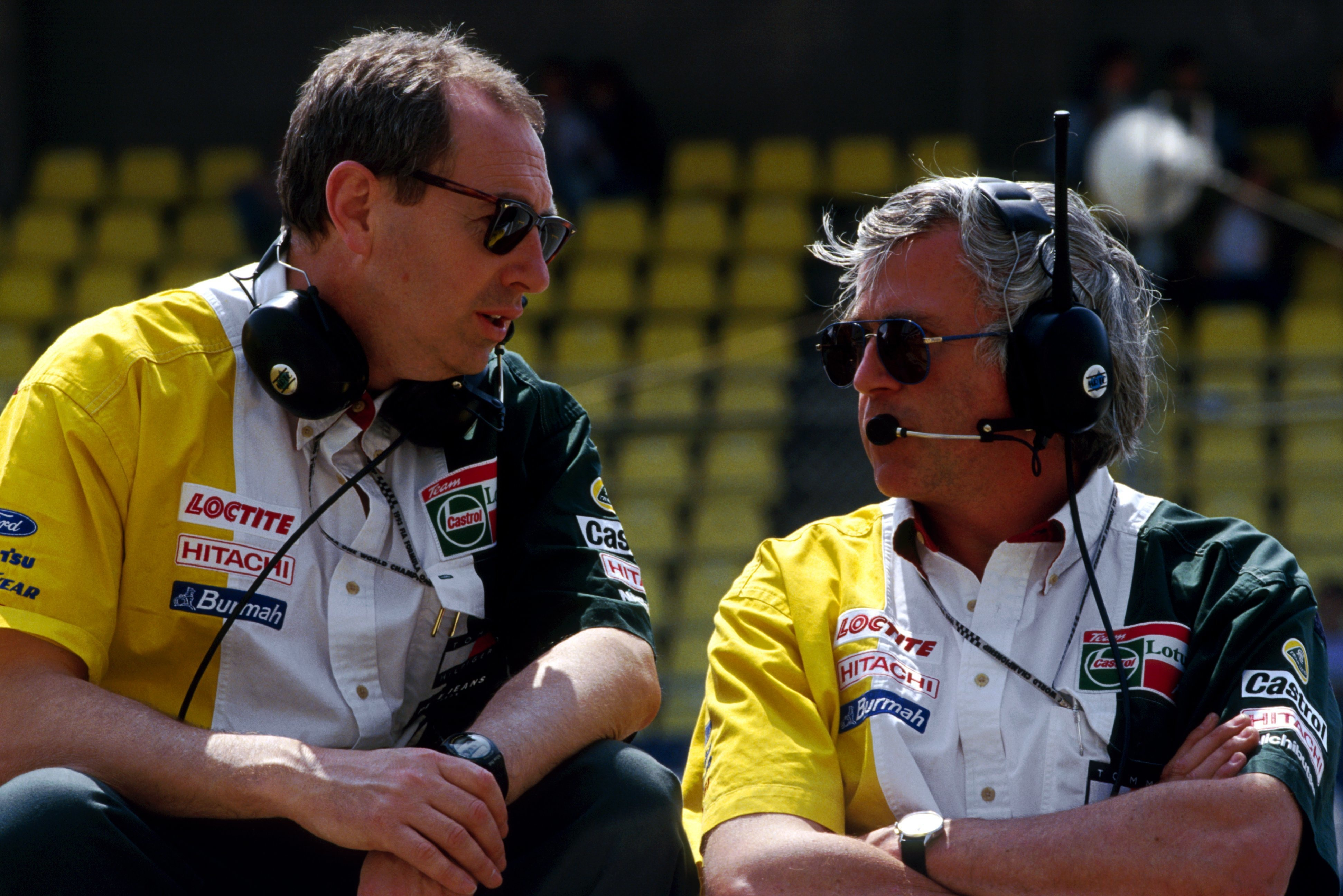
Lotus enjoyed a mini-revival under Collins (left) and Wright in 1992, but it wouldn't last
Photo by: Motorsport Images
A supply of Ford HB engines, recalling memories of happier DFV days, powered a mini-revival in 1992 as Team Lotus finished a respectable fifth, largely thanks to Hakkinen. But, inevitably, the Finn was soon on the move. Ron Dennis snapped him up for 1993, first as a McLaren test and reserve driver and then as replacement for Michael Andretti from the Portuguese GP – where he outqualified team-mate and fellow Lotus old boy Senna. Hakkinen remained forever grateful to Collins and Team Lotus for the F1 grounding from which he eked every drop.
Chris Murphy, fresh from Leyton House, designed the pretty 107 that laid the 102 to rest during 1992 and in B-spec form allowed Herbert to score when he could in 1993, while Alex Zanardi shook Senna as Donnelly had with a massive shunt at Spa’s Raidillon.
Pedro Lamy’s was even worse in the dark days of 1994, when he flew over the fencing while testing at Silverstone, landing in an empty spectator tunnel. He recovered from his leg injuries to race again in F1 before a long and fruitful career in GTs.
For the Lotus name, there would be an F1 coda, of course – more than one, actually, and all at the same time. But ransacking history to badge cars with no connection to the line, from Type 25 to 79, 97T to 107, was little short of sacrilege
But for Team Lotus there was no happy ending. Like Brabham before it, this giant of F1 slowly shrivelled and finally ran out of puff. When Zanardi and Mika Salo both lodged DNFs at the 1994 Australian GP, it marked a low-key final scene for a wonderfully rich epic.
At its zenith and across its first two decades, Team Lotus outstripped every team including Ferrari, through thrilling peaks and head-scratching troughs – and under Chapman, then Warr and finally Collins these were the cars dedicated fans always pulled for.
For the Lotus name, there would be an F1 coda, of course – more than one, actually, and all at the same time. But ransacking history to badge cars with no connection to the line, from Type 25 to 79, 97T to 107, was little short of sacrilege. It shouldn’t count.
Team Lotus, the real Team Lotus, folded for good in 1994. But the euphoria will live forever.
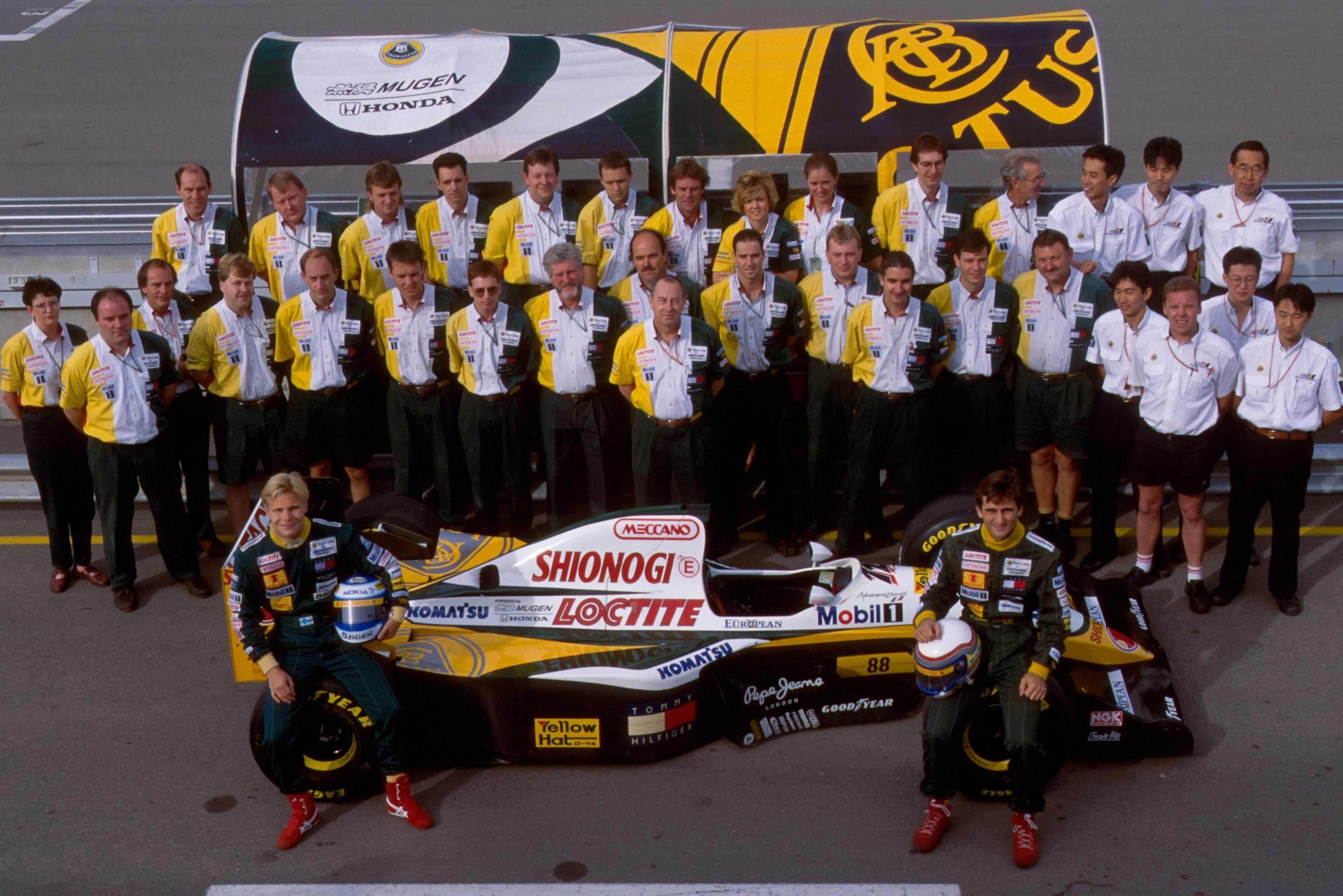
Team Lotus in its original guise bowed out at the end of a troubled 1994 season with Mugen engines that didn't match expectations
Photo by: Motorsport Images

How Ratzenberger beat the odds to realise his cruelly short-lived F1 dream

F1 uncovered: A weekend behind the scenes with a chief mechanic

When McLaren was pipped by Red Bull in a modern F1 classic

The big opportunity Sainz’s Williams switch affords to F1’s latest centurion

Inside the science of F1 fuel

How F1’s plan for rotating races could look in practice

The early decisions that set Sauber’s rookie for success

How F1 media coverage has evolved in line with its subject

Acosta's long road to his maiden MotoGP win

MotoGP Austrian GP: Acosta finally claims maiden win

Great debate: Which circuit should host the F1 2026 finale if the calendar has to change?

Live: MotoGP Austrian Grand Prix updates as it happens
Subscribe and access Autosport.com with your ad-blocker.
From Formula 1 to MotoGP we report straight from the paddock because we love our sport, just like you. In order to keep delivering our expert journalism, our website uses advertising. Still, we want to give you the opportunity to enjoy an ad-free and tracker-free website and to continue using your adblocker.


Top Comments