


The floundering fortunes of F1’s many Lotus reboots
Team Lotus ceased to exist in 1994 - and yet various parties have been trying to resurrect the hallowed name, in increasingly unrecognisable forms, ever since. DAMIEN SMITH brings GP Racing’s history of the legendary team to an end with a look at those who sought to keep the flame alive in Formula 1
Let’s be clear: the story of Team Lotus as an active, contemporary Formula 1 team ended sadly but decisively at the 1994 Australian Grand Prix. Everything else after that, at least in terms of cars carrying the Lotus name on to F1 grids, should be considered – to resort to that hateful modern phrase – fake news.
Most of what has followed in the past 27 years has little or nothing to do with Colin Chapman’s hallowed F1 legacy, which was guarded and maintained for a dozen more years after his death in 1982 by the three Peters: Warr, Wright and Collins. It’s a pity really that our story couldn’t have been wrapped up in five chapters.
But this sixth and final part, picking through the sorry tales of how a great name was dredged up for revival when it would have been best to leave well alone, is necessary because it reminds us of the power Lotus was perceived to still hold in F1, even as a shadow of what it used to be. It’s also important to acknowledge not all attempts to keep Team Lotus alive should be dismissed as cynical opportunism. Some of the players in this chapter were genuine in their intentions.
David Hunt was one. The brother of 1976 world champion James Hunt, 13 years his junior, became the custodian of the Team Lotus name and badge – which is and always was a separate entity to Lotus Cars and the Lotus Group. Chapman kept it that way, sensibly, to avoid potentially sticky insurance or legal plotlines from motor racing contaminating the wider business.
Collins and Wright had given their all to keep Team Lotus alive, but in September 1994 the administrators were called in and Hunt’s deal meant the final two races of the season in Japan and Australia, featuring Mika Salo and Alex Zanardi, were officially under his watch.
Deservedly or otherwise, Hunt was never taken entirely seriously in motor racing, perhaps in part because his own adventures as a racing driver paled in comparison with his brother’s. He started in Formula Ford in the early 1980s, graduated without distinction to Formula 3 and made it as far as Formula 3000 in 1988 in a Lola run by Roger Cowman – although in one respect he did mirror his sibling.
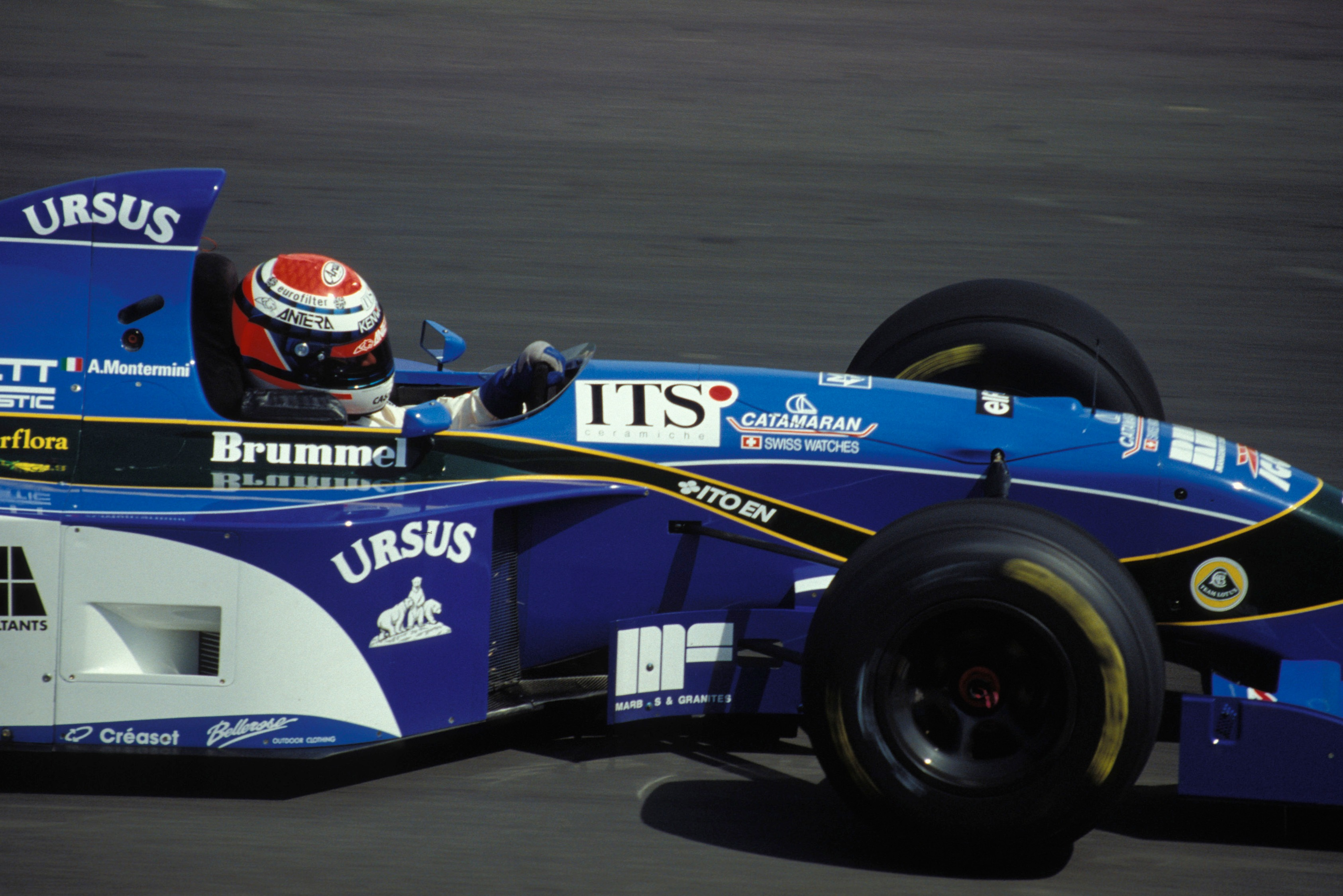
Team Lotus collapsed at the end of 1994, but its logos were still on the grid in 1995 following a tie-up with Keith Wiggins' Pacific outfit
Photo by: Motorsport Images
Early in his own career, James became known as ‘Shunt’ in honour of the regularity and scale of how his races tended to finish. Similarly, David’s greatest claim to fame was punching a hole through a shop wall after launching off another car at the 1988 Birmingham Superprix street race. To be fair, at Brands Hatch he had finished seventh, his best F3000 showing, in a race that with hindsight had an odd significance to Team Lotus.
That day, Johnny Herbert crashed while battling for the lead with Swiss driver Gregor Foitek and suffered the severe leg injuries that would largely define his career. Rising Northern Irishman Martin Donnelly won the restarted race and went on to drive for Lotus in 1990 - only to endure his own horrific, and in his case career-ending, crash at Jerez. His replacement? A still-hobbling Herbert.
Hunt had long hung up his helmet by that time and was running the water filter business that provided the means by which he would buy the Team Lotus rights a few years later. When his efforts to keep the team alive through the winter of 1994-95 were dashed, he struck a deal with Keith Wiggins, whose Pacific team was attempting to grab a foothold on the grid.
The trouble began when Group Lotus claimed Lotus Racing was in breach of its licence – and Fernandes responded on two fronts: first, he struck a deal with David Hunt to use the Team Lotus moniker in 2011 instead; second, he launched a lawsuit against Group Lotus for breach of contract over the licence deal he claimed had not been breached
It became Pacific Team Lotus for 1995, the mainly blue PR02 featuring the famous Team Lotus roundel within its swirling British Racing Green stripe. Unlike in its first season, Pacific was at least guaranteed to start each grand prix, in the wake of Lotus and others dropping away. Not that it did much good.
Andrea Montermini and Bertrand Gachot managed a couple of eighth places – which would have meant points today! – while Giovanni Lavaggi and Jean-Denis Deletraz scraped an increasingly cavernous barrel mid-season. But by season’s end another ambitious F1 dream had died on the vine.
Thereafter, Hunt would pop up from time to time with sincere intentions for a Team Lotus revival. There was even talk at the turn of the millennium that ailing Prost Grand Prix could turn from blue to green – but nothing ever amounted to much.
Then, as the first decade of the 2000s neared its end, Max Mosley’s FIA opened an invitation for new teams to bid for a place in a new budget-capped F1. An audacious plan for a cap of ‘just’ £40m per season in 2010 – along with of customer cars – was never going to be accepted (budget caps? Ridiculous idea. It could never happen…). But it did give teams and companies existing outside the F1 bubble what seemed like a genuine opening to make the grade, without suffering the same fate as the Pacifics of this world.

Hunt's deal with Tony Fernandes brought Team Lotus name back onto the grid, but the arrangement was convoluted
Photo by: Motorsport Images
Prodrive and British constructor Lola put in bids, which were surprisingly rejected, as was another by the Litespeed F3 team – to whom Hunt had bequeathed his rights to what was known as Team Lotus Ventures Ltd. That project was given the red light too. But another, named Malaysia1, did succeed in landing an entry, along with Manor Motorsport (with backing from Richard Branson’s Virgin company) and the Spanish Hispania team.
PLUS: How Lola missed out on a 2010 F1 berth
Unfortunately, all three launched in 2010, not in the strictly budget-capped F1 they thought they were signing up for, but in the usual spend-what-you’ve-got free-for-all that had always made the pinnacle a great way to watch a fortune slide away. Hindsight… but the trio were doomed from the start.
Malaysia1 was the awkward name for an operation headed by businessman and budget airline tycoon Tony Fernandes, a motor racing enthusiast who professed a deep admiration for Colin Chapman. He struck a licence deal with Group Lotus to label his effort Lotus Racing – immediately gaining resonance and a semblance of credibility. There was also a useful Malaysian synergy with the British car company, which had been owned since 1996 by the country’s foremost automotive manufacturer, Proton.
Sadly, there was much less synergy between Fernandes and smoothly ambitious Lotus CEO Dany Bahar, late of Red Bull and Ferrari, who had his own plans for an F1 comeback. Bahar’s next move triggered a farce that left two teams on the grid carrying variations of the same famous name.
The trouble began when Group Lotus claimed Lotus Racing was in breach of its licence – and Fernandes responded on two fronts: first, he struck a deal with David Hunt to use the Team Lotus moniker in 2011 instead; second, he launched a lawsuit against Group Lotus for breach of contract over the licence deal he claimed had not been breached.
Meanwhile, Bahar agreed a deal that amounted to a sponsorship and marketing agreement with the Oxfordshire-based Renault F1 team, which had been sold by the French manufacturer to financial investment house Genii Capital.
The Lotus name would now appear on the cars still known as Renaults, sporting a black and gold livery that offered a blatant visual connection to the old days of John Player Special sponsorship – without any link to the cigarette brand, in an era when tobacco sponsorship had long since been outlawed. ‘Lotus’ would also appear on the cars painted in green with a yellow stripe run by Fernandes and his technical director Mike Gascoyne – once of Renault – out of their base in Norfolk. Still with us?
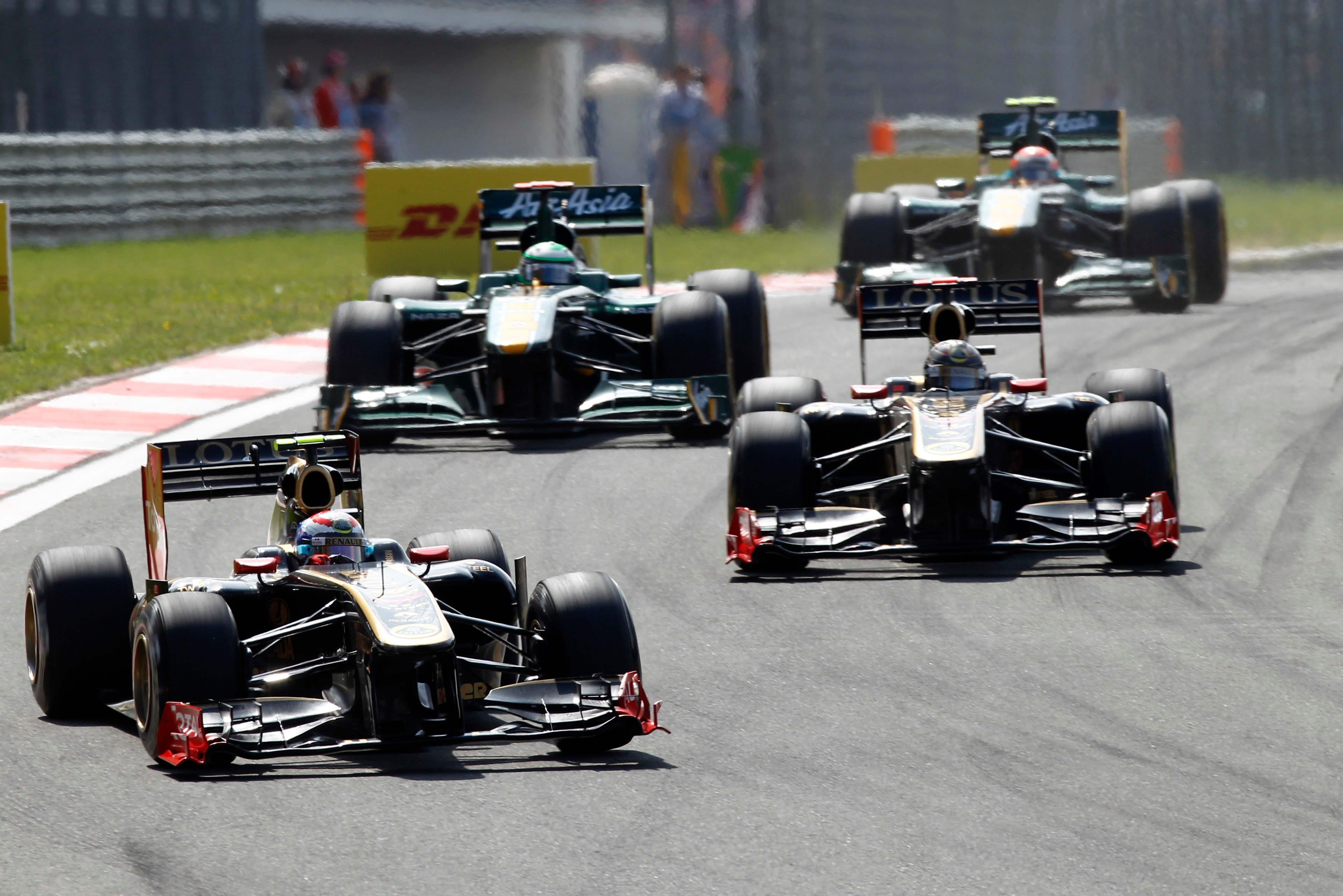
Confusion abounded in 2011 as two squads both laid claim to the Lotus name
Photo by: Motorsport Images
In May 2011 the case concerning naming rights between Group Lotus vs Team Lotus was settled in the High Court – and both claimed the victory! Group Lotus won the right to continue in F1 using its black and gold livery, which Fernandes had also coveted, while Malaysia1 (now operating under umbrella company Team Lotus Ventures Ltd) was also allowed to use the name – but only if it was suffixed by the crucial word ‘Team’.
What a tangle, intertwined over years. Hunt claimed that back in the 1990s when Proton bought Group Lotus, the manufacturer thought the F1 ‘Team’ name was part of the deal; Hunt compared it with the Americans who bought London Bridge thinking they’d purchased the vastly more ornate Tower Bridge…
Sadly for Hunt, even now it didn’t end particularly well. He fell out with Fernandes when he discovered the businessman had also bought Caterham Cars, the company that acquired the rights to build and develop the iconic Lotus 7 from 1973.
For 2011, ‘Team Enstone’ as it is known given its many regenerations of identity, still actually ran Renaults, even if the five gold letters that ran down the nose spelt Lotus
The Team Lotus return lasted just two years, without distinction or a single point despite the proven talents of Jarno Trulli and Heikki Kovalainen, before Fernandes renamed his team Caterham for 2012. The team folded in 2014 and a year later, in October 2015, Hunt died in his sleep. He was 55 years old. The parallel to brother James, who died similarly in 1993 at just 45, is uncannily sad.
But ‘Lotus’ raced on – in name alone. For 2011, ‘Team Enstone’ as it is known given its many regenerations of identity, still actually ran Renaults, even if the five gold letters that ran down the nose spelt Lotus. The Renault R31 was a respectable grand prix car, but the team’s season was overshadowed by Robert Kubica’s dreadful injuries sustained in a rally crash in February that disrupted a highly promising career.
With Kubica sidelined (he would return eight years later for a fruitless season with Williams, and for two cameo outings this season when Kimi Raikkonen was ruled out of Zandvoort and Monza by a positive COVID test) the team fell back on experienced hand Nick Heidfeld – the Pole's old BMW team-mate – who joined Russian Vitaly Petrov. The pair started well, Petrov scoring a podium in Melbourne from sixth and Heidfeld matching the feat in Malaysia, setting a new record for podiums scored without a win.
But by Spa, Heidfeld was out, his F1 career finally at an end, and Bruno Senna – nephew of Lotus old boy Ayrton – was in. The famous yellow helmet back in a black and gold ‘Lotus’ with Renault power… but it was hardly 1985/86 all over again.
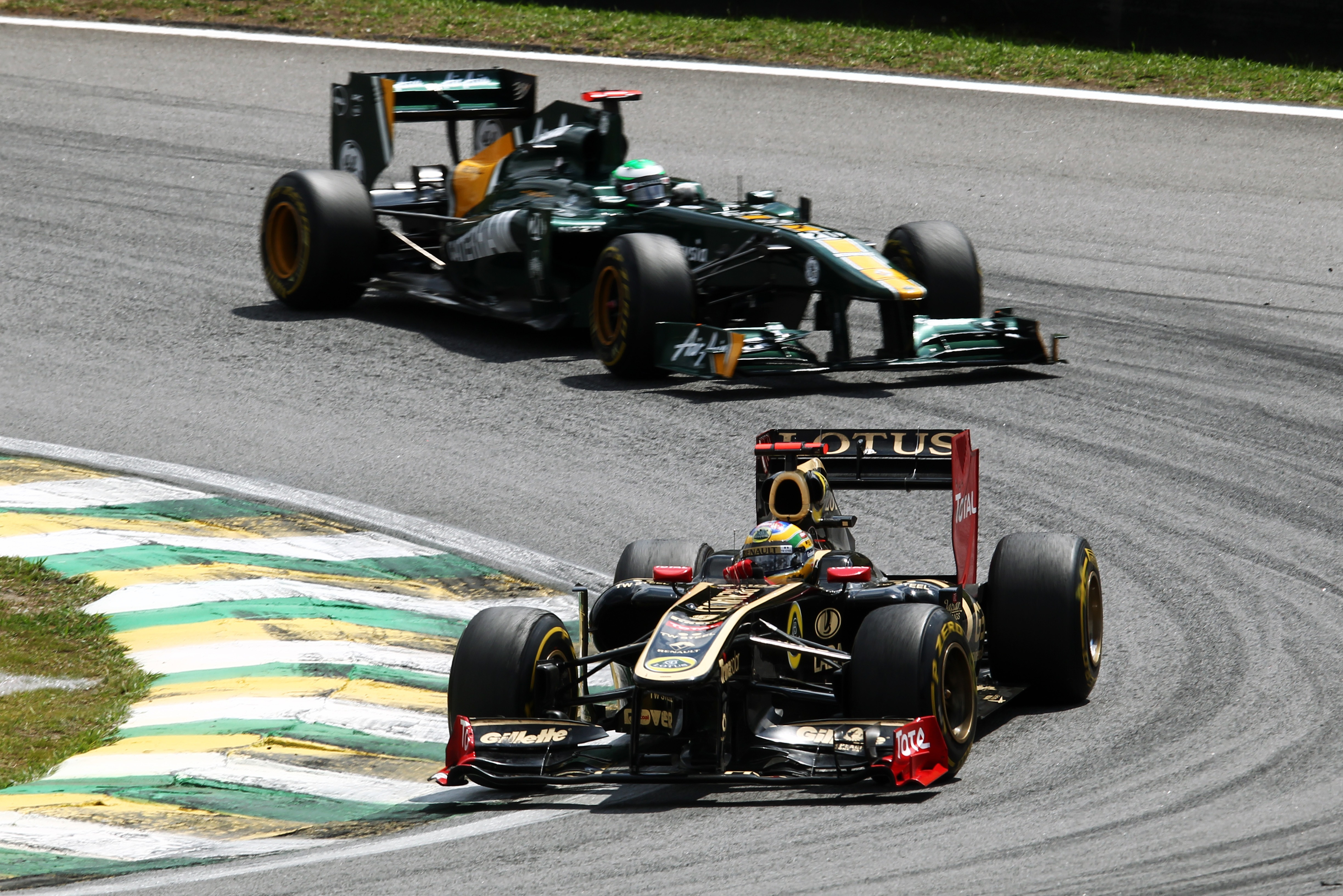
Senna and Lotus were reunited in 2011, but it wasn't a memorable tie-up for either party with naming rights acrimony still high
Photo by: Motorsport Images
Still, 2012 was memorable. Now the team dropped the Renault ID (if not the engines) to properly carry the name on the nose, the new car being labelled the Lotus E20 to mark its distinction as the 20th F1 car produced from Enstone – which again, just to clarify, is most definitely not in Norfolk. Or North London for that matter, from where Lotus originated.
Now with Romain Grosjean grabbing a rare second chance to establish himself in F1 after a false start with the same team in 2009, and Raikkonen on the comeback trail after a two-season sojourn in the World Rally Championship, the team bristled with new promise. There were 10 podium finishes, including a remarkable win for Raikkonen in Abu Dhabi – officially (but not really) the first Lotus GP victory since 1987.
It absolutely wasn’t a Team Lotus win, thus isn’t counted among the official 79 victories, but Raikkonen couldn’t care less. Then again, what does he care about? This was the infamous “leave me alone, I know what I’m doing” race when he barked at his engineer over the radio, thus creating a slogan fit for a million T-shirts.
Raikkonen ended up third in the points that year, even if he was far behind champion Sebastian Vettel and Ferrari’s Fernando Alonso. As for Grosjean, there were high points too – but the highest and most infamous was when he took off over Alonso at Spa’s La Source, also taking out Sergio Perez and Lewis Hamilton. He earned himself a one-race ban, during a season in which he earned an unwelcome reputation as a liability.
Grosjean addressed that with a number of decent performances in 2013, as Raikkonen added an 81st Lotus win (again, big asterisk) in the Australian season opener, proving his tyre sensitivities in an era of crumbling Pirellis to score his 20th career victory. Following a Lotus double podium in Bahrain, Raikkonen was second to Alonso in Spain and just four points off Vettel’s title lead.
In truth, a second championship to add to 2007 was never realistic, but he’d done enough to convince Ferrari for an unlikely return in 2014. But his time in Lotus black and gold didn’t have a happy ending. For all of Enstone’s technical strength, Genii was struggling to keep the team afloat and when the Finn found he hadn’t been paid he chose to sit out the final two races - Kovalainen coming in as his replacement. The team claimed he was undergoing back surgery.
As Raikkonen headed back to Maranello, the beginning of the hybrid era triggered a startling tailspin for Lotus as engine supplier Renault dropped the ball on the new turbo V6. Red Bull made the biggest noise and had more to lose, off the back of those four consecutive titles in the V8 era – but Enstone’s suffering was greater.
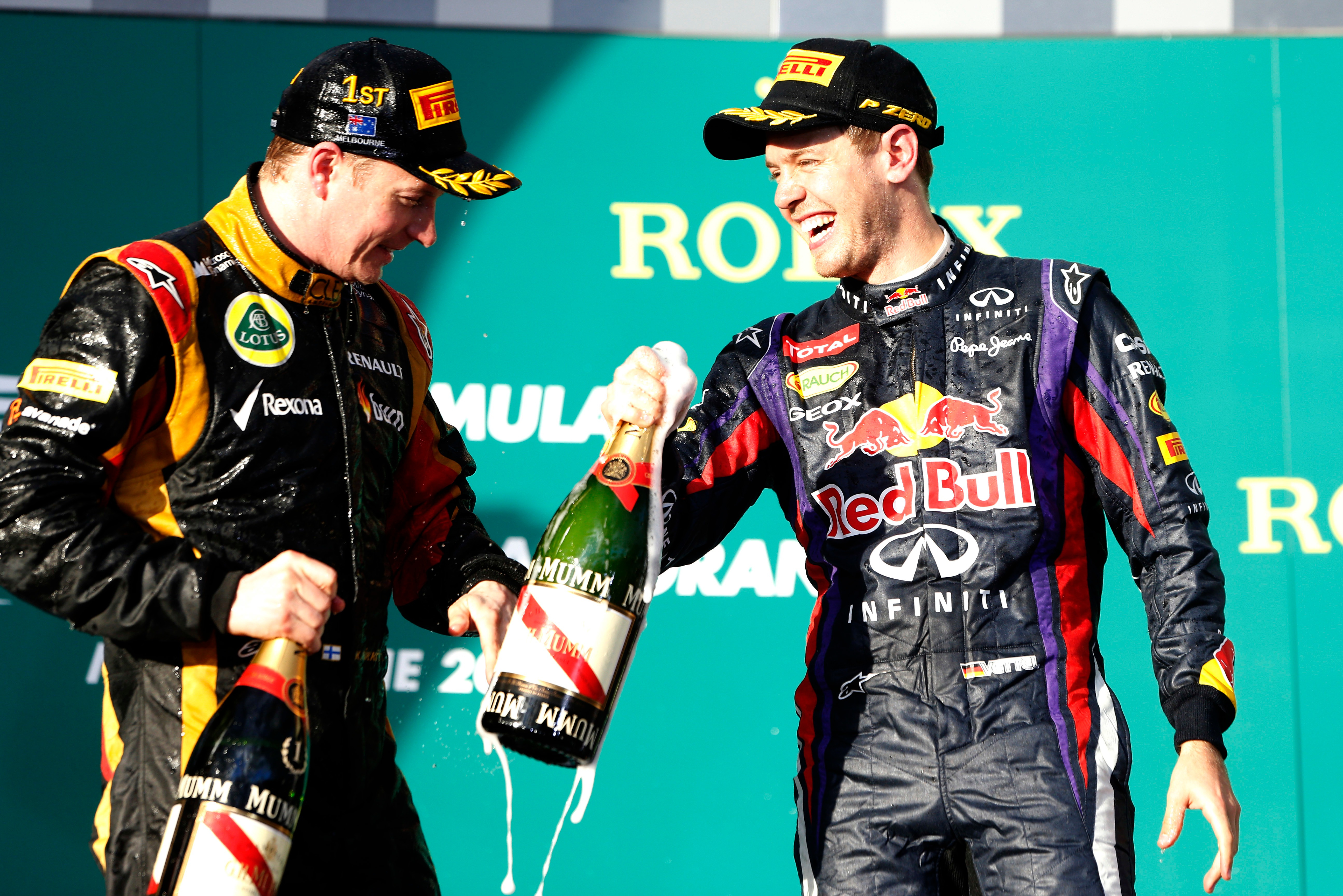
Raikkonen scored popular victory in 2013 Australian GP for 'Team Enstone', the last affiliated with Lotus in F1
Photo by: Motorsport Images
A design misfire with the twin-tusk E22 hardly helped as Pastor Maldonado joined Grosjean to boost Genii’s team coffers. The Venezuelan’s day of days with Williams in Spain in 2012, when he beat Alonso’s Ferrari on merit, seemed a long time ago – not least for Maldonado himself. From fourth in 2013, the team slumped to an uncompetitive eighth.
A switch to Mercedes power – sacrilege, surely, to those old-school Renault racers in Enstone – pulled the nose out of the tailspin in 2015, but Genii’s time in F1 was coming to a close. Grosjean inherited a podium third at Spa, but ‘fake Lotus’ was about to morph back into Renault: in December the manufacturer completed the deal to buy back the team it sold six years earlier. The last Lotus era was quickly forgotten.
Will it ever return? The rights to Team Lotus have finally reverted to the mothership and, given the company’s resurgence under new management, you can never say never. The Chinese Geely empire now holds a controlling stake as the company embarks on an ambitious electrification of its proposed road car range.
Lotus is and always will be ingrained in F1, such was Colin Chapman’s imprint, but its grand prix presence is best left in the past
The recent launch of the Emira, a traditional two-seater which even has an option for a manual gearbox, marks the end of Lotus cars as we’ve know them before the new era kicks in. Right now, it’s hard to believe F1 will be part of the plans – but budget caps aren’t now just a theory.
Then again, even if Geely finds the desire and the means, should it really risk all in F1? Instead it should be left to Chapman’s son Clive to keep the flame alive, as he does so wonderfully through Classic Team Lotus.
Supported by the same mechanics who put in those famous all-nighters back when the Old Man ruled the roost, CTL pulls out the classics at Goodwood and beyond – even diving back down the troublesome cul-de-sacs to punch our nostalgic buttons… The whistle and whine of the turbine-powered Type 56B at the Goodwood Festival of Speed this July was a highlight of the summer.
Lotus is and always will be ingrained in F1, such was Colin Chapman’s imprint, but its grand prix presence is best left in the past. Sequels and ‘reboots’ can sometimes match the original – but not often, and in the case of Lotus they came nowhere near. Nothing ever could.
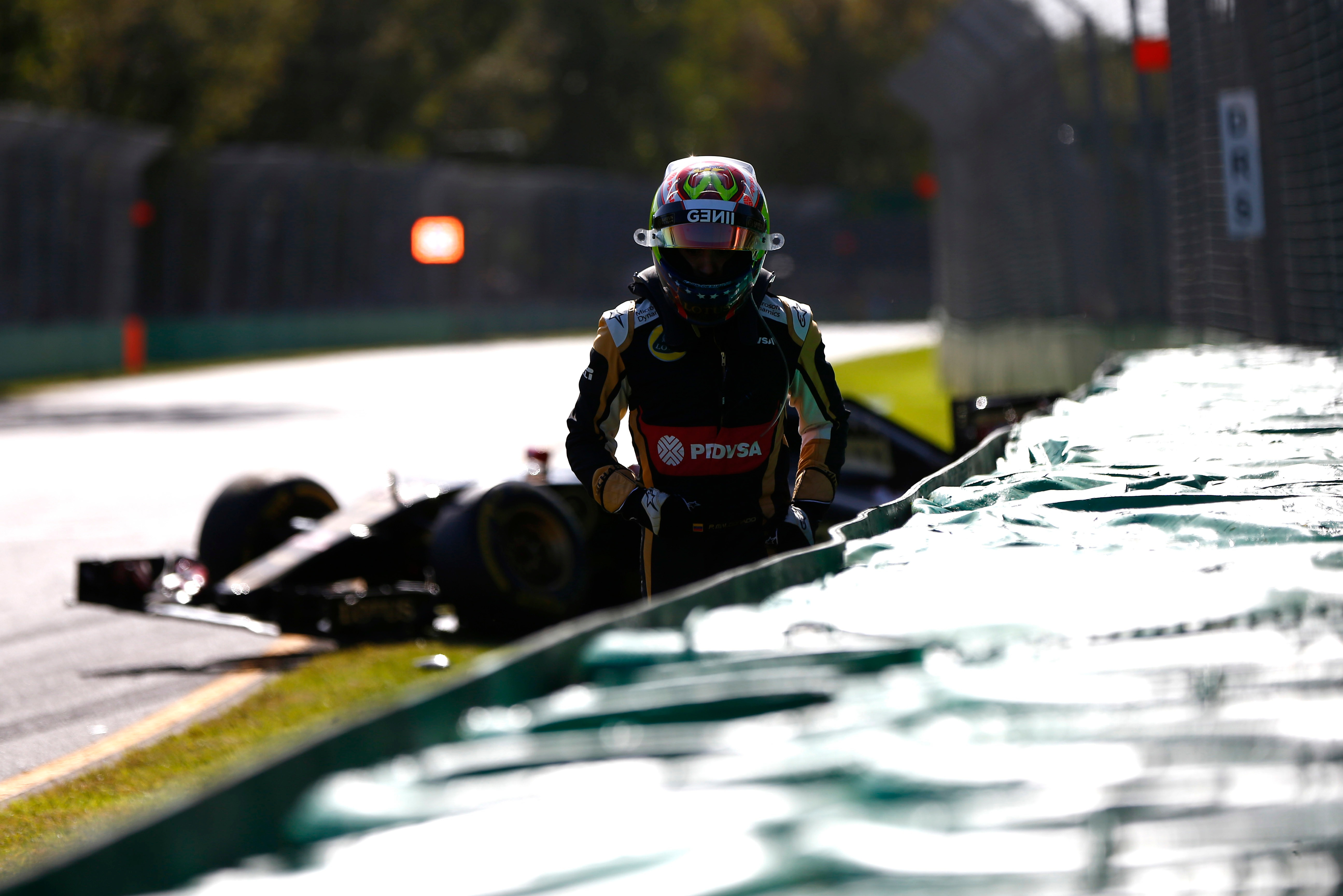
The various Lotus reboots could never live up to the high-flying original
Photo by: Motorsport Images

How Ratzenberger beat the odds to realise his cruelly short-lived F1 dream

F1 uncovered: A weekend behind the scenes with a chief mechanic

When McLaren was pipped by Red Bull in a modern F1 classic

The big opportunity Sainz’s Williams switch affords to F1’s latest centurion

Inside the science of F1 fuel

How F1’s plan for rotating races could look in practice

The early decisions that set Sauber’s rookie for success

How F1 media coverage has evolved in line with its subject

Mercedes has a Russell-sized problem and it is sharing responsibility

Phillips wins inaugural GB4 Winter Series in dramatic circumstances at Snetterton

Rally US host city announced ahead of WRC return

The role Friday practice played in Hamilton failing to achieve a podium at the US GP
Subscribe and access Autosport.com with your ad-blocker.
From Formula 1 to MotoGP we report straight from the paddock because we love our sport, just like you. In order to keep delivering our expert journalism, our website uses advertising. Still, we want to give you the opportunity to enjoy an ad-free and tracker-free website and to continue using your adblocker.


Top Comments