


The changing faces of F1’s British GP conquerors
The British Grand Prix is where the world championship began in 1950. STUART CODLING looks at six of Formula 1's era-defining cars which have all scored memorable victories in its original race
The British Grand Prix has been a mainstay of the Formula 1 calendar since the world championship's very first race in 1950.
Across races at Silverstone, Brands Hatch and Aintree, F1 drivers and cars have been competing for over 70 years for the honour of lifting the perpetual Royal Automobile Club Trophy and to join a list of winners that counts all the era-defining drivers - from legendary world champions to home heroes enjoying their day in the sun.
From Ascari to Alonso, Collins to Coulthard and Hunt to Hamilton, the event is awash with history - and the same applies to the cars too. Here are six of the British GP's most illustrious winning machines, photographed by James Mann.
Alfa Romeo 158
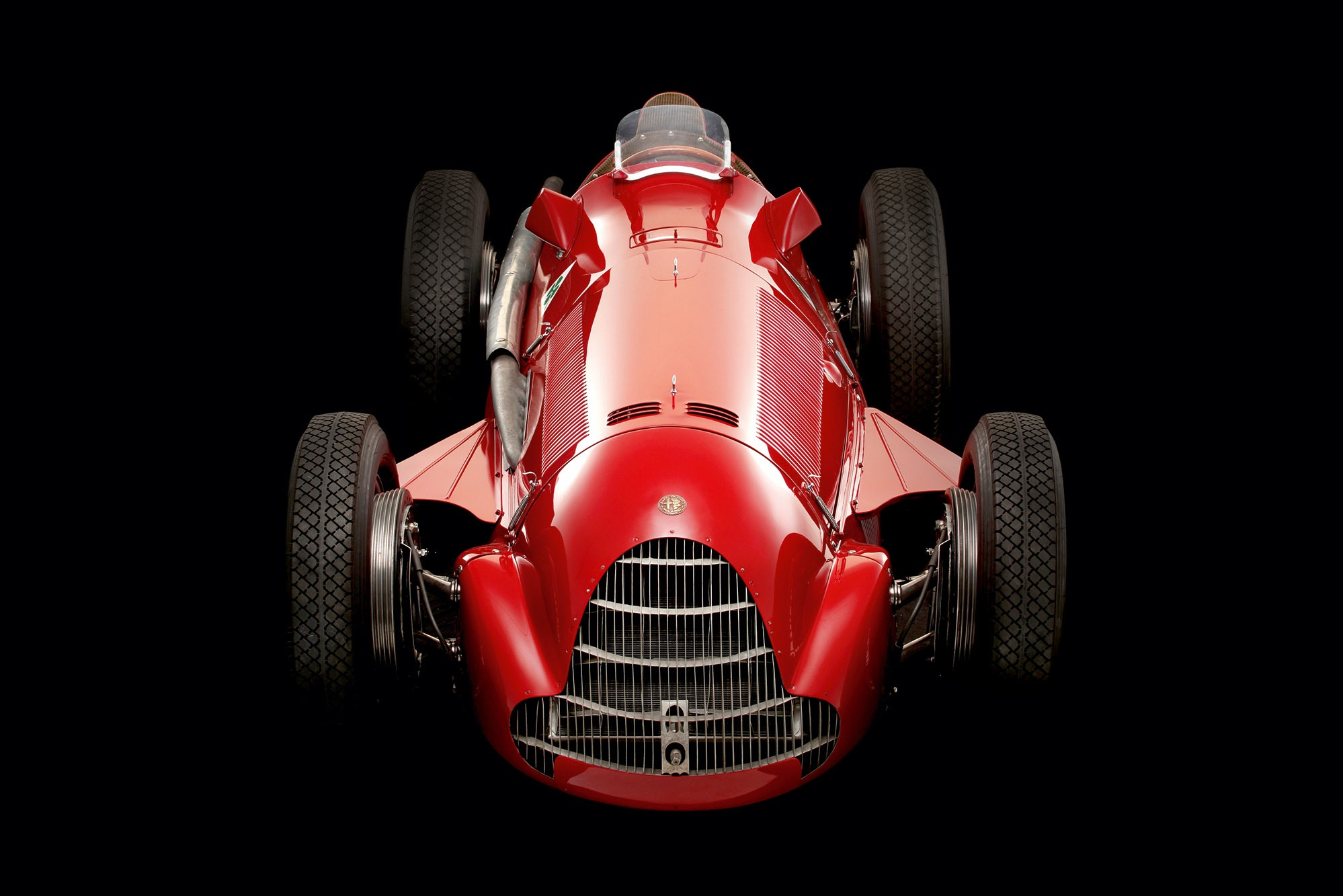
Alfa Romeo 158
Photo by: James Mann/GP Racing
The dominant force in the first two years of the Formula 1 world championship hadn’t even been cutting-edge when it was new, over a decade earlier. Initiated by Enzo Ferrari when he was running Alfa’s competitions department, and designed by Gioacchino Colombo, the 158 was conceived as a means of occupying the same racetracks as Mercedes and Auto Union without the embarrassment of competing directly against them and suffering virtually inevitable defeat: its 1.5-litre supercharged straight-eight engine placed it in the ‘voiturette’ sub-class.
As organised motor racing began again after the war Formula A, later Formula 1, permitted 1.5-litre blown engines and 4.5-litre naturally aspirated ones. The rules were shaped by expediency because very few top-level racing machines had survived the conflict (the 158s had been hidden to avoid being melted down for munitions), and casting the net relatively wide was the only way to ensure healthy grids.
Juan Manuel Fangio’s 158 succumbed to a broken oil pipe but Reg Parnell’s survived a close encounter with one of Silverstone’s famous hares to complete the podium
Alfa’s experience running the car gave it the jump, and its revvy eight-cylinder engine responded well to larger and more sophisticated superchargers. The Maserati 4CLT’s four-cylinder engine couldn’t quite match the Alfa’s grunt, relegating it to scrapping for best-of-the-rest status with Talbot-Lago’s T26C, a new car based on old underpinnings and powered by a 4.5-litre naturally aspirated straight-six.
Giuseppe Farina took pole position for the first world championship F1 grand prix at Silverstone in the fastest of four Alfas entered, 1.8s quicker than Prince Bira in a Maserati. King George VI, Queen Elizabeth, Princess Margaret and Lord Mountbatten were in attendance on race day as Farina led an Alfa rout.
PLUS: The dogfight to become F1's first 'Alfa' male
Juan Manuel Fangio’s 158 succumbed to a broken oil pipe but Reg Parnell’s survived a close encounter with one of Silverstone’s famous hares to complete the podium. Fourth-placed Yves Giraud-Cabantous was classified two laps down in a Talbot-Lago.
Silverstone, 13 May 1950
1st Giuseppe Farina, Alfa Romeo 158 2h13m23.6s
2nd Luigi Fagioli, Alfa Romeo 158 +2.6s
3rd Reg Parnell, Alfa Romeo 158 +52.0s
4th Yves Giraud-Cabantous,Talbot-Lago T26C-DA +2 laps
5th Louis Rosier, Talbot-Lago T26C +2 laps
6th Bob Gerard, ERA B +3 laps
DNF Juan Manuel Fangio, Alfa Romeo 158 - oil pipe
Lotus 25

Lotus 25
Photo by: James Mann/GP Racing
A classic example of the pencil-on-napkin design school, the Lotus 25 epitomised the lighter-stiffer-faster route to success in F1’s 1.5-litre era. With less power, race car designers had to turn to aerodynamics and structural science to find performance differentiators.
Lotus purchasing director John Standen is credited with sketching the first proposal over lunch at the company’s local greasy spoon: two ‘backbone’ chassis lifted from the Elan road car, each containing a rubber fuel tank, connected with steel bulkheads at each end to form a ‘tub’ in which the driver reclined.
As developed by Colin Chapman, chief draughtsman Alan Styman, and (later) Len Terry, the result was genre-defining. The 25 might not have been the first racing car to achieve lightness, stiffness and shrink-wrapped proportions by embracing aircraft-style stressed-skin construction, but it did so with a completeness and simplicity which soon made the philosophy de rigueur.
Tyre technology was also advancing. The 25’s rigidity enabled it to maximise the strengths of the high-hysteresis synthetic rubber in Dunlop’s R5 family. Softer spring rates took the edge off the R5’s tendency to overheat in dry weather, especially when the car was guided by Jim Clark.
PLUS: Track-testing the Lotus 25
Reliability was a bugbear early on – Chapman liked his cars pared to the bone and would only beef up components which broke – but Clark took his first grand prix wins and his first title aboard the 25. His second victory came at Aintree in 1962, the last British Grand Prix to be held there, and Clark led throughout from pole position to beat John Surtees by nearly a minute.
A year later, at Silverstone, Surtees had upgraded to a Ferrari but there was still no touching Clark – who was using the same set of R5s he’d run at Zandvoort and Reims. This time the margin of victory was ‘just’ 25.8s.
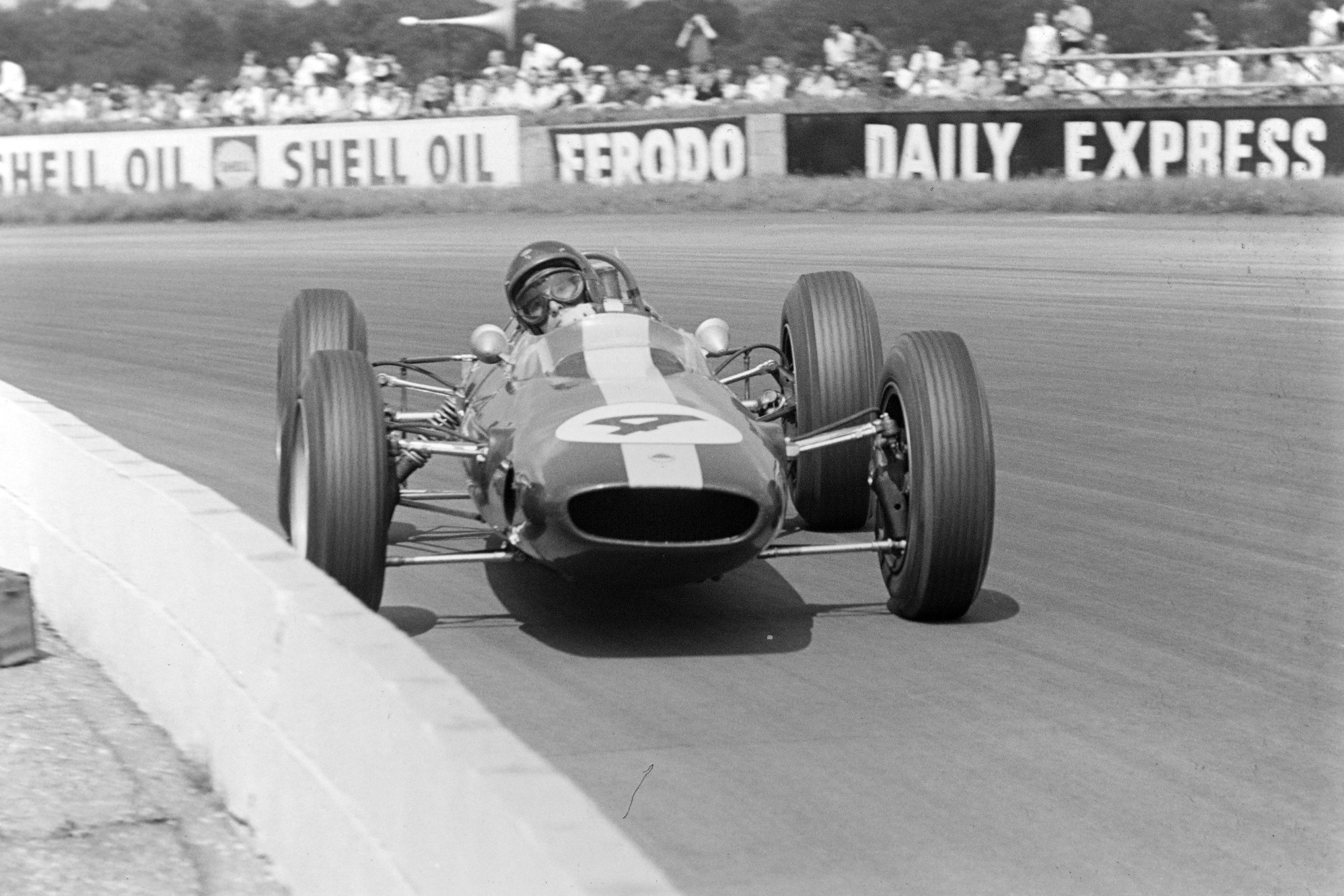
Clark dominated to win at Silverstone in 1963
Photo by: Motorsport Images
Clark, now world champion, claimed another British GP win before the 25 was phased out in favour of the 33. Brands Hatch, making its GP debut, provided the venue for a tighter affair in which Clark battled throughout with Graham Hill in 1964.
Aintree, 21 July 1962
1st Jim Clark, Lotus 25 2h26m20.8s
2nd John Surtees, Lola Mk4 +49.2s
3rd Bruce McLaren, Cooper T60 +1m44.8s
4th Graham Hill, BRM P57 +1m56.8s
5th Jack Brabham, Lotus 24 +1 lap
6th Tony Maggs, Cooper T60 +1 lap
Silverstone, 20 July 1963
1st Jim Clark, Lotus 25 2h14m09.6s
2nd John Surtees, Ferrari 156 +25.8s
3rd Graham Hill,
BRM P57 +37.6s
4th Richie Ginther, BRM P57 +1 lap
5th Lorenzo Bandini, BRM P57 +1 lap
6th Jim Hall, Lotus 24 +2 laps
DNF Trevor Taylor, Lotus 25 - fuel pump
Brands Hatch, 11 July 1964
1st Jim Clark, Lotus 25 2h15m07.0s
2nd Graham Hill, BRM P261 +2.8s
3rd John Surtees, Ferrari 158 +1m20.6s
4th Jack Brabham, Brabham BT7 +1 lap
5th Lorenzo Bandini, Ferrari 158 +2 laps
6th Phil Hill,Cooper T73 +2 laps
9th Mike Spence, Lotus 25 +3 laps
DNF Mike Hailwood, Lotus 25 - oil pipe
DNF Chris Amon, Lotus 25 - clutch
Ferrari 312 T3
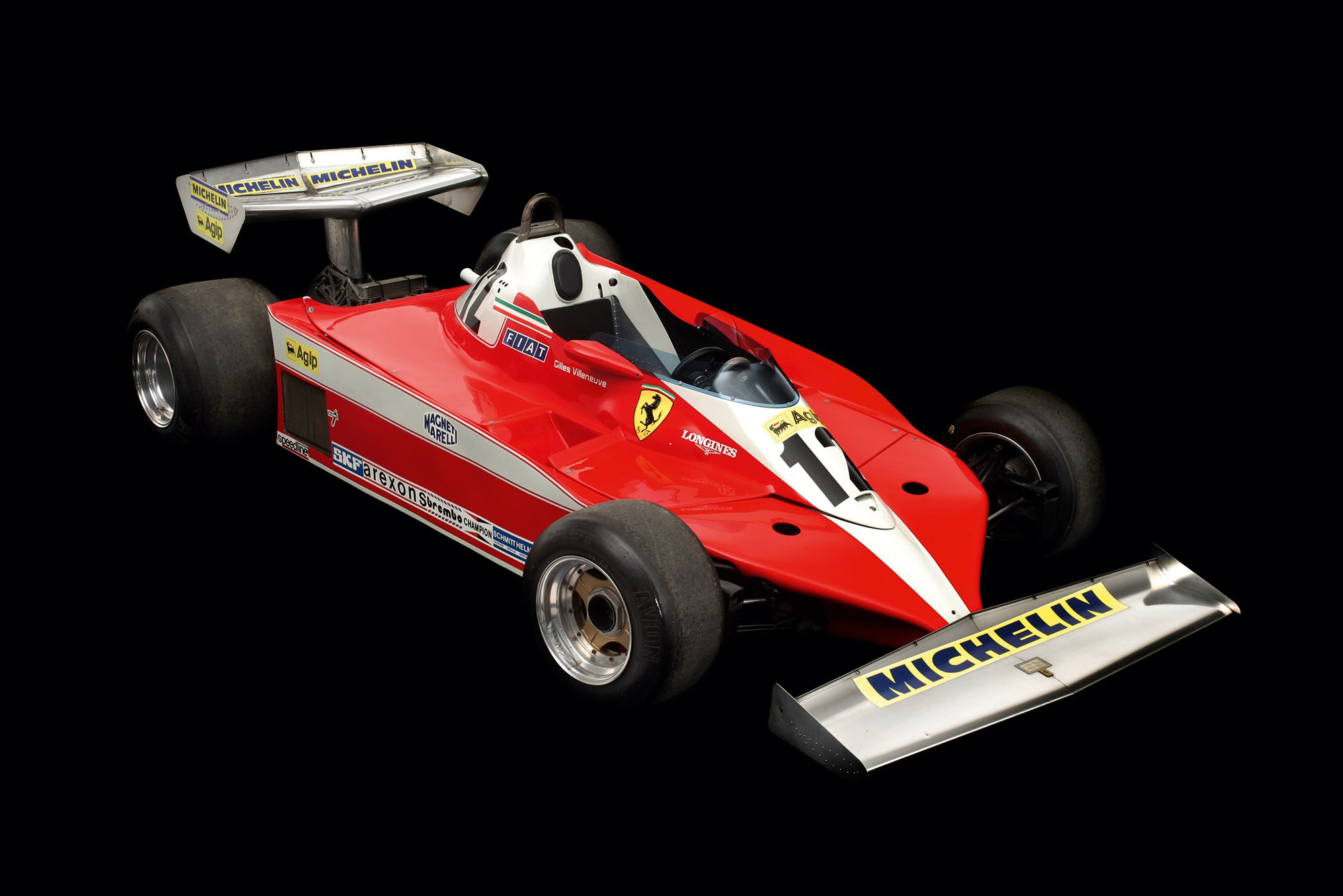
Ferrari 312 T3
Photo by: James Mann/GP Racing
“Useless and finished” was Niki Lauda’s scathing assessment of the 312 T2 which conveyed him to the world championship in 1977. But then again, Lauda’s relationship with Ferrari had deteriorated to the point where he checked out after establishing an unassailable points lead, skipping the last two races of that season. A reboot was required all round at Maranello.
The late Carlos Reutemann assumed the mantle of team leader alongside new recruit Gilles Villeneuve, and chief engineer Mauro Forghieri heavily revised his time-served semi-monocoque chassis design to accommodate a decision taken at the very top. Keen to get an edge on rivals, Enzo Ferrari had terminated his arrangements with Goodyear and signed up for a year on Michelin’s new radials. Ambitious as Michelin was, though, it simply hadn’t gained enough mileage through its previous exclusive deal with Renault and its temperamental new turbo.
A switch to higher-profile rubber mid-season had a transformative effect on the T3, enabling Reutemann to claim a memorable scalp in the British Grand Prix at Brands Hatch
Ferrari hadn’t caught on to the ground-effect aerodynamics being honed by Lotus, but the new car’s flatter, squarer shape was sculpted in Pininfarina’s windtunnel with straightline speed and balanced downforce in mind. The suspension geometry was recrafted in tandem with the switch from cross-ply rubber: out went the long front rockers and small springs in favour of bigger coil-over shocks and tubular wishbones. The rear suspension redesign also required a new casing for the transverse gearbox.
Throughout the season the T3 was understeer-prone and highly sensitive to tyre choice – and, once Lotus put its 79 in the field, Reutemann’s hopes of taking the drivers’ title slid away. But a switch to higher-profile rubber mid-season had a transformative effect on the T3, enabling Reutemann to claim a memorable scalp in the British Grand Prix at Brands Hatch.
PLUS: The ‘special relationship’ Ferrari will hope to exploit at Silverstone
Reutemann qualified eighth but with both Lotuses out by mid-distance he reeled in leader Lauda, executing an opportunist pass with 16 laps to run as they lapped Bruno Giacomelli’s dawdling McLaren M26. Villeneuve had by then departed with transmission failure in the T3 pictured here.
Brands Hatch, 16 July 1978
1st Carlos Reutemann, Ferrari 312 T3 1h42m12.39s
2nd Niki Lauda, Brabham BT46 +1.23s
3rd John Watson, Brabham BT46 +37.25s
4th Patrick Depailler, Tyrrell 008 +1m13.27s
5th Hans Stuck, Shadow DN9 +1 lap
6th Patrick Tambay, McLaren M26 +1 lap
DNF Gilles Villeneuve, Ferrari 312 T3
- transmission
Williams FW11
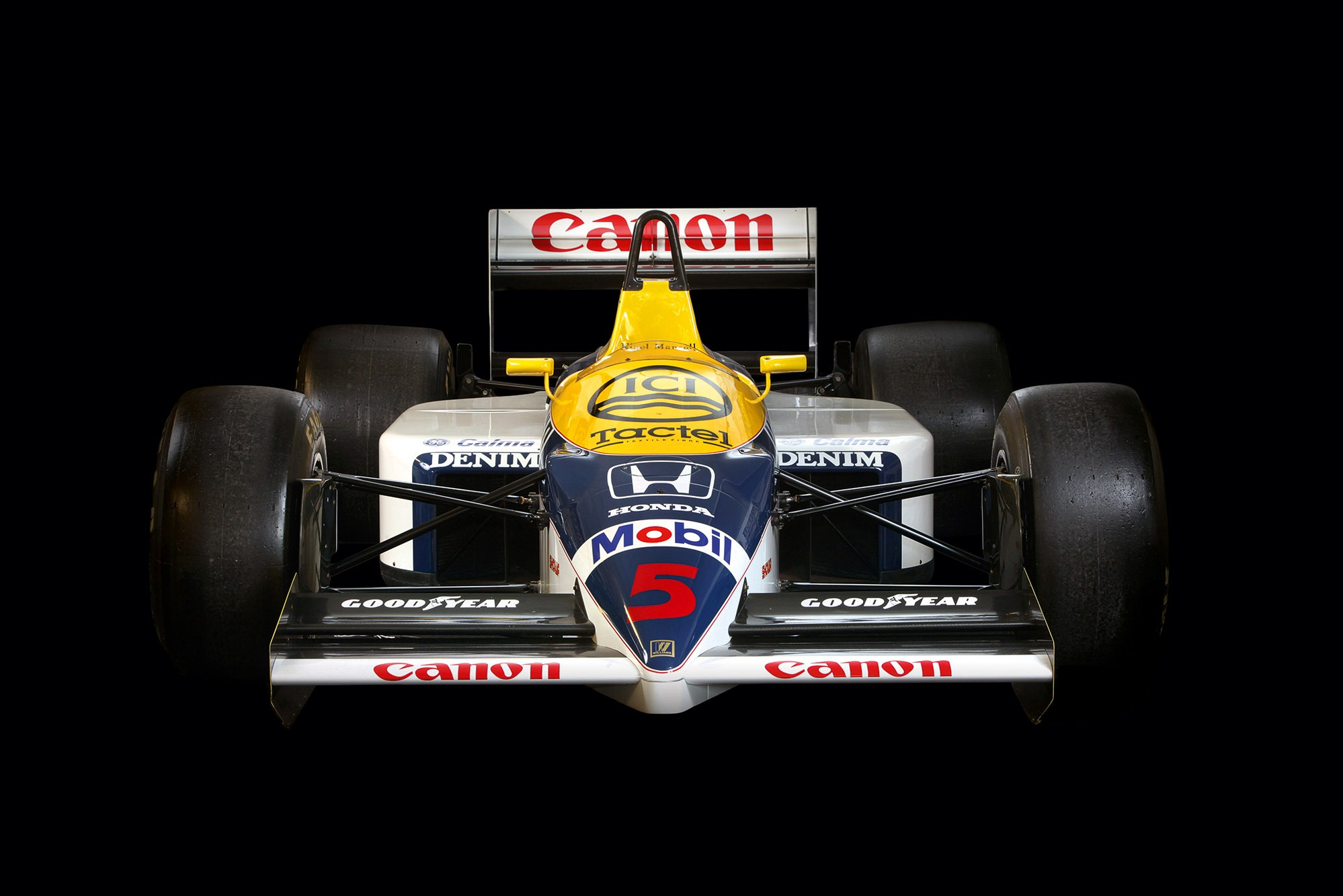
Williams FW11
Photo by: James Mann/GP Racing
In the 1980s power trumped sophistication as developments in the engine bay provided the easiest laptime gains. By the middle of the decade, Honda had honed its 1.5-litre V6 concept into a proven winner which occupied a desirable ‘sweet spot’ in the characteristics range: while it lacked the peak qualifying grunt of BMW and Renault, in race trim it was in a similar ballpark – and more frugal, important when the FIA was limiting fuel tank capacity to hamper power gains. Only McLaren’s TAG V6 was more parsimonious, but top-end power was not its strongest suit.
The FW11 was only the second Williams to feature full carbonfibre construction and, like the contemporary Ferrari F1-86, the ‘tub’ was moulded as an inverted ‘u’ shape with the floor bonded in later. Williams had yet to gain the materials know-how and manufacturing capacity to follow the example of McLaren. While the FW10 had won races it was sacrificing too much straightline performance for downforce in the form of larger wings; for the FW11 Patrick Head’s design team took advantage of the reduction in fuel tank sizes to recline the driver even further in the cockpit and achieve a smaller frontal area.
Honda collaborated by producing an even more powerful evolution of its engine, capable of 900bhp in race trim but with the facility to be turned up beyond 1100bhp in qualifying.
The FW11 and its B-spec sequel were the fastest cars throughout 1986 and 1987 and duly brought home the constructors’ titles, but neither Nelson Piquet nor Nigel Mansell would claim the drivers’ championship in 1986. In the absence of team founder Frank Williams, injured in a road accident, the drivers fell to squabbling.
PLUS: How Williams overcame its greatest setback
Energised by his home crowd, Mansell took two of his finest victories on home soil in these years: he was fortunate to be in the running at all in 1986, for his diff let go on the opening lap but a red flag enabled him to take the restart in Piquet’s spare.
In 1987 he flirted with piston melt by turning up the turbo wick and selling his team-mate a famous dummy on Hangar Straight, lunging up the inside to take the lead with two and a half laps to run.
Brands Hatch, 13 July 1986
1st Nigel Mansell, Williams FW11 1h30m38.471s
2nd Nelson Piquet, Williams FW11 +5.574s
3rd Alain Prost, McLaren MP4/2 +1 lap
4th Rene Arnoux, Ligier JS27 +2 laps
5th Martin Brundle, Tyrrell 015 +3 laps
6th Philippe Streiff, Tyrrell 015 +3 laps
Silverstone, 12 July 1987
1st Nigel Mansell, Williams FW11B 1h19m11.780s
2nd Nelson Piquet, Williams FW11B +1.918s
3rd Ayrton Senna, Lotus 99T +1 lap
4th Satoru Nakajima, Lotus 99T +2 laps
5th Derek Warwick, Arrows A10 +2 laps
6th Teo Fabi ,
Benetton B187 +2 laps
Ferrari 641

Ferrari 641
Photo by: James Mann/GP Racing
A car so strikingly elegant that one is on display in the New York Museum of Modern Art, Ferrari’s 641 also ranks among F1’s great lost opportunities. Evolved by Enrique Scalabroni and Steve Nichols from the original 640 laid down by John Barnard, it undoubtedly represented the peak of the concept in terms of performance – it was all downhill from here – but reliability, so long a Ferrari bugbear in this era and earlier, prevented it from bringing home the trophies it warranted.
In an era of McLaren-Honda dominance no other car or team could offer such consistent opposition until Williams completed its resurgence after Adrian Newey came on board in mid-1990. The brute force of Honda’s horsepower enabled – or should that be ‘compelled’ – McLaren to fit ever larger wings in order to contain it, with the result that its cars grew bulkier in appearance.
Nigel Mansell felt the love and attention pivoting away towards his new team-mate, a belief compounded as Mansell suffered four car failures in the first seven races and Prost won in Brazil, Mexico and France
The 640 and 641 were slim and elegant, striving to achieve ducted airflow through their Coke-bottle-shaped sidepods to benefit the work of the diffuser. Low-drag aerodynamics had to take up slack left by a V12 engine which sounded marvellous but fell short of the horsepower claimed for it. Plus there was the unique feature soon to become essential across the grid: a semi-automatic gearbox which enabled the drivers to change gear without taking their hands off the wheel.
Alain Prost brought the champion’s number one plate with him from McLaren in 1990 and immediately resumed his rivalry with former team-mate Ayrton Senna. On the other side of the Ferrari garage, Nigel Mansell felt the love and attention pivoting away towards his new team-mate, a belief compounded as Mansell suffered four car failures in the first seven races and Prost won in Brazil, Mexico and France.
Come Silverstone – round eight – Mansell qualified on pole but exited when his gearbox packed up on lap 55. As Mansell threw his gloves into the crowd and announced his retirement Prost won, moving into the lead of the drivers’ championship. We all know how that scenario played out…
Silverstone, 15 July 1990
1st Alain Prost, Ferrari 641 1h18m30.999s
2nd Thierry Boutsen, Williams FW13B +39.092s
3rd Ayrton Senna, McLaren MP4/5B +43.088s
4th Eric Bernard, Lola LC90 +1m15.302s
5th Nelson Piquet, Benetton B190 +1m24.003s
6th Aguri Suzuki, Lola LC90 +1 lap
DNF Nigel Mansell, Ferrari 641 – gearbox
McLaren MP4-23
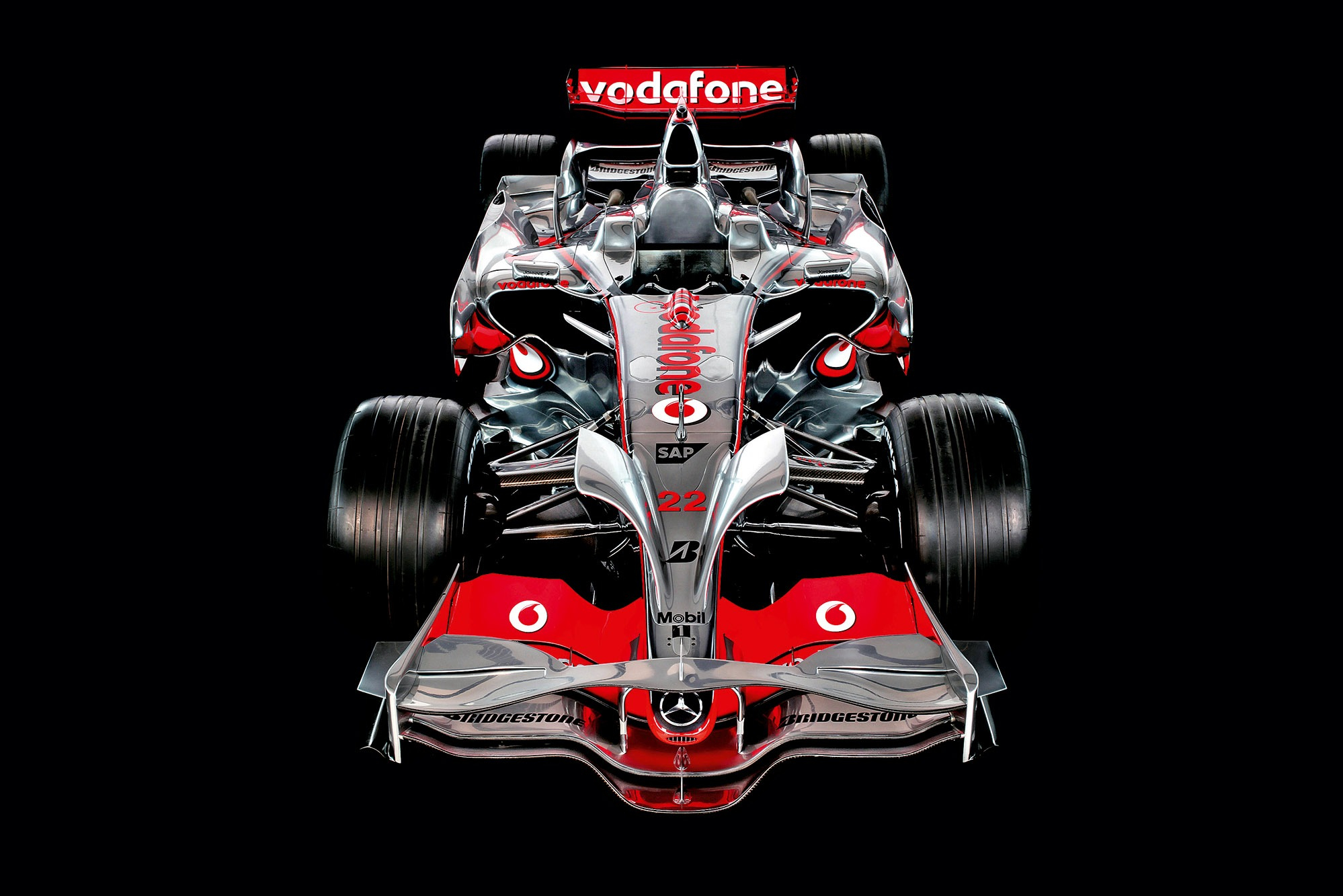
McLaren MP4-23
Photo by: James Mann/GP Racing
Few would deny that Lewis Hamilton drove more consistently over the balance of 2007, his debut season in which he was trumped for the drivers’ title by Ferrari’s Kimi Raikkonen in the final round, than he did in a topsy-turvy and incident-strewn 2008. Partly that can be accounted for by the legacy of ‘Spygate’, the industrial espionage scandal which resulted in McLaren paying a record $100m fine and forfeiting its constructors’ points.
Not only was the genesis of the MP4-23 subjected to unprecedented scrutiny, lest its design contain any trace of Ferrari DNA, to operate it McLaren had to set up camp at the far end of the pitlane alongside the backmarkers team principal Ron Dennis disdained.
The aerodynamic configuration was a clear carry-over from the MP4-22 which had so nearly propelled Hamilton to the championship, though the new car had a slightly longer wheelbase. Ferrari had gone shorter, and evidence from the opening races suggested its F2008 had the MP4-23 beaten on traction out of slow corners even if they were equally matched elsewhere.
Hamilton won the opening round but looked discombobulated elsewhere, fluffing the start in Bahrain before clouting former team-mate Fernando Alonso’s Renault, hitting the barrier in Monaco (before an excellent, if strategy-assisted, recovery drive to victory), and driving into the back of Raikkonen in the pitlane in Canada. It was at Silverstone, for the British GP, where Hamilton got his season back on track after finishing a penalised 10th at Magny-Cours a fortnight earlier.
Team-mate Heikki Kovalainen occupied pole on a very damp grid – this was not a British GP characterised by barbecue weather – but Lewis shadowed him for four laps before making his move for the lead at Becketts. Thereafter Hamilton was in a class of his own as conditions worsened – Ferrari’s Felipe Massa, his title rival, spun five times – and the worried McLaren pitwall began to urge Lewis to slow down. But this was indubitably Hamilton’s day of days, a foreshadowing of his future dominance – and a victory by over a minute on (wet) home soil.
Silverstone, 6 July 2008
1st Lewis Hamilton, McLaren MP4-23 1h39m09.440s
2nd Nick Heidfeld, BMW-Sauber F1.08 +1m08.577s
3rd Rubens Barrichello, Honda RA108 +1m22.273s
4th Kimi Raikkonen, Ferrari F2008 +1 lap
5th Heikki Kovalainen, McLaren MP4-23 +1 lap
6th Fernando Alonso, Renault R28 +1 lap

Hamilton took famous wet-weather victory at Silverstone in 2008
Photo by: Motorsport Images

How Ratzenberger beat the odds to realise his cruelly short-lived F1 dream

F1 uncovered: A weekend behind the scenes with a chief mechanic

When McLaren was pipped by Red Bull in a modern F1 classic

The big opportunity Sainz’s Williams switch affords to F1’s latest centurion

Inside the science of F1 fuel

How F1’s plan for rotating races could look in practice

The early decisions that set Sauber’s rookie for success

How F1 media coverage has evolved in line with its subject

Verstappen responds to COTA boss and proposes drastic measures to tackle bumps

Supercars Gold Coast: Feeney converts Race 2 pole to win after Saturday defeat

MotoGP's final Australian GP at Phillip Island cancelled due to poor weather

Antonelli pole shows Mercedes is 'finally seeing the results' of car upgrades
Subscribe and access Autosport.com with your ad-blocker.
From Formula 1 to MotoGP we report straight from the paddock because we love our sport, just like you. In order to keep delivering our expert journalism, our website uses advertising. Still, we want to give you the opportunity to enjoy an ad-free and tracker-free website and to continue using your adblocker.


Top Comments