


The cash conundrum behind F1’s latest calendar choices
Liberty Media's assurance that any new races joining the calendar must add excitement and value for the fans, the teams and Formula 1 overall has been tested by multiple factors all dictated by the COVID-19 pandemic. But with one eye on the balance sheet, is F1 going against its pledges with its latest plans?

"What we want to see is a race circuit, we don’t want Mickey Mouse circuits. We don’t want those old classic street circuits with 90-degree turns. We want fast sweeping circuits, circuits which are going to challenge the drivers - and they are going to love it - and we want circuits where we can have wheel-to-wheel racing."
Those were the words of Ross Brawn earlier this year when, talking about the new Saudi Arabia track design, he raved about the new approach that F1 owners Liberty Media had been taking when it came to adding fresh additions to the calendar.
Long gone, supposedly, were the days when all that was needed to get a grand prix was a big cheque from the local government that delivered a massive race hosting fee and some shiny paddock facilities that looked good for the corporate guests.
It left F1 undergoing a period where new races, taking place in remote locations in front of often empty grandstands, were paraded as an expansion plan to a brave new world but ultimately fell flat with its old-school fans.
And when the cash ran out, F1 quickly packed up its trucks and rolled out – ready to chase the next government willing to deliver it a cash injection.
The quality of the racing action didn’t matter to F1’s bean counters, for as long as the dollars kept rolling in then they were more than happy.
With F1’s previous owner CVC gone, under Liberty the emphasis was supposed to be going back to the racing.
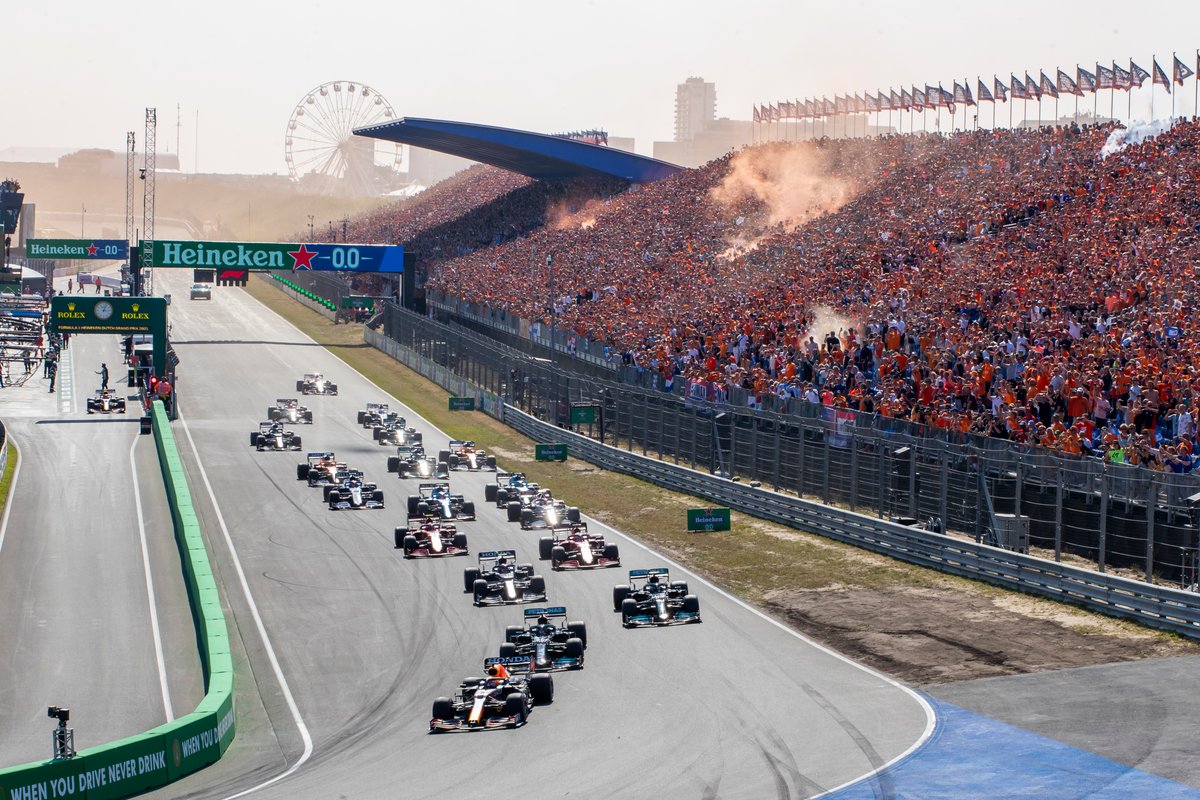
Start of the Dutch GP
Photo by: Essay Produkties - Chris Schotanus
Calendar expansion was not just about selling out to the highest bidders. The quality of the end product on a grand prix Sunday afternoon was viewed as essential; and for that, F1 would only be going to tracks that it felt could do the spectacle justice.
At its London headquarters, F1 duly devoted staff and tech resources under the guidance of former Williams engineering chief Craig Wilson to help run computer simulation models to create and design tracks that offered overtaking opportunities.
It was here that the idea for the Zandvoort banked corners was created; and here too the ambitious designs for the street circuits in Vietnam and Saudi Arabia became a reality to deliver on the vision that Brawn so proudly boasted about.
Money talks and the suggestions of Qatar offering one of the biggest race hosting fee would certainly explain a lot about why it got the nod for this year
Venues like Vietnam (which ultimately fell through as COVID-19 struck) and Saudi would become the blueprint for making even better circuits in the future.
"Nothing is ever 100% - and we will probably make one or two mistakes - but it will go a long way towards the sort of circuit we want," declared Brawn.
But amid all the hope that Liberty’s words and actions (including their popular choices forced by the coronavirus pandemic of racing at places like Mugello, Imola and the Nurburgring) gave us, the decision to put Qatar on the calendar this year has raised some alarm bells.
PLUS: How F1's calendar push risks "disposable" races
For in a season that has all the hallmarks of a classic, with so little to choose between Lewis Hamilton and Max Verstappen, F1 is facing a potential crunch race at a track that is far from the peak vision that Brawn outlined.
Qatar’s flat and featureless Losail circuit has proved good for MotoGP, but the nature of its medium to high speed corners, allied to vast characterless run off areas, does not bode well for it delivering much excitement on the F1 front.

Losail International Circuit aerial view
Just like Paul Ricard’s problem has been the difficulty of cars being able to follow closely enough in the type of corners it has in the opening sequence, so too that could be the case in Losail.
PLUS: The IndyCar feature that Paul Ricard desperately needs in F1
In fact, for all of F1’s soundbites about Qatar being an amazing addition to the schedule, F1 has already all but admitted that Losail is not the long term solution.
It was quite telling that on the day of the announcement, F1 was already making it clear that when F1 returns to Qatar in 2023, it will be somewhere new. That either means a completely different track, perhaps a street circuit in Doha, or at a Losail circuit that has been modified.
As F1 CEO Stefano Domenicali said this week: “For 2023 we are really working on another plan to see what is the best venue, on which we can really build the event.”
That’s not exactly a ringing endorsement of what prospects Losail has of delivering a good race this year, and what a shame it would be if the title were to be settled with a boring event.
But, in the end, money talks and the suggestions of Qatar offering one of (if not) the biggest race hosting fee for its 10-year grand prix deal, would certainly explain a lot about why it got the nod for this year.
Let’s not forget that on the back of the coronavirus pandemic, F1’s income took a huge hit – so the attraction in getting the bottom line back in healthy shape is obviously high up the agenda. And that is also good news for the teams who, because they share commercial rights income, will also benefit from the extra Qatar revenue.
But there also does come a point where, if Liberty is chasing the money as aggressively as predecessor CVC was, then that could step it back from previous mantra of delivering for the spectators and improving the show.
Fans have openly questioned on social media how Qatar, a country under the spotlight for its human rights record, had found its way on to the calendar of a series that is keen to underline its #weraceasone mantra.
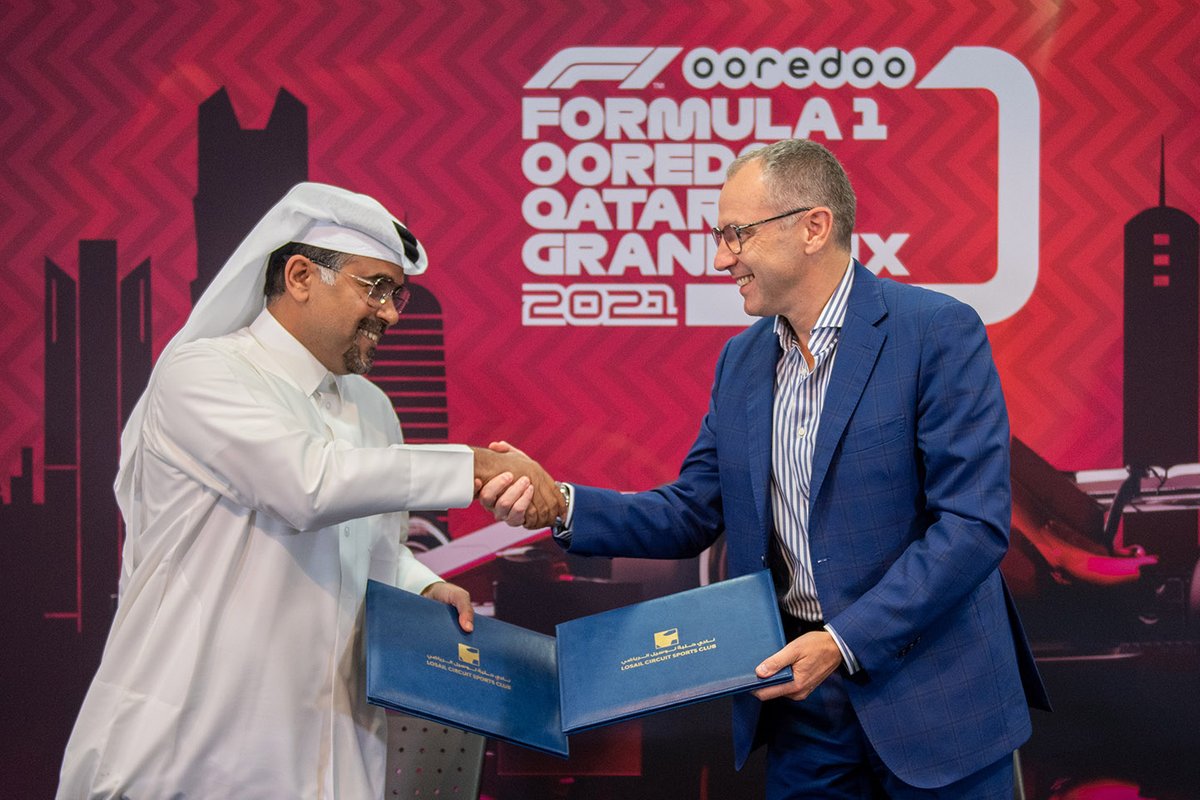
Abdulrahman Al Mannai, President Qatar Motor and Motorcycle Federation, Stefano Domenicali, President and CEO F1
Photo by: Formula 1
This also came in a week where Liberty Media’s previous promises of ensuring it delivers a calendar that doesn’t push team personnel to the brink has also come under the spotlight.
Back in 2018, with the French, Austrian and British Grands Prix triple header having left team personnel broken, F1 chiefs were clear that cramming three events on three consecutive weekends would not be a preferred option in the future.
Of course the coronavirus pandemic in 2020, and the need to run as full a schedule as possible into the second half of that year, meant that doing the hat-trick was an understandable necessity that F1 teams had to simply accept for the sake of the championship’s survival.
"We need to be more balanced, and I really hope next year, when the situation should be more stable, we’re going to avoid as much as possible the triple-headers" Stefano Domenicali
But at the start of this year, Domenicali was clear that it was not something that should happen when the world got more back to normal.
“We need to be more balanced, and I really hope next year, when the situation should be more stable in that respect, we’re going to avoid as much as possible the triple-headers because I understand what are the limits,” he said. “Also consider the logistic implications that we [F1] have to handle.”
PLUS: How F1's new boss is shaping the championship's future
But the three triple-headers lobbed on the the 2021 schedule do not look like being the final ones that F1 has.
In F1’s bid to cram in the 23 races it wants in 2022 between the middle of March and the middle of November, more triple-headers are on the cards – something that several team boss have said they are not too happy about.
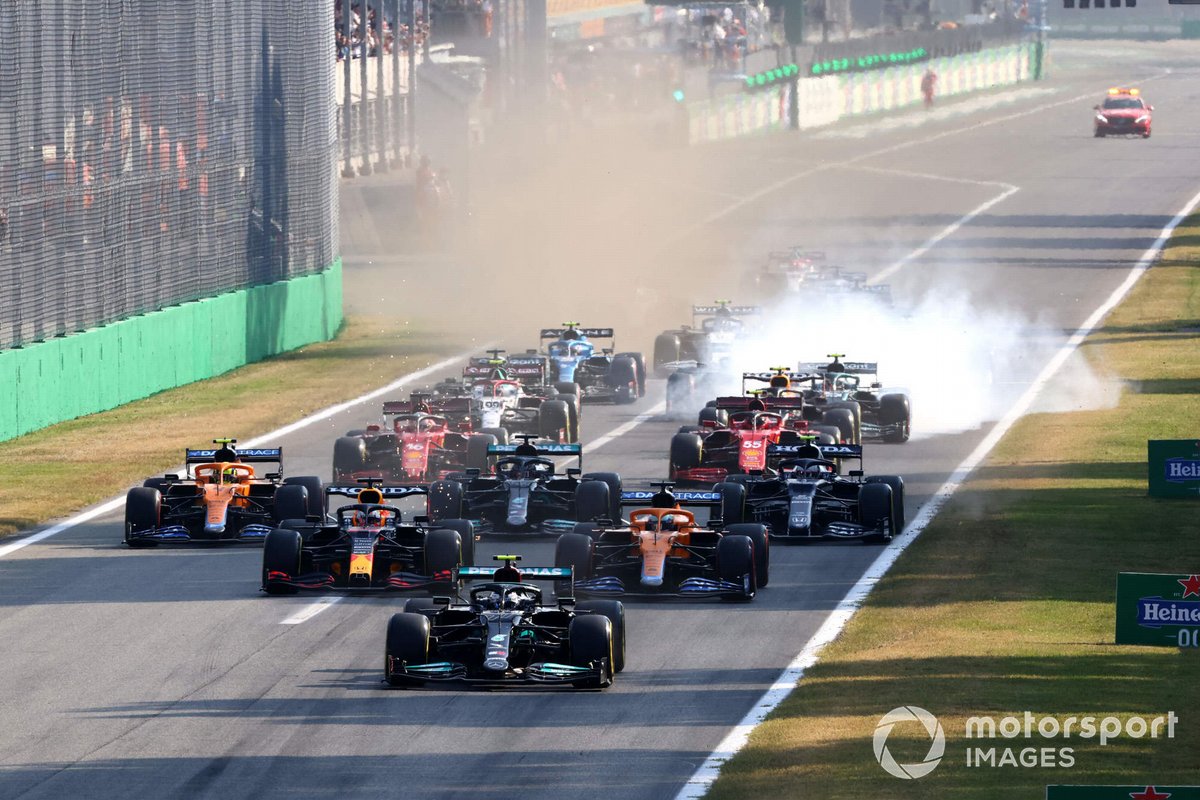
Valtteri Bottas, Mercedes W12, Max Verstappen, Red Bull Racing RB16B, Daniel Ricciardo, McLaren MCL35M, Lando Norris, McLaren MCL35M, Lewis Hamilton, Mercedes W12, Pierre Gasly, AlphaTauri AT02, and the rest of the field at the start
Photo by: Steve Etherington / Motorsport Images
There is no doubt that the desire to chase these extra races and deliver the biggest calendar in F1 history is fuelled by chasing income. But whether the love of triple-headers and 23 race calendars are temporary blips for F1, like enduring the current Losail layout, remains to be seen.
So it will be fascinating to see what path F1 takes now in how far that pursuit of money goes.
It’s that fine balance between doing what’s best for the business, over doing what’s best for the championship and the fans, that will ultimately define how we all come to view Liberty’s reign.
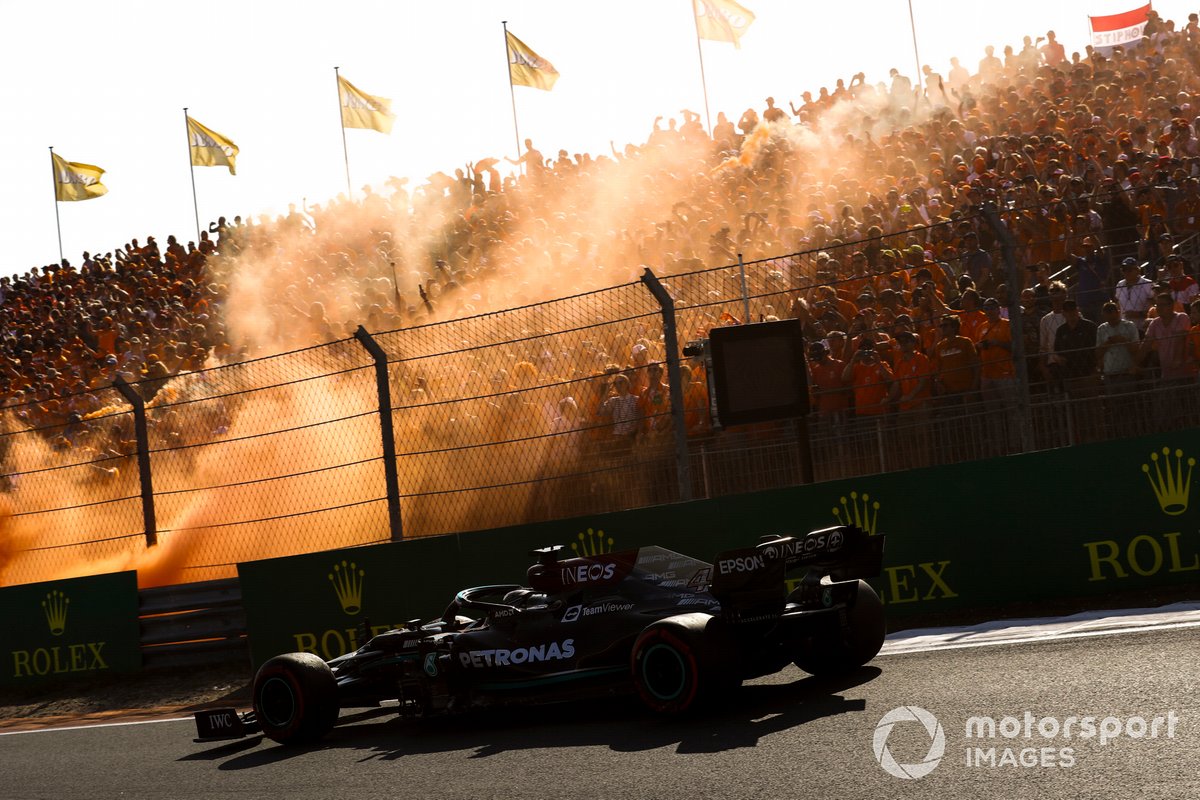
Lewis Hamilton, Mercedes W12
Photo by: Charles Coates / Motorsport Images


Brundle awarded OBE in King’s New Year’s honours

The new rules dilemma that will define the 2025 F1 season

Verstappen issues Red Bull title warning in push for RB21 progress

Mercedes opens up on the factors that hurt Hamilton with the W15

How McLaren faced up to the misinformation, noise and distractions of being an F1 title challenger

Why Bottas is not letting the “worst-case scenario” end his F1 career

Jon Noble: An unfair perception or a genuine concern? Lifting the lid on Red Bull’s Tsunoda scepticism

Binotto on Audi's F1 reality check after finding team "frozen" with no plans

Project Rally One reveals WRC 2027 challenger

Can Ducati mount a serious victory challenge at the MotoGP Austrian Grand Prix?

MotoGP plans to introduce two qualifying sessions each weekend, following F1 model

Why KTM's Red Bull Ring advantage is looking particularly potent in 2026
Subscribe and access Autosport.com with your ad-blocker.
From Formula 1 to MotoGP we report straight from the paddock because we love our sport, just like you. In order to keep delivering our expert journalism, our website uses advertising. Still, we want to give you the opportunity to enjoy an ad-free and tracker-free website and to continue using your adblocker.


Top Comments