


The art of compromise behind an "emotionally draining" F1 job
The job of a Formula 1 race engineer requires in equal parts engineering skill and acute sensitivity – not an easy combination when the pressure is on, as Fernando Alonso's Alpine F1 engineer explains

Ever since team radio messages became part of the Formula 1 broadcast, the often-colourful interaction between driver and race engineer has been a popular staple of grand prix coverage. But just like most team communication, the finer nuances of the race engineer role stay out of the public spotlight. The unique blend of engineering, infused with a human touch, makes the role one of the most challenging and rewarding in motorsport – as Alpine race engineer Karel Loos knows well.
Belgian-born Loos, who joined the Enstone team in 2011 in its Lotus guise, worked his way up from performance to race engineer and worked closely with Kevin Magnussen, Jolyon Palmer, Carlos Sainz Jr and Daniel Ricciardo. This year, F1 returnee Fernando Alonso will be added to that list.
Loos sums up his job as “trying to get the most out of the car-driver combination”. The process for solving that equation starts with preparation at the factory, well before the cars hit the track on a grand prix weekend.
“We need to make that work with the tools we have in the way we’re structured as a team,” Loos explains during a now-standard video call prior to the Bahrain pre-season test. “You still have your area, but as a race engineer you’re kind of putting the puzzle together.
“There’s a lot of preparation work in terms of where you want to go with set-up and trying to understand problems from previous races. And when you get into a race weekend where you straight away feel like the car is there or thereabouts, that already makes a weekend so much easier. Getting it right, especially in qualifying and the race, is quite rewarding for me and for the group of engineers behind the cars.”

Karel Loos, Fernando Alonso, 2021 Bahrain F1 test
Photo by: Motorsport Images
A race engineer is not just a technical mastermind, but also the first point of contact for a driver within a team. The most public display of that interaction occurs during the adrenalin-laden grand prix weekend, when race engineers take to the airwaves to inform their respective drivers or attempt to keep them calm. But whatever makes it into the TV broadcast is just the tip of the iceberg.
PLUS: The last element of F1 performance that can't be found on a laptop
“You hear my voice to the driver, but I have about seven or eight people almost constantly talking to me at the same time,” explains Loos, who studied for his Masters in Motorsport Engineering and Management at Cranfield University to complement his previous engineering studies in Belgium. “It’s quite challenging to manage the radio traffic behind the scenes, which nobody hears. It’s not made public at all, fortunately for me!
"These days, they talk about EQ and IQ. I think there needs to be a good mix of both and you also need a practical feel for things as well" Karel Loos
“You hear probably the odd radio message on TV, but the amount of communication we give to the driver is quite large. During a race you’re trying to give the driver a picture of what is happening around them, who’s doing what, where is he in his strategy, without giving it away to others. Things like that and managing things like tyres and fuel; there’s so many conversations going on during the race that nobody hears. There’s a lot going on. I think that’s one of the difficult bits in the job.
“Traffic management in qualifying is also one of the more stressful moments, especially in Q1. I feel sending the car out for the first time in qualifying is one of the most stressful moments in the weekend, because where we are in the field that first run is quite important for us. We try to do it in one go, so we can save tyres for Q3. And getting it right, positioning a car right on track is so crucial for that. In theory it should be a fairly easy run, but it’s so easy to get that wrong. More often than not, we get it right.”
In the heat of the moment, drivers must have blind faith in their race engineers, who in turn must try to understand what their drivers are going through. But getting to that level of mutual understanding doesn’t happen overnight. It’s the result of a long process during which driver and engineer develop their own language, that Loos says can be “quite emotionally draining”.
“With the relationship you build up with your drivers, you start to feel when they’re in the right frame of mind and when they’re not,” explains Loos. “I think that’s quite important to them, maybe [to] give them a little bit of motivation, or making sure that they’re comfortable. And they know: ‘Right, we can do well here and there’s no reason to panic’.
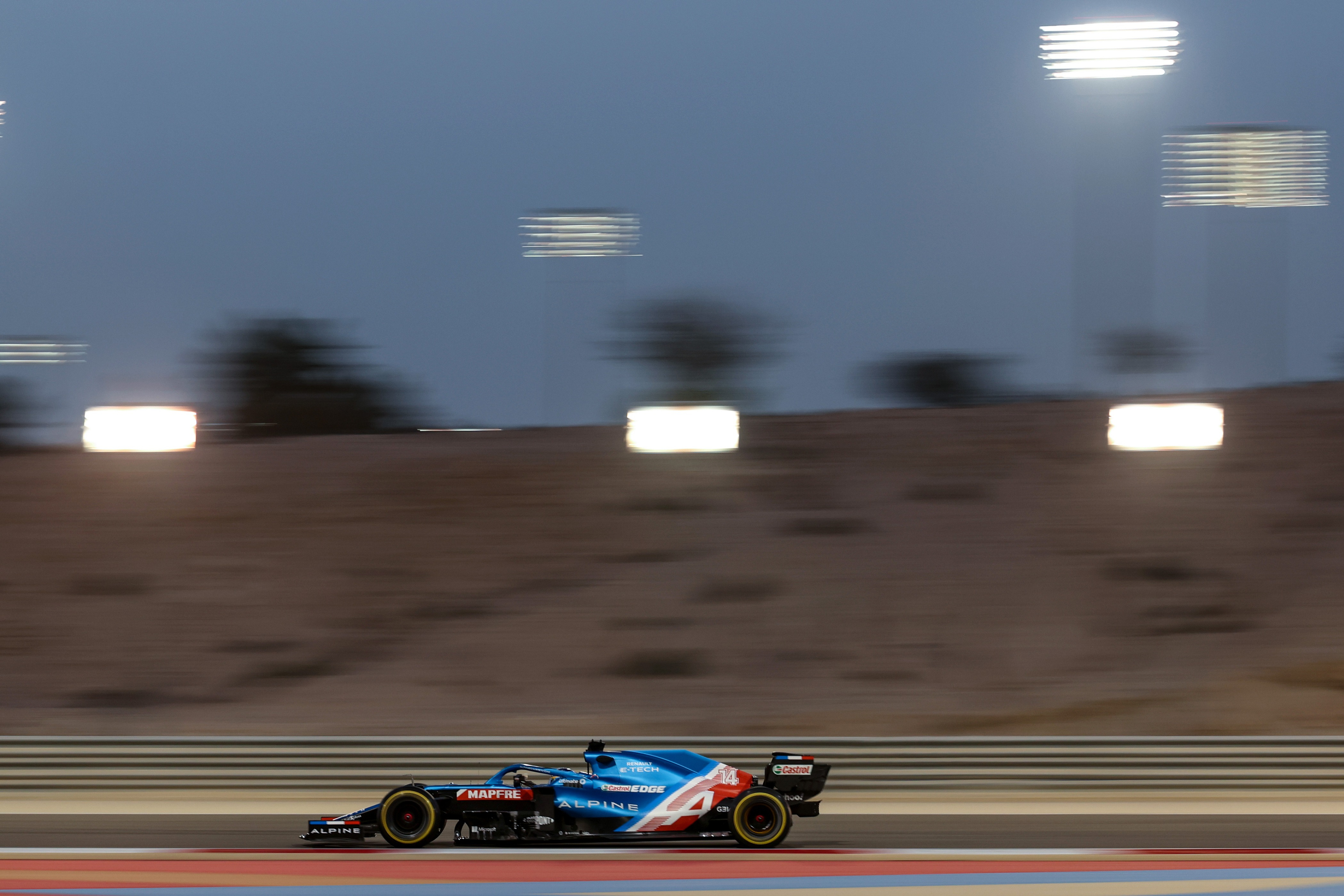
Fernando Alonso, 2021 Bahrain F1 test
Photo by: Alpine F1 Team
“These days, they talk about EQ and IQ [emotional and intellectual intelligence]. I think there needs to be a good mix of both and you also need a practical feel for things as well. It’s important to listen, take their points on board and kind of empathise with them. I do talk a lot to my drivers and it takes time to build up that relationship, because every driver will say that he has the same problem in a slightly different way. You need to adjust your dictionary a little bit.”
Interestingly, the engineering side and driver management don’t always align. The empirical data might show that a certain cornering technique or set-up choice yields a faster lap time, but if the driver isn’t fully on board with how that translates to the cockpit, then compromises may be required. Sometimes, an engineer has to “think a bit like them and try to think how they feel”, which may involve briefly letting go of the numbers.
“Having them in the right frame of mind is important,” says Loos. “There’s sometimes more lap time in that than a small set-up change.”
With his experience of working for various Belgian sportscar teams in his early days, including the Selleslagh Racing Team Corvette in the short-lived FIA GT1 World Championship, the experience of dealing with a wide range of driver abilities has often proved handy to Loos.
“I worked with drivers that weren’t always professional drivers,” he says. “If a driver comes back and says he has an issue in a particular corner, in the grand scheme of things you look at the data and say, ‘Well, you’re losing the tiniest bit of time there’.
"But [if] your driver keeps pointing out he can go quicker there, sometimes you have to compromise in other areas to make him happy. It’s also about putting the numbers on the table and saying, ‘Look, we can do this or this about the problem you’re having, but we think it might compromise the car in other places’.”
Loos experienced few such issues over the past two seasons while working with Ricciardo. He has fond memories of his partnership with the Australian, who has moved to join McLaren during the off-season.
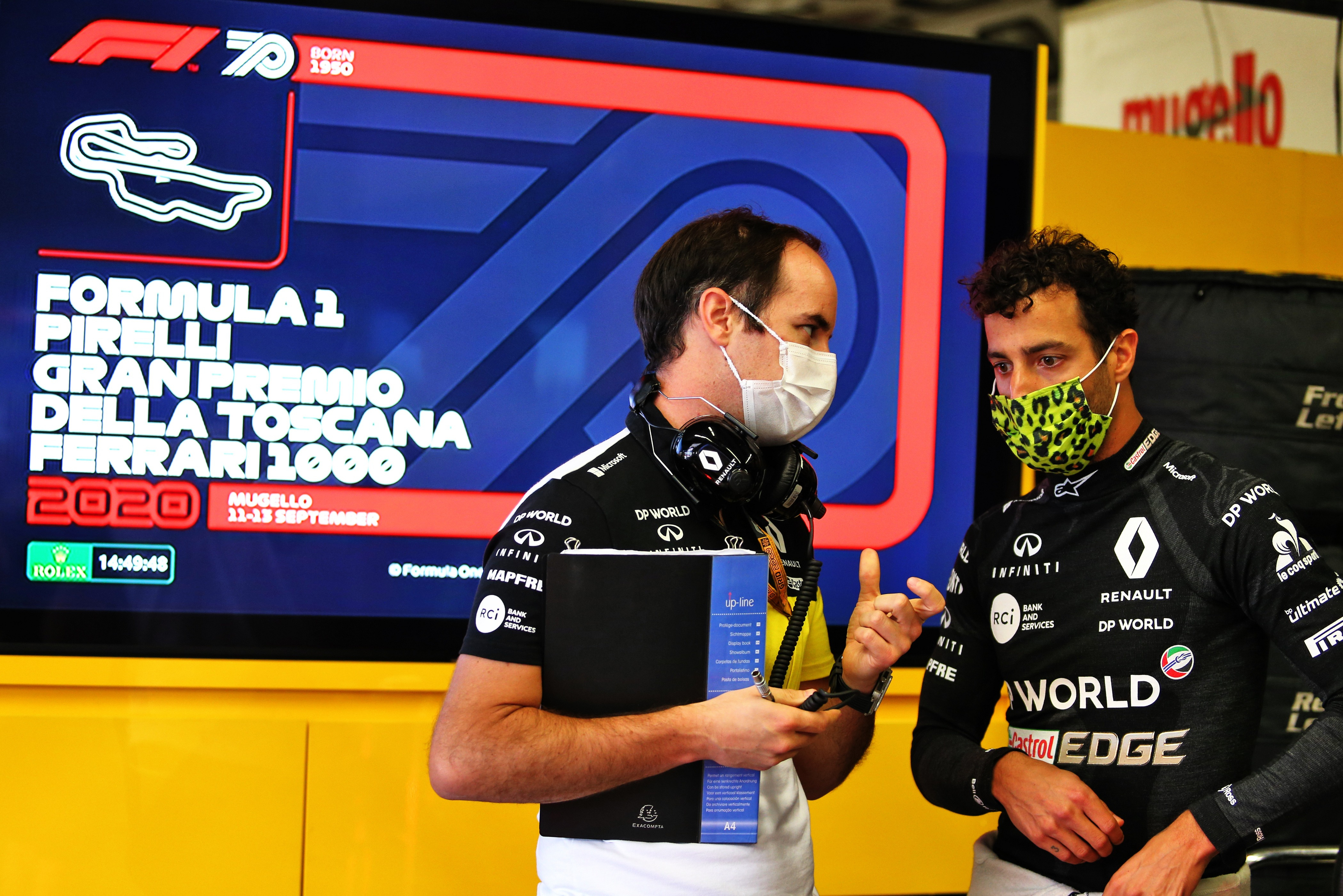
Karel Loos, Daniel Ricciardo, 2020 Tuscan GP
Photo by: Renault F1 Team
“Daniel was pretty good, he is a fairly relaxed person,” Loos says. “There have been qualifying sessions where we were joking on the radio just 20 seconds before the car went out, and then he nailed the qualifying and put in a good performance. The way you see Daniel on TV, I think that’s the way he is. He’s always been positive and appreciated what every single person in the team did.”
As Ricciardo moves to McLaren, two-time world champion Alonso is his replacement at the rebranded and overhauled Alpine team. The arrival of a double world champion has had a galvanising effect on the Enstone squad, his ever-demanding nature pushing the team on. In preparation for his F1 comeback, the Spaniard started visiting the factory and attending race weekends early on during the 2020 season, which was a telling sign of his commitment to the project.
"He’s a guy that doesn’t leave a stone unturned. He is really pushing us and I really like that" Karel Loos on Fernando Alonso
“It was good to have a bit of a head start,” Loos comments on Alonso’s early involvement. “It wasn’t easy because you kind of have to work with two girlfriends in a way! But it’s been good and refreshing; he’s come in with a very positive mindset. And he’s pushing quite hard.
“He is very motivated, so that kind of gets us going as well. And he’s a guy that doesn’t leave a stone unturned. He is really pushing us and I really like that. It is exciting and you do respect his opinions. He brings quality knowledge and experience.
“I like to say you learn something new every day, and that’s definitely the case with someone like him.”
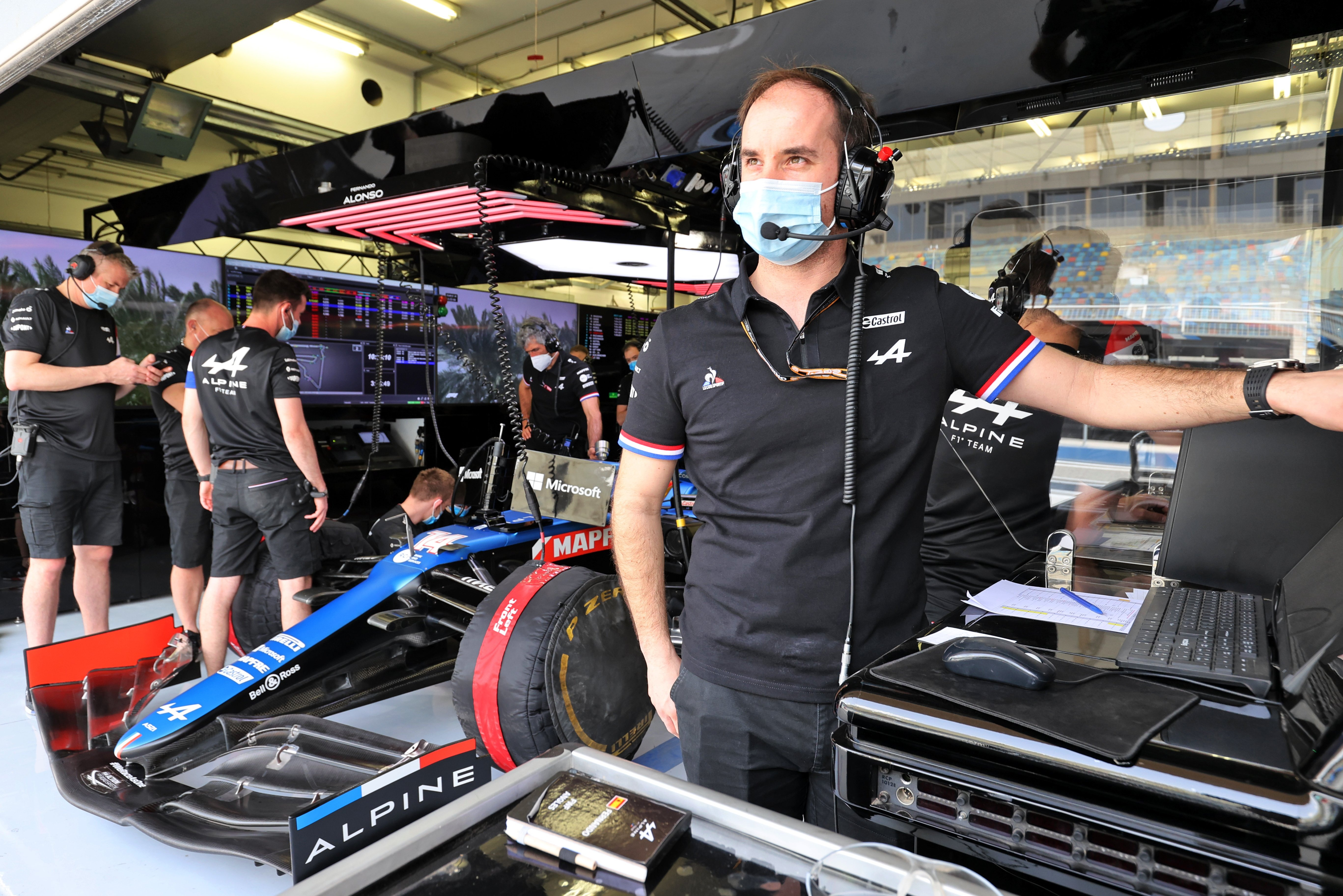
Karel Loos, 2021 Bahrain F1 test
Photo by: Motorsport Images


Mercedes has a Russell-sized problem and it is sharing responsibility

F1 United States GP: Antonelli dominates from pole - but forced to wait for title

Inside COTA's Turn 1 clubhouse and its plans to build a second track

Antonelli pole shows Mercedes is 'finally seeing the results' of car upgrades

F1 United States GP: Antonelli beats Verstappen to pole with Russell only sixth

F1 United States GP: Ferrari completes perfect practice record as Hamilton tops FP3

F1 United States GP: Leclerc pips Antonelli to top FP2 while McLaren struggles

How Antonelli levelled up his character to be F1 2026's world champion-elect

Mercedes has a Russell-sized problem and it is sharing responsibility

Phillips wins inaugural GB4 Winter Series in dramatic circumstances at Snetterton

Rally US host city announced ahead of WRC return

The role Friday practice played in Hamilton failing to achieve a podium at the US GP
Subscribe and access Autosport.com with your ad-blocker.
From Formula 1 to MotoGP we report straight from the paddock because we love our sport, just like you. In order to keep delivering our expert journalism, our website uses advertising. Still, we want to give you the opportunity to enjoy an ad-free and tracker-free website and to continue using your adblocker.


Top Comments