


The 10 steps Ferrari needs to take for the Prancing Horse to be stable
Max Verstappen most likely would have won the 2022 Formula 1 world championship even without Ferrari’s blunders and miscues. The team has much to work on if it’s to mount a challenge in the years ahead

“Max has just been incredible and it’s a title fully deserved. On our side, we’ll try to push for the last four races this season to improve as a team and to hopefully put in more of a challenge next year…”
Charles Leclerc was magnanimous in defeat to Max Verstappen after the Japanese Grand Prix, accepting that his Ferrari squad had ultimately been well beaten in the first season of Formula 1’s new ground-effects era. But he’d already been making similar noises in Singapore the previous week. Leclerc, after taking his ninth and most recent pole of 2022, had said that “it’s a matter of time before Max gets his title”, and so it proved to be. The Monegasque’s mindset had already shifted.
What a turnaround for both Ferrari and Leclerc. After three races and his dominant Melbourne win, he led Verstappen by 46 points, the Dutchman down in sixth place after his second fuel-pump-problem retirement from the opening events. Now Verstappen has his second world title with an unassailable 113-point lead, and four dead-rubber events to come. But, as Leclerc has outlined with the clear party line from Ferrari heading into the season’s run-in, the races in the USA, Mexico, Brazil and Abu Dhabi matter for the red team.
PLUS: Why Verstappen and Leclerc can bust a myth about early F1 coronations
With the F1-75, Ferrari has produced the second-best interpretation of F1’s major rules reset. The points gap to the Red Bull RB18 in the constructors’ championship is also massive – 165 (which means Red Bull can seal that title too this weekend at Austin) – but the pace differences between the two machines over the season so far has been small. It is in operating the car and executing races where Ferrari and its drivers have let themselves down together.
Ferrari deserves huge credit for much of its 2022 campaign. Compared to the two awful fallow years that came before, it did indeed deliver on its promise to get back in the title fight using the opportunity provided by the rule changes.
So, the Italian team is capable of big and impressive change. But more is clearly required. With what Ferrari itself is saying in mind, here are 10 priorities it must address heading into 2023 if it’s to have any chance of toppling Red Bull and perhaps even staving off a resurgent Mercedes.
1. Improve or alter its ground-effect concept

Rivals got a peek at Ferrari's underfloor when Sainz went off in qualifying at Imola
Photo by: Mark Sutton / Motorsport Images
Although their ultimate performance levels are very similar, the Ferrari F1-75 and Red Bull RB18 get their speed in different ways. The former has its deep, sculpted sidepods that produce downforce from air passing over the top. The latter’s distinctive feature is its advanced radiator inlets, with the sidepods heavily undercut to channel air down a passage between these and the floor. The two different concepts were a relief to those who feared that F1’s heavily prescriptive rulebook overhaul for 2022 would result in car designs all looking the same.
But the devil is really in the under-chassis venturi tunnels and the aerodynamics effects of the floor, which one leading team’s designer suggested to Autosport means that while the on-top aero pieces catch the eye, they don’t make enough of a difference compared to nailing the design and set-up underneath.
But Ferrari does appear to have a key decision to make with regards to how its 2023 car looks. Not only will it need the floor and suspension arrangements necessary to cope with the rule changes coming for next year (more on that later), but it may wish to consider the other key strength of the RB18: its low-drag profile.
The Red Bull’s slippery nature comes from this lack of drag compared to the higher-downforce-generating Ferrari and is allied to the potent power punch of the Honda engine. Ferrari is on a par in the power stakes and has better corner-exit driveability to gain through traction. But even with the changes it made to its design to boost its top speed compared to its rival, this has proved to be a key weakness.
On top of that, the F1-75 can be said to be more of a peaky machine – it works best at a handful of high-downforce tracks, where it can best show its corner-speed prowess. The RB18 is a contender wherever, which is a reversal from how Red Bull previously found matters against Mercedes.
Given it was aware of the scale of the challenge to catch Red Bull even as it targeted “to win 10 races from now to the end” – said team principal Mattia Binotto at the French GP – Ferrari acknowledged in Singapore that it had already switched its development attention to building its 2023 challenger.
2. Plan to keep pace with or beat its rivals in the in-season development battle

Ferrari held off on its first major development package until Barcelona, where Leclerc took pole and looked set to win before reliability woes struck
Photo by: Andy Hone / Motorsport Images
Back at the start of this season, Red Bull was churning out a regular string of small updates, while Ferrari waited until May’s Spanish GP before it introduced its first major development package with floor, diffuser and rear wing changes.
There are pros and cons to both methods, with Red Bull’s more aggressive approach catching rivals’ eyes early and causing the first whispered suspicions regarding its cost-cap planning. Yet Ferrari’s strongest passage of the campaign came during these early exchanges, and even now Leclerc is regularly able to beat Verstappen to pole. Its methods are therefore not to be instantly dismissed.
But where Ferrari may reflect on how its 2022 development played out concerns a weakness at Red Bull that it successfully addressed through its more-constant development. This was that the RB18 was considerably heavier at the start of the year than the F1-75, with only Alfa Romeo’s C42 at the minimum weight target back at the Bahrain GP opener. Red Bull successfully addressed this – although it misstepped in places, such as with its DRS malfunctions in Spain.
“It’s very important that we keep improving,” Ferrari sporting director Laurent Mekies said in Singapore. “And that’s what we have been saying all year long. We’ve made a great step this year, but we are perfectly aware that there are more steps to come.”
3. Play the cost-cap game to the max
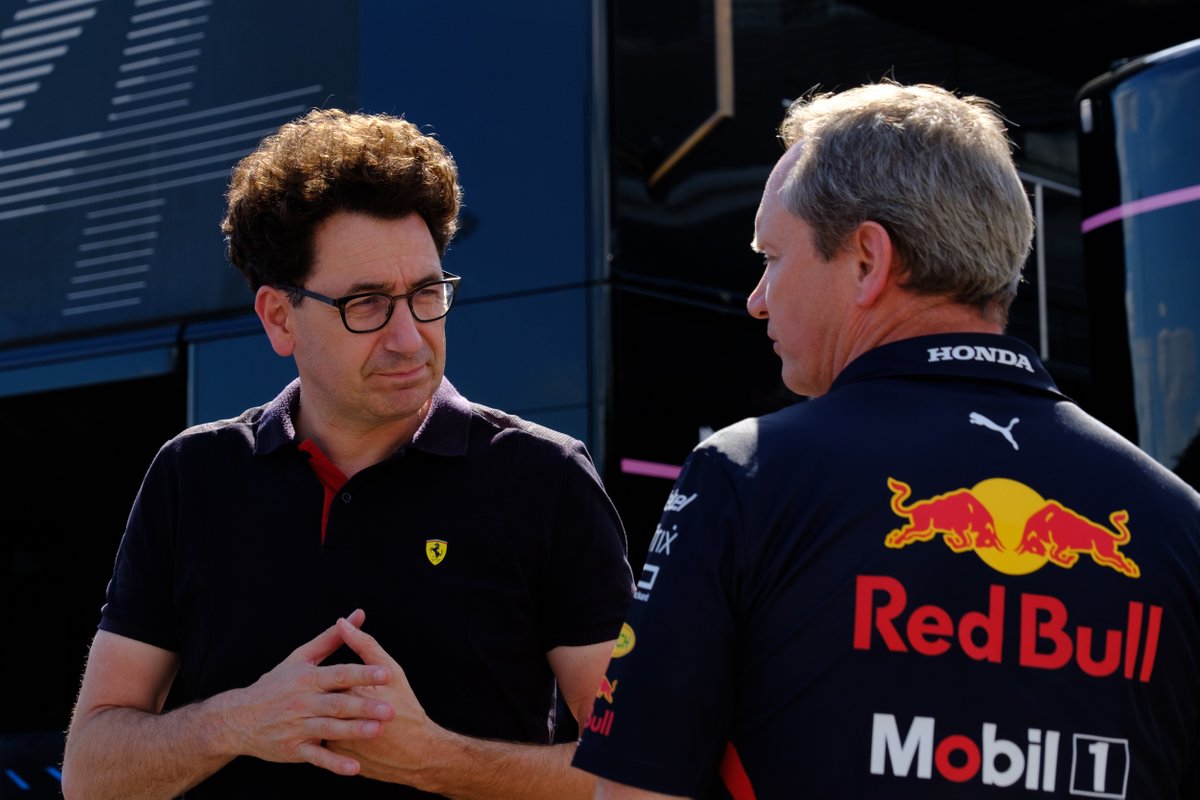
If Red Bull faces a lenient punishment for its non-compliance with the cost cap, then Ferrari should also consider exploiting the rules to keep pace
Photo by: Erik Junius
This point goes together with the need to keep pace in – or lead – the 2023 in-season development battle. But it’s one where we must enter the realm of speculation, paired with an acknowledgement of the facts as they stand in a murky, very F1 affair.
The revelation this month by the FIA’s Cost Cap Administration that Red Bull is “considered to be in procedural and minor overspend breaches of the financial regulations” on the 2021 cost-cap submissions raises serious questions for the flagship financial rule’s future. In turn, what happens next regarding cost-cap policing will determine precisely how car design processes are honed at the biggest teams.
PLUS: The one thing that can't be sacrificed amid Red Bull’s F1 overspend controversy
Although the ‘minor’ breach tag suggests at this stage that no serious cost-cap fraud has been committed by Red Bull, Ferrari and others are pushing for any indiscretion in this area to be harshly punished. It’s important to stress at this point that Red Bull believes its submission was within the rules and that what the FIA has found concerns something it did not expect to be covered.
It isn’t yet known exactly how much Red Bull may have overspent in 2021, but to fall into the ‘minor’ territory it can only be a maximum overspend of $7.25million (5% of the $145m 2021 limit). It’s possible that indiscretion is thought to involve figures below this, but that is important for all the teams when it comes to considering what punishment may eventually be handed out. This is because of what an extra $7m for car development could buy.
“Five million is about half a second, even one or two million is about one or two tenths, which is about from being second on the grid or being on pole and maybe having the fastest car,” Binotto said after the Japanese GP. “Obviously it’s about 2021, [but] 2021 is an advantage you gain over the following seasons.”
Although much of this is hypothetical thinking at the time of writing, if Red Bull (or any team in the future) is found to have definitely breached the cost cap and the punishment for doing so isn’t massive, then the lesson will be: ‘the actual cost cap is higher’. Taking a putative slap-on-the-wrists fine guess at $5m, then that’s ‘a year’s cost cap + 5% + fine’.
To make the gains Binotto outlines would surely be worth it for teams that can afford to spend it, of which Ferrari is one (and Red Bull and Mercedes are the others). This is cold F1 logic flying in the face of morality, and this isn’t to say that any of those teams actually would take such an approach, but such is the relentlessly pragmatic nature of this game that they wouldn’t be doing their jobs in not at least considering it.
4. Improve reliability to avoid giving rivals free points

The question of whether Leclerc could have beaten Verstappen in Baku can never be answered due to another Ferrari engine issue
Photo by: Glenn Dunbar / Motorsport Images
Leaving Melbourne back in April, Red Bull was the team with the reliability problem. But, just as it did with the RB18’s weight problem and the understeer that Verstappen hates, it implemented a fix. Only engine supplier Honda’s recommendation to take new internal combustion powerplants to avoid overstressing the existing pool has subsequently forced Red Bull to take engine-change grid drops in Belgium and Italy.
Ferrari has suffered badly in this area. Starting from Leclerc’s Spain engine failure while leading, he then also retired with power gremlins in Baku and had to take a grid drop in Canada. And don’t forget his dominant Austrian GP victory was imperilled by his sticking throttle, while in the same race Carlos Sainz’s engine blew up badly. The Spaniard was already out with a hydraulics issue in Baku by the time his team-mate retired there.
Since the Austrian race in July, Ferrari’s reliability has improved, although it’s hard to know exactly how hard the engines are now being pushed in a contest the team knew was already over – the suggestion is that the Baku failures were about trying to squeeze every bit of power performance to keep up with the Red Bull’s straightline advantage.
Ferrari cannot afford to give points away to rivals in this regard come 2023. But in fact, since Austria, Ferrari’s only retirements have come from its drivers crashing out.
5. Leclerc and Sainz must stop crashing
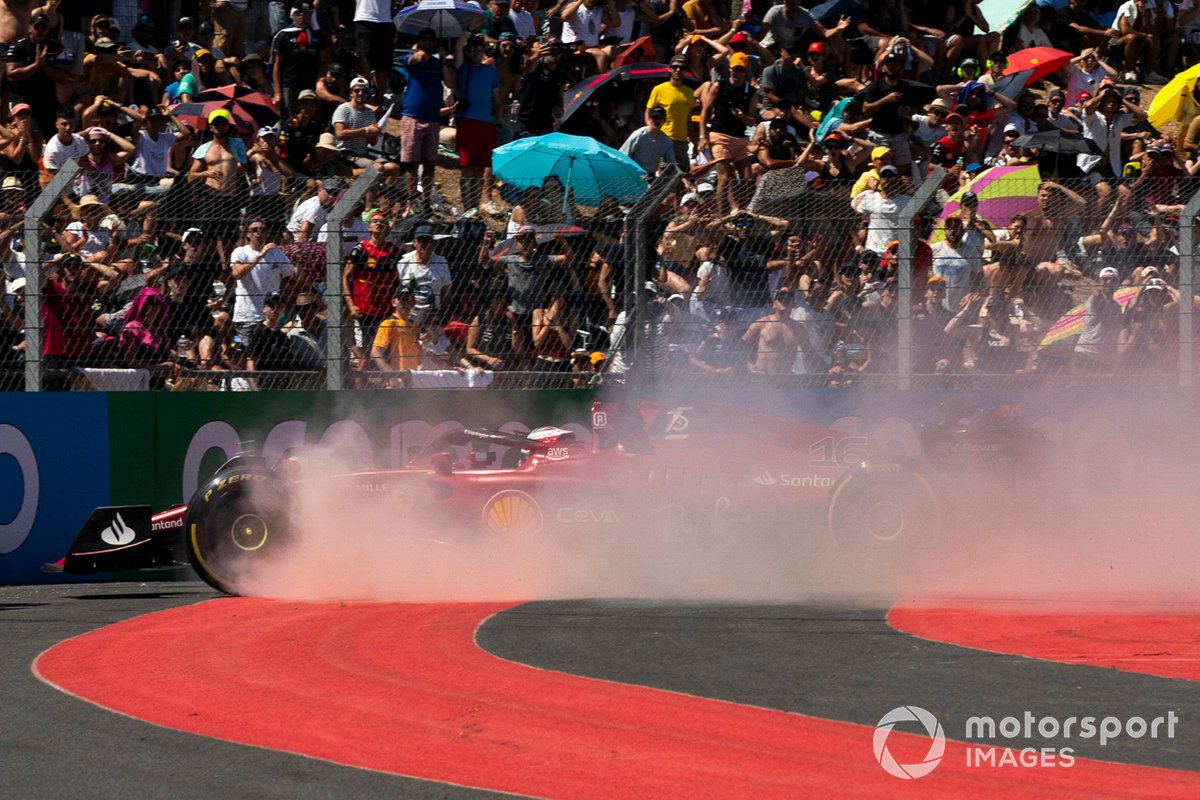
Ferrari's drivers need to cut out the mistakes that leave them on the back foot - Leclerc's French GP crash was especially costly
Photo by: Carl Bingham / Motorsport Images
Ferrari’s two stars can’t be blamed for their machinery letting them down at key moments this year, but it’s also true that they have gifted Verstappen and Red Bull points with their own blunders. If Leclerc and Sainz want to be F1 champions, they must cut this out.
Sainz’s crashes were the initial problem – he threw himself off the road in Melbourne during a weekend that had got away from him as he struggled to adapt to the F1-75’s rear-end instability (a notable feature of the new car designs). Then he crashed in qualifying at Imola, where Leclerc’s off late in the Emilia Romagna GP while chasing Sergio Perez converted third position into sixth.
That was almost understandable in that Leclerc was chasing an eminently possible better result against Red Bull’s weaker driver – knowing he had to land what blows he could against an established super-squad. His Paul Ricard crash was something much worse, but at the same time we must acknowledge that he was pushing on against a faster car. But it was a bad error and, looking back, must be considered as the moment the title truly got away.
Sainz’s Suzuka crash is Ferrari’s most recent unforced error. It was understandable in the tricky wet conditions, but none of his peers ended up in the barriers at that point in the same circumstances. Much later on, Leclerc’s off at the chicane ultimately sealed Verstappen’s title, but again he was pushing on trying to keep what is by now a much faster race car at bay.
6. Historical tyre management weakness must finally be cured

Leclerc was unable to challenge Verstappen after the start at Suzuka as his tyres once again overheated, a problem that Ferrari needs to address in 2023
Photo by: Sam Bloxham / Motorsport Images
Binotto said that Leclerc’s recent defeat at Suzuka came down to “pushing too much on the very first laps – we simply destroyed the front tyres, in a way that it was not possible to recover”. He ate through his intermediates just like in Singapore, where Leclerc’s charge after the second safety car restart was thrilling – if very ‘do or die’.
Once Perez had got his slicks up to temperature at Marina Bay, he drove away. This continued the pattern of Ferrari’s race pace in dry conditions falling away from Red Bull’s, a phenomenon that had really begun in Hungary at the end of July.
There, Ferrari was exposed in the cooler conditions on Saturday and Sunday, which meant it struggled to warm up its tyres in qualifying, and then had the same issue on the hard-compound Pirelli in the race. That cost Leclerc badly to the charging Verstappen on what really should have been firm Ferrari hunting ground, given the track’s high-downforce nature.
Ferrari has also struggled with front-tyre graining limitations at certain tracks. But since beating Verstappen comfortably on tyre management in Austria, which has turned out to be an outlier along the same lines as Melbourne, Ferrari’s rear-tyre overheating has also been its undoing.
In short, even if Leclerc can beat Verstappen to pole – ideally avoiding late Q3 errors such as at Zandvoort and Suzuka to edge the Dutchman – Red Bull’s stronger long-run pace and tyre-degradation levels make the races little contest. Verstappen is the master of tyre management, but Ferrari also has a historical weakness (think the 2021 French GP) that it will need to address for 2023.
7. Strategy shambles must not recur
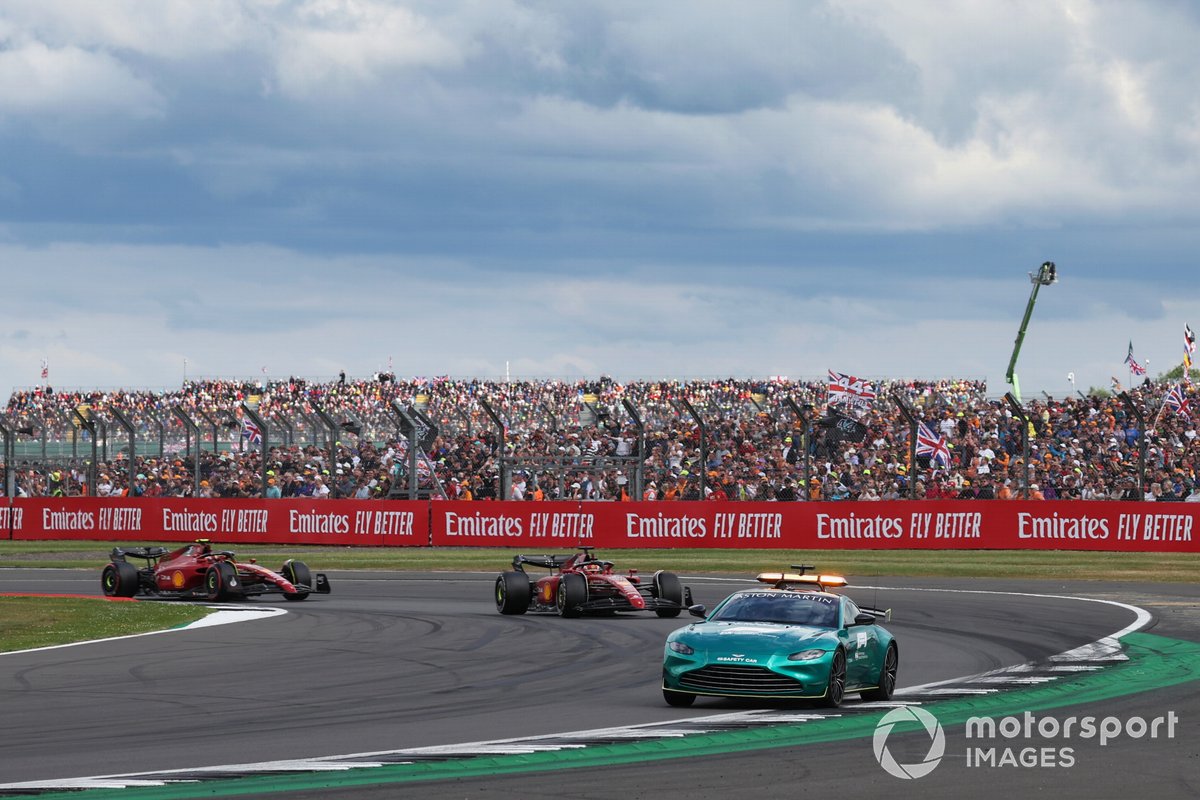
Leaving Leclerc out on hard tyres at Silverstone left him vulnerable to attack in the closing laps
Photo by: Glenn Dunbar / Motorsport Images
“We need to focus on ourselves,” Leclerc said in Japan, “try to execute Sunday well. Because performance is not what we lacked this year.”
The 25-year-old is famously self-critical, so he will be all too aware of how his own errors contributed to Ferrari’s stunning post-Melbourne downfall. But he has also borne the brunt of its strategy shambles gifting Verstappen yet more points.
Monaco (where it must be said that Leclerc would have been better served by taking control of his own destiny on the full wets/slicks switch, as Sainz did), the Silverstone safety car call, the hard-tyre choice in Hungary. These were Ferrari’s high-profile strategy gaffes. It wasn’t alone – look at Red Bull’s error in underfuelling Verstappen’s car for Q3 in Singapore.
But those Ferrari tactical mistakes all came in under-pressure race situations and at the stage of the season where reliability and crashes were also biting. Red Bull has proved to be much more nimble and decisive in its thinking on race strategy, with its drivers’ advice to avoid the hard tyres in Hungary well-heeded.
In terms of its strategy, if the personnel were not the problem (as Binotto insisted back then), then Ferrari’s operations and data-crunching were off. It has involved its drivers in strategy choices more visibly since the autumn began, and there has been a notable uptick in its calls paying off. It’s just that Red Bull has been untouchable whatever Ferrari has done, such as with its alternative two-stopper gambit for Leclerc at Monza. It also got its towing tactics in Paul Ricard qualifying spot on.
At the same time, we can see with hindsight that only the safety car stopped Mercedes’ one-stopper kicking Leclerc off the Zandvoort podium, while the tyre warm-up struggles for all drivers in Singapore meant that stopping after Perez likely would have been the better approach for Ferrari once it had lost the start, since there track position was critical.
All this is what Leclerc means by executing better on race days; it’s something that Ferrari can’t afford to get wrong so often.
8. Back a number one earlier and fully

Leclerc and Sainz scrapped hard in the Austria sprint, robbing Leclerc of a chance to challenge Verstappen
Photo by: Zak Mauger / Motorsport Images
Although the lower fuel levels required for the Red Bull Ring would mask the uphill task suddenly facing the home team in tyre degradation, the Austrian GP sprint race featured an intra-Ferrari battle that cost Leclerc ground against his rival up-front.
This was just a week on from Ferrari dithering badly over team orders at Silverstone, where Sainz led from pole after Leclerc had spun in the wet qualifying. That was also a day where Verstappen suffered misfortune in picking up AlphaTauri debris in his floor, and so Ferrari should have been maximising its gain.
Sainz still won the British GP after Ferrari’s decision not to pit Leclerc when it had time to under the late safety car backfired, but the Spaniard was further behind in the championship fight at that stage thanks to his early-season crashes. He has shown he is worthy of a place with Ferrari (see panel, left), but Leclerc has had the edge on qualifying pace and race execution overall.
Red Bull has no hesitation in requiring Perez to move over for Verstappen when needed – as he did in Spain and Azerbaijan. This is a bold but valuable pragmatic approach that Ferrari must at least consider for the future – as it most famously did in previous, successful, F1 eras.
9. Avoid pitstop mistakes and take on Red Bull’s service supremacy

Sainz had a troubled stop at Zandvoort, not for the first time this year
Photo by: Andy Hone / Motorsport Images
Pitstops have been another issue in 2022. They are the visual representation of several themes already covered – such as the strategy shambles in Monaco playing out when Leclerc arrived for a double-stack pitstop that Ferrari had tried to cancel at the last second, or his own error in sliding past his pitbox when he arrived to take slicks in Singapore.
At Zandvoort, Ferrari’s pitcrew was in the spotlight after Sainz was forced to wait for his full set of tyres to be brought out, which the team later revealed was down to it calling the stop too late for the mechanics to be ready. A Ferrari pit gun was also left in Perez’s path at that stop, while Sainz copped an unsafe-release penalty later in the same race, although he was braking to avoid a McLaren mechanic in F1’s shortest pitlane.
But there have been several other instances, such as in Hungary, where Sainz in particular has lost out to slow tyre changes. In this respect Red Bull gains significantly, since it is regularly among the quickest and slickest stops, so Ferrari could make an important step if it can front up to its rival in 2023.
10. Nail the floor changes aimed at eliminating porpoising

Floor changes coming for 2023 offer another potential opportunity for Ferrari to gain ground on its rivals
Photo by: Lionel Ng / Motorsport Images
For 2023, floors will be required to be 15mm higher, in addition to edges being stiffened and diffuser designs tweaked. This is part of the FIA’s solution to eliminate the porpoising problem that plagued the championship at the start of its new era.
The teams were always going to get the bouncing under control, but the time it took to do so exposed the drivers to unsafe conditions and risked injury, which the FIA hopes the 2023 changes will fully address. This will go alongside the requirement for a stiffer underfloor plank and skids introduced in the controversial summer technical directive that finally came into force at Spa in late August. Red Bull has barely been troubled by porpoising, while the Ferraris were still suffering from it to a near-comical degree deep into the season. Unlike Mercedes, this wasn’t at the cost of performance.
Ferrari insists that there were not “any specific impacts on our team”, according to Mekies, regarding the Spa directive after the team had made the changes to remain within the new requirements. But there are suggestions to the contrary, with Ferrari’s race pace notably suffering from Hungary onwards – right when it would have been preparing for the Spa alterations.
Either way, getting the new floor rules right could provide Ferrari with the boost it needs to get back on terms and edge ahead of Red Bull next year. Remember, that’s exactly what Verstappen’s squad did against Mercedes in 2021…
That potential, of course, adds pressure, but Ferrari has soaked this up throughout 2022. Now it needs to show that it can make the changes required to step forward again. This is all while Binotto and co must continue with the progress on team culture they have made since 2018.
The worst thing for Ferrari would be to convert its 2022 humbling into a culture of fear, so remembering its high points from this year and building from those foundations will be critical to grabbing future and lasting success.
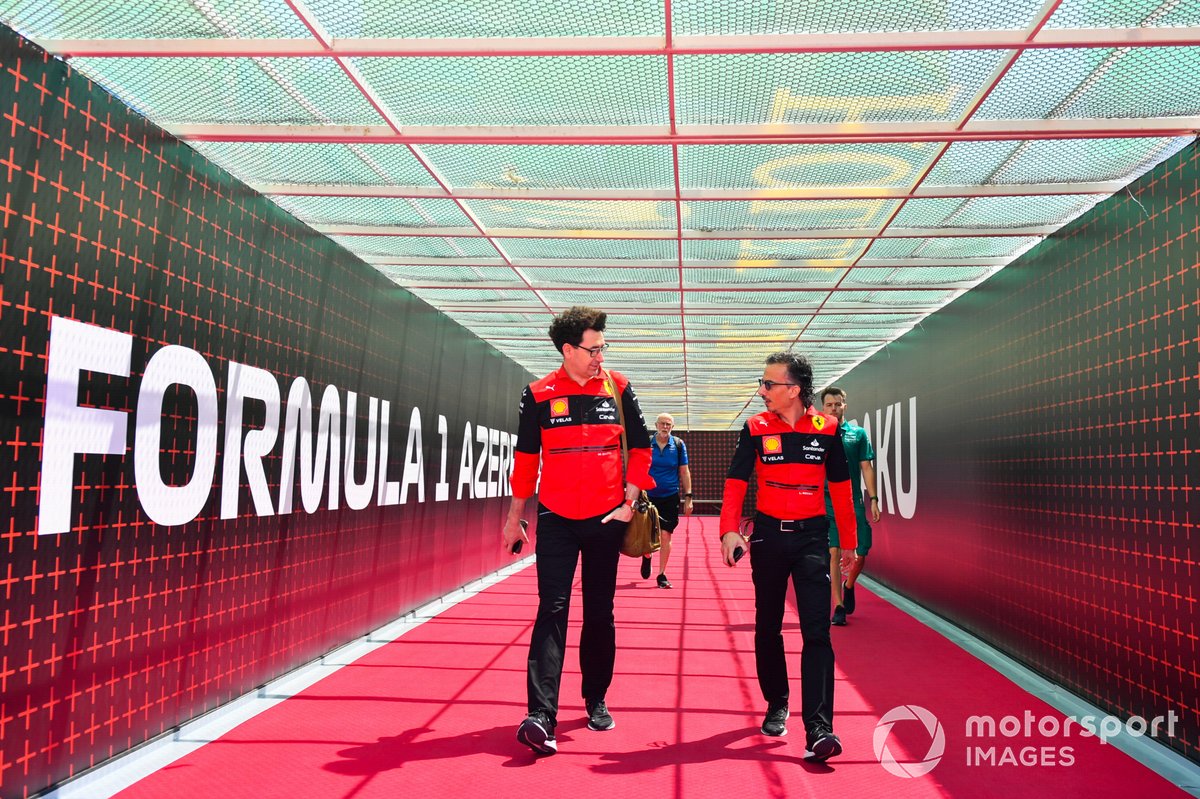
Ferrari must use this year as a launching pad for further success, rather than develop a fear of making mistakes
Photo by: Simon Galloway / Motorsport Images


Why Britain’s role in Formula 1 endured a troubled start

Why Bottas believes his F1 reserve driver role is the fastest route back to a race seat

Why Norris is now ready for his final exam

The key advantage for Bottas vs Perez in the 2026 F1 return race

Why Ferrari's management is under pressure after its bad start to F1 2025, not Hamilton or Leclerc

Why Red Bull can’t solve its second F1 car problem with a simple paint job

Hirakawa replaces Doohan at Alpine for Japanese GP FP1 outing

How Alonso and Bortoleto can be F1 rivals in a unique driver management deal

Pryce pips McRae in final stage showdown to win British Rally Championship

Dakar Rally moves 2027 event out of Saudi Arabia; new location to be announced

How both Verstappen and Antonelli were “surprised” in United States GP qualifying

Inside COTA's Turn 1 clubhouse and its plans to build a second track
Subscribe and access Autosport.com with your ad-blocker.
From Formula 1 to MotoGP we report straight from the paddock because we love our sport, just like you. In order to keep delivering our expert journalism, our website uses advertising. Still, we want to give you the opportunity to enjoy an ad-free and tracker-free website and to continue using your adblocker.


Top Comments