


Visionary engineer and technical journalist Peter Wright dies aged 79
Peter Wright was a pioneer of ground-effect aerodynamics and active suspension in F1, and played a significant role in implementing better safety in sport and the automotive industry


Mario Andretti, Peter Wright and Colin Chapman
Visionary British engineer and technical journalist Peter Wright has died at the age of 79.
Wright exercised a quiet but profound influence on the world of motor racing, far beyond the innovation with which he is chiefly associated, ground-effect aerodynamics. After graduating from Trinity College, Cambridge, in 1967 with a degree in mechanical engineering, he secured is first job in motorsport with BRM, and the patronage of Tony Rudd.
It was there where he essayed his first experiments with using a car's bodywork to generate downforce rather than wings. Understanding of aerodynamics was primitive at the time and the aerofoils attached to F1 cars were typically crude. But the ‘wing car' was cancelled when John Surtees, BRM's recently recruited lead driver, discovered the secret project and angrily demanded that it be cancelled, on the grounds that it was diluting resource that would be better applied to the team's current and lamentably uncompetitive machinery.
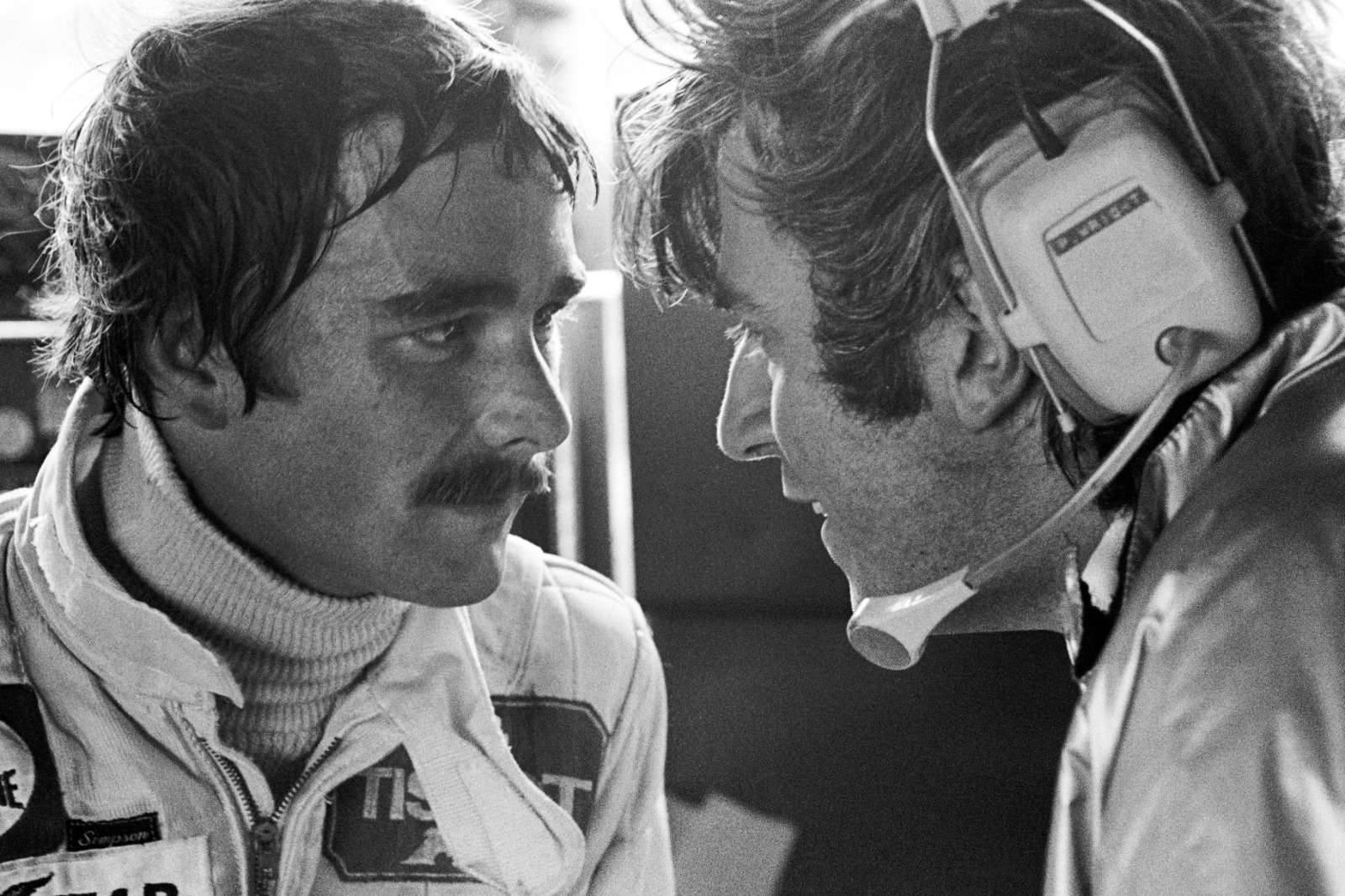
Wright with Nigel Mansell at Lotus
Rudd and Wright paid the political toll for BRM's struggles and moved on in 1969 to Huntingdon-based Specialised Mouldings, the subcontractor that made fibreglass bodies and panels for racing cars. There, Wright was responsible for setting up the company's wind tunnel, large enough to take 1:4 scale models. A decade later, Williams would buy it and a young Ross Brawn modified it to accommodate a rolling road.
Wright was credited with designing the inverted-wing sidepods for the March 701, though these never generated the intended downforce. Understanding the reason for this would be Wright's big breakthrough after he and Rudd moved to Lotus, initially to the Technocraft composites subsidiary, latterly to the Team Lotus HQ in Hethel.
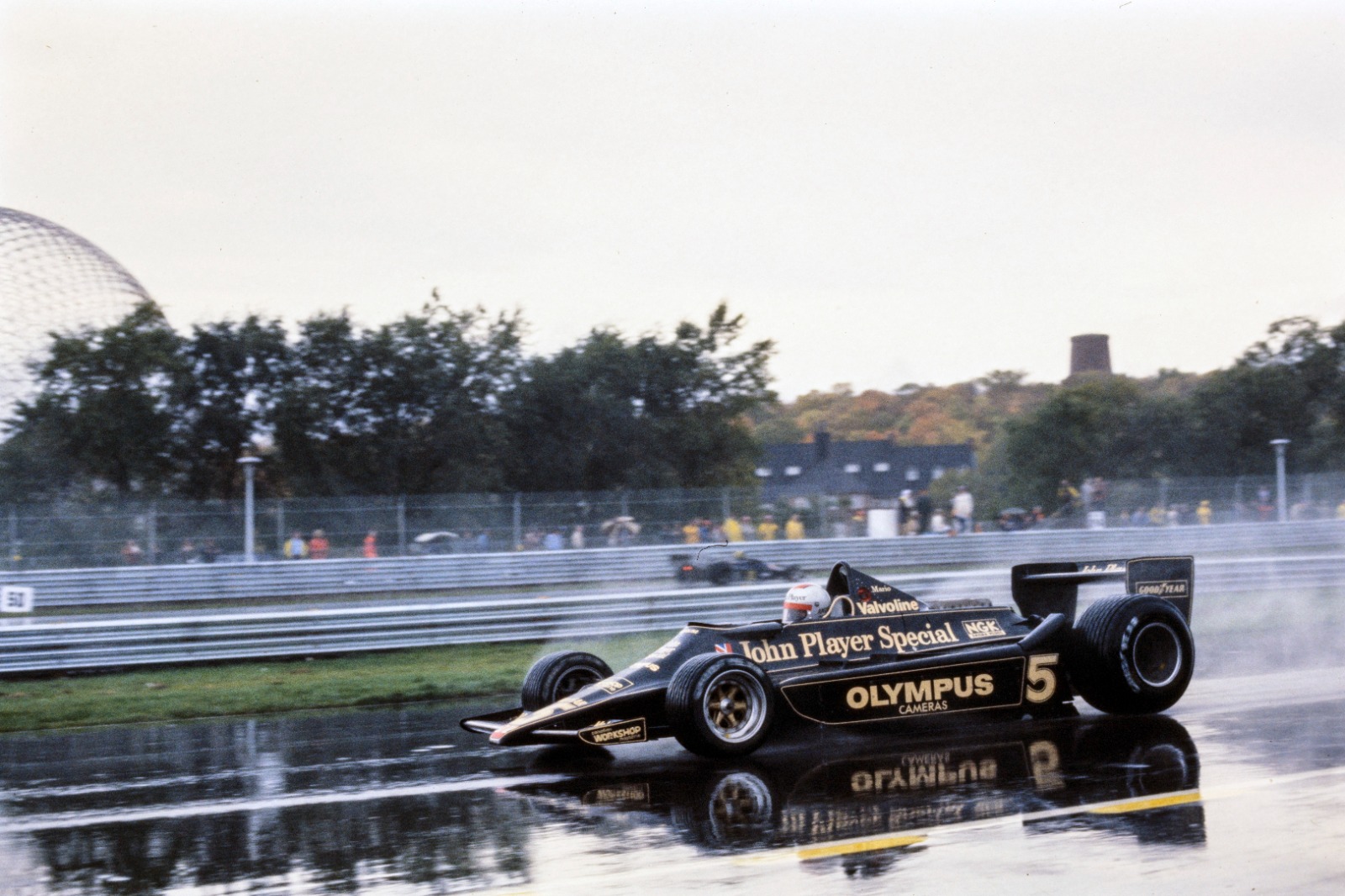
Mario Andretti in the Lotus 79
While experimenting in the Imperial College wind tunnel, Wright realised that the key to using underbody airflow to generate negative pressure was to seal the floor edges, preventing the ingress of outside air from each side. From here he worked with the Lotus engineering team to create the 78, which won five grands prix in 1977, and the 79, with which Mario Andretti won the 1978 world championship.
During this campaign he became the first engineer to fit a data logging system to an F1 car, a bespoke device based on equivalent systems used in aircraft.
Wright eventually moved on to the Lotus Engineering subsidiary, where he worked on the first active suspension systems to appear in Formula 1, in 1983. Here, a data logging system played a part in directing a car's dynamics for the first time.
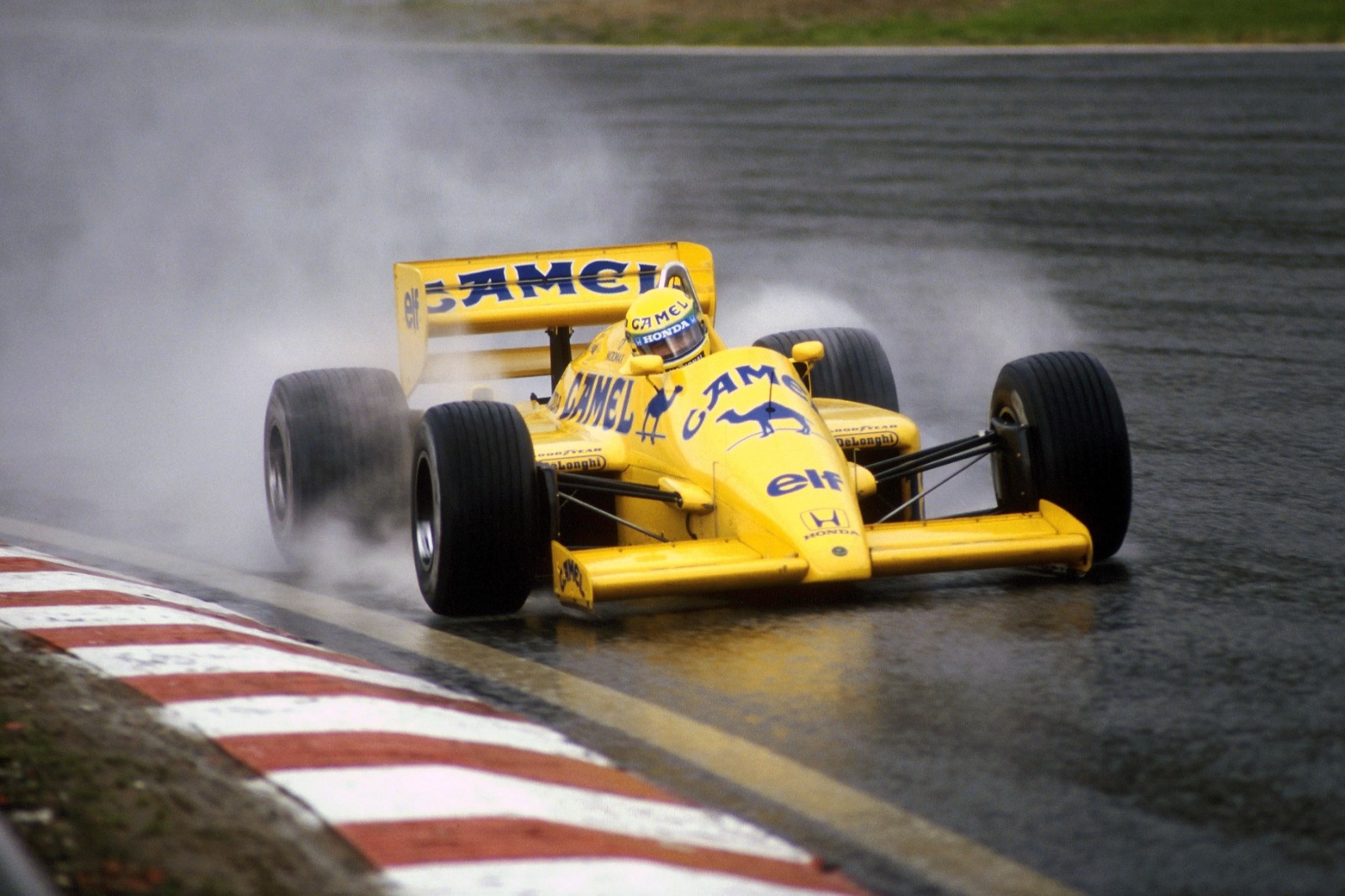
Ayrton Senna in the actively suspended Lotus 99T
The relative crudeness of the system led to it being ‘parked' for onward development until its return in 1987, on the 99T F1 car, in which Ayrton Senna won consecutive rounds in Monaco and Detroit. By now Lotus's system was well advanced and fully active, unlike the reactive suspension Williams would later employ. The principal advantage of the Lotus technology was that it enabled the tyres to sustain peak performance for longer: in Detroit, Senna didn't have to visit the pits, and still set fastest lap after Nigel Mansell pitted for fresh rubber in his Williams.
When Team Lotus ran into financial difficulties at the end of the decade, Wright helped team manager Peter Collins keep the team afloat and acted as technical director until the great name faded from the grand prix firmament in 1994.

Collins (right) helped Team Lotus survive into the 1990s
FIA president Max Mosley then approached Wright to act as a consultant for the various safety measures being implemented in the wake of Senna's death at Imola that year. Mosley's belief was that safety had been dealt with on an ad hoc basis for too long and that proper engineering rigour needed to be exercised.
"Until then," Mosley wrote in his autobiography, "a failure to apply basic science and scientific methods systematically had been a fundamental problem."
Working with the likes of professor Sid Watkins, Wright played a key role in formulating new crash-testing methodologies – both in racing and the wider automotive industry – and trackside safety precautions, as well as the adoption of the HANS tethers and the halo. He was involved in a programme to develop fuel-efficient engine technologies and energy-recovery systems a decade before the hybrid formula was introduced in 2014.
In parallel, Wright also found great pleasure in explaining complex engineering theories to a mainstream audience via his technical journalism. Away from the world of motor racing he had a passion for both powered and unpowered flight.
Recently he published a fascinating memoir entitled How Did I Get Here?
Share Or Save This Story


Italy’s next F1 world champion?

Why Norris doesn’t buy Russell’s driving style theory

How Antonelli is proving unbeatable, even when he's beaten

Acosta's long road to his maiden MotoGP win

MotoGP Austrian GP: Acosta finally claims maiden win

Great debate: Which circuit should host the F1 2026 finale if the calendar has to change?

Live: MotoGP Austrian Grand Prix updates as it happens
Subscribe and access Autosport.com with your ad-blocker.
From Formula 1 to MotoGP we report straight from the paddock because we love our sport, just like you. In order to keep delivering our expert journalism, our website uses advertising. Still, we want to give you the opportunity to enjoy an ad-free and tracker-free website and to continue using your adblocker.


Top Comments