


Why grounded Mercedes isn’t worried about ‘camouflage’ games
Mercedes has been the team to beat in Formula 1 since 2014 – but it’s taking no chances this season in the face of a renewed challenge from Red Bull, says STUART CODLING
Seven wins into a record-breaking sweep of consecutive world championships, Mercedes’ biggest problem is that it makes such brilliance seem easy and effortless, even on its occasional off-days. But that excellence comes at a cost: last season’s title double might have appeared straightforward but it was bought painfully.
Wary of a resurgent Ferrari, Merc’s engineers pushed harder than ever, taking risks both with the W11 chassis and its new power unit. Team principal Toto Wolff said it had pushed many of them to breaking point, or even beyond. As the season panned out, flattered by Ferrari and Red Bull proving weaker than expected, Mercedes enjoyed a surprisingly healthy competitive margin. But it isn’t allowing itself to be lulled into complacency, even though F1’s austerity measures dictate that the ‘new’ W12 is essentially a B-spec version of its predecessor.
PLUS: How Mercedes ambition produced the fastest F1 car ever
“You don’t want to fall into the trap of saying, ‘This is a ‘B’ car and it’s just carry-over,’” Wolff tells GP Racing. “In Formula 1 the tiniest bit of advantage can decide the season result. And the bit that was cut out on the floor has had quite an effect – you need to think if you cut the part out, that is X percent of downforce, that’s going to be the same for everybody. So your whole baseline drops.
“And then how much of that can you recover through the various solutions and innovations you can come up with? There are many unknowns. So we still have the mindset that we’re entering another season with zero points. We know we have a capable team and we’ve had past successes, but that isn’t any guarantee for this success to continue.”
The mantra of starting from zero is an important one. Some of the most successful coaches in football and rugby speak of the need to approach the second half of a game as if the score is nil-nil, regardless of what’s actually on the board. And if the restrictions on technical development make this F1 season in some ways a ‘second half’ of 2020, at least so far as the cars are concerned, some uncertainty lingers over how each team will specifically be affected by the measures taken to reduce downforce.
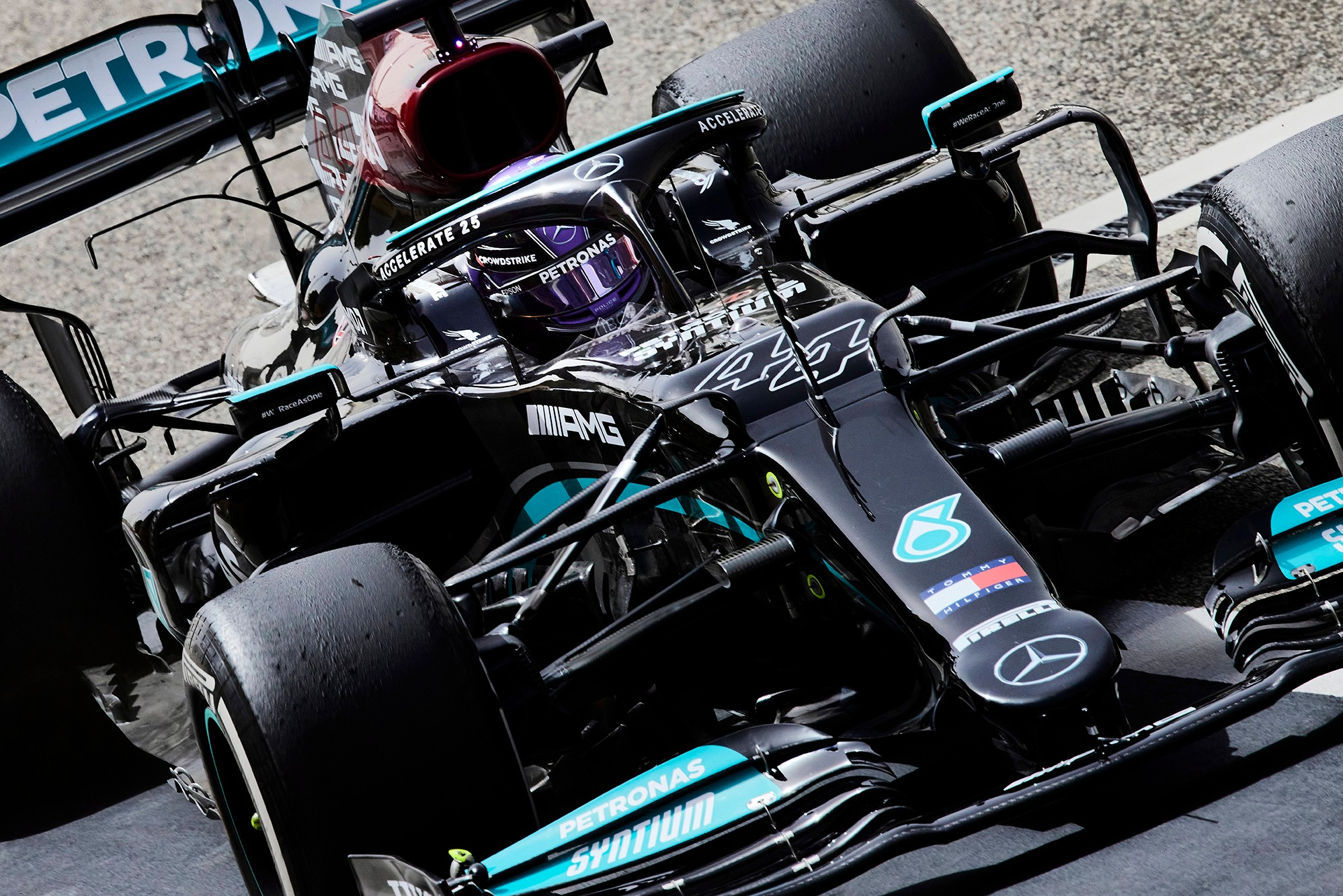
Mercedes W12 in testing
Photo by: GP Racing
Targeted at the rear of the car, the restrictions on diffuser fences and brake winglets, together with simpler and smaller floors, may not have affected each car equally given the variations in aerodynamic philosophy up and down the field. Ferrari in particular was already struggling with chronic rear-end instability brought on by a lack of consistent downforce in that area; it’s had to go beyond the scope of ‘free’ aerodynamic development and spend ‘tokens’ on redesigning the rear suspension.
Red Bull took most of last season to understand fundamental flaws in its car concept and the correlation between windtunnel data and real-world performance. While the majority of the issues were concentrated around the performance of the front end, F1 aerodynamics work as a complete system and Red Bull’s new understanding will influence its thinking all the way across the car.
Of all the teams it was the most cagey before testing began, darkening out the floor and rear suspension in early shots of the RB16B (Mercedes also played games, allowing the camera to play all over its car at launch before technical director James Allison casually mentioned that it was essentially a mock-up).
"It’s still a game of camouflage where some teams tend to hide a lot, and probably confuse themselves even more. There is a kind of first indication or assessment of where everybody stands, but as they say, once the flag drops the bullshit stops" Toto Wolff
“I think all the chatter before you go testing is just noise,” says Wolff. “And you can listen to it and be entertained. But we don’t pay any attention to it. And in testing, it’s a step into the real racing because you can analyse what you’re seeing on track.
“But it’s still a game of camouflage where some teams tend to hide a lot, and probably confuse themselves even more. There is a kind of first indication or assessment of where everybody stands, but as they say, once the flag drops the bullshit stops.
“If we showed everything, the competition would have the opportunity to look at it, evaluate it, maybe even calculate it in CFD and get a result that would allow them to show up at the first, second or third race with this update… we can’t afford to be exhibitionist so early.”
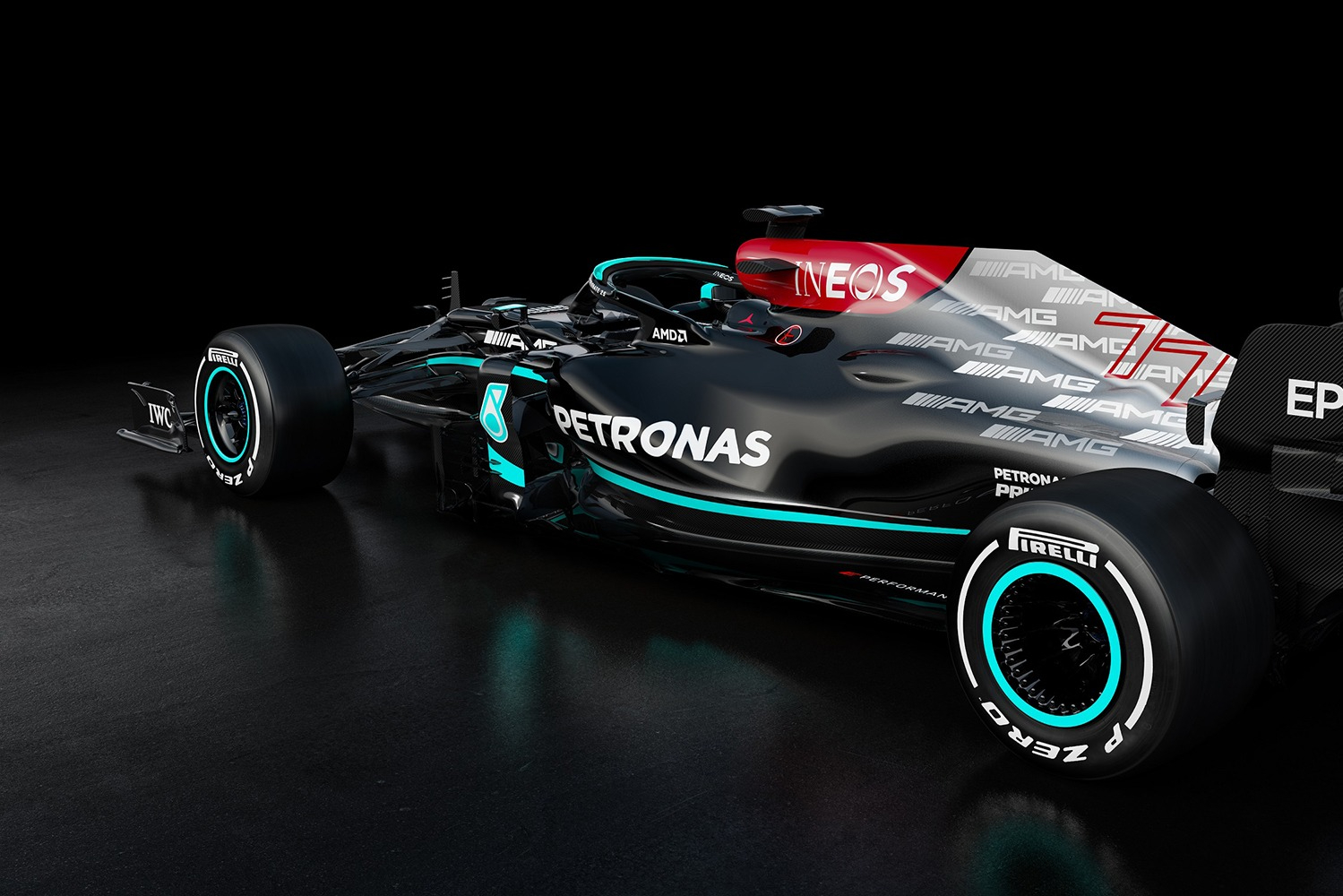
Mercedes W12
Photo by: Mercedes/GP Racing
One of the key innovations on last year’s W11 was its narrow-wishbone rear suspension design, something which freed up a lot of room for aerodynamic development but was difficult to implement and had an impact on gearbox reliability at the beginning of the season. Others are now copying this, and it’s difficult to judge how much of an effect the new restrictions have had on the concept.
This is another good reason for secrecy: Wolff speaks of an accumulation of “marginal gains” in this area, small elements adding up to tenths of a second rather than single design features creating big gains by themselves. As ever, the balance sheet will be revealed when all the cars run in anger at the first race of the year.
There are doubts, too, about the mindset of the reigning champion. By his own admission, Lewis Hamilton expended much energy fighting on several fronts last year, dovetailing his title defence with a vigorous campaign for social justice. He then contracted COVID-19 after putting the title beyond reach, missed the penultimate round of the year, then returned for the final race weekend but looked palpably out of sorts throughout. And despite protestations to the contrary from all parties to the negotiations, settling his contract for this season took longer than expected and required fundamental compromises all round.
PLUS: The key answers on Hamilton's new Mercedes deal
Wolff scotches any doubts about Hamilton’s motivation, or indeed the whole Mercedes organisation’s desire to wring itself dry in the fight at the sharp end. And if Hamilton elects to continue beyond this season, that decision will come sooner rather than later – there will be no waiting until the world championship is in the bag this time around.
“I think there’s a good chance Lewis will want to continue,” says Wolff. “Because he enjoys driving and he’s embedded in the team, and that motivation is still there. But of course that can change during the season. He just wants to keep that flexibility.
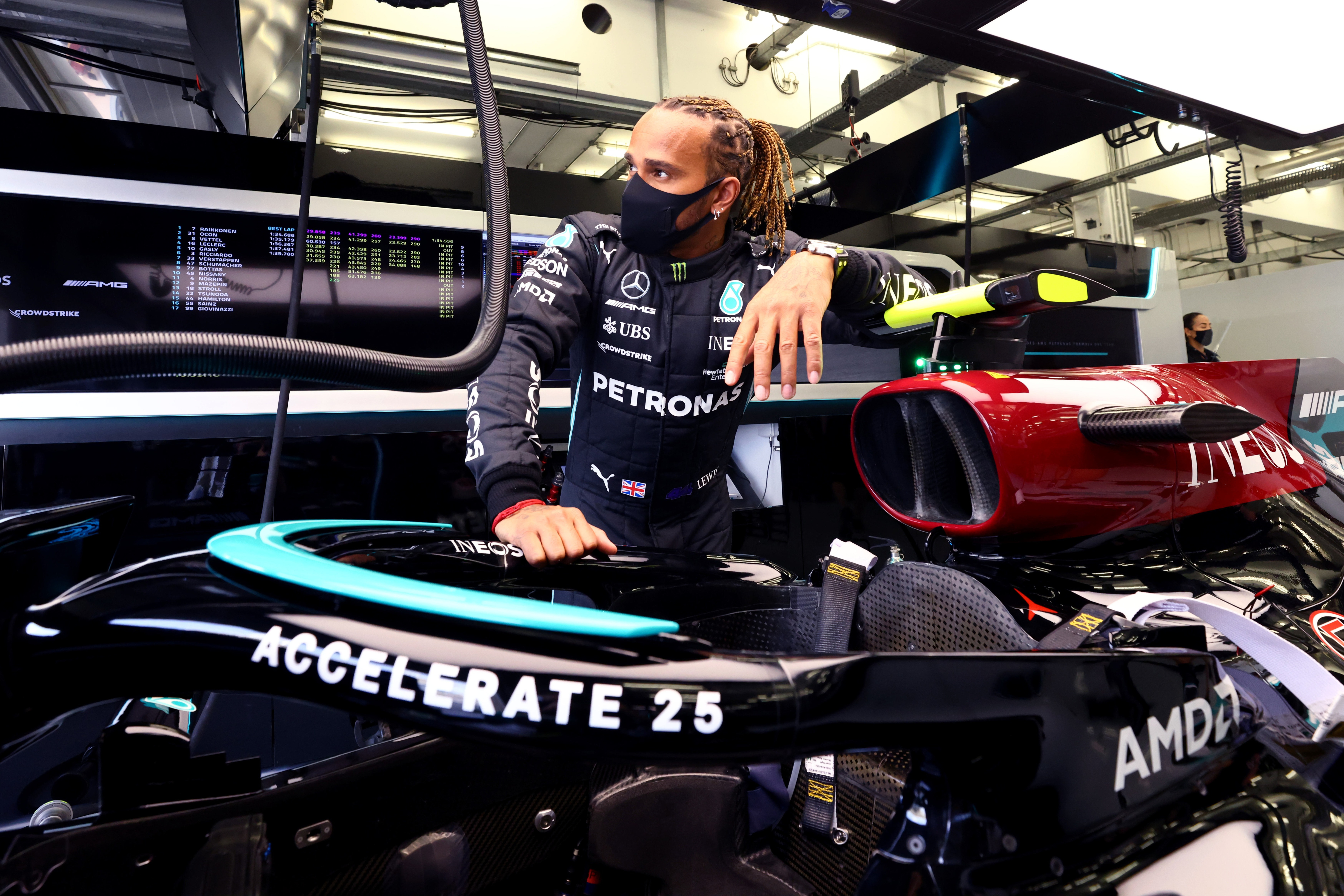
Lewis Hamilton, Bahrain F1 test 2021
Photo by: Motorsport Images
“Nevertheless, we’ve decided to start talking to each other relatively early, very soon in fact, to find out what we mutually envision for the future. He on the one hand and we on the other hand as a team.
"I think it’s fair enough for a driver who has won seven championships to give himself the flexibility in his mind to decide what he wants to do in the future, whether this is racing or outside the circus" Toto Wolff
“Times change. New priorities for all of us in terms of the way we live. He [Lewis] is very passionate about his initiatives against racism and inequality.
“And then we have this massive regulatory change in 2022, but I don’t think this plays a role. I think it’s fair enough for a driver who has won seven championships to give himself the flexibility in his mind to decide what he wants to do in the future, whether this is racing or outside the circus.”
What’s most significant about this latest round of contract negotiations is that Hamilton was no longer in the proverbial driving seat, or at least was unable to name his terms to the extent he has in previous years. He’s a man who very much wears his heart on his sleeve, so it will soon become very clear – once again, around the time the flag drops – how determined he is to rack up title number eight.
PLUS: 10 things we learned from F1 testing 2021
Regardless of whether Mercedes has delivered the technical goods once again, can it ensure its key human asset remains on the competitive boil – or perhaps finds yet another higher level – even as they circle the negotiation table once again to thrash out a future beyond this season?
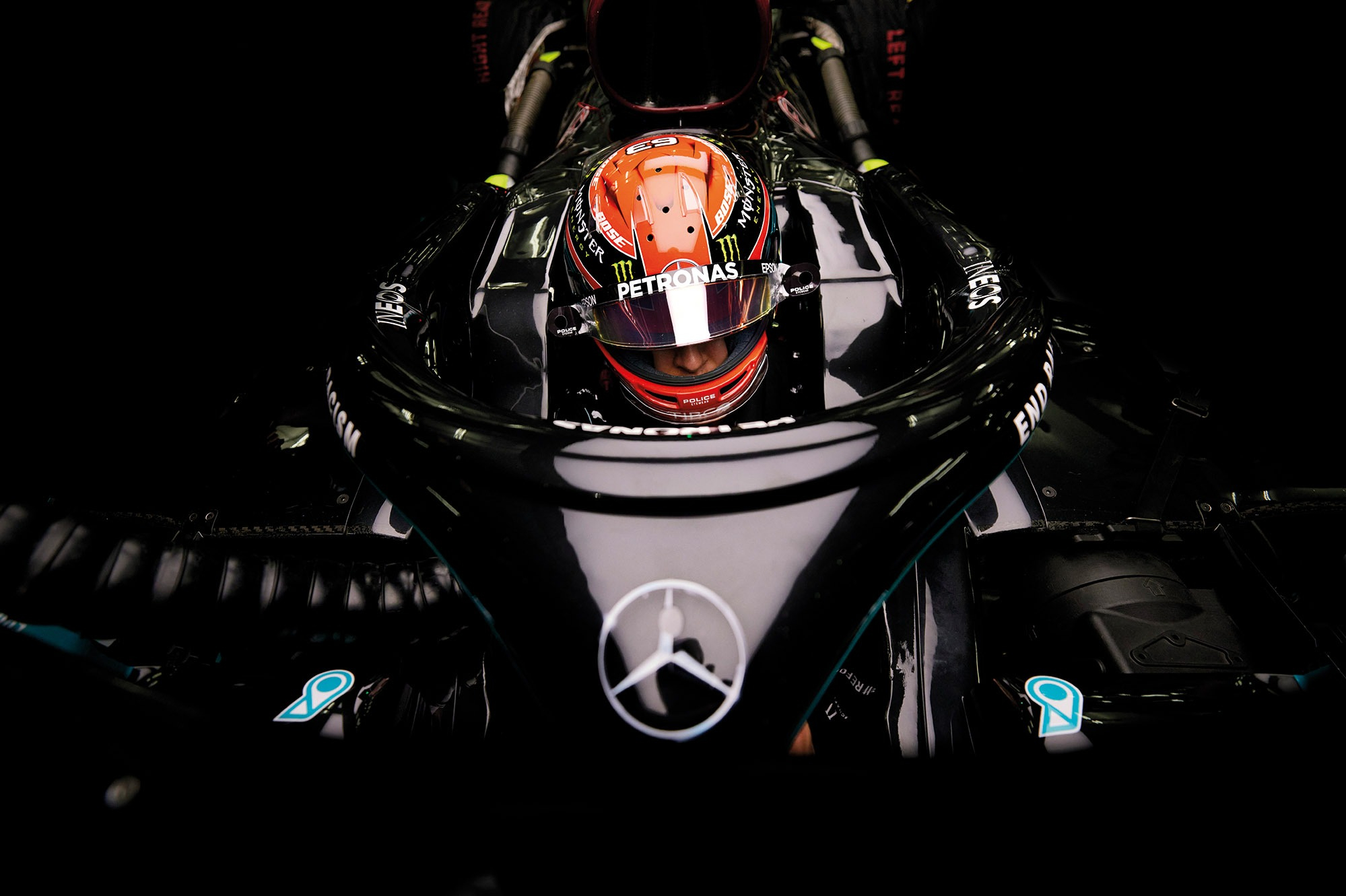
George Russell in the Mercedes W11
Photo by: GP Racing
Bottas vs Russell: on a wing(man) and a prayer
Lewis Hamilton’s role is just one plate Toto Wolff must spin as 2021 unfolds, because the identity of the team’s second driver – Hamilton’s ‘wingman’ – is open to question from 2022 onwards. George Russell’s assured stint as Hamilton’s stand-in at last season’s Sakhir GP has had a complicating effect, strengthening Wolff’s hand in negotiations with the world champion. Russell could replace Valtteri Bottas or even Hamilton should the need arise. While Russell might lack Hamilton's box-office value, he is eminently capable of delivering on track.
“With Valtteri, we know exactly what we have,” is Wolff’s telling summation of where the Finn stands. He won’t say Bottas doesn’t have what it takes to challenge for the title, and speaks warmly of “fantastic performances”, and yet his pronouncements are shrouded in equivocation.
Despite several ‘reboots’ since his arrival at Mercedes in 2017, Bottas has been both frustrating and frustrated. Capable of beating Hamilton over a single lap, given the right circuit and conditions, too often he has had off-weekends or allowed small problems to send him backwards in races. Tyre management has occasionally been an issue or, as at Imola last year when a chunk of bodywork lodged in an aerodynamically critical area of his car, you could say that if he didn’t have bad luck he’d have no luck at all.
PLUS: Why Bottas won't emulate Rosberg to beat Hamilton
“I don’t want to leave any ‘what ifs’ after this year,” says Bottas, which is a tacit admission that this season is a critical one. He acknowledges he could have done “a better job” in several races in 2020, and that he either put too much pressure on himself or not enough.
“A lot of work and focus for me this season is the mental side of things, and trying to find the right way of approaching every single race weekend.”
He’ll need to find that quickly if negotiations open sooner rather than later – because as Wolff says, ominously, “We also know what we have in George – and the future is bright for George in any case.”
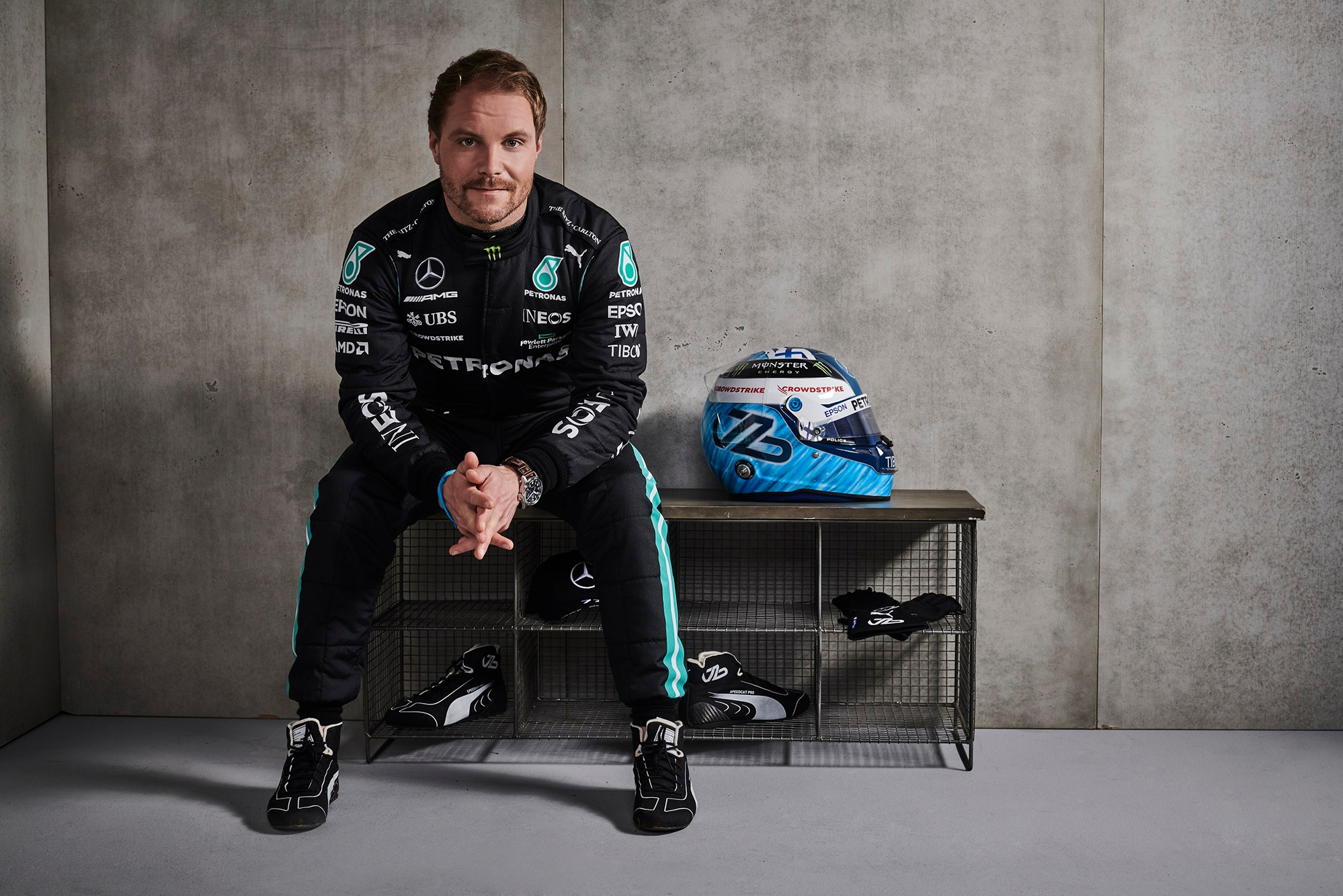
Valtteri Bottas
Photo by: Mercedes/GP Racing

How Ratzenberger beat the odds to realise his cruelly short-lived F1 dream

F1 uncovered: A weekend behind the scenes with a chief mechanic

When McLaren was pipped by Red Bull in a modern F1 classic

The big opportunity Sainz’s Williams switch affords to F1’s latest centurion

Inside the science of F1 fuel

How F1’s plan for rotating races could look in practice

The early decisions that set Sauber’s rookie for success

How F1 media coverage has evolved in line with its subject

Taken for a ride? The less heralded flaw of the 2026 F1 regulations

Sainz set for Rally1 outing in latest gen WRC car

United States Grand Prix Driver Ratings 2026

Martin's fight to get fit for Malaysian GP with MotoGP title at stake
Subscribe and access Autosport.com with your ad-blocker.
From Formula 1 to MotoGP we report straight from the paddock because we love our sport, just like you. In order to keep delivering our expert journalism, our website uses advertising. Still, we want to give you the opportunity to enjoy an ad-free and tracker-free website and to continue using your adblocker.


Top Comments