


Why McLaren’s M26 wasn’t solely to blame for its decline
Riding high on James Hunt’s 1976 Formula 1 world title triumph, McLaren went into the following season with an underprepared M26. But while the car had its faults, there were more strengths unravelling elsewhere which led to the team’s downward turn
The biggest problem with the McLaren M26? Simple. It wasn’t the McLaren M23. Yet with the hindsight of nearly 50 years, looking back specifically to the first of its two seasons in the Formula 1 frontline, a softer light can be cast upon a car that didn’t inspire a great deal of love within McLaren and its star driver James Hunt during 1977. In reality, its record in Hunt’s hands during his world championship title defence was more than respectable: three grand prix victories, three of Hunt’s impressive tally of six pole positions that season, and a whole bunch of laps led.
In the year he turned 30, Hunt had a better shot at matching his friend Barry Sheene by repeating his world crown than the final standings give credit to. If only for better reliability from McLaren’s Cosworth DFV engines, Master James would surely have finished far higher than fifth, and McLaren might have bettered its third place in the constructors’, behind metronomic Ferrari and a reborn Lotus. F1 drivers today can almost take reliability for granted, such are the precise standards and rigour of team preparation. It wasn’t quite like that in the 1970s.
In the wake of Hunt’s sensationally dramatic title-clinching 1976 season, driving a McLaren M23 that remains among the great F1 cars in terms of its sheer longevity of cutting-edge competitive life, no wonder 1977 turned out to be something of an anti-climax. Topping what had just passed would have been tough on anyone, never mind a racing driver who lived on
an emotional knife-edge at the best of times – and one who also carried a certain reputation for embracing and indulging in the hedonistic distractions that were all too available to a man in his high-rolling position.
The other problem was that F1 in 1977 was competitively wide open. Niki Lauda calmly stroked to a second world title that should have been his in 1976, through characteristic consistency, but the healthy spread of winners indicates a robust strength in depth through the grand prix field. Hunt’s three wins was equal to Lauda’s tally – although the Austrian only ran in 15 of the season’s 17 races after checking out from Ferrari early once the title was clinched. The surprise of the season was Jody Scheckter, who also won three times despite driving for a new team. His first-time-out victory in Argentina in the pretty Wolf WR1 was no fluke, as he’d prove on his way to becoming a distant runner-up in the points to Lauda.
Mario Andretti took the most victories of the season with four for Lotus, and had more cause for complaint over reliability than Hunt as engine tuners toiled to eke more from the venerable V8, while Ferrari’s flat-12 hit full maturity amid a period when Maranello claimed a hat-trick of constructors’ titles. Still, Cosworths claimed 12 of the 17 races in 1977, with Scheckter’s Monaco triumph representing the DFV’s 100th GP win almost precisely 10 years on from its debut. Single GP winners across this overlooked season were Lauda’s Ferrari team-mate Carlos Reutemann, Alan Jones (Shadow), Gunnar Nilsson (Lotus) and Jacques Laffite (Ligier).
One driver who didn’t win a GP, but should have, was John Watson. Again, a lack of reliability bit hard as his Brabham-Alfa Romeo lost the French and British GPs – the second falling memorably to Hunt and his McLaren M26 at Silverstone. “When James headed into 1977 he carried the benefit of being the world champion and in a sense that feeling of ‘I can do it again’,” says ‘Wattie’. “But notably a number of things had changed. There was a lot more competition. First of all, Niki was properly back following his Nurburgring accident and he was race fit. Lotus was improving with the Type 78 in which Gunnar won a race [at Zolder] and Mario won four. You had Jody in the Wolf, I was in a competitive Brabham, so there
were a bunch of others he had to contend with.
“And on top of that McLaren had the M26, which was arguably not any better than the M23. It wasn’t as easy to find the sweet spot with that car.”

The 1977 F1 grid contained a packed and competitive field
Photo by: Motorsport Images
No “arguably” about it, according to McLaren’s forthright team manager Alastair Caldwell, who kept Hunt on the right track to his world title and throughthe following season. From his perspective, the M26 was little more than a distraction from the job in hand. Conceived by Gordon Coppuck and built in the thick of Hunt’s championship-winning campaign in 1976, it took a brief bow at that year’s Dutch GP, where Hunt decided to stick with his tried-and-trusted M23. A wise decision, given that he won the race. Team-mate Jochen Mass ran
the M26 instead, qualifying 15th and finishing ninth.
“It was annoying,” recalls Caldwell. “The car wasn’t much better, if any better, than the M23, and it would have been wiser to have just concentrated on the M23, put the M26 to one side until it had been well tested. The M23 was heavier, so it would have been better just concentrating on making a lightweight M23.
“It was a nightmare making the M26 because we were totally understaffed, with no test team. It was just the race team. Teddy [Mayer, team principal], Gordon and the factory all wanted the M26 built, I assume because they thought it would be better than the M23. The whole place was concentrating for weeks making this thing and not doing anything else. A huge distraction.”
Finally, at Jarama for the Spanish GP, M26-2 was ready for Hunt, but he found the handling unbalanced and unpredictable. After qualifying seventh, he was out on lap 10 with a misfire and was back in the M23 for Monaco, where again engine woes forced an early bath
After Zandvoort through to the end of the dramatic 1976 season, McLaren stuck with the M23, and the M26 was mothballed until the following year. McLaren’s final pre-ground effect F1 chassis was lighter and lower than its predecessor, with a smaller frontal area and a narrower, stiffer aluminium monocoque. Yet even in early 1977, the new car still wasn’t deemed fit for purpose. Hunt, riding high on his status as reigning world champion, used the
still potent M23 in the early-season races in Argentina and Brazil, but a suspension failure put him out in Buenos Aires, and he was beaten into second by Reutemann’s Ferrari at Interlagos. When chassis M26-1 was badly damaged in a crash for Hunt in the pre-South African GP test at Kyalami, after a bolt came loose from a front brake caliper, he opted again to use the M23 for the race weekend. Another pole, before he slipped to fourth with tyre problems in a race overshadowed by Tom Pryce’s horrific fatal accident.
Following a no-score in Long Beach, Hunt had only nine points to show from the first four rounds, although such was the competitive spread he was only 10 shy of joint leaders Scheckter and Lauda at this stage. Finally, at Jarama for the Spanish GP, M26-2 was ready for Hunt, but he found the handling unbalanced and unpredictable. After qualifying seventh, he was out on lap 10 with a misfire and was back in the M23 for Monaco, where again engine woes forced an early bath. The title defence, despite those early pole positions, hadn’t really got going.
Still, he was back in a heavily revised M26 for the Belgian GP at Zolder. A modified wing configuration and the oil cooler relocated from the rear to the car’s nose – which became its characteristic feature – at least created a better balance, although Mass still outqualified Hunt in his M23. In the race, James finished seventh – out of the points back then, of course – having gambled on slick tyres on a still-wet track.

A rushed preparation left the M26 undercooked on its debut
Photo by: Tim Scott / fluidimages.co.uk
Fortunes finally took an upturn at Dijon for the French GP, where Hunt qualified his M26 on the front row beside Andretti’s Lotus. He led the race too until an inspired Watson blasted past. The M26’s handling imbalance kicked back in and Hunt was left in the wake of Watson
and Andretti, with the American claiming a dramatic last-gasp win when Wattie’s Alfa V12 coughed, apparently short of fuel, in the closing moments. Hunt’s third place was at least, and finally, the first points for the M26. But any realistic hope of a second championship looked long gone, with the top four of Lauda, Andretti, Scheckter and Reutemann separated by just five points.
Then the breakthrough. Twelve months earlier in the sweltering heat of Brands Hatch, Hunt had taken a glorious home win on the road, only to be disqualified months later following a protest from Ferrari, which claimed the McLaren shouldn’t have been allowed to take the restart after picking up damage in a first-corner crash. The perceived injustice fuelled Hunt’s fantastic title run-in, but full retribution only followed at Silverstone in the summer of 1977 when he won his home grand prix again – and this time got to keep it. Again, Watson starred and led the first 49 laps – and again his Brabham-Alfa let him down with another fuel problem allowing Hunt, who had claimed pole position, to pass for a thereafter unopposed win. Wattie would have to wait another four years for his Silverstone day in the sun.
But any hope that Hunt could now build a second consecutive title challenge in the latter half of a season soon wilted. A broken exhaust and faulty fuel pump dropped him out at Hockenheim; he led for 32 laps at a wet Osterreichring when again a Cosworth engine failure destroyed his race; and then came an infamous clash with Andretti at Zandvoort. A year earlier he’d held off Watson’s Penske by edging him off the track on the exit of the long Tarzan right-hander. Now chasing a personal hat-trick at the Dutch track, Hunt took the lead after a terrific start from the second row and tried the same trick with Andretti, but with a vastly contrasting outcome.
The American picked up the story in his book Mario Andretti: World Champion, published in the wake of his 1978 title success. “He was inviting me to go on the outside – it was the only race track left to me,” Mario wrote. “He was on the inside every lap, and I didn’t have the straightaway speed to pull alongside him before the turn. I went around the outside of him, and as we left the turn he just moved across like I wasn’t there. I wasn’t going to be driven off
the goddam road and rip the skirts off on the kerb.”
Hunt’s M26 was tripped in the impact, landed heavily and was out. Andretti recovered only to drop out with another Cosworth failure. He and James then rowed over their coming together. “I told him if he didn’t know I was alongside him, he was like a horse with the blinders on,” was Andretti’s take on their conversation. “He told me he had no problem with Watson the year before. Well, of course he didn’t because John drove off the goddam road each lap. And then he said, ‘We don’t pass on the outside in Formula 1’. To me that’s just asinine, especially when he gives you no alternative. And I notice no one criticised John for trying it the year before…”
The following Italian GP was another missed opportunity for Hunt. He stuck his M26 on pole, but this time brake problems forced a no score. Then back at Watkins Glen, scene of perhaps his finest F1 win a year earlier, Hunt once again displayed his racing intelligence. From his sixth pole position of the season, he initially lost out to Hans-Joachim Stuck’s Brabham in the wet until the German spun out. Now Hunt juggled an overheating engine, wet-weather tyres on a drying track and a slow puncture as Andretti loomed. The Lotus made up 13 seconds in the final 10 laps, but came up two seconds short as the McLaren made it home. Meanwhile down in fourth, there was Lauda, doing what he needed to be champion for a second time. Having announced at Monza (of all places) that he’d had his fill of Ferrari and was off to Brabham for 1978, he promptly walked away from Maranello.
Hunt and his M26 had found a rich vein of form, too late for it to count for much. Again at Mosport, James fought it out with Andretti, who shared a similar frustration. The pair had lapped most of the field at three-quarters’ distance, when in a terrible mix-up Hunt was taken out by a deeply contrite Mass in the other McLaren. Hunt hit the wall head on, wrecking the M26’s tub and briefly leaving its driver trapped by his feet. Once he was out of the car, Hunt’s lingering red mist then led – not for the first time – to an unedifying moment of indiscretion. He punched a marshal.

Hunt's aggression also cost him in his failed title defence
Photo by: David Phipps
“It was a part of James’s character that he was very highly strung, especially when his adrenalin was flowing,” explains Watson, who saw all sides of Hunt’s personality through
his racing career and beyond. “It made him unpredictable. The marshal tried to assist and he turned around and just whacked him. Then he realised what he’d done. Having done the deed, his education and background immediately trumped that moment and he realised he had done something terrible. He was very apologetic.”
“He had lots of adrenalin, masses,” agrees Caldwell. “On the grid you’d think the car was running but it wasn’t. It was just him rattling inside the car. He was just so agitated and that’s why he used to get into trouble when he had a crash or stopped suddenly, because the adrenalin was still there. So he’d punch somebody or do something stupid. But that adrenalin was also one of his strong points, of course. And he had fantastic stamina. As a person he wasn’t aggressive, he was polite. It was the same in the F3 punch-up [with
Dave Morgan at Crystal Palace in 1970], he was so hyper. In Canada, it took me half a day to talk the marshal out of suing us. We gave him all kinds of stuff, gifts if you like – and he decided to go with that.”
The season at least ended on a high note, at the scene of Hunt’s greatest moment a year earlier. This time at Fuji, in Mass’s M26-3, he took the lead from Andretti’s pole-winning Lotus at the start and was never headed, for the 10th and last GP win of his career. Little could McLaren know it was also the team’s last until Watson’s British GP win in 1981.
In desperation, the team clawed for extra downforce from the M26 – a high nose-mounted wing in practice at Jarama, and even full-length sidepods on M26-4 at the British GP. But as a wing car concept it was half-baked. As Mayer described it, “30% of the way to being a Lotus, but only 20% of the way towards our new car”
Caldwell’s summary is succinct and to the point. “I would say James drove as well in 1977 as he did in 1976, if not better,” he states. “We had quite a few engine failures. But one of his problems was he wasn’t focused. James was lazy. When we went testing all he wanted to do was go home. He knew exactly what professional racing drivers should do, he knew he should go to the factory and talk to us. But he never came to the factory and if he did come for a seat fitting or something, he wouldn’t go round and meet all the people. He’d just talk to those he knew, then f*** off.
“James was a good driver, but he was inattentive, lightweight, not a serious racing driver. He thought he was, but he wasn’t. He didn’t apply himself to the job. He’d come to the race track, get in the car, be quick and go home. That’s all he wanted to do. In retrospect we should have used Mass or a third driver for all the testing. James would just get tired and bored.”
While Andretti and Lotus stepped up a gear in 1978, with the ground-effect marvel that was the Type 79, Hunt and McLaren began to unravel. The M26 was not yet obsolete in what were still early days for the wing car revolution across the grid, but both team and driver were on the slide. Hunt’s motivation began to sag and there were few highlights from what became a slog of a season. Fourth at the Buenos Aires season opener and a final podium at Paul Ricard
was as good as it got for James. Even that French GP was contentious, after Hunt and Andretti once again fell out after a rancorous battle. Meanwhile, Patrick Tambay’s big break turned into deep disappointment. The Frenchman, in for Mass, scored points on five occasions but in total McLaren managed just 15. Hunt was 13th in the standings, Tambay 14th – and McLaren eighth. In desperation, the team clawed for extra downforce from the M26 – a high nose-mounted wing in practice at Jarama, and even full-length sidepods on M26-4 at the British GP. But as a wing car concept it was half-baked. As Mayer described it, “30% of the way to being a Lotus, but only 20% of the way towards our new car”.

The Cosworth engine proved unreliable to sustain a title tilt
Photo by: Tim Scott / fluidimages.co.uk
Caldwell is quick to point out that McLaren explored aerodynamic chassis skirts to channel air on the M23, but still the team was falling behind the curve: “The M26 was designed to have skirts. It had a lip built into the monocoque to fasten them on to. But then it got superseded by the sliding skirt cars which suddenly found huge downforce, and McLaren lost the plot completely. We could barely build a car. It fell to pieces, literally.”
He’s talking about the unloved M28 of 1979, by which time Hunt had switched to a brief, unhappy stint at Wolf before wisely calling time on his career after a miserable Monaco GP. By then Caldwell was also long gone, for equally brief, unfulfilling stints at Brabham and ATS.
As for McLaren, the team under Mayer had badly lost its way, just a couple of years after Hunt’s title glory. Yet placing the blame on M26 isn’t fair. The model was no M23, that much was clear, but the team’s decline was symptomatic of a deeper malaise. An injection of fresh thinking was required to reboot McLaren for the 1980s. Enter Ron Dennis and John Barnard, and a new age for the dormant F1 superpower.
Race record
Races 31
Wins 3
Pole positions 3
Fastest laps 1
Other podiums 3
Specification
Chassis Double-skinned aluminium and Nomex monocoque
Front suspension Upper rocker arm, operating inboard coil spring/damper, lower wishbone, anti-roll bar
Rear suspension Adjustable top link, parallel lower links, twin radius rods, coil spring/damper, anti-roll bar
Engine Ford Cosworth DFV V8
Engine capacity 2993cc
Power 465bhp
Transmission McLaren/Hewland six-speed
Tyres Goodyear
Weight 589kg
Notable drivers James Hunt, Jochen Mass, Patrick Tambay, Bruno Giacomelli, Brett Lunger

While the M26 wasn't to blame for McLaren's decline, it did signify its downward spiral in the late 1970s and early 1980s
Photo by: Tim Scott / fluidimages.co.uk

Why this quintessential late-1970s F1 car stands out in the history of the Tyrrell team

The F1 title winner that was produced with an entirely different plan in mind

The man who shaped the Formula 1 car

When Alesi was reunited with his “dream” F1 racer

The crazy story behind a remarkable racing quadruple

Obituary: F1 team founder Ted Toleman dies aged 86

Prototype Winter Series Barcelona: Newcomer David defeats champion Soufi

Formula Winter Series Barcelona: Peebles doubles up to claim title

LIVE: F1 Singapore GP - Verstappen leads Hamilton and Leclerc after virtual safety car
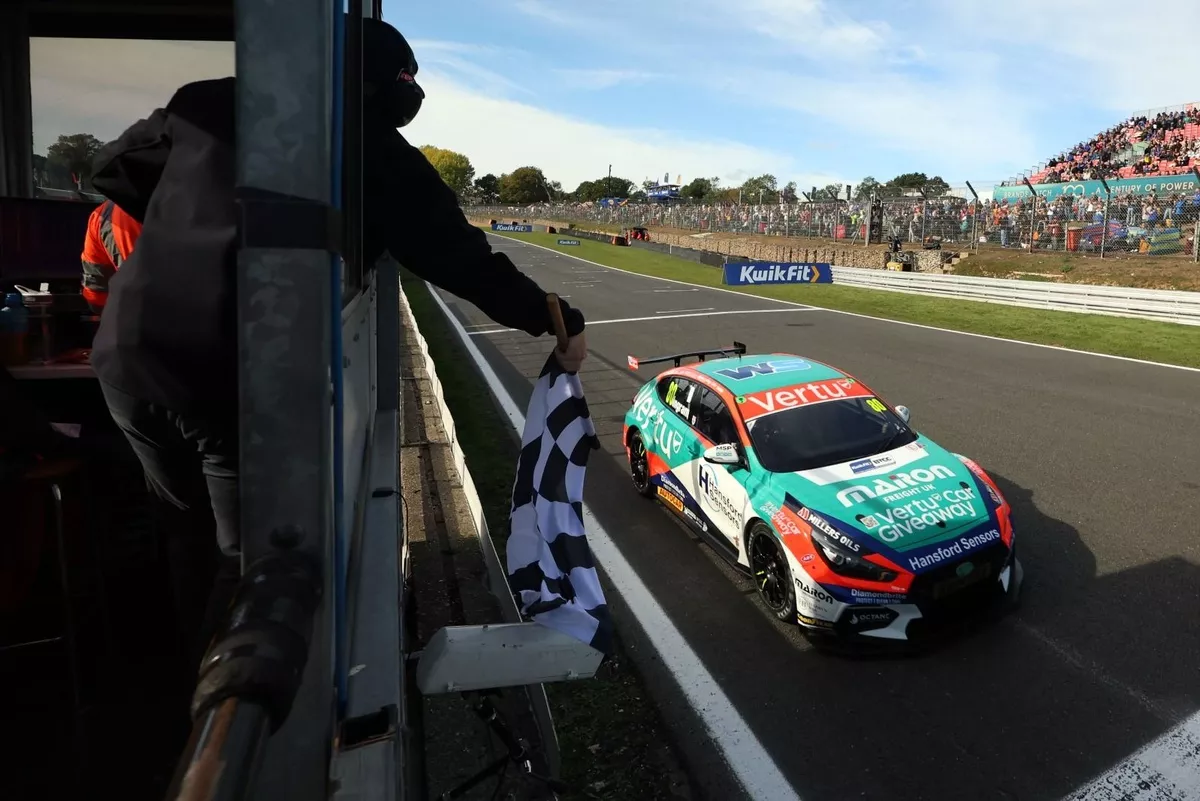
BTCC Brands Hatch: Ingram wins after wonder move on Moffat

Bezzecchi with conflicting feelings: Indonesian GP feels ‘more like a loss than a win’

Top five roles on Motorsport Jobs this week
Subscribe and access Autosport.com with your ad-blocker.
From Formula 1 to MotoGP we report straight from the paddock because we love our sport, just like you. In order to keep delivering our expert journalism, our website uses advertising. Still, we want to give you the opportunity to enjoy an ad-free and tracker-free website and to continue using your adblocker.


Top Comments