


Leading Ferrari out of the darkness?
The famous Italian squad has not won an F1 title since 2008, but now there is a new boss and a fresh plan in place. Marco Mattiacci speaks to JONATHAN NOBLE about his latest challenge
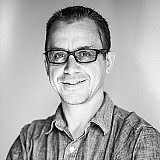
As a team that has been so central to the history of Formula 1, it would be all too easy for Ferrari's chiefs to look back at its past glory days for the answers as to why it is not performing right now.
But for Ferrari's new team principal Marco Mattiacci, the response Maranello needs has nothing to do with lessons from the past. In fact, he thinks to be successful its future has to be something totally different.
Having been parachuted into Maranello just hours after an early morning call from Ferrari president Luca di Montezemolo to his then home in New York telling him of his new job, Mattiacci has spent his time meticulously listening, understanding and analysing 'Il buono, il brutto, il cattivo' (the good, the bad and the ugly) at Ferrari.
And now, as he swings his action plan into place, it is clear Ferrari's future is not simply about finding a single big name star to tell it what to do. Instead, the change Mattiacci wants goes much deeper than that: it's about a break from the past and a huge cultural shift.
"These are important changes. Very important changes," he tells AUTOSPORT in his first in-depth interview since taking charge. "We are clear where we want to go. So I don't know if you can call the changes big, but they will be important.
"I think that Ferrari is going to look different, it will be different. And the story will tell if it will be better.
"But the change will be across the board - although most importantly - cultural change and discontinuity. These are the most important things."
That word discontinuity is interesting, for it is clear that one of the reasons Mattiacci was chosen as Stefano Domenicali's replacement was because he would be open to doing things differently. There would be no more reason to keep doing things simply because that was the way they have been done in the past.
Key too was the fact that Mattiacci knows how the Ferrari company works: for di Montezemolo had come to the conclusion that if things were to change, it would be easier for the man coming in to know how the Maranello political machine operates than how life evolves in the F1 paddock.
 Mattiacci has fresh ideas to make Ferrari win again © LAT
|
Mattiacci agrees: "I definitely have an advantage. You need to do a trade-off with someone that has not been in F1, but knows Ferrari very well. I have not been in F1, but I have been watching F1, I have been listening about F1, and I have been living F1. So I know in a certain dynamic what the sport is. But I definitely know the company.
"It is an Italian company, it has a certain kind of dynamic, being Italian, but also working there in the last 20 years it is multi-cultural, and there is a lot of diversity.
"That has helped me to probably smooth some angles and try to build an organisation where the passport is not important, but the idea is important. The hierarchy is not important, the contribution you give to the team is. I prefer not so much the skilled technical engineers, but instead someone who is a team builder. As in all sports, as in all businesses, people are the most important factor."
Spend any time speaking to Mattiacci away from the confrontational nature of press conferences, and you find someone whose calmness instantly builds trust. He is also evidently a listener, a trait he put to good use in his first weeks at Maranello as he got to grips with understanding what needs to be done.
"The best thing is to ask questions," he explains. "I am not scared or afraid to ask any kind of questions. People know that I am not from F1, so I ask every sort of question. I cross-reference a lot, because I want to understand different kinds of sources.
"I make my opinion. But definitely I leverage upon the experience of the people that surround me. And I have started to find people that I definitely trust.
"I don't call meetings; I sit with the head of aerodynamics, or mechanics, or someone from finance - without any agenda. I want every person to know what is going on, and every person to know what direction we are going in.
"And definitely we need a cultural change, we need to open ourselves - and I ask to embrace the risk humbly, cautiously - but be aware that to go back to the top we need discontinuity."
It has not taken him long to realise that some of the traits within Ferrari are not good. There is the risk element: that perhaps the team has been reluctant to be aggressive with its design for fear of getting it wrong and facing the consequences. That has bred conservatism - which in F1 equals uncompetitive machinery.
Another issue too has been the territorial nature of producing the car itself. Just as Renault had found itself on the receiving end of some harsh criticism from Red Bull, so Mattiacci found a team in which the chassis and engine groups were finger-pointing too readily.
"I am going to say something that doesn't sound very F1; it's not the product that is competitive, it is the package," he asserts. "So, I don't like this distinction of aero, chassis, engine or power unit - there is one car and one team. Everybody has to work.
"I don't like it when I talk to engine people and they talk to me about the chassis for the first five minutes. I don't like chassis people to talk to me about the engine. We talk about the car. Everybody has to share the responsibility with that car. There is no, 'we did better than you', or 'we did this because you asked'.
"Everybody is responsible for that car in the same way.
 A Ferrari driver on the podium: a rare sight this year © LAT
|
"For me, that is my style, that is what I want to implement. But definitely we are talking about the most sophisticated engineering company in the world, so you need clear responsibility, clear tasks, and clear objectives. That is where management skills count a little bit, to put in place process and procedures, and key performance indicators. Then, when you talk, it is about how much you can improve, what you will give me. There is a lot of methodology behind that."
One of the key tasks for Mattiacci will be in channelling the huge resources that Ferrari has at its disposal in to the areas that will make the most difference on track. The challenge is to recover the 1.5 seconds per lap deficit it needs to be beating Mercedes - and there is no silver bullet that will get it there in an instant.
"You can look once at your competitors behind you, but you can't spend too much time on it. We have some benchmarks of what the best are doing, who are ahead of us. That is where we are going to look a lot.
"I think we have a phenomenal structure, we have resources, we have impressive facilities and definitely we need to have clarity about which are the areas where investment will give us, in a period of time, a competitive advantage. In F1, that means to be one second ahead, or half a second ahead.
"But to arrive there, you need to make important decisions in terms of which area you need to invest. It is always quality versus quantity, and I don't know which is the right size."
Being open to using the skills and expertise of others, perhaps even outside of F1, is also part of the vision.
"The world is changing today," continues Mattiacci. "It is phenomenal how you can get connected to your supplier: and they don't give you just a piece of equipment or a service, they give intelligence. There are manufacturing companies in North California that can give me perspectives that I have never seen before. That is what I want.
"We are Ferrari. Ferrari is a global brand, so I want to be open to the world - to take the best of the best, and that does not necessarily mean being in F1. Sometimes, honestly, there may be some companies that are doing some things better than us. They have 300 people, but how many brains really are working on that project? It is an open source.
"It is like if you get software from a very big brand or another one that is open source. The open source gives you some small issues in the beginning, but it is faster in upgrading, it is faster in getting excellence. The way you must work today is different."
It goes back to the new way of thinking that Mattiacci wants to see - discarding the shackles and the limitations from the Ferrari of a past where individuals were perhaps scared from being bold for fear of getting it wrong and taking the blame.
"We have to embrace risk," adds Mattiacci. "To embrace the utmost co-operation. Dialogue. To be brave. That is the most important thing for me."
 Engine chief Marmorini is not part of Ferrari's plan © XPB
|
This approach is why simply opening the chequebook and capturing some big names is not necessarily the right way, even though there will be personnel changes.
One of the first has been the departure of Ferrari's long-serving engine chief Luca Marmorini, who has paid the price for a disappointing first attempt at the new V6 turbo. A new power unit department structure is in place.
"It is about the system, the platform you create," says Mattiacci. "I am not looking for names but people who give impressive added value.
"Sometimes it is not a big name: sometimes a big name will take away the chemistry that you need, that philosophy that you need, to move all the team in one direction. But, saying that, definitely we are looking to reinforce or improve certain areas."
One name that is central to it all is Fernando Alonso, who has often been quite aloof in his comments about the management changes at Ferrari. Mattiacci insists he is not perturbed by Alonso's sometimes political nature. And for all the Spaniard has said this season about not being involved in the plans for change, he and his boss do speak regularly - and there was a big meeting after the British Grand Prix to run through ideas for the future.
Of course, Alonso has heard all the talk before - and Mattiacci admits the 2005 and '06 world champion needs convincing that the coming changes will succeed.
"For sure, but I need to convince everybody, not only Fernando," he says. "I need to convince all the hundreds of people working for me. Every minute, every second they look at me and I need to convince my boss, I need to convince so many people. I need to convince millions of fans.
"Do I wake up every morning thinking that I need to convince them that day? No. I work my way."
Indeed, the convincing is not something that will happen overnight. Mattiacci may be new to F1 but he knows he has a long-term project on his hands.
"Just look to the others - look today who is at the top and how long it took to get to the top," he says. "F1 has changed in that regard as well. It is an important process. How long? I cannot say."
Yet reading between the lines, there is no illusion that changes now will have instant results and get Ferrari back to the top before 2016. That is why he draws short of title talk for next year.
"I expect to be more competitive, that is clear," says Mattiacci. "That is Ferrari. That is the expectation for the millions of fans, management, shareholders, everybody. Everybody wants Ferrari at the top, for the good of the sport."
That is perhaps the only thing that the new Ferrari will not change: the desire of its faithful fans to want it back at the very pinnacle of the sport.
THOUGHTS ON THE PLANS OF FERRARI
JAMES ALLISON - TECHNICAL DIRECTOR (CHASSIS)
"You need to make big changes and small changes at the same time. Any team in F1, any of them, good or bad, are all pretty impressive organisations. And it is much, much easier to make them worse than it is to make them better.
"So the changes that need to be made are in an absolute sense quite small, but there are lots of them and they have been happening for some months. Marco's arrival has helped galvanise more of them, and I think that across the board in Ferrari there are changes that are extremely helpful to moving us in the right direction.
 Changes are needed, says Allison © XPB
|
"If you were to come and sit alongside me or any of the other senior figures in Ferrari and watch the changes that are being made, you may say, 'that doesn't look very big'. But by the time you have the totality of them, they add up to something significant. And when you are in a sport that is very, very competitive, then all of those things add up to making a real difference."
FERNANDO ALONSO
"In August everybody is very, very competitive [in their predictions for the next season], November even more, and in January super. Then in February only two or three are able to win. You should have a crystal ball to see what is going to happen next year.
"Obviously everything remains to be seen, but it's only good prospects and good feelings at the moment with the performance we can achieve next year. Our aim is to keep improving and use this year in the best way possible - experiment for next year, and next year to be stronger.
"Mercedes showed us this year that [teams in] this new era of Formula 1 can be dominant. We didn't make a good enough job with these new regulations and there is a lot of room to improve. It's not like other years where everything was more or less at the limit.
"The step between 2014 and 2015 cars will be a lot bigger than what we saw in the past, so that's the hope we have and I think everyone will have the same because everyone has very good prospects in July."
KIMI RAIKKONEN
"We know our issues and what we have to do to improve things, but some of them are quite big things to fix and it will not happen quickly. Plus, with the new rules some things cannot be changed.
"We have to make sure we deliver those and I have full belief that we have the right team and the right tools to make a really good car. But this year is what it is and next year is a different story. Like I said, I believe in the people who are there who are making the car and I'm sure we can improve a lot."


Brundle awarded OBE in King’s New Year’s honours

The new rules dilemma that will define the 2025 F1 season

Verstappen issues Red Bull title warning in push for RB21 progress

Mercedes opens up on the factors that hurt Hamilton with the W15

How McLaren faced up to the misinformation, noise and distractions of being an F1 title challenger

Why Bottas is not letting the “worst-case scenario” end his F1 career

Jon Noble: An unfair perception or a genuine concern? Lifting the lid on Red Bull’s Tsunoda scepticism

Binotto on Audi's F1 reality check after finding team "frozen" with no plans

How much time has Aston Martin gained with its F1 Hungarian GP update?

Antonelli hit with grid drop for yellow flag infringement in F1 Hungarian GP qualifying

Hamilton slapped with grid drop for impeding Piastri in F1 Hungarian GP qualifying

Russell to undergo Mercedes engine change but avoids F1 Hungarian GP grid drop
Subscribe and access Autosport.com with your ad-blocker.
From Formula 1 to MotoGP we report straight from the paddock because we love our sport, just like you. In order to keep delivering our expert journalism, our website uses advertising. Still, we want to give you the opportunity to enjoy an ad-free and tracker-free website and to continue using your adblocker.


Top Comments