


How F1’s other champion to emerge from 1991 thrived at Lotus
Mika Hakkinen became Michael Schumacher’s biggest rival in Formula 1 in the late-90s and early 2000s, having also made his F1 debut in 1991. But as MARK GALLAGHER recalls, while Schumacher wowed the world with a car that was eminently capable, Hakkinen was fighting to make his mark with a famous team in terminal decline
Some races stick in the memory. Phoenix, Arizona, and the 1991 United States Grand Prix is one of them. A hot, sweaty race sponsored by Iceberg, where 34 drivers and 18 teams turned up, the big boys aiming to win, others just hoping to give it a go.
Jordan made its debut, Andrea de Cesaris failing to pre-qualify, while team-mate Bertrand Gachot demonstrated the potential of the 191 by qualifying 14th.
Two and a half tenths quicker in 13th was a 22-year-old Finn. Mika Hakkinen was making his F1 debut a few months after clinching the British F3 Championship, then losing out at the Macau Grand Prix following a controversial collision with a certain German. The Schumacher-Hakkinen world championship duels were still years away, but the die had already been cast.
Signed up by Team Lotus, new owner Peter Collins eager to get his hands on a driver he felt was the real deal, Hakkinen had the benefit of manager Keke Rosberg fighting his corner. For a cash-strapped team, this meant hustling to find sponsorship monies back home in Finland.
PLUS: The gradual decline and demise of F1's greatest innovator
“After winning the Cellnet Superprix F3 race at Brands Hatch I won the opportunity to test the Benetton,” recalls Hakkinen. “That was the first time I met Peter. Later, when he was taking over Lotus, he contacted Keke and said ‘let’s work on a package.’”
The announcement of Hakkinen's signing came over Christmas 1990, a gift-wrapped windtunnel model of his Lotus 102 delivered to Helsinki as part of the launch PR.

Lotus in 1991 wasn't the easiest of environments for Hakkinen to make his F1 bow
Photo by: Motorsport Images
Powered by the Judd EV V8, the Lotus 102B was a rehash of the unloved Lamborghini V12-powered 102 which Derek Warwick and Martin Donnelly had the misfortune to race in 1990. This being the car which cost Donnelly his career when it disintegrated on impact during a practice accident at Jerez.
Designer Frank Dernie had used the Lotus 101 as the basis for the car and, with a cockpit designed for the diminutive figures of Satoru Nakajima and Nelson Piquet, Hakkinen found it a tight squeeze.
“The cockpit was tiny,” he says. “Quite a few times I got a bollocking for making a mistake with the tiny gear lever! It was heavy, slow, bloody small and difficult to drive.”
"Peter had worked with Johnny before, so when he became my team-mate I was a little put out. I was supposed to be the golden boy, and here was Johnny getting the boss’s attention" Mika Hakkinen
It didn’t help Hakkinen's confidence when the steering wheel came off in Phoenix, his race ending with a blown engine. But ninth in Brazil suggested better days ahead. Then came San Marino…
Hakkinen was partnered for these early races by Britain’s Julian Bailey and the pair scraped onto the back row of the grid, 25th and 26th. The race featured heavy attrition.
PLUS: The great unheralded Imola F1 drives
“The weather was awful,” says Hakkinen. “The top drivers went off so it became a case of being in the right place at the right time. The only problem was that Julian was in front of me.
“I was supposed to be the young gun so I started pushing hard to catch him, but worried the engine might let go. Then he was slowed by a gearbox problem so I overtook him. We finished fifth and sixth – unbelievable.”
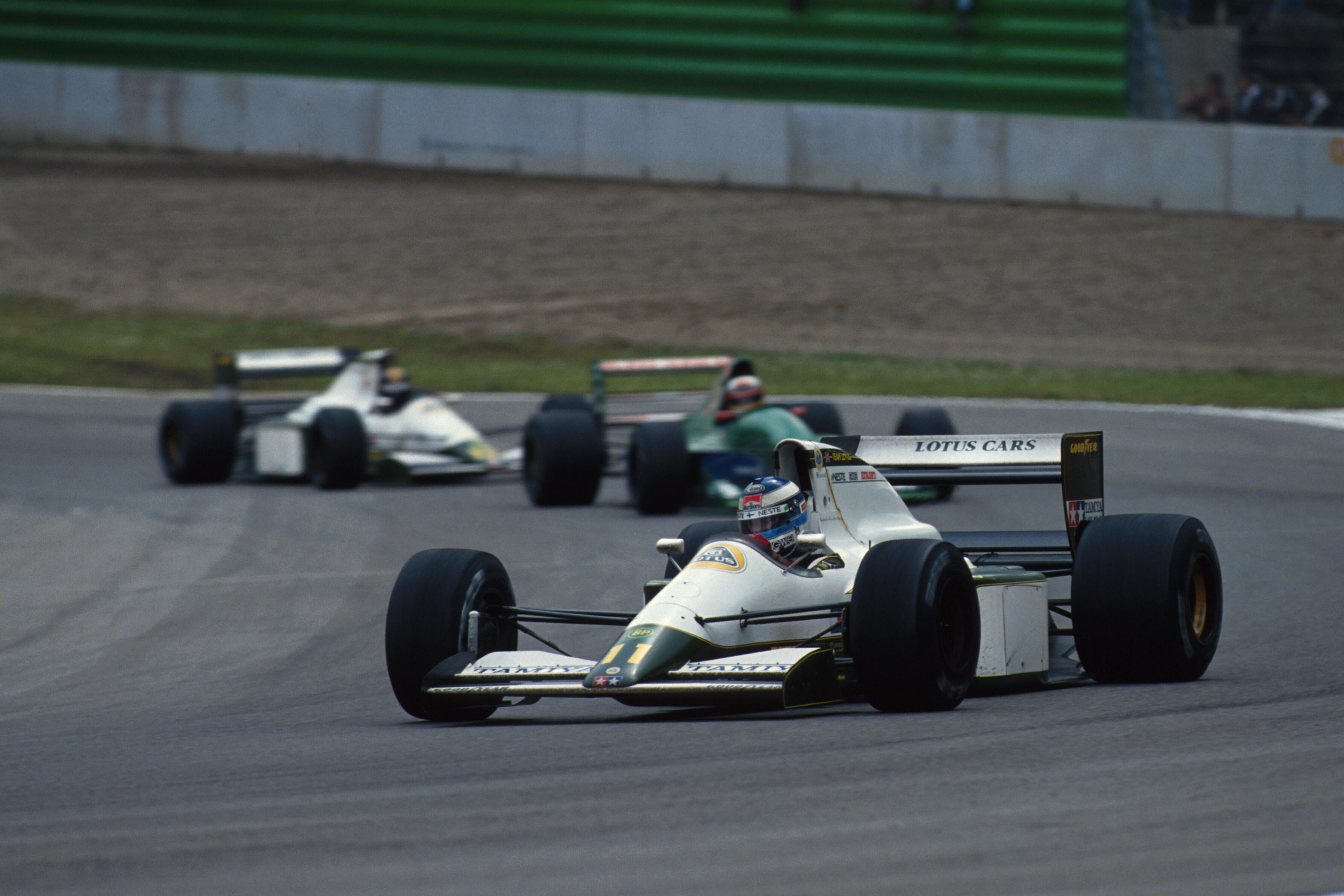
First points came in chaotic race at Imola, passing team-mate Bailey in the process
Photo by: Motorsport Images
It was the day of the minnows, JJ Lehto third for Scuderia Italia and local hero Pierluigi Martini fourth for Minardi.
Imola turned out to be the season highlight. With Bailey failing to qualify for three of the first four races, he was replaced by a Collins favourite – rising star Johnny Herbert, although conflicting Japanese F3000 commitments meant Michael Bartels deputised for Herbert on four occasions. The German never did manage to qualify.
Have a go hero: Michael Bartels' Group C cameo
For the next year and a half Hakkinen and Herbert became F1’s blond-haired, boy-band driver line-up. They shared hotel rooms alongside frustrations with the car.
“Sharing rooms was just what we did,” recalls Hakkinen. “I remember walking into the bathroom and finding Johnny having a bath. He asked me to join him, but even for a Finn that’s taking things too far.”
However, Hakkinen found the bond between Collins and Herbert an irritant.
“Peter had worked with Johnny before, so when he became my team-mate I was a little put out,” he says. “I was supposed to be the golden boy, and here was Johnny getting the boss’s attention.”
Herbert’s horrific F3000 accident at Brands Hatch in 1988 had left its mark, however, and Hakkinen well remembers being shocked at the sight of his team-mate’s injuries.
“I have the seen the scars and sometimes he mentioned the pain,” he says. “Peter Collins was concerned about it. It was a shame he went back to racing so early (after the accident), but he still managed to do really well. His braking and acceleration were good, and Johnny always had amazing car control.

Collins favourite Herbert's arrival in the team meant Hakkinen faced strong internal competition
Photo by: Motorsport Images
“We had different driving styles. I always wanted to turn in early and get on the throttle, keeping the engine in the maximum power range all the time. Johnny would keep the car straight under braking, turn in later. In the old 102 it never made much of a difference!”
The introduction of the long-awaited Chris Murphy-designed Lotus 107 of 1992 was repeatedly delayed, the new car finally making its debut in Herbert’s hands in round five at San Marino. He qualified 26th and last, with Hakkinen 27th. It was the second and final time that he would fail to qualify for a GP. Then, in Monaco Hakkinen finally got his hands on the 107, qualifying 14th with Herbert a promising ninth.
“The Lotus 107 was the first real racing car for me in F1,” admits Hakkinen. “What Chris Murphy did, considering the budget, was unbelievable, and the Cosworth HB was a big step. To have a good car you need good basic aerodynamic balance, and when you have that you can start to develop. That car worked in both high and low-speed corners but was not so good mid-corner.”
PLUS: How to build a budget F1 car
In the French GP at Magny-Cours, Mika’s third race with the 107, he finished fourth, Herbert sixth. Three races later, in Hungary, Hakkinen finished fourth again.
"To walk into Ketteringham Hall and see all the photographs of the drivers who had driven for Team Lotus before me reminded me of what an opportunity it was" Mika Hakkinen
“With its monoshock front suspension it was really stable under braking and acceleration – perfect for Hungary,” says Hakkinen. “I remember getting to fourth and battling with Gerhard Berger’s McLaren-Honda for third. The Honda’s power was incredible, so I was watching where Gerhard was quick, where I was quick. In the end I tried too hard and went off, but I recovered and didn’t lose track position.”
Those fourth-placed finishes intensified interest in Hakkinen across the paddock, particularly when followed by sixth in Belgium and fifth in Portugal. Lotus wanted to retain his services, but others were beating on the door.
“Everyone seemed to want me, it was a great moment,” Mika recalls. “Keke and I were looking at who is going to provide me with the best future, the most opportunity and of course the right money too.”
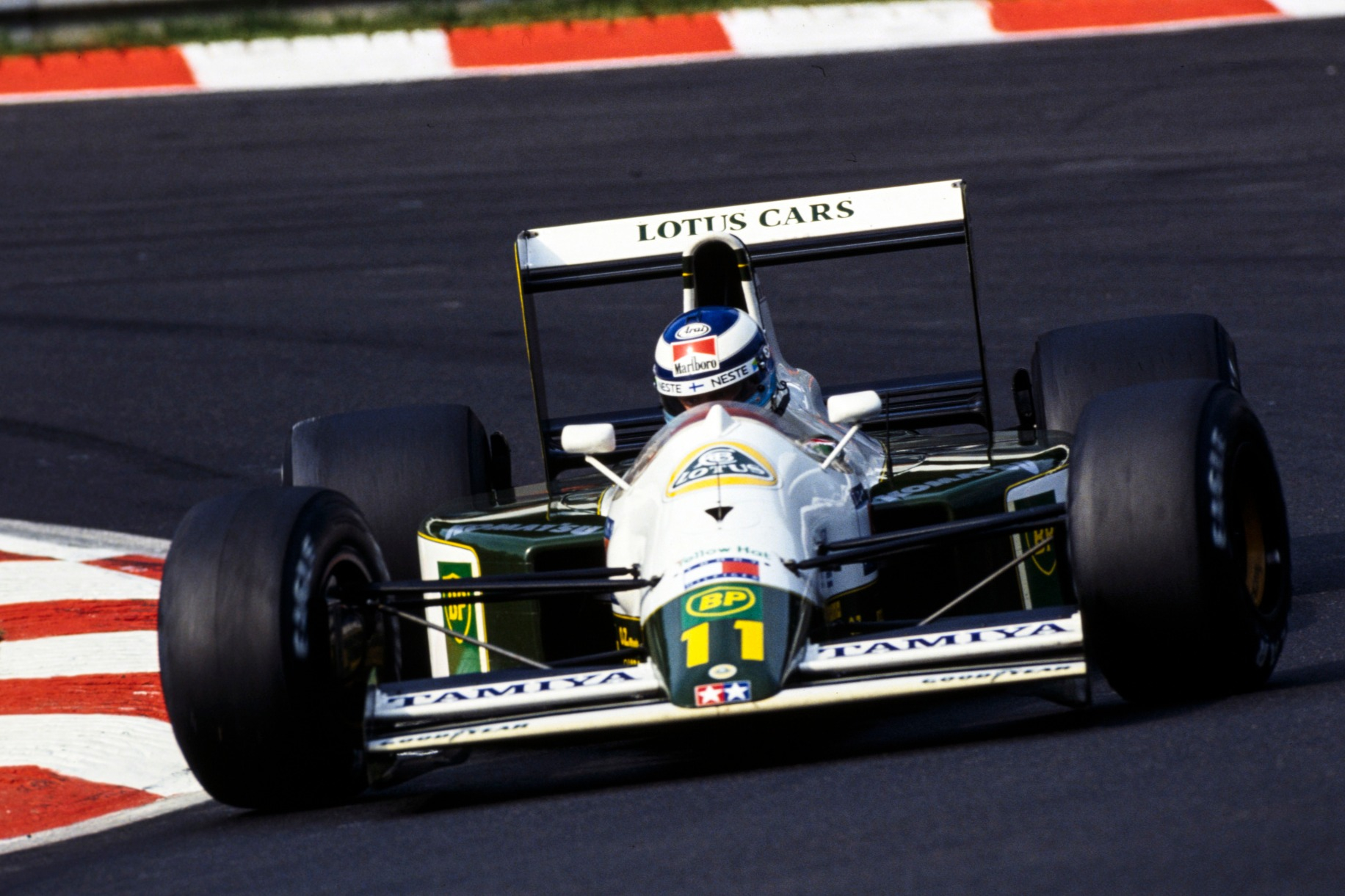
Upgraded 102B allowed Hakkinen to score points consistently at season's end, including with sixth at Spa
Photo by: Motorsport Images
In the end it was Ron Dennis who lured Hakkinen to McLaren, beating off the other suitors and a contractual challenge from Lotus. Looking back, Hakkinen has positive memories of his Lotus sojourn.
PLUS: How the driver who shocked Senna became an F1 legend
“The people were brilliant. They worked hard to find sponsorship, particularly in Japan with companies like Hitachi, Fujitsu and Yellow Hat – a clever approach because the Japanese loved the Lotus brand and its associations with the lotus flower, an important cultural symbol.
“We achieved a lot, some great results. I remain very grateful for that opportunity. To walk into Ketteringham Hall and see all the photographs of the drivers who had driven for Team Lotus before me reminded me of what an opportunity it was. It was a team with an incredible history, and one that I was proud to drive for.”
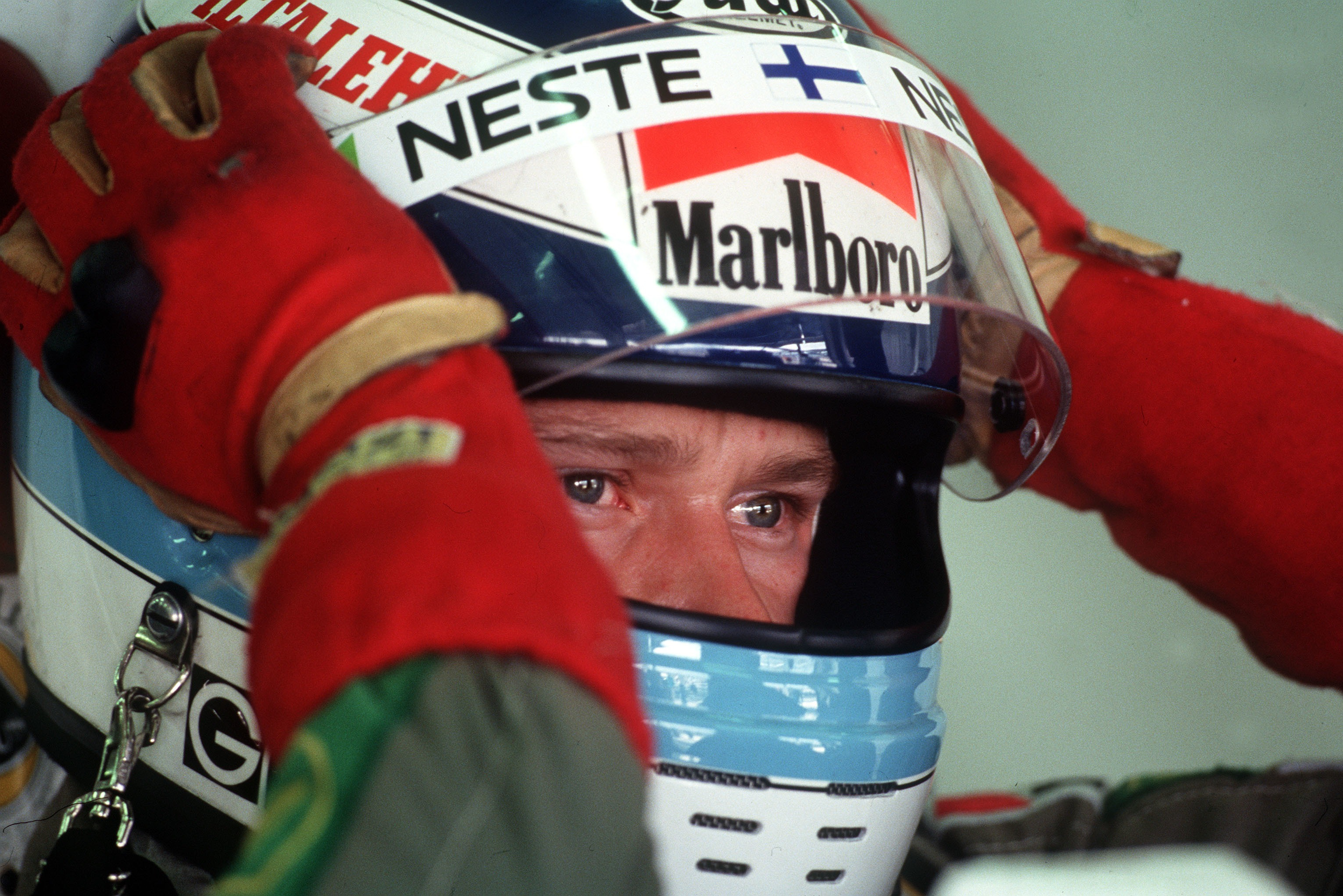
Lotus experience gave Hakkinen valuable tools for later title battles with Schumacher
Photo by: Motorsport Images

How Ratzenberger beat the odds to realise his cruelly short-lived F1 dream

F1 uncovered: A weekend behind the scenes with a chief mechanic

When McLaren was pipped by Red Bull in a modern F1 classic

The big opportunity Sainz’s Williams switch affords to F1’s latest centurion

Inside the science of F1 fuel

How F1’s plan for rotating races could look in practice

The early decisions that set Sauber’s rookie for success

How F1 media coverage has evolved in line with its subject

The big British GP chance F1 almost missed

What Alonso needs from Aston Martin and F1 as career decision looms

Why nationality should be 'no factor' as Haas considers Fornaroli and Camara for F1 2027

F1 drivers raise concerns over 'self-learning' power units – what's going on?
Subscribe and access Autosport.com with your ad-blocker.
From Formula 1 to MotoGP we report straight from the paddock because we love our sport, just like you. In order to keep delivering our expert journalism, our website uses advertising. Still, we want to give you the opportunity to enjoy an ad-free and tracker-free website and to continue using your adblocker.


Top Comments