


How Britain’s lost Ferrari star epitomised a bygone F1 era
The 1956 Italian Grand Prix was over for Juan Manuel Fangio, along with his hopes of winning the world championship – until his Ferrari team-mate (and title rival) voluntarily surrendered his own car so Fangio could continue. NIGEL ROEBUCK recalls Peter Collins, a remarkable sportsman
Peter Collins had it all. Blessed with movie star looks, and charm to match, he was everyone’s idea of what a 1950s racing driver should be, and for a time – sadly brief – he was among the best in the world.
The son of a motor dealer, Collins began racing in 1949 with a Formula 3 Cooper, and quickly made his mark. By 1952 he was into the world championship with HWM, at the same time joining the Aston Martin sportscar squad.
Back then drivers took part in all manner of events, and Collins drove many different cars, his performances in Tony Vandervell’s Thinwall Special leaving no doubts of his ability to handle power.
In 1955 Collins won the International Trophy at Silverstone in the Owen Racing Organisation’s Maserati 250F, and later that year gave the company’s first 2.5-litre BRM its debut at the Oulton Park Gold Cup. The car didn’t last long, but while it did Peter ran third, behind the factory 250Fs of Stirling Moss and Luigi Musso, but ahead of Mike Hawthorn and Eugenio Castellotti in Ferrari-entered Lancias.
After a one-off drive for Mercedes in the Targa Florio (where he shared the winning 300SLR with Moss), Collins was invited to a meeting with Enzo Ferrari, which put him in a competitive Formula 1 car for the first time.
In 1956 Peter truly arrived, scoring a first GP victory at Spa, his second at Reims. By Monza, the final race, Collins was in contention for the world championship, but if anything defines the man it was his selfless behaviour that afternoon.
When Juan Manuel Fangio retired, his day seemed done, leaving the title fight between Moss, leading in his Maserati, and Collins. After Musso made a routine stop, and declined to hand over to Fangio, Peter came in, and when he saw his idol sitting on the pit wall he immediately climbed out. That gave Fangio the points he needed for his fourth title, and when I interviewed Fangio, more than 20 years later, his eyes filled with tears as he remembered his young team-mate.
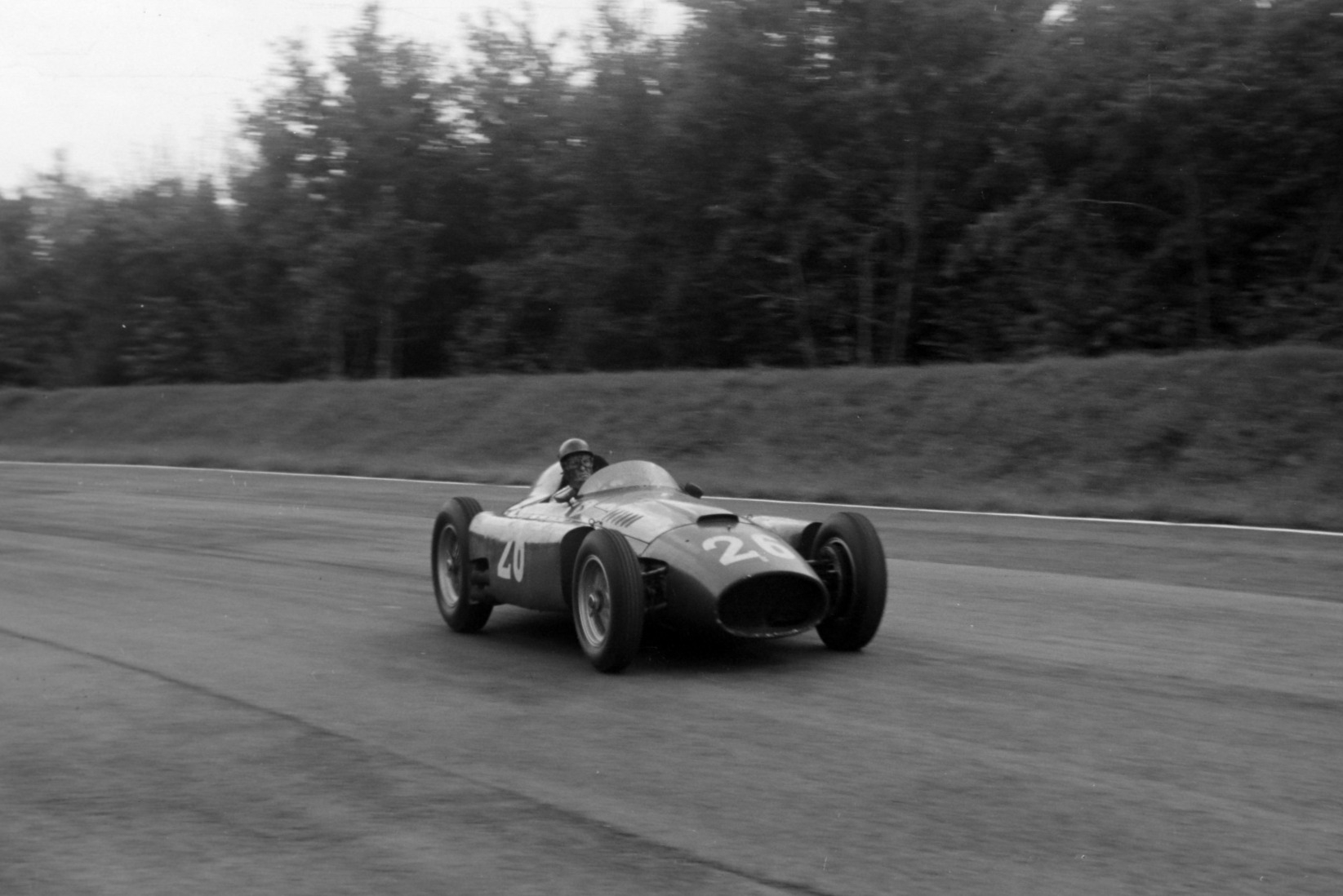
Collins sportingly gave his car up for Fangio in the 1956 Italian GP
Photo by: Motorsport Images
Collins, though, saw his action as nothing remarkable, as Louise, his widow, told me.
“Maybe it was easier to be a sportsman in those days, because there wasn’t the money – that wasn’t why those boys raced – but Peter revered Fangio, and he was only 24, and didn’t feel there was much urgency about winning the championship. Team spirit was important to him – what mattered, above all, was that someone in a Ferrari won the title. Probably that doesn’t make sense to the drivers today.”
“Of the two, on his day Mike was quicker, I think – but he didn’t have that many days, and overall I’d put Pete ahead. He was also very good company” Stirling Moss
This was a terribly perilous time to be a racing driver, particularly if you were with Ferrari. In March 1957 Castellotti was killed while testing at Modena, and two months later, in the Mille Miglia – which Collins was on course to win until his car failed late in the day – Alfonso de Portago died, together with several spectators.
“It’s odd what the mind can do,” said Louise. “There was always this justification – this belief that it could never happen to anyone else. Peter once started to say something about, ‘If anything ever happens to me’, and I said, ‘Oh, shush...’ I know it’s a cliche to talk about living for the moment, but that’s what we did. The world was a different place back then.”
The relationship between Ferrari and Collins was unusually close.
“Enzo looked upon Peter as a surrogate son, and it was the same with his wife, who always wore black – they’d lost their only son, Dino, in the summer of 1956, and went to the cemetery every day,” said Louise. “I don’t mean to sound hard, but it struck me as very theatrical somehow. Eventually Peter went to see Ferrari, said he was neglecting the company, and in effect told him to snap out of it. People couldn’t believe that anyone would dare to say something like that to Ferrari, but actually he accepted it, and was much lighter after that.”
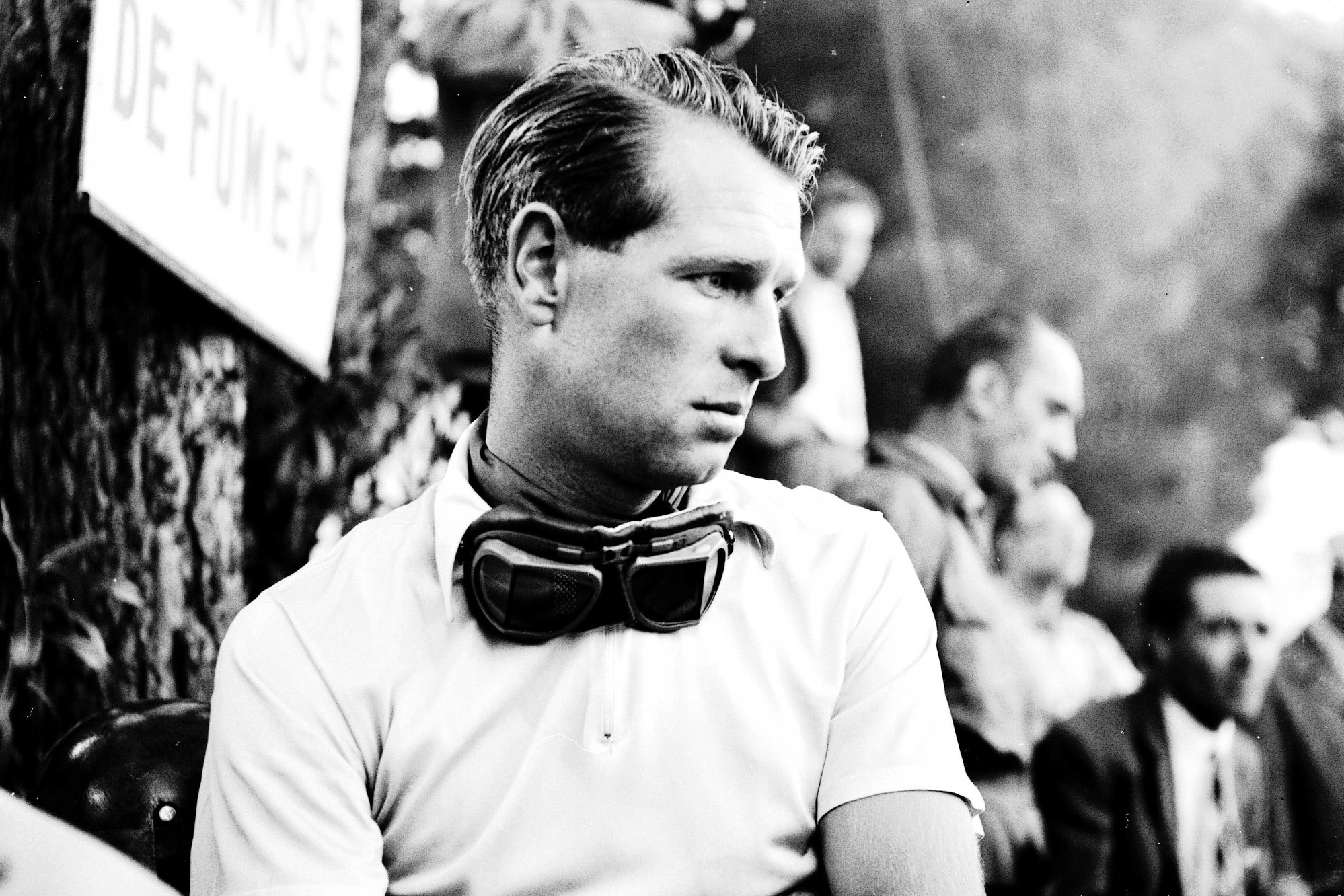
Collins was widely respected by his peers, and had the charm to epitomise his era
Photo by: Motorsport Images
In terms of results, 1957 was a poor year for the team, but for Collins there were compensations: for one thing, his friend Hawthorn had rejoined Ferrari; for another, this was the year he married Louise, a Broadway actress, a week after meeting her.
Ferrari was in better shape in 1958, Collins beginning the season with victories in the International Trophy and – partnering Phil Hill – the Buenos Aires 1000 Kms and the Sebring 12 Hours.
His friendship with Hawthorn was a close one. Some suggested it compromised Ferrari against the onslaught of a Vanwall team comprising Moss, Tony Brooks and Stuart Lewis-Evans: such good mates were they it didn’t seem to matter which won.
“There was something in that,” said Moss. “Of the two, on his day Mike was quicker, I think – but he didn’t have that many days, and overall I’d put Pete ahead. He was also very good company.”
Hill concurred: “Peter was just a charming guy, whereas Mike was hard for anyone to get along with – although I was quickly on to him, and never had any problems with him.”
As 1958 unfolded, Vanwall had slightly the edge, and it wasn’t until July that Ferrari won a world championship grand prix. Hawthorn led all the way at Reims, but there was more tragedy for the team, for Musso crashed early in the race and was killed.
Next on the schedule was Silverstone. Hawthorn and Collins qualified only fourth and sixth, but Peter made a fantastic start, at Becketts passing Moss for a lead he was never to lose. Louise remembered a perfect day: “The weather was great, and Silverstone had an English garden party atmosphere back then. Once Peter was in front, no one could challenge him. Wonderful.”
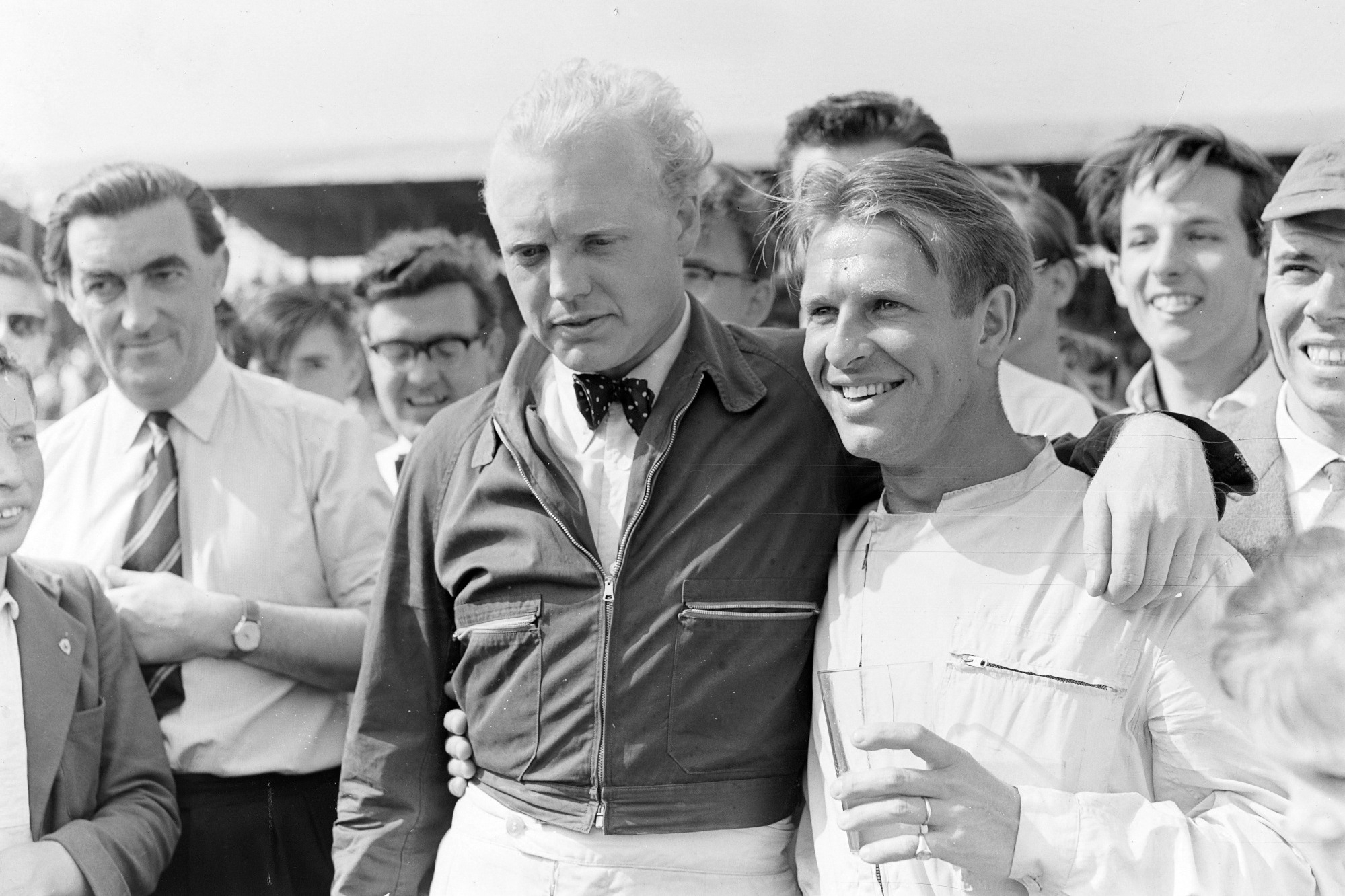
Collins is congratulated by Hawthorn after winning the 1958 British GP
Photo by: Motorsport Images
Now it was on to the Nurburgring, where the year before Collins and Hawthorn had fought an unforgettable, if unsuccessful, battle with Fangio on his day of days. This time around the scenario was uncannily similar, the two of them swapping the lead – and being caught by an inspired driver from another team, in this case Brooks and his Vanwall.
Race of my life: Juan Manuel Fangio on the 1957 German GP
“They had me on top speed,” Brooks recalled, “so my only hope was to snatch the lead early in the lap, and pull out enough that they couldn’t pass on the long straight at the end of it. Eventually that worked out, and the tragedy was that Peter, trying to stay with me, overdid it…”
"There was a feeling that the boys were all doing something they loved, and weren’t they lucky? Peter and I weren’t together very long, but it was the happiest time of my life" Louise Collins
Collins went off at Pflanzgarten, and was thrown from his somersaulting car against a tree. His death, only two weeks after the Silverstone victory, caused enormous grief, for the debonair Peter had personified all that was good about sport.
For Louise Collins, married only a year, it was an unimaginably awful time, but she had no bitterness as she looked back.
“Racing was so different then – much more dangerous, and not highly paid – but it seems to me there was much more joy in it. There was a feeling that the boys were all doing something they loved, and weren’t they lucky? Peter and I weren’t together very long, but it was the happiest time of my life.”

Collins gives his ill-fated pursuit of Brooks in the 1958 German GP
Photo by: Motorsport Images

How Ratzenberger beat the odds to realise his cruelly short-lived F1 dream

F1 uncovered: A weekend behind the scenes with a chief mechanic

When McLaren was pipped by Red Bull in a modern F1 classic

The big opportunity Sainz’s Williams switch affords to F1’s latest centurion

Inside the science of F1 fuel

How F1’s plan for rotating races could look in practice

The early decisions that set Sauber’s rookie for success

How F1 media coverage has evolved in line with its subject

Ogier: Portugal WRC loss “hard to accept” after late puncture

BTCC Brands Hatch: Ingram takes first win of 2026 in race three

"It's only going to get better" - How Audi is responding to rocky start to F1 2026

BTCC Brands Hatch: Taylor-Smith takes shock win aboard Toyota in race two
Subscribe and access Autosport.com with your ad-blocker.
From Formula 1 to MotoGP we report straight from the paddock because we love our sport, just like you. In order to keep delivering our expert journalism, our website uses advertising. Still, we want to give you the opportunity to enjoy an ad-free and tracker-free website and to continue using your adblocker.


Top Comments