


How “abysmal” reliability blunted Brabham’s first winner
Brabham’s first world championship race-winning car was held back by unreliable Climax engines – or so its creators believed, as STUART CODLING explains
Jack Brabham was a racer ahead of his time: commercially savvy; brusque bordering on ruthless in his on-track manners; and as adept at stripping down an engine as he was at flinging a broad variety of cars around the circuits of the day. Brabham knew what he wanted from a racing car and how to get it – little wonder that he should become the first driver to win the world championship in a car bearing his own name.
Mechanically gifted, Brabham had quit school at 15 to work in a local garage, then set up his own business buying, fettling and selling second-hand motorbikes before joining the Australian air force as a mechanic. His earliest experiences of racing came in self-built, motorcycle-engined midget cars on dirt ovals, and the reflexive driving style never left him.
In road racing he demonstrated a tendency to flirt with what was possible and permissible: rivals would speak ruefully of the way he would deliberately put a back wheel in the dirt while cornering to flick stones at his pursuers; and he had an early run-in with the Australian motorsports body over sponsorship. Having reached a compromise to cover the Redex logos on his Cooper-Bristol rather than removing them, Brabham applied a loosely attached layer of masking tape which detached at speed, sending the officials apoplectic.
Indubitably he was cut from the correct cloth to attain success in the more thrusting and entrepreneurial era to come, one dominated by the British-based car makers once derided by Enzo Ferrari as ‘garagistes’.
Europe beckoned. Brabham’s mechanical engineering skills furnished his integration into the Surbiton-based Cooper Cars organisation, where his flourishing talent behind the wheel became obvious on the European racing scene. Resettling his family in the UK, Brabham claimed the 1959 Formula 1 world championship by a slim margin, and somewhat against expectations, in the diminutive rear-engined Cooper T51. F1 had reached a turning point: the front-engined era was over.

Brabham became a double world champion with Cooper, but cracks soon appeared in the relationship
Photo by: Motorsport Images
Brabham won the 1960 title more convincingly with five consecutive victories mid-season, but only after winning a proverbial arm-wrestle with the Cooper principals over car development. Father-and-son Charles and John Cooper were fundamentally change-averse, designer Owen Maddock - if Brabham is to be believed - even more so.
"I couldn’t believe it when he [Maddock] took up gliding as a hobby," Brabham wrote in his autobiography. "I was pretty sure old Owen would find some situation in which he would convince himself he was right regardless of what the flight instruments or even any basic sense of self-preservation might be telling him."
In resolving the argument to develop the ‘Lowline’ Cooper T53 – with straight rather than curved chassis tubes, coil-over-shocks instead of leaf springs in the rear suspension, and the engine and transmission mounted an inch lower – Brabham paved the way for going it alone.
In partnership with Ron Tauranac, who designed the step-down transmission which enabled the lower mounting of the 1960 title-winning T53’s engine, Brabham founded Motor Racing Developments in 1961. It was a suitably anonymous name for a company whose co-owner was seeing out his Cooper driving contract. The first product of the Brabham-Tauranac partnership was a Formula Junior chassis which Gavin Youl raced to victory in the Australian Formula Junior Championship in 1962.
The BT3 prototype delivered some useful lessons: neither Brabham nor Tauranac were inclined to follow Lotus into monocoque construction, believing a properly engineered spaceframe could be just as light and stiff
F1’s transition to 1.5-litre engines produced an outlier season in 1961, dominated by Ferrari principally because other manufacturers were slow to produce engines for the new formula. The balance tilted back in favour of the garagistes as more competitive engines became available, though Brabham was unimpressed with the quality and consistency of the Coventry Climax V8s he campaigned in customer Lotus chassis through 1962 as his own prototype F1 car took shape.
Neither was he enamoured of the Lotus 21 or 24, finding them both “as tight as a sardine can” and intolerably hot, owing to the internal plumbing. During the British GP at Aintree, Jack blistered his right foot on a hot pipe and had to discard the burned shoe afterwards.
The BT3 F1 prototype took shape in Motor Racing Developments' new premises in the Weylock Works, a fittingly nondescript unit on the banks of the River Wey in New Haw. Introduced at the 1962 German GP, it saw action in just a handful of world championship races, though Brabham campaigned it in non-championship events even after it was superseded by the BT7.
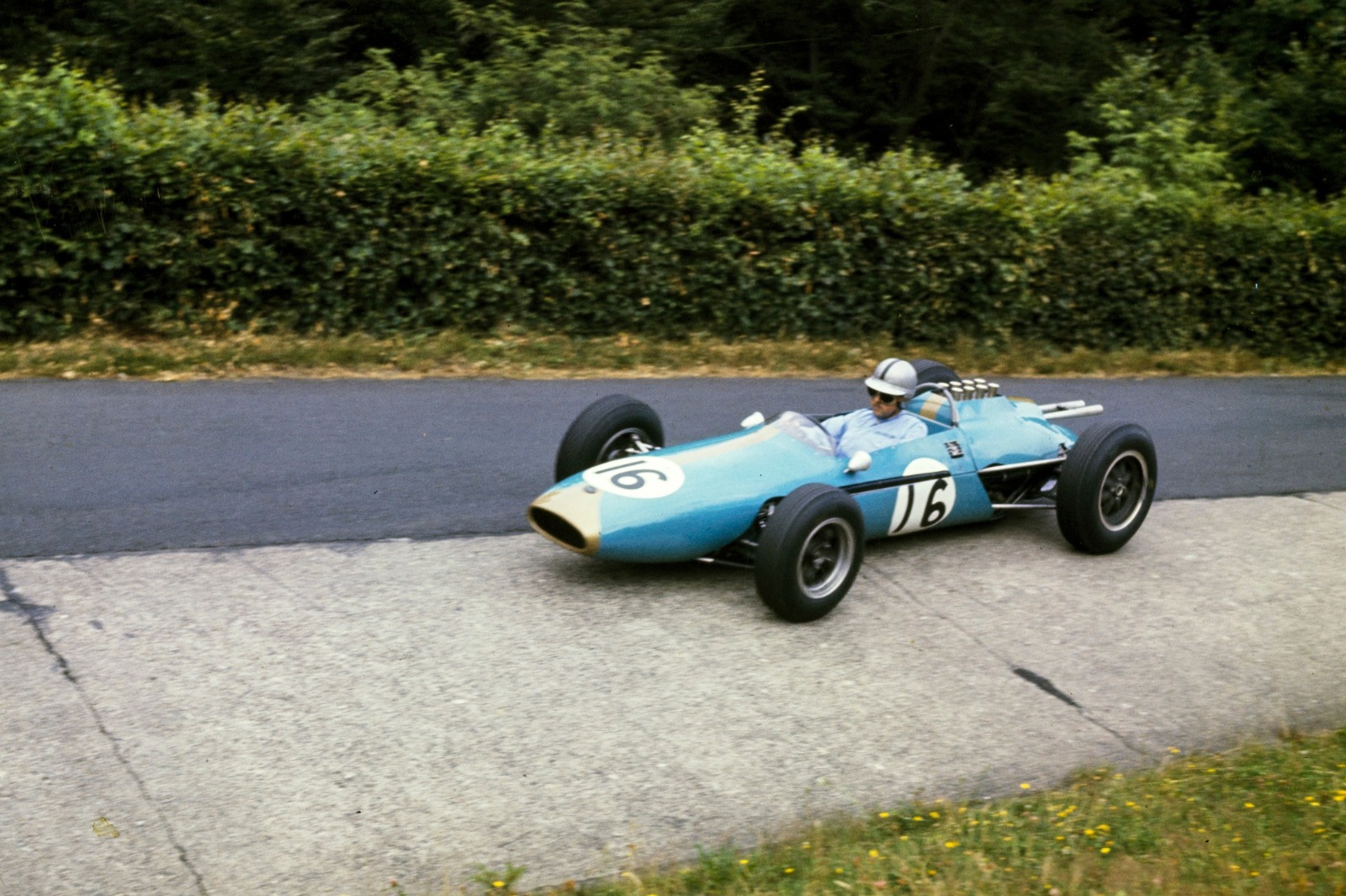
Brabham gave BT3 prototype its debut at the 1962 German GP, where he retired on lap nine with a broken throttle linkage
Photo by: Motorsport Images
The prototype delivered some useful lessons: neither Brabham nor Tauranac were inclined to follow Lotus into monocoque construction, believing a properly engineered spaceframe could be just as light and stiff, and Brabham was delighted with the new car’s handling. Running 13-inch rather than 15-inch front wheels wasn’t so successful, though, as Brabham discovered when his brake pads wore out mid-way through the non-championship Oulton Park Gold Cup. The Colotti gearbox and Climax engine also proved fragile.
Brabham and Tauranac quickly dropped the 13-inch front-wheel set-up and made further developments to the concept of the BT7, including time in the Motor Industry Research Association windtunnel to refine the shape of the nose, which had been generating lift. The original BT3 was retained as a spare, with 25kg stripped from it, as the team expanded to enter two cars for Brabham and Dan Gurney in 1963.
In Gurney, Brabham found a kindred spirit of sorts. Not only was Dan a racer from the top drawer, he possessed mechanical aptitude he would later bring to car manufacture through his own company. But the results would take time to flow.
The BT7 was lighter than the prototype, and featured a new five-speed Hewland gearbox based around a Volkswagen casing – which proved reliable enough after a troubled introduction in Monaco. Both drivers appreciated the comfort of the roomy chassis with its external coolant pipe runs. The car handled sweetly enough, though the slimline monocoque Lotus 25, which ran theoretically identical Climax engines (now with Lucas fuel injection instead of carburettors), had the advantage in a straight line.
Theoretically. As the season wore on, Brabham became convinced he was receiving unequal service from the manufacturer which had delivered him to two world titles. The reliability of the 1.5-litre Climax V8 had been suspect since its introduction, and in Brabham’s cars it proved exceptionally vexatious.
A string of problems in non-championship races left Brabham short on engines for the start of the 1963 F1 season proper, in Monaco, where Jack had a rebuilt engine flown in on Saturday – just in time to learn that Gurney’s had dropped a valve during practice and expired messily. Gurney was given the ‘new’ engine and Brabham borrowed Lotus’s spare 25 from Colin Chapman, a generous professional courtesy and one which left Brabham impressed by the monocoque car’s traction and agility, if not by the gearbox.
Engine failures came to define Brabham’s season, and the picture wasn’t improved by the development of a revised unit with a flat-plane crank which demanded a different exhaust and oil inlet set-up. Gurney finished second at Zandvoort despite a late pitstop to fix a sagging oil line, then fifth at Reims a week later, where the team arrived late owing to the time taken effecting repairs.
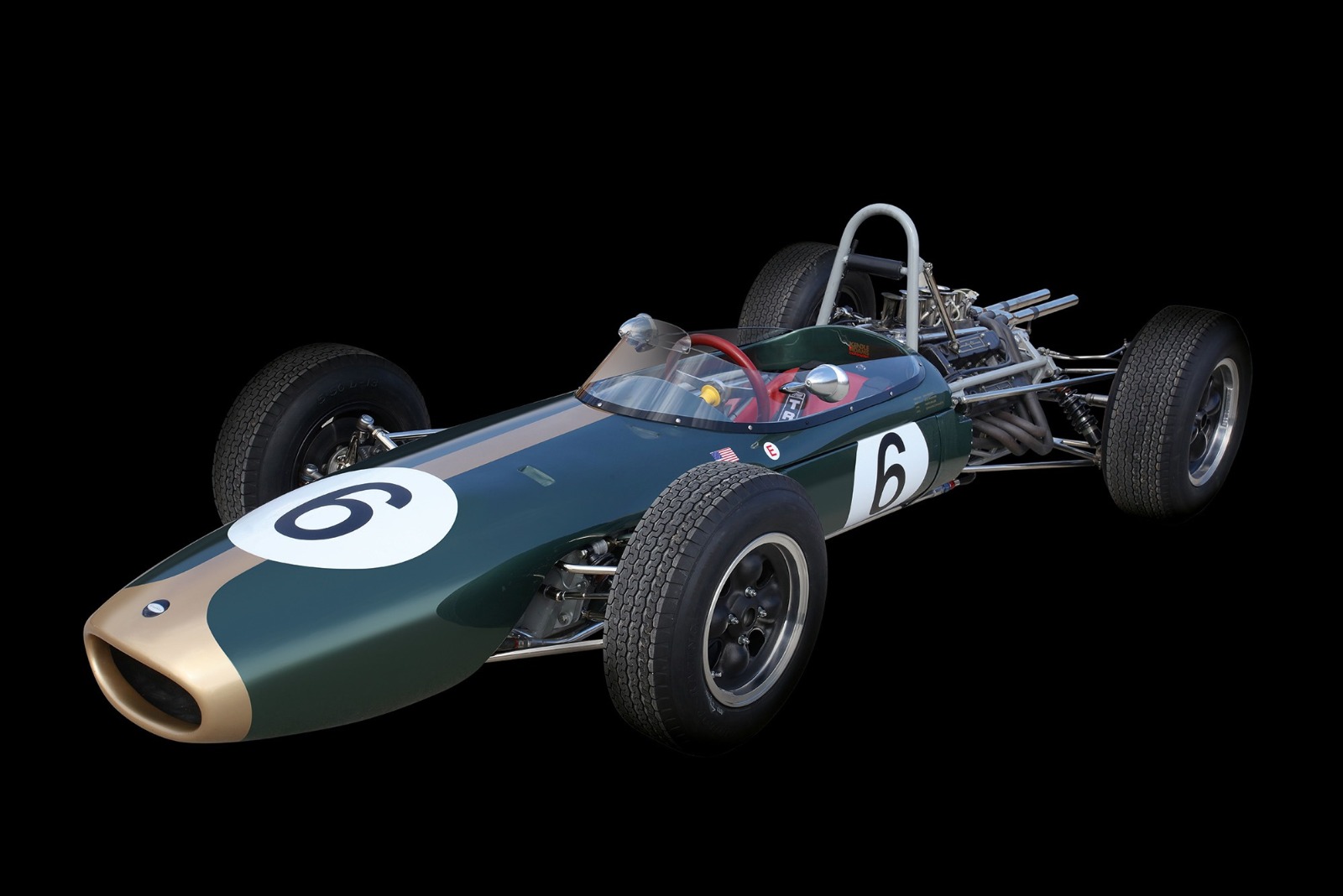
BT7 was quick, if not quite as fast as Lotus's offerings, and often thwarted by engine failures
Photo by: James Mann/GP Racing
Twin failures at the subsequent British GP led to Brabham slimming down to a one-car entry – Jack in the BT3 – for the non-championship Solitude Grand Prix. There Jack salved some of the pain by becoming the first driver to win an F1 race in a car of their own making.
“Having once been Climax’s favourite customer,” ruminated Brabham, “it was galling now to realise how much we were receiving second best. Where the four-cylinder Climax FPF engines had been virtually unbreakable, the Climax V8 was, in my experience, never much good. It was rough-running, never really nice to drive, and worse, its reliability, in our cars at least, was often abysmal.”
Ultimately the BT7 was not quite as quick as the Lotus 25 and, later, the Lotus 33. While many retirements came while Brabham and Gurney were occupying points-scoring positions, generally those places were best-of-the-rest behind Clark
While Brabham’s frustrations were understandable, particularly in 1963 when Jim Clark won seven of the 10 world championship rounds, the following season three of Clark’s four retirements were engine-related. And many of the BT7’s retirements were caused by flaky fuel pump filters and failures of the electronic ignition’s transistor box, elements sensitive to location and installation across different chassis designs.
Ultimately the BT7 was not quite as quick as the Lotus 25 and, later, the Lotus 33. Regardless whether Lotus was receiving preferable treatment from its engine supplier, its slim monocoque chassis forged an easier path through the air – a crucial advantage in this low-power era. While many retirements came while Brabham and Gurney were occupying points-scoring positions, generally those places were best-of-the-rest behind Clark.
Dunlop’s new 13-inch R6 tyres prompted a change in suspension geometry for 1964. The season started brightly as Brabham won the non-championship Aintree 200 and Silverstone International Trophy. Success in championship rounds seemed to remain frustratingly out of reach, though, as Gurney led commandingly at Spa only to run out of fuel.
Next time out, at Rouen, Gurney was running second to Clark when the Lotus’s engine failed. Now, finally, Brabham’s name took its place on the roster of championship race-winning marques. Gurney would win again in Mexico at the end of the season, but by then neither driver was in the hunt for the title. Powertrain issues had contributed to seven retirements and several other missed points-scoring opportunities despite the BT7’s pace.
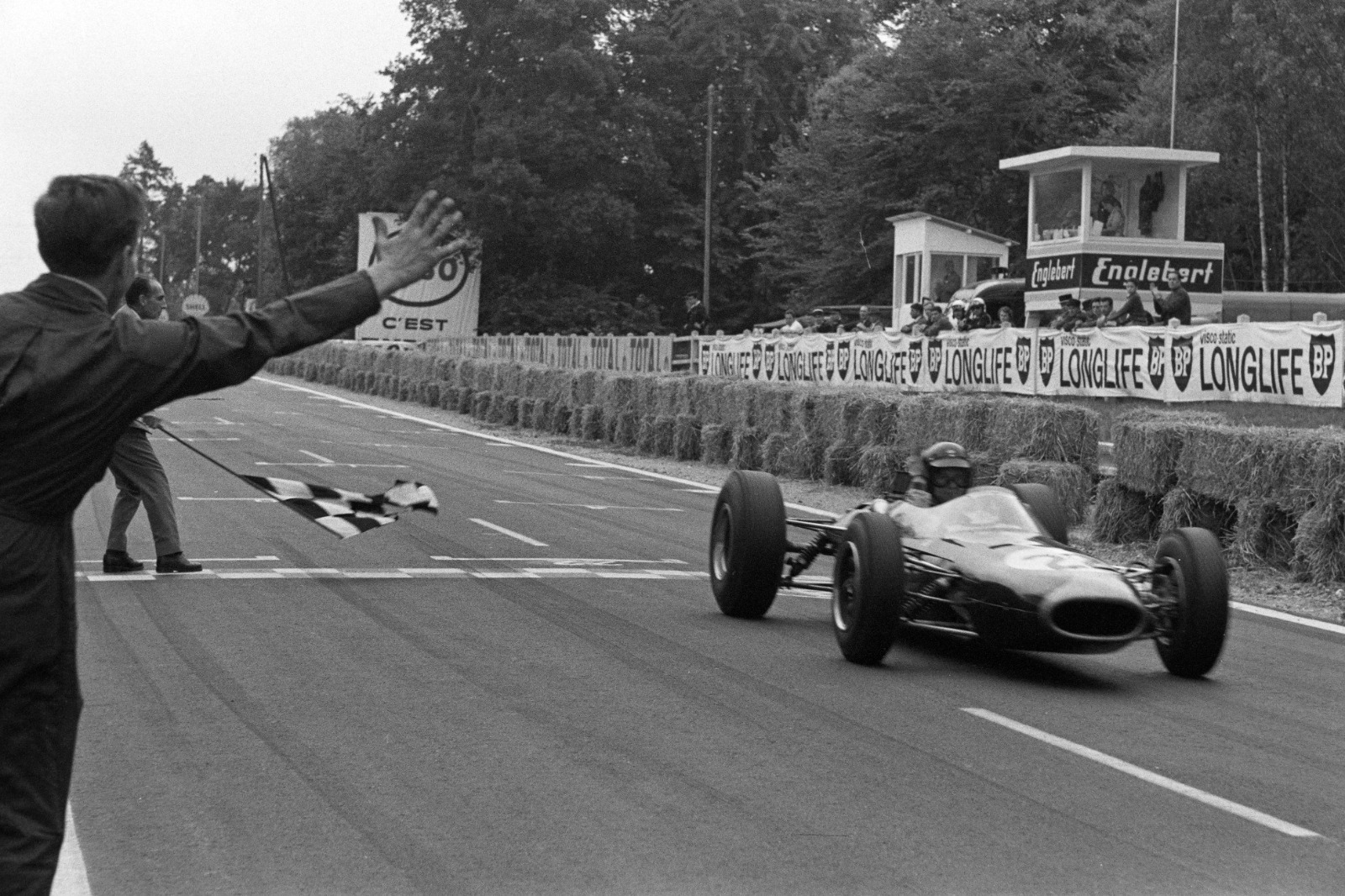
Gurney took victory in the BT7 at the 1964 French GP after Clark's engine failed
Photo by: Motorsport Images
Still, Motor Racing Developments had a full order book for its junior single-seaters and its new, customer BT11 F1 chassis. An exclusive tyre supply deal with Goodyear meant the final season of the 1.5-litre era would be an interim year in more ways than one as the new manufacturer got up to speed, but it put Brabham’s racing team on a proper financial footing at last – and enabled him to draw plans for the 3-litre era to come...
Race record
Starts: 52
Wins: 2
Poles: 2
Fastest laps: 4
Podiums: 6
Drivers championship points: 61
Specification
Chassis: Steel spaceframe
Suspension: Double wishbones with coil springs/dampers (front), lower wishbones with parallel radius arms and coil springs/dampers (rear)
Engine: 90-degree naturally aspirated Climax FWMV V8
Engine capacity: 1495cc
Power: 195bhp @ 9,500 rpm
Gearbox: Five-speed manual
Brakes: Discs front and rear
Tyres: Dunlop, Goodyear (1965), Firestone (Bonnier 1966)
Weight: 475kg
Notable drivers: Jack Brabham, Dan Gurney, Denny Hulme, Jo Bonnier, Giancarlo Baghetti
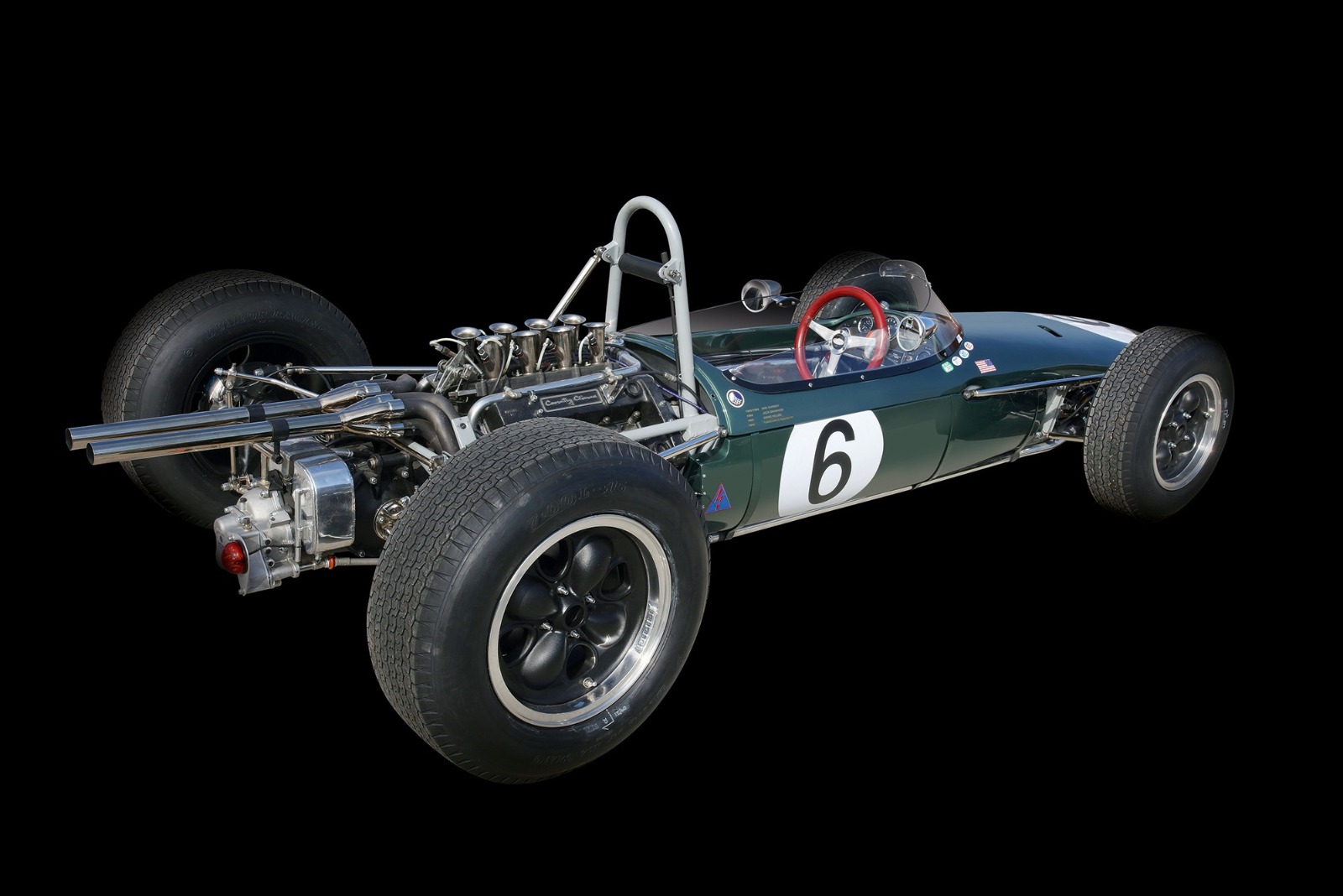
Brabham became a world championship grand prix-winning constructor with the BT7, but greater successes would follow
Photo by: James Mann/GP Racing

How Ratzenberger beat the odds to realise his cruelly short-lived F1 dream

F1 uncovered: A weekend behind the scenes with a chief mechanic

When McLaren was pipped by Red Bull in a modern F1 classic

The big opportunity Sainz’s Williams switch affords to F1’s latest centurion

Inside the science of F1 fuel

How F1’s plan for rotating races could look in practice

The early decisions that set Sauber’s rookie for success

How F1 media coverage has evolved in line with its subject

Horner's inside story of how Red Bull built its own F1 engine

Exclusive video: Christian Horner interview on his Red Bull exit, Mercedes rivalry and more

Top five roles on Motorsport Jobs this week

M-Sport’s 2027 WRC Fiesta Kit car breaks cover
Subscribe and access Autosport.com with your ad-blocker.
From Formula 1 to MotoGP we report straight from the paddock because we love our sport, just like you. In order to keep delivering our expert journalism, our website uses advertising. Still, we want to give you the opportunity to enjoy an ad-free and tracker-free website and to continue using your adblocker.


Top Comments