




F1’s underrated free spirit who stood up to Ecclestone
Nelson Piquet loved racing, hated gladhanding sponsors, and wanted to be adequately compensated for his talents. Nigel Roebuck recalls how that set Piquet on course for conflict with a team boss he felt was exploiting his loyalty
After winning karting and Formula Vee championships in his native Brazil, Nelson Piquet came to Europe in 1977, winning innumerable F3 races before making his F1 debut with Ensign at Hockenheim the following year. After further grands prix in a privately entered McLaren, there came an invitation to drive a factory Brabham-Alfa at the final race, Montreal. It was the start of a long love affair.
Piquet was always a maverick in F1, as also was Bernie Ecclestone’s team: over the next seven seasons there were 13 victories, and twice Nelson won the world championship.
Rarely do you come across a relationship between team and driver like this one. For one thing, there was a fundamental empathy between Ecclestone and Piquet; for another, an almost telepathic working relationship developed between Nelson and technical director Gordon Murray. It went further than that, though: everyone in the team, including such as Charlie Whiting and Herbie Blash, genuinely adored their free spirit of a driver.
It was the ideal environment for one of Piquet’s personality – and not one he could have found anywhere else. Like Kimi Raikkonen today, he had no interest in anything to do with F1 save driving. His attitude to PR was simple: he wouldn’t do it. Happily, Brabham was never a team which paid much heed to PR, and Parmalat, the major sponsor, made no demands of Nelson, so it was a perfect fit.
“At one point,” he told me, “Ron Dennis spoke to me about joining McLaren, and he mentioned so many days a year working for Marlboro and others…forget it, I lost interest. I won’t spend my life talking to people who don’t understand racing.
“Basically, I’m lazy. When I’m not at a track, I like to get back to my boat, and disappear. I swim and ski, watch a lot of TV, lie around, do nothing. That’s the way I am – and when I turn up at a race, I feel fresh…”

Piquet downloads with Brabham technical director Gordon Murray in 1982 - Brabham was a perfect fit for the Brazilian's laid-back attitude
Photo by: Motorsport Images
Piquet took his first grand prix victory in 1980, his first championship the year after. At Las Vegas, the final race, he finished fifth, and though those points were enough to lift the title, I have rarely seen a more exhausted driver than Nelson that blazing day in the desert. His fitness was never on par with Alain Prost, or even a chain-smoking Keke Rosberg.
Two years later, in the beautiful BMW-powered Brabham BT52, Nelson won the championship again, but one aspect of life with Bernie’s team increasingly gnawed at him. At the Osterreiching in 1985 we talked about it, and it remains one of the most remarkable conversations I ever had with a racing driver.
I had been watching at the Boschkurve, and as I passed a caravan near the paddock entrance, there was a knock on the window. I saw Nelson’s face, half hidden behind a curtain. He beckoned me in.
Since the beginning of time, as the summer wears on, an F1 paddock becomes increasingly dominated by rumours about the following season. Back then there was not the Masonic secrecy of today, but still folk kept their cards close to their chest. Not on this occasion. “Help me,” Piquet said. “I don’t know what to do next year.
As his anger mounted, so he spoke faster and louder. Then he stopped abruptly, and was silent a moment or two. “If I stay with Brabham another year, people will think I’ll never leave,” he murmured. “Bernie thinks that now...”
“Sometimes,” he went on, “I think about Pele and Garrincha. They were superstars across the world – and they finished their playing days with nothing! Pele had to go to the New York Cosmos when he was an old man in football terms, to make some money, so now he’s OK, but otherwise... I tell you one thing. That’s not going to happen to me.”
I’ll admit I was taken aback, for Piquet had been the mainstay of Brabham for so long that he was regarded as a fixture, in the manner of Jim Clark at Lotus. Clearly, though, he felt he had been taken for granted for too long.
“So many people have said, ‘Oh, Piquet – he has simple tastes, loves to race, doesn’t care about money’. Bah! I’ve been screwed for seven years. At first I didn’t mind because I’d joined one of the great teams, and it was my big chance. I knew that very well. So did Bernie.
“Since then I’ve been world champion twice, stayed loyal to one team – and Prost is earning three times as much as I am. I don’t know how you rate us, but for sure Alain isn’t three times better!”
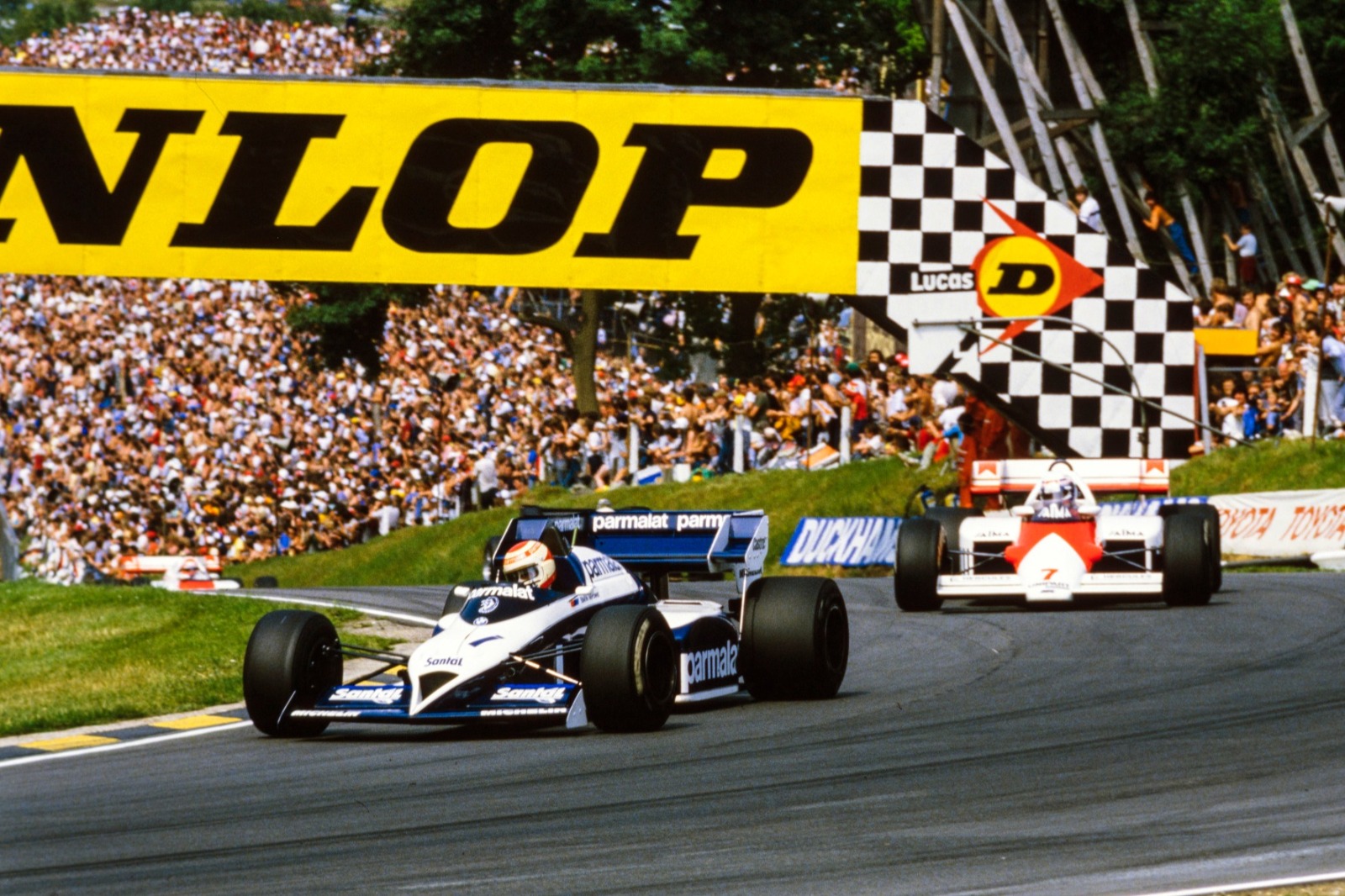
Piquet was concerned that his loyalty was taken for granted at Brabham, as the likes of Prost earned considerably more
Photo by: Motorsport Images
It didn’t help also that for 1985 Ecclestone had accepted a pot of gold from Pirelli, which was all very well for him, but held fewer attractions for his drivers.
“Bernie’s switch from Goodyear to Pirelli – without telling me beforehand – has had a big effect on my attitude to the team,” Nelson said. “For one thing, the tyres are usually uncompetitive; for another, Pirelli totally rely on me – I’ve done the equivalent of 75 grands prix in testing for them! Forget bloody PR, this is real work for a driver – and that’s why I should be paid what I’m worth.”
As his anger mounted, so he spoke faster and louder. Then he stopped abruptly, and was silent a moment or two. “If I stay with Brabham another year, people will think I’ll never leave,” he murmured. “Bernie thinks that now...”
All this being so, then, which alternative was causing Nelson so much soul-searching? “It’s Williams,” he said immediately.
Normally, a racing driver will chew on razor blades before discussing financial matters, but Nelson was never a man for inhibitions: “I’m getting $1million from Bernie,” he said, “and I asked for double – which is still a lot less than Prost is getting. He’s offered me $1.6m, plus a thousand dollars a championship point, and for sure he’s thinking it will be just enough to keep me.”
I asked about the Williams offer. “Three point three million dollars,” Nelson replied, “plus ten thousand dollars a point!”
It said everything about his feelings for Brabham that Piquet still had misgivings about going elsewhere. “I don’t want to leave, but… I don’t want to finish up like Garrincha. I’ve told Frank I’m ready to sign – am I doing the right thing?” The decision, I said, was surely a simple one. He nodded.
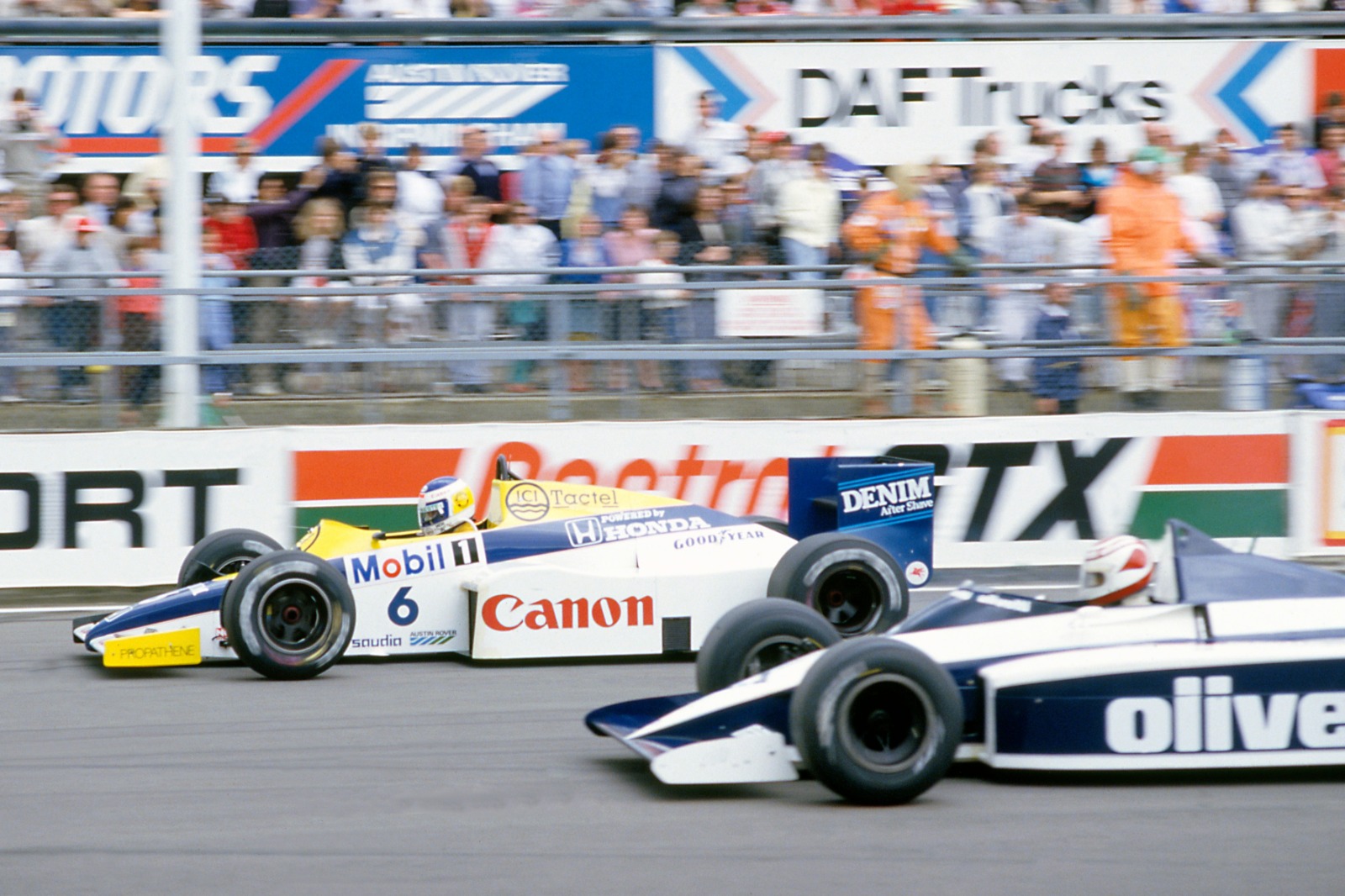
Brabham's move to Pirelli for 1985 also unsettled Piquet, who eyed the resurgent package at Williams
Photo by: Motorsport Images
Conversations like this invariably started with ‘Off the record’, but it was typical of Nelson that he should bare his soul, then say, as an afterthought, “No writing for now, OK? Not until it’s settled.”
So he signed with Williams, where he collected another world title in 1987 before moving to Lotus, then to Benetton, for whom he scored three more wins before retiring from F1 at the end of 1991. Brabham, following Nelson’s departure, never won another race.
Piquet, it has seemed to me, is one of those drivers – like Jack Brabham, like Mika Hakkinen – curiously underrated in motor racing history. As Jack and Mika were multiple world champions, so too was Nelson, yet rarely do their names crop up in discussion of F1’s all-time greats. Indisputably that is where they all belong.
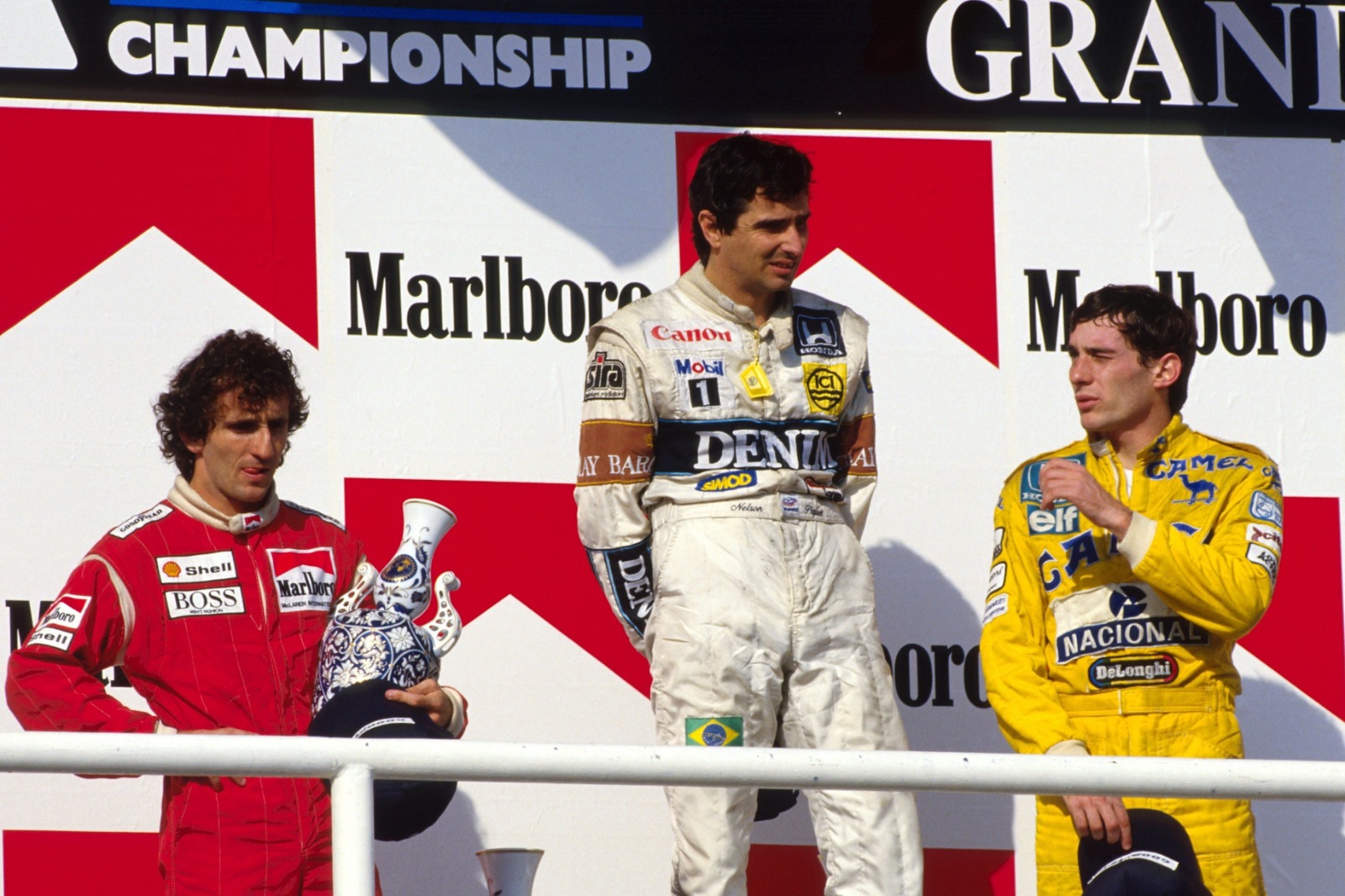
Piquet duly switched to Williams in 1986 and, after his near-miss that year, took a third world title in 1987 despite winning only three races
Photo by: Motorsport Images

How Ratzenberger beat the odds to realise his cruelly short-lived F1 dream

F1 uncovered: A weekend behind the scenes with a chief mechanic

When McLaren was pipped by Red Bull in a modern F1 classic

The big opportunity Sainz’s Williams switch affords to F1’s latest centurion

Inside the science of F1 fuel

How F1’s plan for rotating races could look in practice

The early decisions that set Sauber’s rookie for success

How F1 media coverage has evolved in line with its subject

WEC Barcelona: Genesis secures maiden series pole from Toyota

What drives Bortoleto as his junior rivals hit new heights in F1

How the M8B became the most dominant car in McLaren’s history

What Verstappen knew about Red Bull’s big upgrade when he signed his new F1 deal
Subscribe and access Autosport.com with your ad-blocker.
From Formula 1 to MotoGP we report straight from the paddock because we love our sport, just like you. In order to keep delivering our expert journalism, our website uses advertising. Still, we want to give you the opportunity to enjoy an ad-free and tracker-free website and to continue using your adblocker.


Top Comments