


F1 teams prepare for Austin US GP by shedding cooling adaptations
Formula 1 teams will shed the extreme cooling solutions used in Mexico City for the upcoming United States Grand Prix, where air density is at a more reasonable level


The altitude of the Autodromo Hermanos Rodriguez was a considerable factor throughout the Mexican Grand Prix weekend, with particular attention being paid to the pervasive thinner air.
Mexico City stands at an altitude of 2250m, which means that the air is about 20% less dense than that at sea level.
Austin, the next venue on the F1 calendar, is comparatively lower at 160m above sea level - so the density will be closer to standard values.
With low air density, the turbocharger and compressor work harder to maintain the internal combustion engine's power output, while the overall cooling requirement is reduced due to the decreasing mass of airflow through the cooling systems.
To combat the increased power unit temperatures experienced in Mexico, the rear bodywork on the cars was opened out to shift the heat outwards.
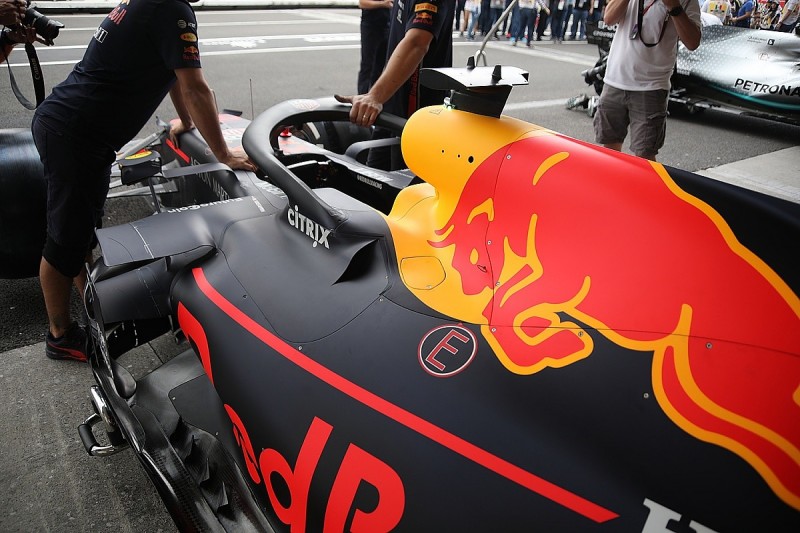
As well as additional cooling, Red Bull also ran with an aperture behind the halo to bleed hot air out from the radiators in the sidepod - as seen in Giorgio Piola's picutre below.
Brake cooling was also a factor in determining the packages for Mexico, and Mercedes ran with its largest brake ducts to ensure its discs could remain in their effective window.
Other squads also ran their most extreme cooling solutions, but teams generally elect not to create specialist packages for Mexico as the trade-off between downforce and cooling is already compromised.
Although increasing the cooling preserves the life of internal components more readily, it also cuts downforce - already at a premium in Mexico - due to an increased blockage effect.
At Austin, such compromises should not be as forthcoming given the more conventional conditions around the circuit with the almost-2100m reduction in altitude.
The lowest altitude on the calendar is in Azerbaijan, where the city of Baku sits 28m below sea level.
Share Or Save This Story


FIA expects F1 races in Qatar and Abu Dhabi to run as planned

Why Piastri has struggled to show his best with this year's McLaren MCL40

Lights, Camara, action: How Haas picked F1's latest rookie for 2027

How Antonelli levelled up his character to be F1 2026's world champion-elect

FIA set to close F1 cost cap loophole with new rules

Norris promises to make "better decisions" following fresh talks over Singapore GP clash

FIA expects F1 races in Qatar and Abu Dhabi to run as planned
Subscribe and access Autosport.com with your ad-blocker.
From Formula 1 to MotoGP we report straight from the paddock because we love our sport, just like you. In order to keep delivering our expert journalism, our website uses advertising. Still, we want to give you the opportunity to enjoy an ad-free and tracker-free website and to continue using your adblocker.


Top Comments