


F1 2026 cars must be made "easier" for drivers – Vowles
Williams boss James Vowles says F1 still has time to ease driver concerns over the 2026 regulations


Williams team principal James Vowles says Formula 1 teams still have work to do to ease driver complaints over the increased workload with the all-new 2026 cars, but plays down initial panic over the seismic changes.
Next year F1 is changing both chassis and power units in what is seen as one of the biggest regulation changes in history, placing a much bigger emphasis on electric energy, close to a 50-50 split with the internal combustion engine.
That move means energy management over a lap will be a much bigger factor. Driver-in-the-loop simulators have so far shown that the 2026 models not only are very different to drive than the current generation, but also place a much higher mental workload on the drivers.
Ferrari's Charles Leclerc was one driver voicing his displeasure over how the new regulations forced him to drive on the team's simulator, although it is believed most drivers who have sampled the new machinery in the virtual world have been on early models that aren't fully representative of what will actually hit the track at the end of January for winter testing.
Williams driver Alex Albon was more measured in his response after trialling what is believed to be a more developed simulator concept, but he too flagged the huge workload involved in managing the new car's energy states.
"It's really early days at the moment, but just look at Formula E as a more extreme version as to where we're going to go to. You can see how the drivers manipulate the race and qualifying and how they deploy and all these kinds of things to gain performance," he said.
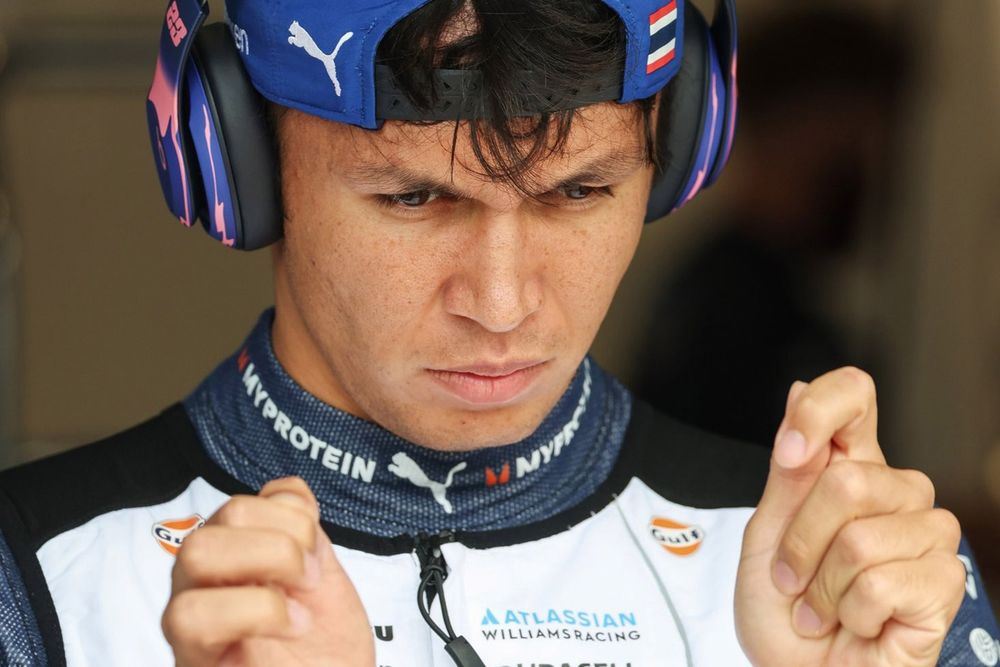
Alexander Albon, Williams
Photo by: Sam Bloxham / LAT Images via Getty Images
"It's not going to be that extreme, but drivers who have the brain capacity to understand and facilitate all these demands will go well. There's going to be so much more attention on simulator work over the winter, and making sure that we understand how it all works and trying different driving styles."
Albon's team principal Vowles said drivers shouldn't panic after their first, very early impressions of the new regulations, although he did concede there is work to do to ease driver workload.
"The first time any of our simulator drivers drove the 2026 regulations it was difficult, because it is a complete change on certain aspects of how you drive," he explained. "Then the second time it became more normal – still complaints. And by the fourth time, there really wasn't much in terms of discussion over it. It just became the norm.
"So, what I ask everyone to do is be careful. Ask the driver how many times they've driven the simulator as you adjudicate their answer. I guarantee you it's once. It's probably the first initial response. And those that have driven it four or five are like: 'I understand it now.'

James Vowles, Williams
Photo by: Peter Fox / Getty Images
"Is it refined enough? We've got a lot more work to do to refine it, and we've got to make it easier on the driver, because I think the workload is actually very, very difficult for the driver at the moment. But we have another six months to run before we're there, so I'm confident we can fix that."
Vowles doesn't share concerns over a potential lack of overtaking due to the introduction of active aerodynamics on the front and rear wings, as well as the current DRS device being replaced by a power-unit-based overtaking aid called "manual override mode".
"I think you're going to get much bigger differences in straightline speed on certain straights because of how much you can play with the energy and various modes," he added. "And so, I think at some point the overtaking could actually be accentuated, not hindered as a result of it.
"The racing concept actually means that if you have a faster car, I think there are more tools at your disposal as a driver to be able to use than this year, even including DRS in there."
Share Or Save This Story


How Antonelli levelled up his character to be F1 2026's world champion-elect

Norris promises to make "better decisions" following fresh talks over Singapore GP clash

Inside the competition building F1’s future engineering talent

How Antonelli levelled up his character to be F1 2026's world champion-elect

FIA set to close F1 cost cap loophole with new rules

Norris promises to make "better decisions" following fresh talks over Singapore GP clash

FIA expects F1 races in Qatar and Abu Dhabi to run as planned
Subscribe and access Autosport.com with your ad-blocker.
From Formula 1 to MotoGP we report straight from the paddock because we love our sport, just like you. In order to keep delivering our expert journalism, our website uses advertising. Still, we want to give you the opportunity to enjoy an ad-free and tracker-free website and to continue using your adblocker.


Top Comments