


Can Mercedes break Formula 1's cycle of doom?
OPINION: Teams that have dominated for long periods throughout Formula 1's history often take years to get back to the top of the tree once they've slipped down. But it remains to be seen whether the same will happen to Mercedes after a challenging 2022 season

While the W13 will not go down in the history books as one of Mercedes’ greatest cars, it would equally be wrong to say that it was a complete flop. For while there were some clear weaknesses, especially at the start of the season as engineers battled to cure its porpoising, there were some strengths to the package too.
Indeed, give it the right type of circuit, with the right combination of high and low speed corners, not too long a straight, and not too many bumps, and the spec of car over the final section of the championship was able to gun for wins.
Team boss Toto Wolff even revealed in Abu Dhabi last weekend that Mercedes’ understanding of its strengths and weaknesses had allowed it to plot a special graph for the final run of the campaign, that would show where it should expect to have its best chances.
“We have this internal table of doom,” he said. “It kind of forecasts whether we are good at a track or not, in terms of our simulations. Mexico was, we thought, the best track in the season and we were performing well. Brazil was right there, like with Austin. But it came in better than we thought. And Abu Dhabi in the table of doom is pretty much in the middle. It's not Spa and Monza.
“So, in a way, if we correlate with the table of doom it means we understand where we are going. If we outperform the table of doom, I'm obviously happy, but also questioning if we are getting it right with our forecast.”
George Russell’s triumph in Brazil came out of the blue, as the Mercedes was much better in Interlagos than the table of doom had predicted. Getting things wrong in the right direction was nothing to be too upset about. But the table of doom is not the only chart that Mercedes has been looking at as it ponders a long-term recovery, for the roll call of previous world champions is something that has also been under the radar of the team’s top brass in recent weeks.

Mercedes took an unexpected 1-2 at the Brazilian Grand Prix
Photo by: Steve Etherington / Motorsport Images
Mercedes’ failure to win either the drivers’ or constructors’ championships this year, for the first time since the turbo hybrid era began in 2014, is something that has not been ignored within Brackley. That is because it well knows that success is often about cycles. In the modern era, it takes years for teams to build up the momentum to get themselves to the top of F1. But once they get there, they inevitably have the strength in depth to keep themselves there for a while.
It is why when we do have spells of dominance from individual teams they last a while, rather than the championships being passed around from squad to squad. Over the last 20 years, for example, the Ferrari era that ran from the early 2000s shifted into the Red Bull era before we had the recent Mercedes era.
"We are analysing what were the reasons in the past that teams that dominated over an era suddenly lost performance. And you can trace it back pretty well" Toto Wolff
Yet just as the momentum that keeps a team on top lasts a long while, so too does the fall away from the top, when finally the long-time champions are knocked off their perch. When a dominant team stops winning, it can take them many years to find their way back up again.
Ferrari is without a championship title since Kimi Raikkonen’s drivers’ crown in 2007 and the constructors’ title the following year. Red Bull went from 2014 to last year without a championship. For Mercedes, this trait for dominant teams to drop away for a while is something that it is alert to – there is no guarantee that defeat in 2022 is not the start of it falling into F1’s doom cycle.
“Of course, we are talking about it,” said Wolff after the chequered flag in Abu Dhabi. “We are analysing what were the reasons in the past that teams that dominated over an era suddenly lost performance. And you can trace it back pretty well. Change of regulation, people leaving, a tyre that changed fundamentally.
“We have the same organisation, the same capability, the same financial funding. And I believe we have things in common and we can trace it back. So we are aware of that.”
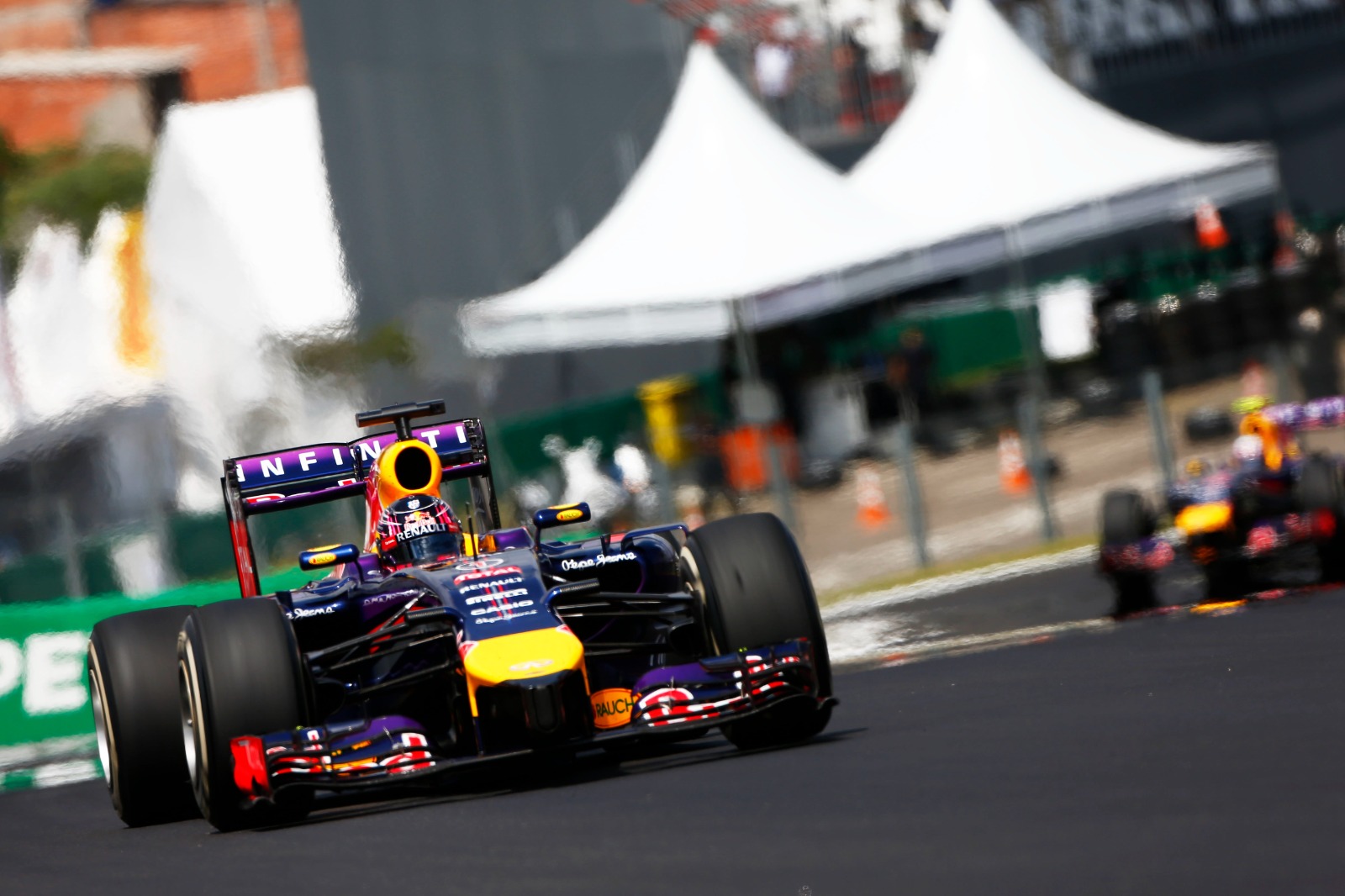
Red Bull's Formula 1 dominance last came to an end with new regulations in 2014
Photo by: Motorsport Images
Wolff is correct that going back through the history books, it is easy to pick out the significant changes that toppled a dominant team and left them off the top for a while. Red Bull lost out after 2013 due to the turbo hybrid regulations. As its engine partner Renault struggled to get on top of things, Mercedes came up with the best power unit for the new rules.
For Ferrari, its decline from dominance in the late mid to late 2000s was caused by the shattering of the Michael Schumacher/Jean Todt/Ross Brawn dream team (as well as tyre rules hurting it badly in 2005). Going back further, Williams’ dominant early 1990s momentum was derailed when Renault quit F1 as a works manufacturer. McLaren too found that it fell away when Honda walked at the end of 1992 after delivering a run of titles that stretched back with the Woking squad to 1988, and with Williams prior to that.
Each time a dominant team tripped up, it was something seismic that triggered it, rather than it just be a gradual eroding of its form. It’s the fact that Mercedes fell foul of getting its concept wrong this year that gives Wolff a sense of belief that 2022 does not mark the start of the decline – but it is rather a blip.
“The regulation changed and we got it wrong,” he said. “But all the other pillars are still in place. And we have to tune the systems and understand. And I think I'm 100% sure that this was a difficult year that was necessary for us. It's necessary for us to re-motivate and re-energise the organisation.
“We won eight times in a row, more than 100 races. And this has, again, made us feel, made us come back down to the ground, made us appreciate how it feels when you win in Brazil, and also understand how difficult it is to recover, not from a race like we've had it before.”
But while what happened in the past does not offer a guarantee of what will happen in the future – they say history rhymes. And that is why Wolff, for all his belief that the factors that triggered Mercedes’ difficulties this year do not point to a long-term decline, knows that complacency would be a dangerous thing to have right now.
“It was fundamental parameters that changed,” he said. “But we are looking at that and thinking; we better be careful. We better be careful because the season has gone by in a heartbeat. And we can't let that happen, to look back after the next season, and the one after…”

Can Mercedes get back to winning ways?
Photo by: Steve Etherington / Motorsport Images


Brundle awarded OBE in King’s New Year’s honours

The new rules dilemma that will define the 2025 F1 season

Verstappen issues Red Bull title warning in push for RB21 progress

Mercedes opens up on the factors that hurt Hamilton with the W15

How McLaren faced up to the misinformation, noise and distractions of being an F1 title challenger

Why Bottas is not letting the “worst-case scenario” end his F1 career

Jon Noble: An unfair perception or a genuine concern? Lifting the lid on Red Bull’s Tsunoda scepticism

Binotto on Audi's F1 reality check after finding team "frozen" with no plans

Colapinto urges fans to stop online abuse: “You’re not helping me or my future”

Evans given a hero's homecoming after WRC title triumph

How an unspectacular showing in a kart race is such good reason to celebrate

Lights, Camara, action: How Haas picked F1's latest rookie for 2027
Subscribe and access Autosport.com with your ad-blocker.
From Formula 1 to MotoGP we report straight from the paddock because we love our sport, just like you. In order to keep delivering our expert journalism, our website uses advertising. Still, we want to give you the opportunity to enjoy an ad-free and tracker-free website and to continue using your adblocker.


Top Comments