


FIA defends F1's jump-start secret tolerances after Japanese GP
Formula 1 race director Michael Masi says allowing secret tolerances in jump-start rules remains correct, despite the controversy over Sebastian Vettel's Japanese Grand Prix getaway


Vettel's Ferrari moved forward briefly from his pole position slot before the lights had gone out to start the race at Suzuka on Sunday.
That inching forward appeared to be in contravention of the rules, which are clear that cars must remain stationary before the start lights have gone out.
Article 36.13a) of F1's sporting regulations states a penalty will be given to any driver who: "moved before the start signal is given, such judgement being made by an FIA approved and supplied transponder fitted to each car."
That prompted Max Verstappen to say "I really don't understand what's going on with the rules today" in reference to both what he saw of Vettel's start and the decision not to investigate the first-corner clash till post-race.
But the stewards later explained that Vettel was not given a penalty because the movement that was detected by his sensor was within certain tolerances that the FIA allows for.
Autosport understands that some movement before the lights go out has to be allowed for because of the need for drivers to sometimes make adjustments to their clutch in the crucial moments before the start.
This has been accepted practice for more than 20 years, and is fully understood and accepted by all teams and drivers.
But what the exact tolerances for movement are - and whether they are distance moved or time before the lights go out - are kept a closely guarded secret by the governing body.
That is because if teams knew exactly what they could get away with, then they could use that knowledge and create tactics to exploit the tolerances for better starts.

Masi has admitted that while there may be scope in the future to use new technology to better police the starts, he is happy with the current way it is managed.
"The current system is a system we have had in place for a number of years," he explained.
"The advent of technology has got better over the years with in-car cameras, the ability to see things better and all that.
"Is there something we can look at for the future? Absolutely. But as we sit here now, it is the determining factor that we have and the one that we use."
Masi explained that the judgement by the FIA is made purely on car sensor movement.
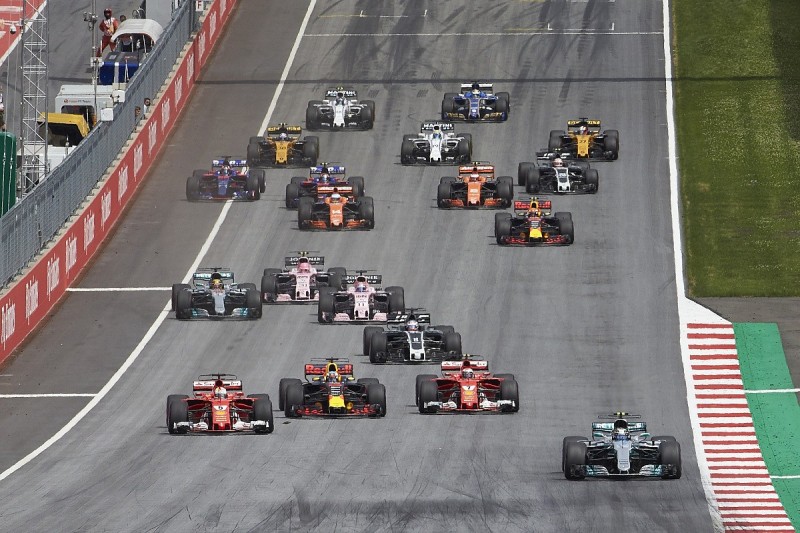
The approach of allowing some leeway was also seen Valtteri Bottas was ruled to have done nothing wrong with his speedy getaway at the 2017 Austrian GP.
"We have effectively the signal from the jump-start sensor, and it [Vettel's movement] was within the tolerances," Masi said.
"Probably the best analogy for everyone would be Valtteri a couple of years ago.
"It was within that [allowance], and that is why that is the approved method in the regulations for it to be determined if it is or if it isn't [a jump start]."
Share Or Save This Story


Brundle awarded OBE in King’s New Year’s honours

The new rules dilemma that will define the 2025 F1 season

Jon Noble: An unfair perception or a genuine concern? Lifting the lid on Red Bull’s Tsunoda scepticism

What has changed in the new Marquez a year after finding “peace” with himself

Top five roles on Motorsport Jobs this week

Top 10 F1 results changed by backmarkers – the passes

What a revival of the World Rally Championship could look like
Subscribe and access Autosport.com with your ad-blocker.
From Formula 1 to MotoGP we report straight from the paddock because we love our sport, just like you. In order to keep delivering our expert journalism, our website uses advertising. Still, we want to give you the opportunity to enjoy an ad-free and tracker-free website and to continue using your adblocker.


Top Comments