


Racing Point overhauls front end F1 car design ahead of Belgian GP
The Racing Point Formula 1 team has overhauled its distinctive front end design for a more conventional nose ahead of the Belgian Grand Prix, abandoning its previous nostril design


Ever since it raced in its former Force India guise, the team has pioneered a distinctive nostril design in the nose to improve airflow underneath the chassis.
This was first seen on the B-spec version of the 2015 car, and has been carried forward in varying configurations in the intervening years.

Now, the team has decided to drop the nostrils for a front end more consistent with those already on the grid, retaining the extended 'thumb tip' crash structure.
This pairs up with a new pair of mounting pylons featuring three slots fitting into a small ridge, which is not dissimilar to Ferrari's current pylon design.
The new nose is not the first change in concept that Racing Point has run with in 2019, having debuted a different design in Canada in which the bottom bounding of each 'nostril' was moved further up to accommodate a cape section underneath.
However, the newest concept dispenses with the cape, suggesting that it benefits from a reduced level of lift following the nostrils' disappearance.
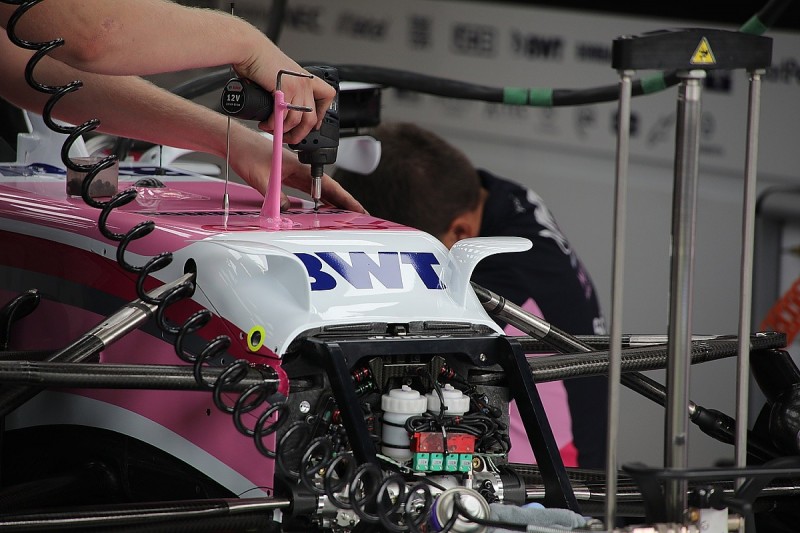
There are further front-end changes to the RP19 this weekend, and the team has added a pair of fins further up the nose.
Attached to the forwardmost point of the chassis bulkhead, these fins promote a small degree of downwash, assisting with airflow management as the nose transitions into the chassis.
These seem to bring airflow over the top of pushrod pick-up points, sending it down towards the bargeboards.
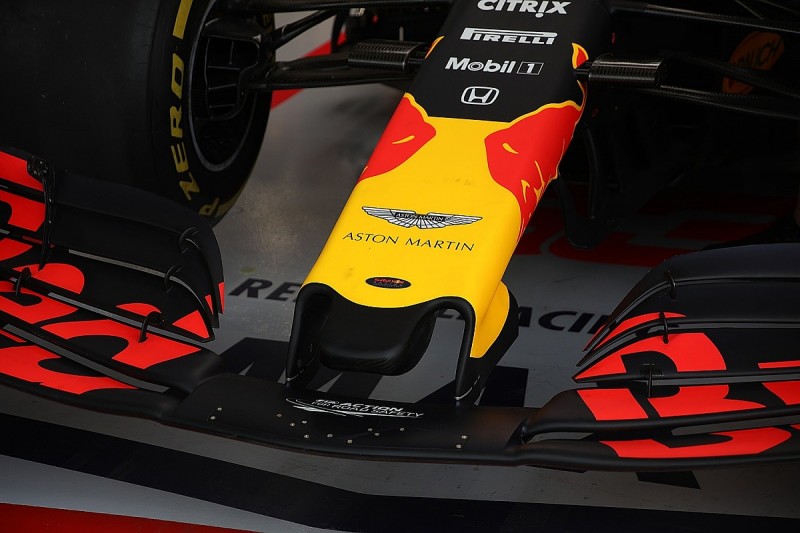
Further front-end changes at Belgium included Red Bull, which has once more brought back the nose configuration it used in Monaco.
This dispensed with the snorkel concept which, similarly to Racing Point's nostrils, assisted with bringing airflow underneath the car.
Share Or Save This Story


The reasons behind Ferrari's US GP upgrades

Mission control: Inside the FIA and F1's remote operations centre

FIA expects F1 races in Qatar and Abu Dhabi to run as planned


The pointed note that starts Ferrari's Leclerc vs Sainz era

Albon: No point 'wallowing about' over lost Red Bull F1 place

The small change that will be F1 2021's big talking point

The reasons behind Ferrari's US GP upgrades

F1 United States GP: Leclerc beats Verstappen to top FP1 in upgraded Ferrari

MotoGP riders ask for guarantees to go and race in Qatar

F1 United States GP live commentary and updates - Leclerc on top in FP1
Subscribe and access Autosport.com with your ad-blocker.
From Formula 1 to MotoGP we report straight from the paddock because we love our sport, just like you. In order to keep delivering our expert journalism, our website uses advertising. Still, we want to give you the opportunity to enjoy an ad-free and tracker-free website and to continue using your adblocker.


Top Comments