


Ferrari: F1 calendar growth plus budget cap poses a "risk"
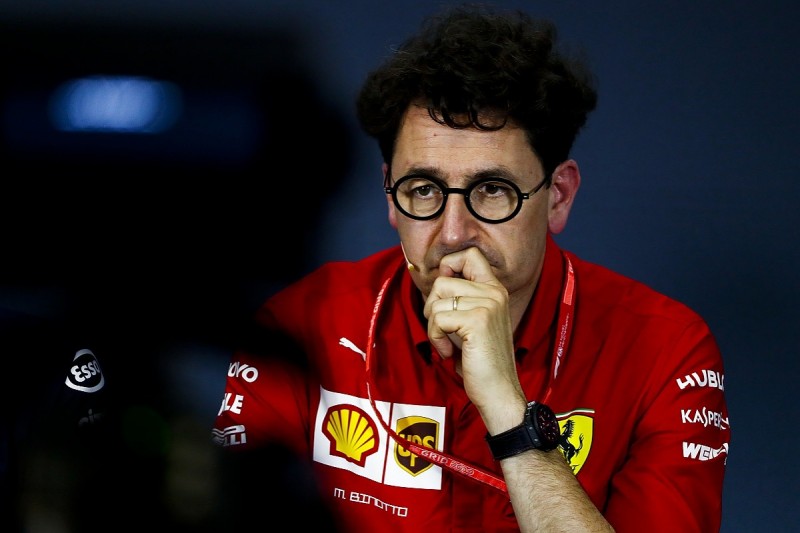
Formula 1 teams will face a "risk" in getting the staff required for an increased calendar within the proposed 2021 budget cap believes Ferrari's Mattia Binotto

F1 is expected to expand to a record 22 races next year, and with owner Liberty Media maintaining its push to add new events the schedule could balloon further the year after.
While Binotto is not opposed to the expansion in principle, as he is aware of the "business necessities", the Ferrari team boss says new races will demand personnel reinforcements.
"I think we need first to make sure that from the financial [side] we are doing the right choices," Binotto told Autosport.
"There should be a benefit in terms of the overall financial balance.
"If the balance is positive, yes, we need to [re-]organise ourselves. We cannot afford an entire season of 24 races with the same single individuals."
Binotto believes a further increase in grand prix events will require rotation of not just mechanics, but the higher-ups in the teams' structures.
"It means we will need extra people, to rotate them, from the mechanics to the engineers, even key people, because some mechanics already today are rotating, but key people normally not.
"I think as a team we want to make sure you're keeping your people in the future, [so] you need to really try to manage the effort throughout the season, so in the end, it will have a big impact.
"It will have a big impact from the number of people, it will have a big impact logistically, because you need to somehow manage the transport of all the parts.
"So it's not easy, and there's very little time to organise ourselves as well, because increasing the number of people is not something you do easily, [and doing so] using the budget cap.
"So here is the risk, because you may not [be able to] afford the right number of people simply because you need to manage extra salaries [under the budget cap]. Not an easy one."
F1 is poised for a $175m spending cap per year in 2021, which Binotto says is still "very high for small teams" while admitting the big teams may overspend in the next two years to make up for its impact in advance.
The growing F1 calendar also carries with it a likely reduction in pre-season testing days, with a revamped winter testing schedule already on the agenda for 2020.
However, Binotto believes slashing pre-season testing from eight days to six or five will not significantly compromise teams.
"[In the past] the shakedown of the new car normally was early January, then you got a couple of months before starting the season.
"Now you've got two weeks and then you go straight to Australia - whatever problem you've got in the two weeks, you will not fix them for the first race.
"So I think that today that it's really winter testing where you start to shake down your car, you will know the initial problems, you will know the initial behaviours, but you never have time to address whatever big problems you will have before the start of the season.
"That's why we are all developing internal facilities - benches, simulator, whatever it is, without waiting for track time, to get developing your car at its best, before you're starting the season."
Share Or Save This Story

Hungarian WTCR season-opener called off as a result of coronavirus

Argentina replaces Austin as 2020 MotoGP season opening round

The harsh realities of being an F1 outcast


How Verstappen’s two subtly different laps beat Hamilton in Bahrain GP in Malaysia qualifying

Vasseur calls for Ferrari unity: Pointing fingers would be "big mistake"

Hamilton strongly backs Vasseur amid Horner to Ferrari links

Live: MotoGP Japanese GP as it happens

Evans set for “all in or nothing” approach to WRC title showdown

WRC Sardinia: Title wide open as Solberg takes Sardinia lead into final day

Why Malaysia would be the perfect place for F1’s first wet-weather race in 2026
Subscribe and access Autosport.com with your ad-blocker.
From Formula 1 to MotoGP we report straight from the paddock because we love our sport, just like you. In order to keep delivering our expert journalism, our website uses advertising. Still, we want to give you the opportunity to enjoy an ad-free and tracker-free website and to continue using your adblocker.


Top Comments