


From refugee to F1, via McDonald’s
Michael Latifi had a solid connection to the higher echelons of motorsport and has supported his son Nicholas to the fringes of Formula 1. But now, as a principal McLaren shareholder, he has become one of the championship's major players
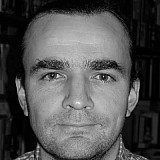
He first earned a wage flipping burgers in McDonald's, and now he owns a slice of the McLaren Group - Michael Latifi has had a remarkable journey.
He left his native Iran for Canada as a teenager and built up a hugely successful food business, tapping into his wealth to support the racing career of son Nicholas. In May, it was announced that the 55-year-old had pumped £203.8million into McLaren, joining Mansour Ojjeh and the Bahraini royal family as a principal shareholder.
Racing dads don't always attract great repute, especially if their wealth has helped to propel their sons through the ranks. These days there's no shortage of drivers who have come from privileged backgrounds - it's a sign of the times, and reflects how much it costs to bring a youngster through karting and even to just the fringes of Formula 1.
When the McLaren news first broke, it was easy for people to jump to the conclusion that Latifi was looking for a way to further his son's career. Nicholas is currently a test driver for Force India and is 13th in his third full season in Formula 2.
But his involvement actually goes far beyond any family considerations. Latifi has not just bought into the F1 team, but also the expanding road car company, and a technology division that has interests in many different areas. This is a carefully analysed long-term investment.
"When I shared this news with my son his first answer to me was, 'Dad, I'm very happy for you, I just hope that you're not doing this for me,'" Latifi recalls. "And I said, 'No, I'm just letting you know that this has been a passion of mine, and I'm making this investment.'
"They are two separate things for me. I've always kept the business of his racing on a path that needs to continue for him to grow and gain experience, and pursue his dream, his passion. And F1 is his dream and his passion, not mine.

"I don't want to live a dream through my son, that's not my goal, it's his. I have children who have various aspirations - I support them, as any parent would. So, he needs to continue to do well in F2, he needs to keep performing on the track, and if he merits it, if he's afforded the opportunity to be in an F1 team, then God bless him."
Indeed, Latifi argues that there would have been many other ways to spend money on helping his son to find an F1 seat.
"I don't want to live a dream through my son, that's not my goal, it's his" Michael Latifi
"My investment in McLaren has never been hinged on anything around his racing," he says. "I could have bought a team much more cheaply, I could have done many other things to build something around Nicholas. This for me is all about an incredible business opportunity that presented itself.
"I would not want my son to be doing something or driving something that he has not earned on his own merit. I don't believe that is productive or comfortable for his growth or his future.
"Anything that you work hard to achieve you always feel more fulfilled than something that's handed to you. And I think that Nicholas has to earn his place, whatever it will be, on merit and on performance."

It's perhaps not surprising that Latifi thinks that way. Modest and quietly spoken, he's a self-made man who was left stranded as a teenager by events beyond his family's control and so had no parental support. He's earned every cent of his fortune.
In 1978 he was just 15 when his parents sent him from Iran, then a prosperous and heavily westernised country, to Canada. There he joined his two older brothers and his sister, who were studying at university.
"We were all on a scholarship, sent abroad to get a superior education," he explains. "I guess it was prescribed that we become engineers. We didn't know better in those days, your parents told you to become a doctor or an engineer, and you just listened! And we would go back to Iran and build a career. That was the plan.
"In Iran there was a need for engineers with a good quality education from abroad. There were lots of civil [engineering] and construction projects that had to be built - bridges and dams and airports. If you had a foreign education, you got the best jobs.
"I was super lucky and it was super coincidental, because typically children from Iran were sent for university, not high school, since foreign tuition is very expensive. It was kind of a last-minute thing - my Dad said, 'You're alone here, your siblings are there, it's not your time to go, but I think you should go.'
"So I left in 1978, the last of the four children. When I arrived, I didn't speak a word of English. I had a little Farsi-English dictionary that I used to walk around with to look for words to try to express myself with!"
In fact, getting out of Iran at that time was to be a life-changing event for Latifi, as the family's world was about to turn upside down.

"My family back home was working for the government when the revolution happened [in 1979], and the Shah was overthrown," he explained. "Things dramatically changed for us. Basically, our lives changed overnight.
"We were all young and didn't know what to do. We either had to go back, which was not a bright picture, or try to figure out how we survive in Canada. We all applied for refugee status, so we could get work permits and make ends meet.
"My first job was at McDonald's. I started at $3.07 per hour salary, and throughout the years things just evolved. I had three jobs, McDonald's was one of them, but I was also waiting at tables and doing maintenance work at night, cleaning the restaurant.
"My parents couldn't leave Iran. I've never gone back in the 40 years I've been in Canada. My dad came once, and my mum came to my wedding, that's the last I saw of them. They've both passed away since. I knew that their objective was for me to get that superior education, and I never wanted to let them down."
"My first job was at McDonald's. I started at $3.07 per hour salary, and throughout the years things just evolved" Michael Latifi
So Latifi grew up as a Canadian, but he remains proud of his Iranian heritage: "Yes, 100%, I think that's in my blood - the discipline, and culture, and work ethic. Everything was instilled to us from Iran, and it's still with me."
After finishing high school, he followed his family's desire for him to enter engineering, although he switched from the specialisation he had originally planned to study.
"The only reason I ended up in electrical was [because after] the revolution happened the best jobs in Canada were for electrical engineers. My two brothers were already too advanced in civil, they [had] both graduated. I looked at my situation and saw there was not much work in Canada, everything is built, and what was in demand at the time was electrical. I wanted to go into something where I had a very good chance of getting a job.

"When I graduated I got a proper job in engineering, but I had free time, so I decided I might as well get a masters degree in business administration to expand my horizons. I graduated with distinction while doing it part time and working. And following that I got five job offers, because I had a broader background - I had a business degree, I had an engineering background, I had some work experience.
"I chose a business in manufacturing and food processing. That's how my career began. I worked in the dairy sector for six years and I learned a lot, and I think I found my passion. After I had another epiphany in that I [realised I] wanted to do something for myself, so I packed my bags and bought a small company in Toronto in 1995."
At that stage, Vienna Meat Products employed just 60 people. But over the past two decades Latifi has expanded it dramatically, under the Sofina name, through growth and acquisition. It's now Canada's third largest food company, and many of his brands are household names.
"Since then we've grown to 5000 employees, I own 20 manufacturing facilities, and our revenues are $2bn now - we started at $11m 23 years ago," he says. "It's been seven days a week, no exaggeration, and hard work, and a lot of sacrifice to get to where we are today."
Inevitably once Latifi had begun earning some money he allowed himself a few luxuries, and that's where his interest in cars developed.
"I bought my first Ferrari when I was 32-33 years old," he explains. "I developed a passion for beautiful machinery, something unique, something hard to have, something that you have to work for. I started doing some track days - I never wanted to race, I was happy just going around and having fun, and it stayed as that."

In fact, Latifi went on to own and drive a Ferrari F2004 (used by Michael Schumacher) and then an F2007 (driven by Kimi Raikkonen) - although both are now sold - as well as a 599XX road car.
The family's interest in racing moved up a gear when Nicholas first sampled karting at a friend's birthday party. He was 13, a late starter by modern standards, but Latifi has supported him all the way to F2 and his Force India test role, as his own fascination with motorsport expanded.
"As my business grew I always envisioned owning a sports 'something'," says the elder Latifi. "I didn't know whether it was going to be a basketball team, a hockey team, or a race team. I had this vision of having it as an interest, something that would take my mind off my daily business.
"The fact that I was at the circuits and following my son, the interest of getting involved with a race team started developing, as I was always around race cars.
McLaren, with its road car and technology divisions, fitted the bill perfectly for Latifi
"I looked at various options and opportunities that presented themselves in F1. In many instances things didn't look logical for me. I didn't want to get involved and lose a fortune, I wanted to get involved to address my passion and interest by having a solid investment, something I could see grow, something I could enjoy and have fun being around, and something that had a more complete business model."
McLaren, with its road car and technology divisions, fitted the bill - especially for someone with an engineering background who has a passion for owning and driving supercars. The F1 team clearly faces some major short-term challenges, but given his successful record in business it's clear that Latifi has a lot to contribute.
"I don't think that the shareholders were in need of money, it was more bringing in a partner that believed in their vision, that had the passion, and that could help support that vision and growth," he says. "I met those criteria in terms of what I believe, what I wanted, and it was in line with what they wanted.

"They've done tremendously well on their own. They have great ideas, tremendous plans, I think I can just support them and bring some perspective from my experience with the different things I have done.
"I can bring business acumen, business discipline, financial discipline - all of those elements are very important. Yes, we're going to have fun, but we need to have good solid controls, and good solid discipline, and I'm going to offer that to the board, to the team - as needed and as requested - and as they seek it."
He also brings knowledge and contacts from a part of the world that is key to McLaren, as has been made clear by the company's interest in IndyCar racing.
"Having a partner that's based in North America is going to be very critical and important, and I can bring that representation as a shareholder," he says. "It is 40% of our car business right now. Also, growing Applied Technologies, there are so many businesses that we could tap into."
For the moment, Latifi can combine his interests by attending grands prix with McLaren while Nicholas is racing in F2. But he's in this for the long haul, regardless of what direction his son's career might take.
"I was speaking to my wife about this investment," he explains. "I needed to make sure that I could answer all the questions in my own mind that I'm satisfied with what I'm doing. And one of them was 'Would I go to the races and would I enjoy them as much if Nicholas was not in an F2 car, and not on the grid?'
"And the answer was 'Yes,' that we would continue to do that. That was a very big question to have to answer, to make sure that it's not just purely an emotional thing that I'm doing."


Krack: Aston Martin F1 team no longer in “no-man’s land”

Gasly rues costly floor damage from Ocon contact in F1 Japanese GP

Andretti planning F2 and F3 entries to promote US talent to F1 team

Andretti F1 team formally opens new Silverstone facility

RB: Tsunoda “mentally on a different level” in 2024

Russell: Dirty air is causing F1 helmet turbulence problems

Vasseur: No guarantee that Ferrari F1 tyre issues are resolved

How an F1 underachiever became a Japanese political player

F1 champion Norris completes first full test in McLaren’s Le Mans Hypercar

How Solberg lit up WRC title fight in Chile

F2 adds extra Baku feature race and insists Qatar, Abu Dhabi still on – what does this mean for F1?

Healeys, MGBs and Lotus Elans top Castle Combe Autumn Classic
Subscribe and access Autosport.com with your ad-blocker.
From Formula 1 to MotoGP we report straight from the paddock because we love our sport, just like you. In order to keep delivering our expert journalism, our website uses advertising. Still, we want to give you the opportunity to enjoy an ad-free and tracker-free website and to continue using your adblocker.


Top Comments