


Why is F1 running out of drivers?
Next week's post-Hungarian Grand Prix test will exhibit a number of future grand prix hopefuls. But how many of them are likely to get to Formula 1, and why are drivers finding it increasingly difficult to break through?

Formula 1 has been seen as motorsport's Ivory Tower for a long time now, and when it comes to opportunities for drivers to break in it's becoming ever more inaccessible.
While considering the candidates to fill seats in the driver market as we recorded the latest edition of The Autosport Podcast, it struck home just how short of options teams are today.
You could argue it's a buyer's market, and therefore good for F1 teams. But the lack of options is a problem for those, particularly down the F1 food chain, who can struggle to find the right 'components' to put in the cockpit.
While the driver is not the main performance differentiator in terms of the overall lap time potential of the car, they are the most significant element in terms of extracting the largest percentage of the car's potential in terms of points and results.
Tempting as it is to lament the fact that F1 is all about cars, drivers do make a difference. After all, if Ferrari had two Kimi Raikkonens, would it be a world title contender? The fact that he's scored just under 50% of Sebastian Vettel's points, even taking into account a couple of incidents not of his own making and the Monaco reverse, suggests not.

And what would we be saying about the debut season of Haas in 2016 had it run two drivers delivering the results Esteban Gutierrez did? It would have ended the year with no points. So drivers do make a difference, and as such it's in the collective interest of the teams to have a good number of available options.
The limitation of the pool was underlined by the fact Williams had to go back to Felipe Massa when it needed someone to run alongside Lance Stroll this year. It required an experienced driver and he was the only one deemed to meet the bill. Beyond that, the options were patchy.
When you look at the statistics, F1's driver pool has never been smaller. To calculate the size of this pool, I've added the total drivers who have raced in F1 this season (22, which comprises the 20 full-time drivers plus stand-ins Jenson Button and Antonio Giovinazzi) to the number of others who have started a race over the previous three years.
Why three seasons? Simple: because the FIA's superlicence regulations grant the paperwork needed to race in F1 to drivers who have raced in that period.
So on top of the current 22 are the following drivers: Nico Rosberg, Jean-Eric Vergne, Pastor Maldonado, Jules Bianchi, Adrian Sutil, Esteban Gutierrez, Max Chilton, Kamui Kobayashi, Will Stevens, Andre Lotterer, Alexander Rossi, Roberto Merhi, Felipe Nasr and Rio Haryanto.

Obviously the Bianchi tragedy means that the real number is, in fact, only 35. But for the sake of historical comparisons, he will be regarded as still eligible. And the real number is even lower than that, because Rosberg has retired and it would take a serious offer from an F1 team at a good level to tempt drivers such as Lotterer and Kobayashi, who are currently driving for manufacturer teams at the top of the World Endurance Championship. And that's even if a team seriously considered them to be an option.
Look back to a year earlier, and the driver pool numbered 39 thanks to the addition of Mark Webber, Paul di Resta, Charles Pic and Heikki Kovalainen, who all raced in F1 for the last time in 2013. This is offset by the loss of Stroll, who is this season's sole true rookie.
Go back to a year before that and the pool numbers 41. The season before that, 43. You'll notice a pattern emerging. In fairness to F1, the size of the pool has not progressively reduced at that rate in the past couple of decades. While it rises to 46 if you go back to 2007, roll back to 1999 and the number is back down to 39 again. It's no coincidence that it's in the late years of the 21st century that driver changes became more rare. If you jump back just a few more years, to '97, the number rises to 63. And the trend is clear that if you roll back 30 or 40 years, the pool is markedly bigger.
Number of drivers starting a grand prix in the current year and the preceeding 3

The lack of seats available is the major driving force in this, and that does not just refer to the number of cars competing. While grid numbers have hovered consistently between 18 and 24 over the past 20 years, the amount of chopping and changing has reduced. Jordan, for example, ran six different drivers in 1993!
And while a driver like Marco Apicella, whose sole F1 appearance lasted a few hundred metres, can hardly be said to have been given a chance, look at what Eddie Irvine made of what was originally planned to be a one-off at Suzuka. Such opportunities, which have historically been able to launch drivers into successful and lengthy stints in grand prix racing, are tricky to find.
Predictably, this is the point where we have to reference F1's inequitable payments structure. Were the financial rewards of the show more evenly distributed then things would be different.
Drivers without hefty pots of sponsorship gold would not be the only ones, along with those young stars picked up by F1 team junior programmes, able to make it into F1. It would be possible for teams to take a punt without worrying about the financial consequences, save for those created by a driver scoring more or fewer points for the constructors' championship.
That said, even with good investment in F1 from manufacturers a decade ago that meant the majority (but not all) of the serious prospects were picked up by junior programmes, the pool was not vastly bigger. So this is not necessarily the most powerful factor in this situation.

Coming back to the concept of the driver pool, there are two other sources of drivers that must be considered. Firstly, the test drivers who have not raced. While testing is severely limited, and has been since 2009, there are some opportunities.
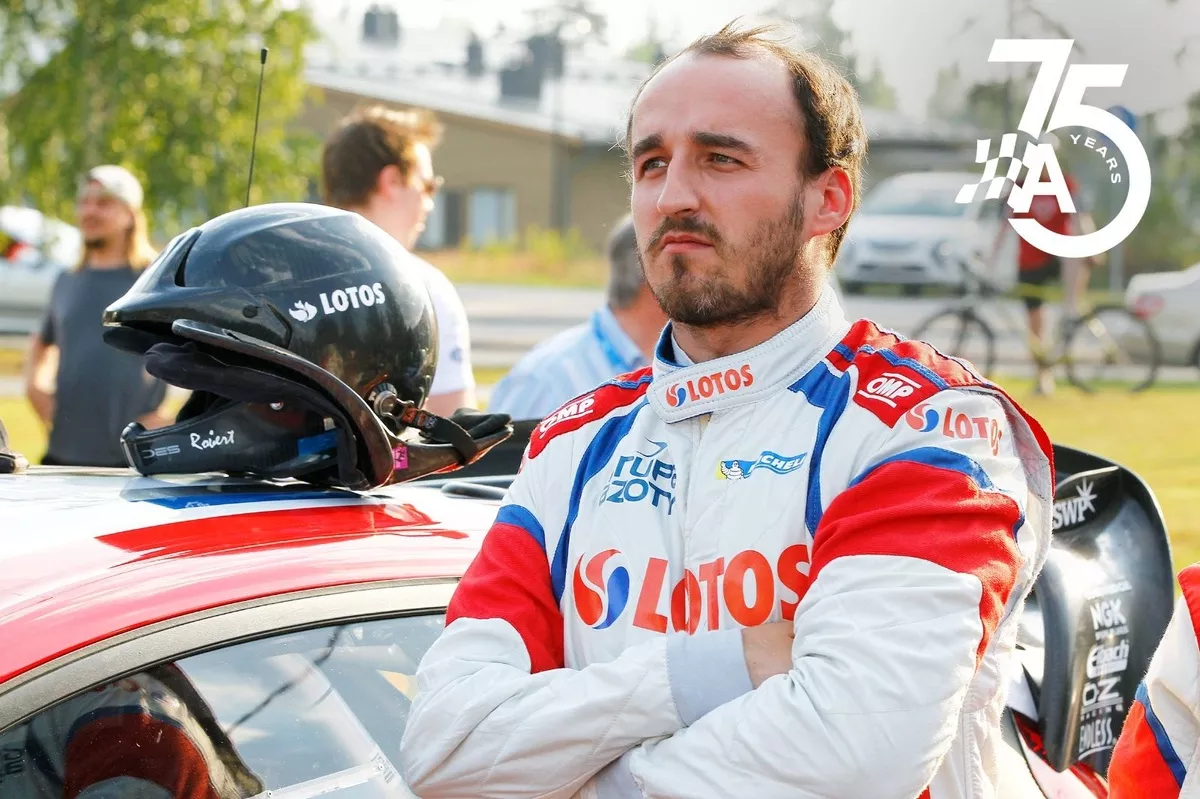
Both Sergey Sirotkin and Alfonso Celis Jr should be added to the list of viable drivers given their Friday and test running with Renault and Force India respectively. In addition to that, Oliver Turvey (McLaren), Gary Paffett (Wiliams), Sean Gelael (Toro Rosso) and Pierre Gasly (Red Bull) have also run in testing. Robert Kubica, who will test at the Hungaroring next week, should also be added to these names.
The introduction of superlicence points, whereby a driver's eligibility to race in F1 is dictated by success over the previous three years in other motorsport categories, has also played a part in reducing this pool. But this is largely a positive thing, since although there are aspects of the structure that are not perfect, it does prevent the risk of seats being clogged up by no-hopers.
While there have been relatively few drivers ripe for that category who made it to F1 in the final few seasons before these rules were introduced, it does reduce the risk of opportunities being wasted. That said, there are still a few drivers who do get into grand prix cars these days whose junior single-seater CVs do not mark them out as prospects for good grand prix careers - in particular Gelael and Celis.
But while there are more than 30 drivers not currently racing in F1 who have sufficient points to qualify, there are a number of red herrings on the list. Drivers such as Webber are retired, it's hard to see 41-year-old Stephane Sarrazin getting a second F1 chance after his one-off with Minardi in 1999, and the knack of Helio Castroneves for doing well in the Indianapolis 500 does not make him a credible F1 option these days.

Arguably the biggest problem is the lack of testing mileage. Again, this is for valid reasons because the drop in testing has reduced costs and also slightly mitigated the extent to which brute financial force can increase the advantage of a big team (although the advance in simulation technologies of all sorts renders that point moot).
Even if you do get into a grand prix car for a test day or two these days, it's difficult to make an impression on a team. But in the days of the true test driver in the first decade of the 21st century, when it wasn't unusual for non-race drivers to rack up huge numbers of miles, it was possible for drivers who might not have been considered otherwise to force their way in.
So this brings us back to the fundamental problem for teams. Coming back to the Williams example, if Massa decided tomorrow he had had enough of F1 (which he won't, but for the sake of argument let's look at this scenario) where would Williams get an experienced hand to replace him?
Assuming it does not poach a driver from another team, the cupboard is pretty bare. There are drivers with good CVs and a few years of experience, such as Gutierrez and Vergne, who have raced in the previous three seasons. There's also well-proven drivers such as di Resta, who has not raced in F1 since 2013, but beyond that you are looking at promising, but in F1 terms inexperienced, racers like Giovinazzi or Charles Leclerc - both on Ferrari's books and both meriting full-time seats next year.
This is why there is a premium on active F1 drivers with good F1 experience. This is doubly the case for the true veterans such as Massa, whose experience in the testing era means they have had far more miles in an F1 car than today's 20-something F1 driver could ever hope to accumulate.
Of those who were around for a good number of years at the peak of testing, only Massa, Raikkonen and Alonso remain. And while drivers such as Lewis Hamilton, Sebastian Vettel and Nico Hulkenberg did catch the later days of that era when running was already starting to be squeezed, their mileage is still dwarfed by the vast distances covered by the most prolific test drivers. Even Franck Montagny, a quick driver who deserved more than his brief taste of F1 racing with Super Aguri, has notched up more F1 testing miles than Hamilton, Vettel and Hulkenberg.

While making an F1 car is a huge undertaking involving hundreds of people - in fact, for the biggest teams that number can break into four figures if you include the engine side - the driver is the focal point that connects it all together and exploits the package. While the car, the designers, the engineers, the mechanics and the engine builders are the ones that define the theoretical lap time and result potential of the car, the driver is key and should not be neglected or left to chance.
Drivers are also the most engaging focal point for fans. Sport is, after all, a very human endeavour - and for all of the technology involved, that's no different either for F1 or motorsport as a whole.
So what's the answer to this? Unlimited testing is not an option, positive as it would be for this driver pool, but it is necessary for F1 to find ways to get more 'new' drivers into cars. It has long seemed obvious that this could be a good way to liven up F1 Fridays, whether it's with an extra session of running (fielding a third car is not an option currently because of costs), something compelling teams to field a young driver in an extant session, or some similar initiative. It just needs some way for good, young drivers to gain experience, learn their trade and impress teams, beyond the current ad hoc arrangement.
By and large, sports that do not invest in their future stars in the right way pay the price. The current driver market situation is F1 reaping what it sowed a decade ago, and needs to be addressed.
While it's not impossible for new stars to rise - Max Verstappen is living proof of that - it's becoming more and more difficult for the hidden gems to be unearthed and refine their skills. The pool of credible drivers could get ever smaller and, in a worst case scenario, become truly stagnant.


Did Bianchi have potential to become F1 world champion?
Autosport 75: Kubica's road to recovery and beyond

Autosport 75: When Red Bull had its own intra-team fight like Norris vs Piastri

Autosport 75: Why Verstappen was ready for F1 at 17

How the Senna myth has been transformed

Archive: When the French GP almost produced F1's greatest shock

Autosport 70: How Scheckter instigated Silverstone's most famous F1 incident

Autosport 70: The lost F1 team that launched Newey

Top five roles on Motorsport Jobs this week

Chantra set for MotoGP return to replace Mir at Honda for Japanese GP

WRC to trial helmet camera at season finale

Hadjar to partner Verstappen at Red Bull for F1 2027
Subscribe and access Autosport.com with your ad-blocker.
From Formula 1 to MotoGP we report straight from the paddock because we love our sport, just like you. In order to keep delivering our expert journalism, our website uses advertising. Still, we want to give you the opportunity to enjoy an ad-free and tracker-free website and to continue using your adblocker.


Top Comments