


Gary Hartstein: The ex-F1 doc speaks
Since losing his job as F1 medical delegate in 2012, the vocal Dr Gary Hartstein is still pushing for safety reform in the sport, as he tells MAURICE HAMILTON for AUTOSPORT's sister publication F1 Racing
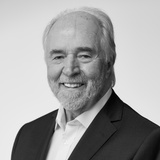
"I'm a lot more outspoken now because I have nothing to lose. I live well with that because I did a decent job. The people whose respect means something to me, they respect me."
Appropriately, Dr Gary Hartstein and I have arranged to meet in Murray's at Northamptonshire's Whittlebury Hall - a restaurant that pays homage to commentator Murray Walker.
Gary may be the clinical professor of anaesthesia and emergency medicine at Liege University Hospital, but he can also talk with massive enthusiasm about motorsport.
Having worked alongside the late Professor Sid Watkins, Hartstein became Formula 1 medical delegate when the legendary 'Prof' retired in 2005. Hartstein, a New Yorker fizzing with energy, played a key role in developing many of the FIA's medical and safety policies before his contract was terminated unexpectedly at the end of 2012.
He's joined me from nearby Silverstone, where he's been delivering a lecture on chest injury as part of an Advanced Trauma Life Support course. As Murray Walker might say: "My goodness! This should be absolutely fascinating!"
Maurice Hamilton: Since Michael Schumacher's accident, your media presence has been quite high. People don't understand a lot about head injury even though, in your world, it's common.
Dr Gary Hartstein: It is. I want people to understand a lot of what's going on because it's a real roller-coaster ride for everybody; the more you understand, the more you appreciate that.
MH: With head injury, is it fair to assume that no two injuries are the same: they can be vastly different, but you can't tell initially?
GH: Absolutely. You take the thought experiment of '100 Michaels' - same velocity, same angle, same accident - and you won't have 100 reproducible outcomes. As time moves on, the future becomes clearer.
 Hartstein with Hamlton © LAT
|
MH: Have head injuries and concussions become something motorsport should be thinking about more than before?
GH: Professor Sid Watkins was a neurosurgeon and when I came on board, we started talking about concussion early on. One of the things Sid did was establish contact with the guys in the States; Dr Terry Trammell, Dr Steve Olvey and Dr Hank Bock. Steve, as a neurointensivist, was already on this and he opened our eyes. We'd been doing pre-season testing of drivers' neuro-cognitive function with a computerised base...
MH: What does that mean?
GH: You test reaction time, perseverance, verbal memory and spatial memory - parameters that are known to suffer in a concussed patient. You're establishing a baseline. It's in the regs that if any of these guys get a knock on the head, or any time the medical folk feel it's appropriate, they have to take another test. When Robert Kubica didn't drive the week after his crash in Montréal 2007, that was because one of those parameters was off. Otherwise, clinically, he was remarkably good - and he wanted to drive.
MH: I'm always amazed by a driver's ability to multitask at 180mph.
GH: It's astonishing. When people ask what makes a great racer, they talk about reaction time. I don't think their reaction times, excellent though they may be, are better than those of other athletes. But on a physical level, they have tremendous ability to change focus with their eyes rapidly. I think their ocular muscles are incredibly strong. There's the concentration, too. Did you ever go in the two-seater F1 car?
MH: I did; with Martin Brundle and, on another memorable occasion, Jean Alesi, both around Yas Marina in Abu Dhabi.
GH: Could you do it for an hour and 45 minutes?
MH: No way. I did about six laps each time and what struck me was how exhausted I was just sitting there, bracing myself. I'd get out of the car, drained. Alright, they're fit and I wasn't, but...
GH: That's a huge factor. You've hit the nail on the head, but I don't have parameters for that. Their information-processing is phenomenal but I think that, say, a Eurofighter pilot is the same. He's tracking three-dimensional targets, controlling the aeroplane, selecting weapons and pulling 6G. So I don't think drivers are demi-gods, but their information-processing sets them apart.
Then you get into the more human factors. The great champions have been extremely intelligent men; they're not just racers.
MH: Every world champion? Would you include, say, Michael Schumacher?
GH: Yes, I would. He's not a guy with book knowledge but he'd immediately understand the essence of an argument and ask the right question. Phenomenally intelligent. He's an extraordinary leader, which has nothing to do with his driving. I saw incidents where people at Ferrari would take a bullet for that guy. They were like soldiers; it was extraordinary.
 Hartstein has been in the spotlight since Schumacher's accident © LAT
|
MH: Let's return to Michael's accident. From a professional standpoint, when you heard the news, what were you thinking at various stages?
GH: I thought: 'Something very bad's happening here, the way news is dribbling out.' Then I heard he was at Grenoble Hospital and I knew it was bad. He was in a coma, but they were talking about a medically induced coma. It's a question that revolves around terms that ought not be used because they don't indicate the situation. That's why I've not used the term 'medically-induced coma'. Any seriously head-injured patient will be anaesthetised.
MH: Which is your field.
GH: It is. It's figurative; when you're asleep, I can wake you up. When you're anaesthetised, I can't wake you up. There are big differences between sleep and anaesthesia. Using conventional language, you have to put him to sleep to control ventilation, control the airways and get him into the scan to see what's going on in his head.
What happens in subsequent stages is that the depth of that anaesthetic can be dramatically increased if necessary to calm the patient down so he's consuming as little oxygen as possible and keeping as much as possible for the brain.
But you can deepen that significantly if ICP [inter-cranial pressure] becomes a problem, to the point where all the brain is doing is just maintaining. You let the cells do nothing; they don't have to bother with sending impulses and so on. That way, everything can be used for cellular maintenance and ICP tends to come down when that happens.
MH: Is the brain so complex that it's hard to predict what will happen as there's so much going on up there? Excuse my broad terminology.
GH: That's fine, but you will excuse my standard answer to that question. Take a Coke machine; drop it on that rock from an equivalent height and if I put in my quarter - I'm showing my age - I wouldn't bet on a Coke popping out.
The brain has as many connections as there are stars in the universe; it's trillion and trillions. So you want to hope that this thing will put itself back together.
It's like the sat-nav in your car. You start your engine and say I'm going here; the sat-nav says you'll get there at three o'clock. That's ballpark because it's making some statistical assumptions: on this road you'll go this fast, then on that road you'll be doing that speed. But as you get closer, the prediction gets more accurate.
In those intermediate stages, we're funnelling down to an outcome. But that outcome won't be clear for quite some time.
MH: That's a very good analogy.
GH: I didn't think of that until now... I talk to myself. Some people sing in the shower - I talk!
 Hartstein took over from Watkins © XPB
|
MH: I remember Prof telling me that the brain is such an extraordinary piece of equipment. Was he one of the best brain surgeons you've met?
GH: That man was properly in awe of the human brain. I've heard lots of very good neurosurgeons speak very highly of Sid's technical ability, but I never operated with him.
MH: I suppose you could tell a lot from the many conversations the pair of you had over the years. When you talk to somebody about motorsport, you can quickly tell whether or not they truly understand and love it. Is it the same when medical people sit down and chat?
GH: Well, yes. But the club you're talking about depends on how you're looking at the picture. For example, I've always noticed the way Martin Brundle talks to Seb Vettel. There's a way drivers speak to each other that no one else can replicate, even if they're not talking about driving.
I've always noticed that about surgeons. Even when they're not talking about medicine, they are members of a club. The fraternity Sid and I belonged to is the fraternity of motorsport doctors. We talked about medicine and, from the beginning, from 1990, I thought: 'Damn, this guy's alright.' He was just on it, and he also knew what was going on in a wider sense.
MH: Your reference to Martin is interesting. I've always assumed it's not that he knows what to say to the drivers, it's that they accept it's alright for him to talk to them because he knows what he's on about. He's not some journalist who's never had his bum in a racing car.
GH: Absolutely.
MH: You're an anaesthetist. I hadn't realised how tricky it is to apply your trade; I remember you telling me once how the body is as close to death as it's ever going to be when under anaesthetic. I was quite startled by that.
GH: The goal of most anaesthetics is to prevent the brain from perceiving something unpleasant. Usually that's surgery, and one of the ways we do that is by suppressing consciousness and awareness to the point where the patient is unarousable. But this requires manipulating drugs that are phenomenally powerful.
MH: That's a hell of a responsibility.
GH: Yes, but most happy anaesthetists I know don't walk around with that weight on their shoulders. Those who do, they're stressed and they're less happy in their lives. What we've seen for 10 years or so now - and it's something we never saw before - is that in each year of new trainees, one or two stop because of stress.
MH: How come, as a trainee, you ended up in a medical school in Liege?
GH: Well I partied my way through university in the States. I went to University of Rochester, upstate New York, then moved to Belgium.
 Kubica's huge crash during the 2007 Canadian GP © LAT
|
MH: To get closer to F1? Where did the love for motorsport come from?
GH: When I was a kid, we had network TV and every Saturday was ABC's Wide World of Sports. I was the most un-athletic human. I couldn't swing a bat. I certainly couldn't hit a ball. ABC had tons of motorsport. We're talking about the golden days of NASCAR and Indy. I remember watching the Monaco GP and Le Mans, too.
MH: I watched on YouTube the interview you did with Mario Muth, and you talk about being in Liege and realising, with Spa just down the road, that there had to be doctors there. Were you drawn by a mixture of doctoring and the sport?
GH: I wasn't drawn by the idea of rendering great care at the circuit, because that would imply that people had been injured. I was going there because they would open the gates of the circuit for me and sit me in a car from where I would watch the race. I was fully ready to deal with anything, but, to be honest, I wasn't going there to roll up my sleeves.
MH: This eventually got you into F1. You couldn't have had a better teacher than Sid. I was touched by the fact that, on the video, you said you would often turn to him for advice rather than, say, your father - which is quite an admission.
GH: It was an immense privilege to have been so close to Sid. He knew about everything - not just medicine, but life. An extraordinary person.
MH: So you had your motorsport internship with Sid, learning the trade. Then he retires and you assume his role. But you knew what was involved because you'd seen it and done it.
GH: I didn't get involved unless Sid wanted me involved. It was very delicate being Sid's assistant because his job was so coveted by everyone who was a doctor and a motorsport fan. I never wanted Sid to think that our friendship had to do with my interest in that. So I really never thought about it. But, yes, it's a huge job.
MH: How much responsibility did you have for the medical guys at the track and their competency? Whose concern was that?
GH: In terms of ultimate responsibility, medical care at the circuit is based on the local team. It's problematic when you come to new circuits in countries without a long motorsport history, and they don't do pre-hospital medicine. Remember, a doctor goes out on the streets to fetch accident victims on the helicopter or on rescue units. Motor racing is the same thing.
The course I've been teaching here at Silverstone starts when the patient comes into the emergency department. So there's a whole phase between the accident and the emergency department that the course doesn't specifically teach.
MH: You're talking about stabilisation at the scene of the shunt?
GH: Yes, trackside. How much do you do? What do you do? Kubica's 2007 accident happened at the opposite end of the circuit to where the medical car was stationed. The accident was 50 yards from a rescue unit, but in Canada they're competent guys; they got on with it.
 The medical car chasing the field © LAT
|
When I got there, all I did was get the ambulance ready for Robert because the guys were doing everything needed. The medical car driver, former racer Alan van der Merwe, put the car in the right place because he does that; he's a smart guy.
MH: What would 'the right place' be on an occasion like that?
GH: It depends on the configuration of the circuit and where the safety car is going to lead the F1 cars through the scene. We want to be out of the way, ideally part of the barrage of vehicles protecting the accident from anybody who moves, because the F1 cars will be weaving like crazy. If one of them loses it, you want them to hit one of the cars - not the intervention people.
MH: Following the field off the grid in the medical car, how hard was it to assess what was going on at a crash scene on, say, the first corner? You've got to be quick deciding whether to stop, because if you hang on and there's no safety car, the leaders are on you in no time.
GH: Exactly. Charlie Whiting tells the drivers regularly: "If you're going to talk to your team saying 'I've spun; that bastard hit me,' whatever you're doing, just put your thumb up for the medical car." If I saw a thumb go up or the steering wheel come out, I'd know it was nothing significant. The driver could have a broken wrist, or a broken ankle. I wouldn't stop for that.
But drivers forget the idea of the thumbs up in the heat of the moment. We're waiting: 'Is it OK? Is it OK?' If there's no detectable or appropriate activity, then it's like: 'Goddammit, I have to get out.' I don't like getting out of the car, because the longer we're out there, the more likely it is a safety car will have to come out, just for us. I don't mind being part of the circus - but I don't want to be part of the race.
MH: When you took over from Sid, all the structures were in place through his good work. You set about refining and improving them and produced an incredibly impressive manual.
GH: It's a good book with a lot of good authors. I put the idea to Max Mosley and he said: 'Do it.'
MH: You got all the right people to contribute to it and talk about their various roles. But then nothing came of it. How far had you got?
GH: All the photos, the figures and diagrams; all the text was done - and nothing happened for a long time. I don't know what was going on. Every time I brought it up, I didn't get answers.
MH: Is it too blunt to say that, when you finally were eased out at the end of 2012, your face didn't fit? You are quite outspoken, aren't you?
 Hartstein continues to work on improving safety © LAT
|
GH: Yes, for sure. And I'm a lot more outspoken now because I have nothing to lose. I can live well with that because I did a decent job. The people whose respect means something to me, they respect me. So I'm fine with that.
What concerns me more is that it doesn't look as if things will move ahead the way they moved ahead in the past. Pulling the driver's feet behind the front axle cost nothing and saved careers. And fire... that doesn't happen any more. But huge advances like that are not happening now.
MH: If you were there today, what piece of legislation would you bring in on the medical and safety side of things?
GH: The goal would be to know the safest closed cockpit and the safest open cockpit. What are the dimensions, what are the materials, what is the best way to build things to avoid all the bad stuff that happens? So, you arrive at these ideal cockpits. You say to every series in racing: 'This is the cockpit you're building into your car. Now go design the car around that.'
MH: Despite improvements with crash helmets, the HANS device and all the rest of it, is the main worry trying to protect the head? There are so many pros and cons about an enclosed cockpit. Access to the driver has got to be vital, surely?
GH: Absolutely. But then there is the question of an open-wheel car with an open cockpit and an open-wheel car with a closed cockpit. How does it look? Is it F1? Does that question even matter?
MH: It's a fine line between ultimate protection and the sport itself and what it should look like. Is that what we're saying in very simple terms?
GH: Yes, and I am not one to say it's more exciting because it's more dangerous. But go round a circuit like Turkey. It's a thrilling track. Then go round Suzuka and it's: 'Grab hold and don't breathe for three minutes.' Turkey is great fun. But, at Suzuka, you realise if this goes pear-shaped, you're dead.
I'm sure that's why the drivers like it more. It's a hairy place; terrible in some respects, but more thrilling than any other.
MH: We're getting to the question of why a driver does this. It's because he wants the buzz you don't get from walking the street and driving a road car. It's something special, but it needs to be kept within reason.
It's been fascinating hearing about your work in trying to keep motorsport safety within that area of reason. Thank you.


Memories of Ken Tyrrell, 25 years on from his passing

Why Garden Gate Green and Yamura White are all part of McLaren’s colourful history

When plucky private entrants could afford to go GP racing, and how F1 changed with the rise of commercialisation

How an F1 mechanics’ reunion recalled stories of working practices that would now send HR into meltdown

F1 fans might well wish for simpler times, but no one wants armed race officials…

Remembering a lost Italian F1 hero 40 years on

The grand prix that never was – but did happen

What links a scribe's rudimentary '70s transport with an inspiring education initiative?

Aldeguer joins VR46 Ducati for MotoGP 2027

Would Hamilton's attempted one-stop have worked at the Dutch GP?

Tech3 signs Marini for next two MotoGP seasons

New Porsche 911 Challenge car to be introduced to Sprint Challenge GB
Subscribe and access Autosport.com with your ad-blocker.
From Formula 1 to MotoGP we report straight from the paddock because we love our sport, just like you. In order to keep delivering our expert journalism, our website uses advertising. Still, we want to give you the opportunity to enjoy an ad-free and tracker-free website and to continue using your adblocker.


Top Comments