


The Maurice Hamilton interview: Emerson Fittipaldi
As McLaren celebrates its 50-year anniversary, MAURICE HAMILTON spoke to the team's first world champion Emerson Fittipaldi for a candid interview about his long and successful career
"When I saw the JPS for the first time, I was shocked. I told Colin it looked like a coffin - he just needed to put four handles on the sides"
McLaren's first world champion, Emerson Fittipaldi, joined the Formula 1 grid just 18 months after arriving in the UK from Brazil as a fresh-faced Formula Ford racer. His may have been a charmed career, but as a young driver in the early 1970s, he experienced the dangers of the era first hand...
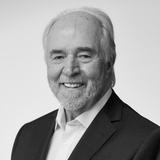
'Serene' is the word that springs to mind as Emerson Fittipaldi glides into view. He was like that as a racer and he's like that now as he appears in the lobby of the Goodwood Hotel.
Having just come from Brazil, he looks fresh and fit - as he would when a special diet has dropped his weight back to what it was when he arrived in Britain as an ambitious and talented 22-year-old Formula Ford racer in 1969.
Emerson has barely stopped smiling since. His charmed career catapulted him into F1 and a grand prix win within 20 months, then a first world championship two years later. Fittipaldi bridged the necessary change in driving style that came with the arrival of slicks in 1971, an ability to drift the car to perfection metamorphosing into the fingertip precision that not only took him to two F1 titles but also, more than 10 years later, two stand-out victories in the Indy 500.
He's at Goodwood to represent Brazil at an FIA Conference on road safety - a subject that is important to the ambassador for a country reeling from 47,000 deaths on the roads in 2012.
 Fittipaldi poses for F1 Racing © LAT
|
Emerson speaks about this with the same quiet dignity he brings to discussion of his outstanding racing career. It's almost a graceful sleight of hand from a man who was incredibly tough but scrupulously fair on the track. It's as you would expect from a driver who experienced the hard knocks of an era when fatalities were a constant and terrible part of a sport he loved so much. He's pretty much unchanged, as our leisurely lunch on a summer's day reveals.
Maurice Hamilton: Good to see you.
Emerson Fittipaldi: It's nice to be here. England is so beautiful at this time of year.
MH: Yes, particularly now with everything so green and lush. I'm not sure it would have looked so nice when you first came to England in the winter of 1968/69. Did you arrive from Brazil on your own?
EF: Yes. But I had a friend here, Jerry Cunningham, who was born in Brazil to an English family. He raced Formula Ford but also had a fibreglass factory and supplied the karts I was building and made moulds for my Super Vee.
He said I had to go to England and race Formula Ford. So, when I arrived from Brazil, he met me and took me to Snetterton. It was the first time I saw club racing in England. I went crazy. There were so many different categories of racing - far more than we had in Brazil.
On the Monday we went to see Frank Williams because, at the time, he was the dealer for Titan Formula Fords. My English was not good, I could not communicate very well. Frank looked at Jerry and said: "Racing in Brazil? I didn't know they had racing there!"
Jerry explained I was the Brazilian kart champion, I had won the Formula Super Vee and wanted to start in Europe. But Frank didn't have a Titan. We went to the Merlyn factory and were told a customer had made the down payment, but not the rest. So a yellow Merlyn was just sat there, ready to race. I bought it the next day.
When Jerry returned to Brazil, it was hard. But he'd introduced me to Dennis Rowland, who made Rowland engines. I made a deal: I'd work in his shop during the week, making cylinder heads and exhaust pipes and, in return, he'd prepare my engine. That's how I started.
MH: I remember Ayrton Senna saying how homesick he was in England in the early days. Did you feel the same?
EF: I did. It was very difficult: the weather, the culture - all those things. I rented a room in a house in Wimbledon from a Mr and Mrs Bates. I stayed for five months - Mrs Bates was so good to me. I worked in the garage behind the house, polishing cylinder heads, and I'd end up covered in metal. Dennis's mother used to keep an eye on me. I was lucky to have good people taking care of me. Being in the right place and going in the right direction is important because, as you know, sometimes you can go the wrong way.
MH: That's certainly true in your case, because within a couple of months you were racing in F3. How on earth did you manage that so quickly?
 Fittipaldi made his debut with Lotus in 1970 © LAT
|
EF: I was doing well in Formula Ford and, after a few months, Jim Russell contacted me and said he was starting an F3 team with Lotus through the Jim Russell Racing School. He wanted me to drive a semi-works car. Then I met Ralph Firman [who would later found Van Diemen]; his first job as a racing mechanic was with me!
We developed the car and I really liked it. I started F3 in July and won the championship. I was racing against Dave Walker and Morris [Mo] Nunn in the Gold Leaf Team Lotus works cars. Twenty years later, I would win Indianapolis with Mo engineering my car.
I remember being at the Lotus factory. Herbie Blash was a mechanic. He called me over and said: "Do you want to sit in a grand prix car?" It was a 49 - Graham [Hill] or Jochen's [Rindt] car. I sat in the cockpit and my eyes were huge. Now, I see Herbie when I'm a steward at F1 races because he works for the FIA. The F1 world is very small.
MH: That's true. And things move so fast. Within 18 months of arriving in England, you were on the grid for the 1970 British GP. You were on the back row in the Lotus 49. You were just opposite where I was sitting in the grandstand!
EF: Do you remember who was alongside me?
MH: Graham Hill in Rob Walker's Lotus 49.
EF: That's right. I was on the grid thinking: 'I'm starting a grand prix next to Graham Hill!' My dream had always been to take part in a grand prix. If I'd died the next day, I'd have died happy.
MH: How did this dream come true so quickly?
EF: It was almost even sooner. Frank Williams called me in '69. I was renting a house near Norwich and he flew over with his instructor, landed, and asked me to drive for him in 1970. At the same time, Colin Chapman called me. When I went to his office, my legs were shaking. Colin Chapman wanting to talk to me. He wanted me to drive for Lotus in 1970, but I said it was too early. I had to say 'no' to both of them, which was very difficult. I knew I was not ready for F1. I wanted to do some F2 races.
MH: That makes sense, because F2 was really good then, wasn't it?
EF: It was. Lots of grand prix drivers took part: Jochen Rindt, Jackie Stewart, Piers Courage. You can imagine the dream for me, driving for Colin Chapman. And all the time he was asking when I would be ready for F1. Then he said he would enter a third car for me in the British Grand Prix.
MH: The Lotus 72 had arrived not long before. The 49 was coming up to three years old, so it must have been a well-developed car by then.
EF: It was. The 49 was not the quickest car but, for a rookie like me, it was perfect. Very nice to drive and very forgiving.
MH: You scored your first points by finishing fourth at the next race at Hockenheim. You had problems in Austria and then came Monza. That must have been a dreadful weekend for everyone, but particularly for a young guy aged 23, new to F1. And you were about to race the 72 for the first time. [Jochen Rindt crashed during practice when his 72, running without wings, turned sharply left under braking for Parabolica and struck the barriers, which parted. The Lotus's front was torn off. Rindt, who didn't use crotch straps, sank into the cockpit and received fatal throat injuries from the seat harness buckle. It is thought a front inboard brake shaft had failed.]
 He won the title in the Lotus 72 © LAT
|
EF: For the first time I understood just how close we were to a crash and that you could die. I'd had breakfast with Jochen that morning and he'd asked me to take his place on the Roy Winkelmann F2 team for 1971. He said Bernie Ecclestone would take care of the contract and we shook hands. Bernie was Jochen's manager and a partner in the team. It was the last time I spoke to Jochen.
We left Monza and I was waiting to see what Colin would do. Lotus withdrew from the Canadian Grand Prix and I was expecting Colin to take an experienced driver. He called me and said: "We're going to Watkins Glen for the US Grand Prix and I want you to be number-one driver." I had not been to Watkins Glen before and, coming from Monza, everyone in the team was trying to recover from the tragedy.
MH: I can't begin to imagine how much pressure that must have been for you.
EF: Huge pressure. I don't know if that caused it, but I caught a bad cold. On the night before the race I had a high temperature and Colin came to my room with a doctor to give me an injection. Next morning I was much better. I started from third but decided to let the race settle down. Three cars in front had problems. With eight laps [of 108] to go, I was in the lead. Then I saw Colin on the track, throwing his cap in the air, like I used to see him doing on television for Jimmy Clark. But this time, it was for me. I couldn't believe it. It was an incredible feeling.
MH: And a problem for Jacky Ickx meant Jochen became the posthumous world champion.
EF: Yes, a fantastic way to end the season after all that had happened at Monza. And for me, in only my fourth grand prix.
MH: What happened in 1971, because you were a favourite to win the championship?
EF: Slick tyres arrived in 1971 and they didn't suit the car. It wasn't until Colin added the new suspension that we started to become competitive again. It was a non-championship race at Brands Hatch in October before we could adjust the car and make it behave like it had in 1970. The car was flying for the first time.
MH: So, you were in good shape for 1972 and the car would no longer be in the red and white of Gold Leaf Team Lotus. You will always be associated - in my mind anyway - with the black and gold John Player Special Lotus 72.
EF: That started when I raced the turbine car, the 56B, at Monza in 1971. This was another of Colin's ideas; he originally designed the car for Indianapolis. When we raced it at Monza, it was mainly gold with black marking. This was the first test of the colours and it didn't work well on TV. So, the marketing people said it had to be black with a gold stripe. When I saw the JPS for the first time, I was shocked. I told Colin it looked like a coffin - he just needed to put four handles on the sides. I'd never seen a black racing car before. But I soon got over the shock. It was beautiful - and it's still beautiful today.
MH: It went well, too: you won five of 11 races and became the youngest world champion, aged 25. It could have been a double because you were in the running in 1973, but there was a key moment at Monza when your team-mate Ronnie Peterson won and you finished second. Was that the end of your relationship with Chapman? Had there been a pre-race agreement?
 A move to McLaren in 1974 led to a second world championship © LAT
|
EF: Yes. We'd agreed that if we were leading and nobody was catching us and Ronnie was in front, we would change position as I still had a mathematical chance [against Jackie Stewart] of winning the title. With 15 laps to go, Colin said he would give the sign to change position.
We got away from everyone; Ronnie was leading. Fifteen laps, no sign; 14 laps, no sign; 13 laps, no sign. When it was 10 laps, I attacked and we started to race each other. It was crazy. I finished right on Ronnie's gearbox. I didn't blame Ronnie but I was upset with Colin because this was not what we agreed. That was when I started to talk to other teams. And I knew I had Philip Morris [Marlboro], who were leaving BRM and said they'd come with me wherever I went.
MH: That's amazing when you think how things are today. You were in such a strong position. And you also had support from Texaco as well.
EF: It was a big responsibility. Philip Morris said it was my decision. I was talking to Brabham, Tyrrell and McLaren. It was a difficult choice.
MH: That's another thing that's very different today. Look at the teams now and the majority have been around for a long time. But, in 1973, Brabham had been re-invented by Bernie Ecclestone just a few years before, and Tyrrell and McLaren had made their debuts in 1968 and 1966. You had an interesting choice from what you might call fresh, young talent. I imagine Bernie was keen to take you for all that money?
EF: I was so close to a deal with Bernie. But I went to McLaren because I liked the team, the organisation, the whole set-up. Around 80 per cent of the guys were from New Zealand and I felt they had the same commitment as me, coming from Brazil. When you live on a different continent and you go for a job, you are committed in a different way. I just felt an incredible energy at the team. It's not that the other teams were uncompetitive; it was just you felt these guys would do anything to win.
MH: And an entirely different management structure to Lotus?
EF: McLaren were much better organised. At Lotus, Peter Warr was a great team manager; I enjoyed working with him. But McLaren were a new type of organisation. They were always thinking ahead - how to get the maximum from different tracks. Teddy Mayer had tremendous commitment. Anybody could say anything to him and he would listen and, where appropriate, accept advice. It was never like that with Colin!
MH: Did you enjoy your time racing at McLaren?
EF: Yes. Great people, so enthusiastic - it was very enjoyable. Most people were young guys, about the same age as me. We had fun working together. At the time, McLaren were close to being one of the biggest teams in F1. I really liked the ambience and they treated me very well. The first time I drove the M23, at Paul Ricard at the end of 1973, it was immediately fast on the short circuit. I felt it was a good match: driver, car and team. I didn't expect to win the title in our first year together, so to do that was fantastic.
MH: But you must have missed some of the Chapman magic?
 Fittipaldi struggled in the Copersucar © LAT
|
EF: Colin was a genius, no question. He had the intuition. You would have dinner with him and talk about what the car was doing at every corner. He would put two fingers to his temple and start thinking. He would go back and change the whole car; the next day it would be faster. McLaren didn't have this.
MH: And, together, you made the M23 work really well, to the point where you won three races and were in a title shoot-out with Ferrari and Clay Regazzoni at Watkins Glen.
EF: I wasn't expecting to win the title in my first year with McLaren. It was a fight to the last race - then I found the car did not work. I was eighth on the grid. In my entire racing career, including IndyCar, that weekend at Watkins Glen was the most pressure I had before a race. Ever! Equal points with Regazzoni going in, the car didn't perform Friday, it didn't perform Saturday, and he's just behind me, ninth on the grid! The McLaren mechanics couldn't look at the Ferrari mechanics and the Ferrari mechanics couldn't look at us. I only slept four hours that night; huge pressure. I fought Clay - he had me off the road on the first lap - but I won in the end.
MH: How close did you come to winning the championship in 1975?
EF: I only won the Argentine and British GPs that year. Niki Lauda's Ferrari was too quick.
MH: You didn't score any points in Spain because of the safety problems with insecure crash barriers at Montjuïc Park...
EF: It was irresponsible of the FIA to start the race like that. Bernie offered to have all the mechanics get nuts and bolts and go and fix the barriers. The organisers said they would do it - but nothing happened. There was a Philip Morris dinner on the Saturday night. I said I knew I was under contract but that this went beyond the usual risks. I said I didn't want to start the race. Teddy and Philip Morris said okay. But when the FIA heard, they said they would impound the McLaren transporter and ban us from the race at Monaco. So I did one lap then stopped - and was suspended for three races. Then came the crash. [The rear-wing support on Rolf Stommelen's Embassy-Hill broke as he approached a 150mph crest on the circuit. The car ricocheted off the barrier, launched off another car and passed over the barrier, killing four bystanders. Ironically, the barriers remained intact. The race was stopped and half points awarded].
MH: Everyone was so very tense that weekend...
EF: You were there?
MH: Yes, I had managed to scrounge a press pass. I was standing at the bottom of the hill and I remember seeing a flash of white at the top of the hill as Stommelen's car disappeared. Then it was chaos. The police were lashing out with their batons. People were smoking while there was fuel running down the gutter. It was awful. But there was an amusing moment. We saw you go by with your arm in the air, doing that single lap. Arturo Merzario was doing the same - except he didn't complete the lap. He reached the bottom of the hill, stopped the Williams, got out and lit a cigarette from a packet in his overalls.
EF: Typical Arturo! Such a funny guy. And so small. Do you remember the Ferrari 512 sportscar; five litres, a beautiful car? Arturo was testing this car at Imola. It jumped one gear - and broke his arm!
MH: That wouldn't surprise me. He looked like a puff of wind would blow him away. But, getting back to Barcelona, that episode was typical of the attitude to safety in those days.
EF: When I first joined F1, I rented a house in Switzerland. Jackie and Jochen took me around. We'd go to the office of Jo Bonnier [head of the GPDA] and I learned about the fight to improve safety. It was a tough time. A lot of lives could have been saved had safety been improved.
MH: At the end of 1975, you started Copersucar [also known as Fittipaldi Automotive] with your brother, Wilson. It must have been hard to leave McLaren at the end of 1975?
 1980 was his last year in F1 © LAT
|
EF: Not hard, no. It was a dream to build a Brazilian F1 car. Remember, Wilson and I used to build cars in Brazil; I loved doing that. But this was more difficult than expected. The decision to leave McLaren? Not difficult.
MH: What was the most difficult part of the Copersucar operation? Was it having to do all the things Teddy and Colin would have done - and drive the car at the same time?
EF: It was the disappointment of 1976. The car was good at first. I started fifth in Brazil, our first race. But it was downhill from there, although I took second place in the 1978 Brazilian GP. That was great; a Brazilian car and team on the podium: one of my career highlights. It was a tough race; it was second place on merit.
MH: So, why did you decide to stop?
EF: In 1980 we had full ground-effect cars - and I hated them. I was not enjoying driving. We had a very good car but we didn't have the money to develop it. We had Harvey Postlethwaite and also Adrian Newey - this was Adrian's first job in F1. He was the top student from Southampton University. We had Peter Warr as team manager and Keke Rosberg driving the other car. So, we had a great team and a fast car later in the season. It was the best car we ever built but, by that time, the media in Brazil were making jokes about the team and gradually destroying us.
Skol, the beer company, were sponsors, but in July they called me and said the press in Brazil had been so bad for the team that they were not going to continue. I had to tell the guys: "You're released from your contracts." I was so disappointed. Harvey went to Ferrari; Keke to Williams - and Adrian went on to make history!
MH: So, you quit F1 and returned to Brazil. How long before you were back behind the wheel?
EF: They had a series for twin-engine karts called Superkarts. I started racing again and I enjoyed it because I was racing against the new generation. Powerful karts and races organised on the streets: I really enjoyed it.
Then Ralph Sanchez, a great friend who passed away this year, called and asked me to race in the Miami Grand Prix in a March-Chevrolet GTP. I said: "I've retired. I don't want to race any more." He said: "Just do one race."
The first time I tested the car was at West Palm Beach. After three laps I was coming to a long corner when the throttle stuck open. I locked the front wheels and went into a lake of crocodiles. I was in the car, trying to get out and watching for the crocodiles! But, apart from that, I was very happy to be back and I put the car on pole. I was leading when the gearbox broke.
Then I had a call from Pepe Romero. He said: "I want you to drive at Indianapolis. I'm putting a team together." Ever since Lotus, Indy had always been at the back of my mind. My parents had raced as amateurs and on Saturday evenings - this was in 1955/56 - we would go to someone's house with a group of racing enthusiasts and watch films about Indianapolis. When I joined Lotus, I kept asking Colin about racing at Indianapolis with Jim Clark. I really had a thing about it. So, I went to test at Indy: there was no pressure; no expectation.
MH: You had gone to Indianapolis straight after winning the F1 world championship in 1974 to drive Johnny Rutherford's McLaren. It was a promotional thing - but this was the car that had won the previous May. Did you enjoy that?
 Fittipaldi went on to win the Indy 500 twice © LAT
|
EF: Oh, yeah. I loved driving at Indy, but I refused to race there because the cars were so fragile at the time. They would disintegrate in an accident and the speeds were so high; I was lapping at 210mph with the 1,000bhp Offenhauser engine and incredible downforce from huge wings. The McLaren was perfect.
AJ Foyt was there and he was very good to me. Bobby Unser was testing and AJ took me to the corners and explained about each one of them: "You always need a bit of understeer; never get the car loose." When I asked him what I shouldn't do, he said: "Never correct the car. If it starts to spin, let it go. If you try to correct, you will overcorrect and go up into the wall."
MH: So, when you raced there, were you enjoying a completely different way of driving the car?
EF: It is different and very hard to explain. The car is never perfect for all four corners. The wind direction has a big effect. To do a 100 per cent lap at Indianapolis is a fantastic feeling, very different from F1. Much more adrenaline, much more finesse. The wall seems to come out towards you, so you have to be so precise. You watch the windsocks all the time; you have to change what you're doing every lap. If the wind changes even a bit, you have more understeer or less. Setting up a car drives you crazy.
MH: Clearly a good engineer is vital. Who was the best you worked with?
EF: Mo Nunn. The three years I worked with him at Patrick Racing were enjoyable and I won Indy in 1989. When I did it with Penske again, in 1993, I was one of the oldest guys to win there.
MH: After your 1993 win, we were both at a Marlboro dinner in Estoril and, by chance, you were sitting opposite me. I don't think I've ever seen you so relaxed and comfortable with yourself. Was that a good period in your life?
EF: It was. And I remember being at that dinner with Ayrton. We spent a lot of time together with a friend of ours at Estoril. Ayrton was tense because he was trying to negotiate with Frank Williams but Alain Prost wouldn't have him at the team. Ayrton came back after qualifying and he wasn't happy. 'That little shit! He's a coward. He won't accept to drive with me at Williams." I said: "Ayrton, Ayrton. Relax!" In the end, Alain retired and Ayrton drove for Frank in 1994.
MH: It's one of those turns that life takes, isn't it? Having experienced so much in your career, do you believe that fate plays a part?
EF: There are things in motor racing that are pre-ordained; you cannot change them. I see these things and think I have had a fantastic career. I'm very grateful for it.
MH: I'm grateful for your time, Emerson.
EF: My pleasure, Maurice. My pleasure.


Memories of Ken Tyrrell, 25 years on from his passing

Why Garden Gate Green and Yamura White are all part of McLaren’s colourful history

When plucky private entrants could afford to go GP racing, and how F1 changed with the rise of commercialisation

How an F1 mechanics’ reunion recalled stories of working practices that would now send HR into meltdown

F1 fans might well wish for simpler times, but no one wants armed race officials…

Remembering a lost Italian F1 hero 40 years on

The grand prix that never was – but did happen

What links a scribe's rudimentary '70s transport with an inspiring education initiative?

Acosta's long road to his maiden MotoGP win

MotoGP Austrian GP: Acosta finally claims maiden win

Great debate: Which circuit should host the F1 2026 finale if the calendar has to change?

Live: MotoGP Austrian Grand Prix updates as it happens
Subscribe and access Autosport.com with your ad-blocker.
From Formula 1 to MotoGP we report straight from the paddock because we love our sport, just like you. In order to keep delivering our expert journalism, our website uses advertising. Still, we want to give you the opportunity to enjoy an ad-free and tracker-free website and to continue using your adblocker.


Top Comments