


Adrian Newey: Mind over matter
Adrian Newey has always loved a good regulation shake-up, and in 2009 he has justified Red Bull Racing's faith in him. Adam Cooper talks exclusively to the man responsible for the fastest F1 car on the grid.
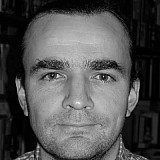
Adrian Newey missed Sebastian Vettel's win for Toro Rosso in Monza last year, and he was absent too when the German triumphed in the wet in Shanghai in April. But at Silverstone he was finally able to see a dark blue car cross the line first as Vettel and Mark Webber recorded a fabulous one-two, just down the road from the Red Bull Racing factory.
Newey has been involved in a lot of grands prix wins over the years, and there have been many at his home track. But this one was important, he admitted, and the emotion was clear to see.
"It is very special to have done it having been involved with this team from very early on," he smiled, "and got it to where we managed to get it to today. I think the circuit was always going to suit us, and hopefully the modifications we did to the car - the new nose and floor - brought a bit extra.
"It's difficult to know how much was circuit specific. I imagine Brawn GP were having tyre warm-up problems and that's why they weren't as strong as you'd normally expect them to be. Sebastian was completely flawless. Obviously Mark was stuck behind Rubens, and that kind of gave Sebastian a relatively clean run."
It took a few years as things fell into place, but Red Bull's investment in Newey has paid off spectacularly this year. He'd be the first to agree that this sport is about team work, but there's no question that the individual at the top can still make the difference. Especially when a major package of rules changes comes along, and some big decisions have to be made.
|
Sebastian Vettel leads the 2008 Italian Grand Prix at Monza in a Red Bull Technologies Toro Rosso STR3 Ferrari © LAT
|
The fact that the car was competitive straight away, even without a double diffuser, was especially impressive. Much has been said about the way Honda threw away the 2008 season to focus on this year, and has thus reaped the benefits. But what about Red Bull? There's never been any suggestion that the team followed a similar policy, although having said that, its form did tail away in the second half of last year as STR's improved. Newey himself doesn't see that as significant.
"If I remember correctly, RBT [Red Bull Technology] won Monza, which was fairly near the end of the season!" he recalls. "The car was the same. Apart from the engine, the car was the same. There was a cross over in the gradient between RBR and STR, but that wasn't due to the car... The cars were developed at the same rate."
He's referring of course to the deficiencies of the Renault, which became even more apparent when STR had a mid-season Ferrari upgrade. Nevertheless, at some point Newey and his men must have turned their focus to 2009. The timing of that move was to prove particularly difficult for the likes of Ferrari and McLaren, since they were still fighting for the world championship.
"We struggled to make the compromise as well," says Newey. "We tried to develop the car through the year. We probably started our wind tunnel programme on this year's car later than most, in truth. We also only have one wind tunnel, and being fairly old it's not the most efficient wind tunnel either. And that can be a handicap at times, for sure.
"Certainly if you take Brawn, from what I understand they were using four wind tunnels for most of last year. Which is great if you've got the facilities. I mean, good luck to them. If you've got that sort of resource, use it. We don't, and we had to juggle. As you know teams have bound themselves to be restricted to 60 hours of wind tunnel versus 60 teraflops of CFD, which is great. But it's way above what we can make anyway, so it's made no difference to us!"
Nevertheless RBR came out fighting, and in Australia Vettel was the only driver who could keep the flying Jenson Button in sight. It was clear that, with or without a double diffuser, Newey had done a better job than most of addressing the rules changes.
"It was a decent start," he admits. "I make no secret of the fact that I enjoy big rule changes. When you're in a period of regulation stability, really the last change of any significance was 2005, and the last big one before that was 1998, so it ends up being a very iterative process.
"It's certainly fair to say that the design of all the cars had converged, and they were looking more and more similar. It's not as if there are any new ideas coming out, it's just how many iterations can you do on refining every component? And that tends to play into the hands of the teams with the most resources."
 Mark Webber at Silverstone in the Red Bull RB5 Renault
|
Although there was much to consider when the concept of RB5 was developed, Newey says the basic approach was clear: "If you go to roots of the car, then obviously you've got the aerodynamic package and the mechanical package. On the mechanical side there's understanding what would be required from the slick tyres, possibly from KERS depending on how much emphasis you put into accommodating it, and also the change in aerodynamics and how much that affects the mechanical package.
"Then on the aerodynamic themselves it's coming up with ideas that best accommodate the new regulations," he adds. "Our correlation between wind tunnel and track has been quite good this year."
One of the key factors was RBR's decision, as a private team, to not put much emphasis on KERS.
"The approach was for the car to accommodate KERS, but to try not to allow it to compromise the fundamental performance of the car," says Newey. "We did test a KERS system in pre-season. For us we have two problems - first of all, we're not convinced that our system is worth a lot of lap time. In fact we don't think it is worth a lot of lap time, the benefit is strategic rather than lap time. But the other problem is certainly with Mark, we can't get the car down to the weight limit.
"So then we'd be forced into a position where we'd run a non-KERS car for Mark, and a KERS car for Sebastian. The problem with that is you become two one-car teams in terms of learning about the characteristics of the car, the characteristics of the tyres. For that reason I'm reluctant to put the car into two different systems."
As the leading non-double diffuser team - and by some margin - RBR had more to lose than most when the disputed concept was declared legal. The saga was obviously a major frustration for Newey.
"Had we known the double diffuser was allowed at the start, we would have a different mechanical package to what we have now," he admits. "And it has been quite a challenge to get a double diffuser to work on our car. Exactly what that will mean for next year, when we are designing a car knowing that's been declared legal, is in the early research stage."
When the team finally did bow to the inevitable and follow the trend, was there a concern that the perfectly honed package would be compromised?
"There's a risk that you can screw it up," he says. "I think it's fair to say that the inherent nature of our car means that putting a double diffuser on isn't quite as much of a benefit as it is for some other cars. But it is still a benefit."
 Fernando Alonso (Renault), Robert Kubica (BMW Sauber), Kimi Raikkonen (Ferrar), and Kazuki Nakajima (Williams) battle at Istanbul © XPB
|
Others certainly found instant performance, although in recent races the teams at the front have been the same ones - the three double diffuser pioneers plus RBR - that set the pace at the start of the season. While some big names have slipped up, generally the field has been closer than ever in terms of qualifying lap times.
"I am very surprised," says Newey. "The only thing I'd offer is that if you took the early tests, then there was a much a bigger gap. I think the teams that if you like have not done a very good job of interpreting the regulations caught up quite a lot in those early tests, and even in the early races. More or less by copying to be perfectly honest, it's the usual thing.
"If you have missed some tricks and you see other people have made them, you can copy relatively quickly. It's not always as simple as that because a simple copy won't translate onto your own car, but it may at least spur some ideas. You can see a few areas of fairly intense development amongst the teams that didn't perform very well, particularly diffusers and front wings."
RBR has been competitive, and in contention for podiums or better, at every race this year. But some early chances slipped away.
"Overall I'm pleased with how it's gone," says Newey. "To get the first and second in China was obviously great, and get the first win out of the way. The next couple of races were slightly frustrating because I think in Bahrain Sebastian definitely had the pace to win that one, and Mark obviously had a very unlucky Bahrain with his practice problems. In Barcelona I think we also had decent pace and were stuck behind Massa for most of the race and allowed the Brawns away.
"I think certainly we were capable of winning the races. I think if things had gone our way, we would have won on those days, but they didn't, so that's it, you move on."
One weakness in some of the early races was the starts. Vettel lost crucial places, and not just to KERS cars.
"Our starts have not been as good as some of our competitors," admits Newey. "So it's an area we do need to improve on. It's always difficult to isolate these things, to be honest. Certainly we don't have a turn-key solution from Renault, so we developed our own start systems. I think that's possibly where some of the big teams with bigger resources do have a benefit through experience and resource. Brawn have had good starts, whether they do that through having worked it out for themselves, or through assistance that has in effect come with the Mercedes, I don't know."
The team's most disappointing performance relative to Brawn was at Monaco.
 Jenson Button and Rubens Barrichello pull away from the field at Monaco © LAT
|
"Certainly our car is not as well suited to the slow speed tracks as the Brawn, and that's something we need to work on," he says. "Monaco is an example of that, where we were certainly of similar race pace to Ferrari, but behind Brawn. We have some ideas on how to improve that, but obviously these things take time.
"We've seen it in the last few years between Ferrari and McLaren. Some circuits suited one, other circuits suited the other, so there's always going to be a degree of dependency on that. We've got one or two ideas to help our slow speed performance."
If Button has a few more bad weekends, can RBR really push him for the title?
"I don't know," answers Newey. "It's race-by-race at the moment. He has got a helluva lead, but there's a reasonable way to go. Nurburgring is a slower speed circuit than Silverstone, probably without the tyre warm-up issues that some teams. I'm sure it will be lot closer."
Meanwhile Newey is enjoying life at RBR, where he has a much bigger say than he would ever have had at Williams or McLaren. Sometimes it's more fun being the underdog: "It's something that I wanted to return to. I always felt that Leyton House was kind of unfinished business. I said when I first joined here the appeal was to be involved in a young team and be involved in how it grows, and hopefully be involved in guiding it up the grid. To have started to achieve that is very satisfying."

Krack: Aston Martin F1 team no longer in “no-man’s land”

Gasly rues costly floor damage from Ocon contact in F1 Japanese GP

Andretti planning F2 and F3 entries to promote US talent to F1 team

Andretti F1 team formally opens new Silverstone facility

RB: Tsunoda “mentally on a different level” in 2024

Russell: Dirty air is causing F1 helmet turbulence problems

Vasseur: No guarantee that Ferrari F1 tyre issues are resolved

How an F1 underachiever became a Japanese political player

Why F1's Madring debut was a wasted opportunity

Bruising F1 2026 will not be the end for Russell - Wolff

Haas confident of getting 2027 F1 budget closer to cap with new partner talks

Top 10 Can-Am drivers
Subscribe and access Autosport.com with your ad-blocker.
From Formula 1 to MotoGP we report straight from the paddock because we love our sport, just like you. In order to keep delivering our expert journalism, our website uses advertising. Still, we want to give you the opportunity to enjoy an ad-free and tracker-free website and to continue using your adblocker.


Top Comments