
What Hyundai needs from WRC 2027 ruleset to commit long-term
OPINION: The WRC will enter a new era in 2027 when its regulation changes come into play. Despite the series being close to finalising its plans, doubt remains over the presence of one major manufacturer

It may seem that the much-anticipated World Rally Championship regulations reset in 2027 is a long way away, but time is ticking – and with every second seemingly getting louder and louder. Fortunately, although there are still some finer details to flesh out, there are some positive sounds coming out of the FIA.
The WRC will usher in new technical regulations from 2027. The aim is to be more affordable and flexible in the hope of attracting new manufacturers and teams to grow the championship. The new rules will feature cars built to a €345,000 cost cap and deliver similar performance to the current Rally1 machines, but will use a spaceframe chassis and Rally2 componentry. The concept also allows for tuners as well as automotive manufacturers to build the chassis and design their own bodywork to compete.
None of the WRC’s current marques, including Rally1 representatives Toyota, Hyundai and M-Sport Ford, are yet to officially confirm plans to contest 2027 – though it is understood that Toyota has started preliminary preparation work. However, interest is beginning to build among tuners, with FIA technical director Xavier Mestelan Pinon recently stating: “What I can say is two of them are working closely with us on this project.”
My understanding is that there is also at least one manufacturer edging closer to an announcement that could result in a new player joining the WRC from 2027. It is believed that a meeting with a car maker to discuss its potential involvement took place in July at Rally di Roma Capitale, a round of the European Rally Championship.
What is also encouraging is that the FIA is in discussions with manufacturers regarding the possibility of allowing a degree of flexibility on engine eligibility. At this point, 2027 will be focused on current internal combustion engined vehicles. The FIA has stated its intention to open up the potential for other powertrains, but is yet to confirm the timescale and how parity between vehicles would be achieved.
Hyundai is among the current teams yet to commit to 2027 and has made its stance clear, suggesting that it requires more flexibility in the new regulations, particularly when it comes to drivetrains, and is pushing for more road-car-relevant technology to be showcased. News that talks are under way to allow more engine derivatives into the WRC has been met positively.

WRC giant Hyundai is a doubt for 2027, but regardless, it is understood there's a genuine possibility of a new manufacturer joining
Photo by: Vincent Thuillier / Hyundai Motorsport
“It does create opportunities for us and for others,” says Hyundai Motorsport president Cyril Abiteboul. “The priority of the championship is to attract as many participants and car makers as possible so we need to open up and give opportunity for 2027 and also the mid-term future. Adding flexibility, in our opinion, is key for the start of the period and the years that will follow.”
Abiteboul maintains that flexibility on powertrains is imperative for Hyundai for a number of reasons: “The steps and the direction that has been taken to basically give flexibility to manufacturers on the chassis side and on the body type is great and, given the situation the championship is in, we should absolutely do that.
“There is a totally different situation on the powertrain side and it is very, very restrictive. There is no freedom of development of marketing messaging, but it is so restrictive that, as we speak, we are not totally sure to have it in our product plan. Unlike the powertrain that we have in Rally1, which is a fully bespoke motorsport-designed powertrain, now we will have to use mass-production powertrains.
"If the FIA continues to go in this way for rally they will find the same difficulty that TCR is finding now. This is why we have been pushing hard for more flexibility on the powertrain side and adapting a similar concept as the one we have with the [2027] WRC chassis" Cyril Abiteboul
“We are not quite sure that what they [the FIA] have specified is something we have in our line-up. Frankly we believe that if that is something we struggle to find in our line-up and being the third-largest car maker in the world, probably others will find similar difficulties.
“This is something the FIA needs to be on top of. A lot of things are impacting the automotive industry and one big thing is the Euro 7 [the next set of emissions standards] that is impacting the way you can design the powertrain. What you could do before, which is take a base powertrain and blow a bit higher with the pressure of the turbo, you can’t do that anymore for all sorts of reasons.
“Actually, this is something we are experiencing right now. We feel if the FIA continues to go in this way for rally they will find the same difficulty that TCR is finding now. This is why we have been pushing hard for more flexibility on the powertrain side and adapting a similar concept as the one we have with the [2027] WRC chassis.”
The WRC is getting close. But we’re not there just yet…
This article is one of many in the monthly Autosport magazine. For more premium content, take a look at the Summer 2025 issue and subscribe today.

The WRC is edging closer towards finalising its 2027 regulations
Photo by: Toyota Racing

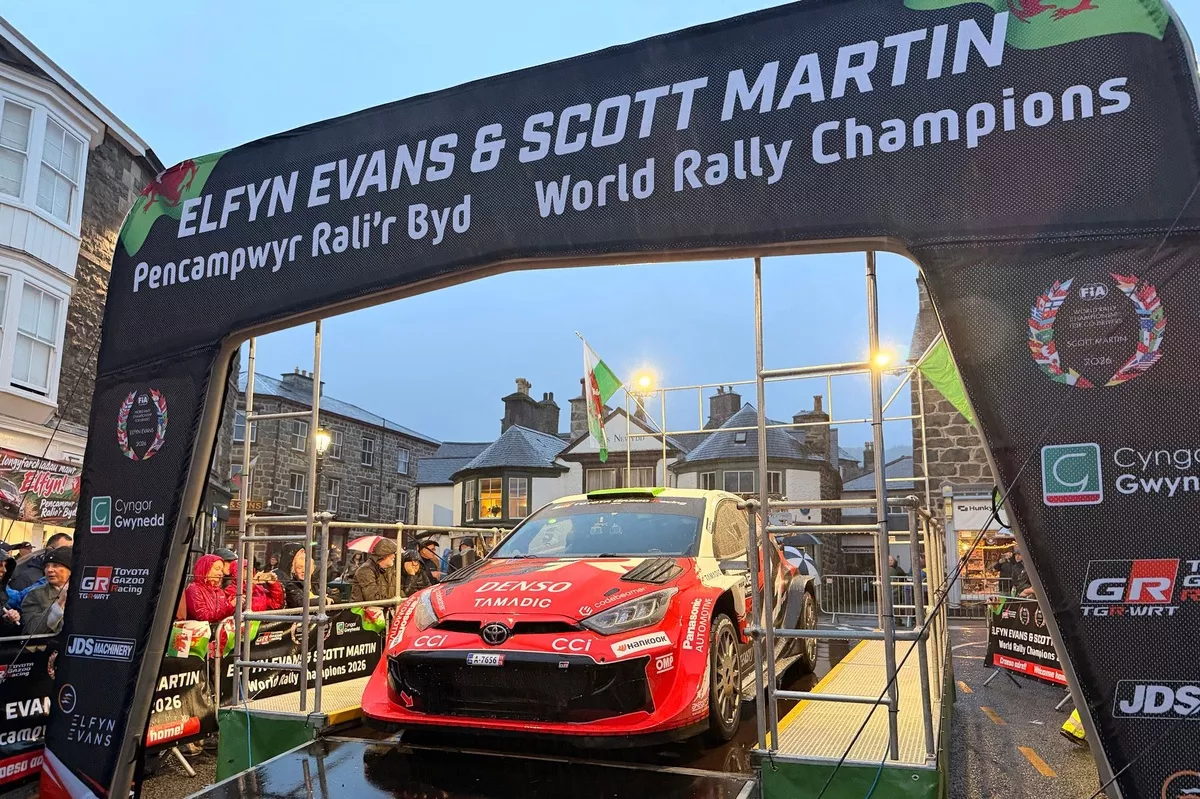
Evans given a hero's homecoming after WRC title triumph

M-Sport’s 2027 WRC Fiesta Kit car breaks cover

Loeb testing for Project Rally One ahead of WRC debut

Where Pajari can improve after WRC title near miss

The USA’s WRC return and 2027 key calendar questions answered

WRC expands 2027 calendar to 15 rounds as USA, UK return

Ogier to skip Monte Carlo with other WRC 2027 plans undecided

A story of persistence as Evans' long wait for WRC glory finally ends

What drives Bortoleto as his junior rivals hit new heights in F1

How the M8B became the most dominant car in McLaren’s history

What Verstappen knew about Red Bull’s big upgrade when he signed his new F1 deal

Colapinto urges fans to stop online abuse: “You’re not helping me or my future”
Subscribe and access Autosport.com with your ad-blocker.
From Formula 1 to MotoGP we report straight from the paddock because we love our sport, just like you. In order to keep delivering our expert journalism, our website uses advertising. Still, we want to give you the opportunity to enjoy an ad-free and tracker-free website and to continue using your adblocker.


Top Comments