
Inside Hyundai’s radical approach to prepare for the WRC hybrid era
As the World Rally Championship undergoes its biggest shift in regulations for a generation, teams are taking radical measures to prepare for its new era. Hyundai's unique approach involved conducting a private 1500km rally in Italy and Autosport went to see how the team is preparing for 2022

“So far we have already won a rally with the 2022 car.”
Those are the words of Hyundai Motorsport boss Andrea Adamo, delivered with a beaming grin as his team get to work servicing the i20 Rally1 prototype at BRC Racing Team’s commandeered headquarters in northern Italy, after a series of asphalt stages.
Although said under a veil of humour, Adamo is technically correct as Hyundai has undertaken a unique approach to prepare for the World Rally Championship’s new Rally1 era by conducting a private 1500km three-day rally in Italy’s Piedmont region - with its 2022 hybrid prototype that will form the bedrock for next year’s voyage into the unknown.
The WRC is undergoing arguably its biggest shift in regulations for a generation as the sport adopts Rally1 rules designed to provide a more environmentally friendly future for rallying’s top tier. Next year the "modern Group B” monsters, introduced in 2017, will be replaced by hybrid vehicles capable of packing their own 500 horsepower punch in short bursts, as 1.6 litre turbo-charged combustion engines combine with a 100kW hybrid system. It will require a whole new approach from teams across the board, from engineering, management, strategy and reliability, and it will even necessitate drivers to alter their styles to ensure sufficient regeneration of hybrid power under braking during stages.
Crews will now not only navigate some of the world’s toughest terrain but will have to do so using full electric power in road sections and service parks, while combining hybrid and traditional power during stages. Creature comforts such as advanced aerodynamics and suspension travel have been significantly reduced and in the case of the centre differential, removed completely.
It's a whole new ball game and to prepare for that a new approach to testing was required in the eyes of Hyundai. Step forward the Korean marque’s passionate Italian motorsport boss. Adamo is a rally man through and through and much like a tree has rings when you cut inside, if you were to do the same with Adamo he would have seams of pacenotes.

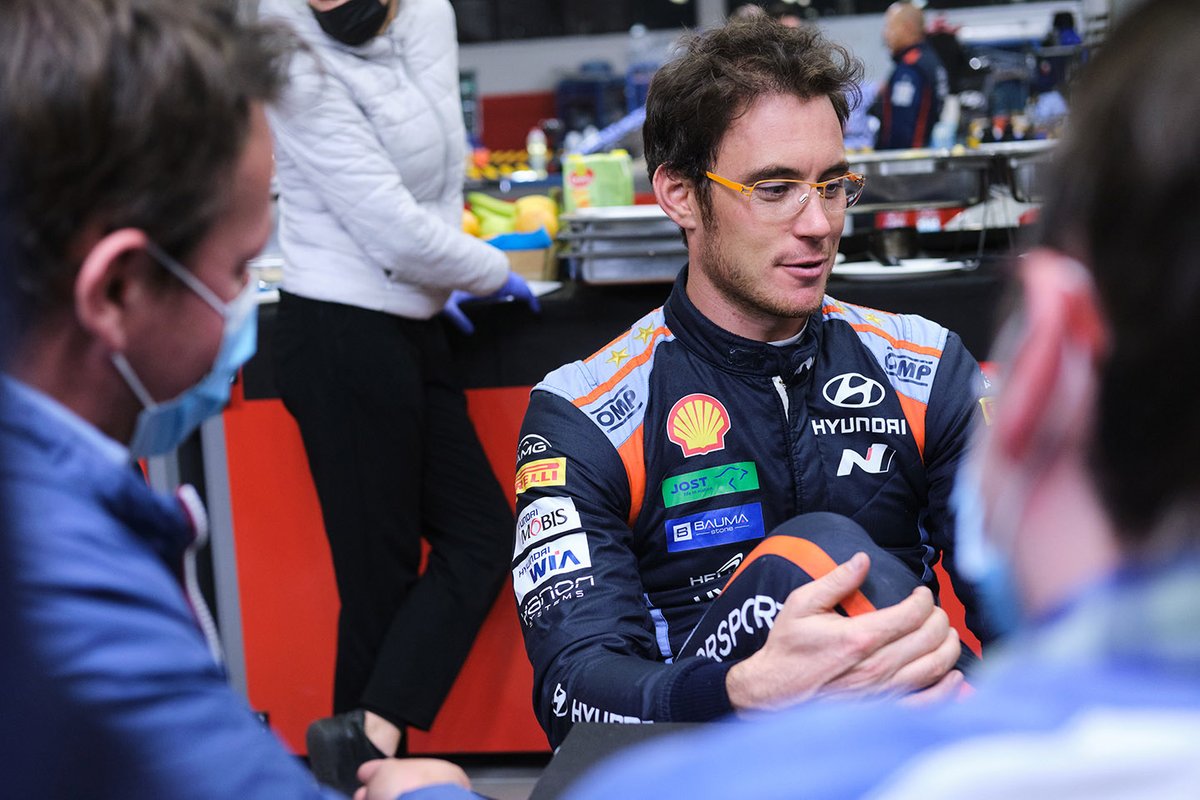
Thierry Neuville, Martijn Wydaeghe, Hyundai i20 Rally1
Photo by: Tom Howard
The Rally Simulation concept was conceived by Hyundai’s charismatic leader in perhaps the most Italian of ways, over dinner, which in Italy is a rally of sorts given the countless courses as Autosport found out after being invited to witness Hyundai’s unique plan in action.
Before outlining the sheer scale of Hyundai’s rally simulation concept in terms of organisation and logistics, it’s perhaps pertinent to understand the context and reasons for such an approach in the first place. Hyundai Motorsport, based in Alzenau, Germany, was the last of the three manufacturers to receive the green light to develop its Rally1 car, and once you add the effects of lockdowns caused by the COVID-19 pandemic, it’s fair to say it’s been playing catch up to its rivals Toyota and M-Sport Ford.
While testing has increased in recent weeks, to really prepare themselves for January’s Monte Carlo Rally Hyundai wanted to put its 2022 prototype through the challenges they will face next year. The team is all too aware of the importance of reliability as this year’s campaign will attest, with likely wins in Portugal, Sardinia and Safari to name just three thrown away through mechanical issues.
While testing has ramped up in recent weeks, to really prepare themselves for January’s Monte Carlo Rally Hyundai wanted to put its 2022 prototype through the challenges they will face next year
And so, essentially a private rally was created, including morning and afternoon stage loops, road sections, electric power only zones, timed services and tyre fitting zones. In total the car completed almost 1500km across a three-day itinerary split between drivers Ott Tanak, Thierry Neuville and Dani Sordo. Each piloted a leg featuring seven tarmac stages (including a night time test) punctuated by road sections, electric zones (7-10km) and timed services across long days that began at 9am and finished in darkness at 11pm.
To achieve this herculean operation, Hyundai employed 58 marshals to oversee the stages that were closed off to the public by police. A live timing company was contracted and time cards were used by the co-driver, such was the attention to detail in ensuring this was every bit a WRC event dress rehearsal. It was as close as possible to the real thing as prescribed by Adamo following discussions with local Rally Alba organisers.
Thierry Neuville, Hyundai World Rally Team, Hyundai i20 Coupe WRC
Photo by: Hyundai
“I think it was needed because this technical revolution that we have is much more wider than special stage performances. We felt that we needed to do something different,” Adamo tells Autosport.
“During a cooking evening I had this idea and spoke to the Rally Alba organisers about trying to put together a one day test with a few stages and a road section, and when you have the seeds of an idea it grew and became a big tree. Then it became a three day event with many kilometres.
“It is very useful for us as we are learning so many things and how to work on the car and the small issues you can have. When you put a fixed and clear timetable together and have mechanics working on the car in 30 minute services it allows you to understand how to make things easier to repair, it is something different. If you learn all of this for the first time in Monte Carlo it is far too late.”
To put it simply, closing off roads for three days to create your own private 1500km three-day WRC event for one car is not a simple task. It requires support from the local authorities, the police to close off roads, and the local people to embrace having sections of their local area shut down to allow a WRC car to blast through hillside stages. Even Adamo admits if he’d tried to do this anywhere else in the world other than his home town of Cuneo, it would have been impossible.
“There are a number of factors [that made this possible] and I would like to list them,” Adamo adds.
“The passion of rally from the people in this area, the Rally Alba organisers, the local authorities the regional president and tourism minister and the chief of the police, all of these people have been so cooperative.
“We have 58 marshals on the stages we have timing, we have a real time cards and a timetable. This is the only way to do the rally simulation properly.
“The police has been so supportive and lot of people have been there as spectators, the passion is there. I’m proud to come from this area now as I don’t think I would have been able to do something like this elsewhere.”

Andrea Adamo, Team principal Hyundai Motorsport
Photo by: Hyundai
From the outside looking in, one could argue organising a three day rally for one car is a bit of an overkill. But a debrief with Hyundai’s powertrain manager Julien Moncet reveals the reality and the extent of the challenge Hyundai, Toyota and M-Sport Ford face in developing hybrid cars to meet the WRC’s new Rally1 regulations for 2022
“I would say so,” Moncet tells Autosport, when asked if this is the biggest engineering challenge he has faced. “I am combustion engine guy and I have had nothing to do with the electrical stuff, so this is something completely different. I have to learn as well.
“You could say that we [the rally industry] are a bit late [with hybrid] compared to road cars. We have seen this technology in other motorsport series but now this is being used not on a circuit but on the road in rally, which makes it completely different. We are not doing the same course lap after lap. Every rally is different with different conditions. It may look easy form the outside but it is a very difficult challenge and for us it is the first time we integrate electrification with the combustion engine.
It was important for [Adamo's] team to be transparent and showcase the challenges in adapting to new Rally1 regulations
“It is brand new technology for all of us so we started from scratch and now we are improving and the feeling for the driver is getting better definitely.”
Testing is all about ironing out issues to ensure they don’t appear when the serious business of competition begins next year. And with such a change in technology problems are inevitable. There were delays on the first two days, a steering issue and a small gremlin starting the car on one occasion, but overall the i20 completed its 1500km route and made it to the finish to claim a win of sorts.
But what was brave of Hyundai, was to allow all this to play out in front of an invited group of the WRC journalists, including this writer. However, for Adamo he wouldn’t have done it any other way. It was important for his team to be transparent and showcase the challenges in adapting to new Rally1 regulations.
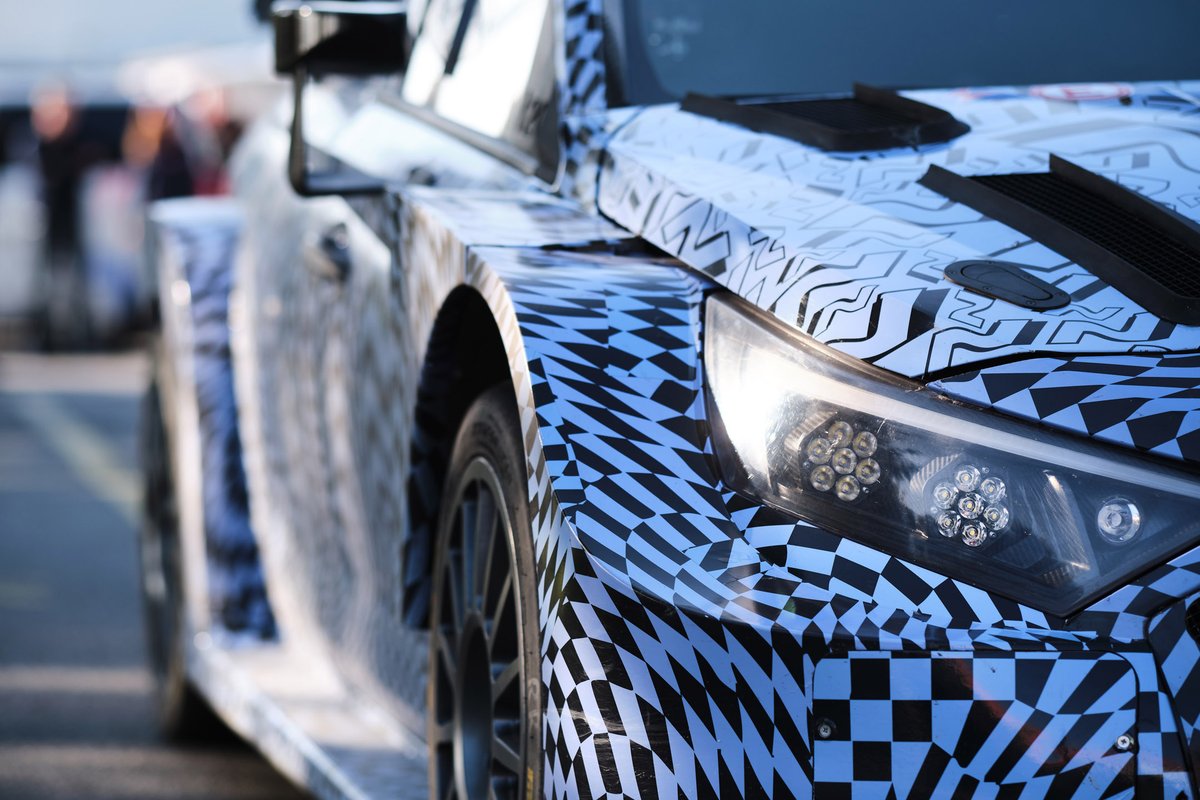
Hyundai i20 Rally1 detail
Photo by: Hyundai
“It is great experience and I’m happy and of course in my opinion it was important to have you journalists here to see this first hand,” says Adamo.
“Now you are beginning to know me, I’ve had enough of this stupid static presentation with a fake car and where everything is beautiful. In 2022 we have enough fake news on social media so we have to speak with reality.
“I was happy to invite all of you here to see the truth. There are some issues but this is the thing and we have run the car on the stage to see how it performs on the stage in respect to the current one and see how it runs with the electric power. I think it is the way you have to present the [2022] programme. We expect some glitches will come and we will sort them and we are here for that.”
As learning missions go this could not have been a better litmus test for Hyundai in understanding the challenges and the areas it must master to be successful in the WRC’s new hybrid era. Likewise it would have provided valuable information and food for thought for the FIA, who sent a small team including rally director Yves Matton and technical director Jerome Touquet to oversee the simulation. No doubt the car completing the distance will have provided a huge sigh of relief for the FIA as the clock ticks down until January’s Monte Carlo season opener.
"For sure, what we have seen over these three days is that they seemed able to do a full rally which is the most important result, without any major issue,” Matton tells Autosport.
"Monte Carlo will be the first step and then after that they will continue to improve the cars, to improve the performance and the reliability of the cars, but it seems that there is no worry that the cars will be there and be able to show something interesting in Monte Carlo.”
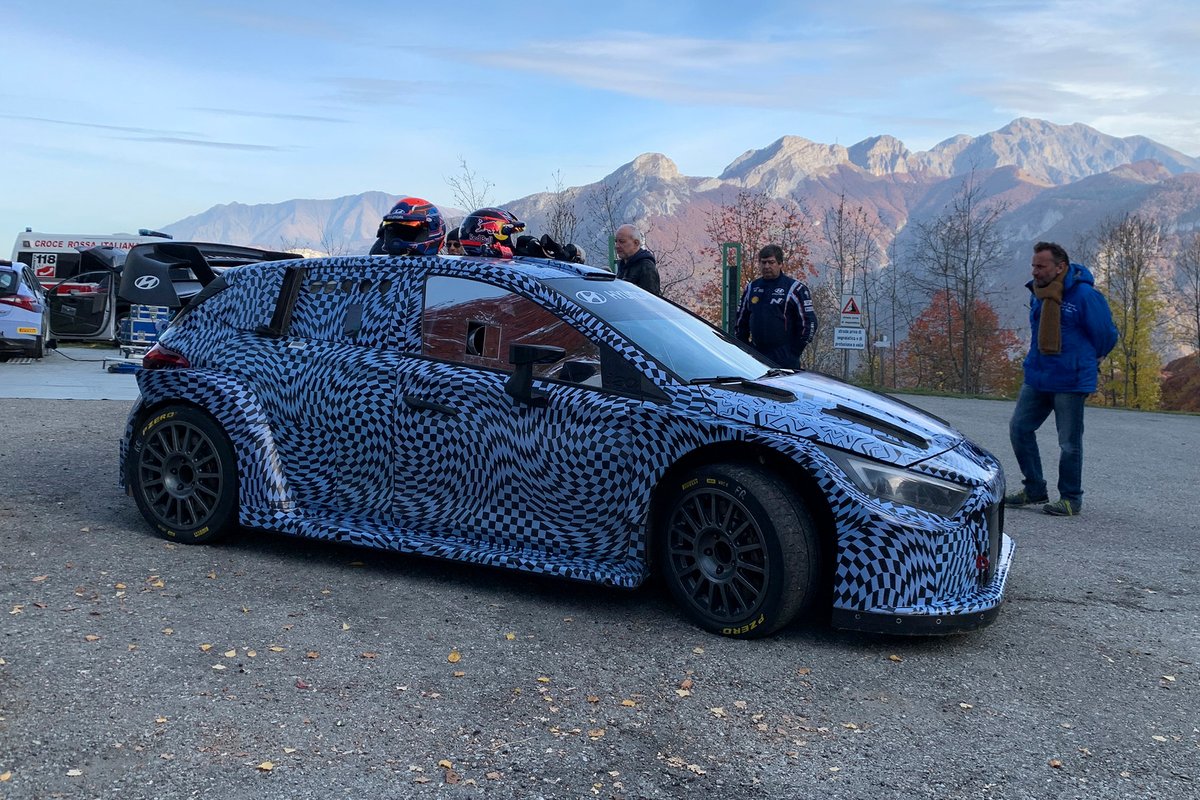
Thierry Neuville, Martijn Wydaeghe, Hyundai i20 Rally1
Photo by: Tom Howard
For the drivers, Hyundai’s unusual approach delivered much needed seat time in real world conditions ahead of Monte Carlo, and a chance to practice switching between combustion engine to electric mode, using the hybrid boost on stages, and to understand how to regenerate the extra power through braking on fast and narrow mountain stages akin those they will encounter in January.
“We started early and we finished quite late but it was a very helpful experience, especially to have three different stages on one day to experience the hybrid,” Thierry Neuville tells Autosport after completing his 698km leg.
“When you drive the same road all day it is difficult to get a good feeling, here we were testing three different stages. We are getting better [with the extra hybrid boost] and in the afternoon it was working quite nice, so it is a good step.”
As Adamo claims, Hyundai has already notched up a victory with its 2022 hybrid machinery - a feat that cannot be taken away from them.
Whatever happens in Monte Carlo in January, the effort all the teams have put in to be ready for 2022’s regulation shake up should be appreciated
But what has been the important piece of information learned according to Adamo?
“That you don’t have to become scared when you see the car running and it goes immediately quiet, it doesn’t mean the engine has broke it just means it is on electric power,” Adamo smiles.
“It has happened to me twice already when I was following it and I forgot.”
“Wednesday was very important and we worked a lot on the car management with Ott and we are pushing what we learned with Thierry."
What Hyundai’s rally simulation has highlighted is the WRC’s move to Rally1 regulations is a huge undertaking for all the teams, and a task that has been completed during perhaps the most challenging period of time for the world thanks to COVID-19.
Whatever happens in Monte Carlo in January, the effort all the teams have put in to be ready for 2022’s regulation shake up should be appreciated.
Time will only tell how successful this test will be for Hyundai on next year’s stages, but what was plain to see from this no stone left unturned approach is an abundance of passion to go the extra mile and succeed in WRC’s new era.

Ott Tanak, Martin Jarveoja, Hyundai i20 Rally1
Photo by: Hyundai


Rovanpera to conduct demo run at WRC Rally Finland

Ogier to reunite with WRC champion co-driver for Rally Finland

Was the WRC’s new 50-hour format a success?

Is the 2026 WRC title fight the most unpredictable in a generation?

How Estonia crowned Pajari as the WRC’s new flying Finn

The important lesson Solberg put into practice in Estonia

What maiden WRC win means for Pajari

WRC Estonia: Pajari powers to sensational maiden victory

KTM's biggest weakness exposed by Vinales contract drama

How Silverstone has proved that bigger isn’t always better

IndyCar releases renderings of new chassis for 2028 regulation overhaul

Why the contentious regulations were a talking point again in BTCC's visit to Thruxton
Subscribe and access Autosport.com with your ad-blocker.
From Formula 1 to MotoGP we report straight from the paddock because we love our sport, just like you. In order to keep delivering our expert journalism, our website uses advertising. Still, we want to give you the opportunity to enjoy an ad-free and tracker-free website and to continue using your adblocker.


Top Comments