


Why F1 should ignore its short-term critics
Liberty Media tried to take a long-term research-based approach to making changes to Formula 1. But that has left it open to criticism that it is not doing enough to fix the championship's immediate problems

This week's media statement from the Formula One Promoters' Association (FOTA) criticising Liberty Media for its running of the championship has fuelled the debate about whether F1's chiefs are doing a good enough job.
A quick glance on social media shows there are fans who remain enthralled and full of excitement for the on-track battles ahead. Then there are those who are more unhappy about modern F1.
There are debates about the lack of action on the track, concern about the gulf between the top three teams and the rest, F1's falling income, declining viewer numbers in some markets because of the pay TV switch and uncertainty about what is really going to change from 2021. Amid that, it is all too easy to think that F1 has been cut loose and is lost at sea.
But at times like this, it is important to sit back and understand that a lot of the issues central to the negative thoughts are those that either Liberty inherited from the previous regime or that simply cannot be realistically immediately changed.
For example, one key point of contention for fans, teams and sponsors (and now promoters) is the shift towards pay TV. In the UK, in particular, there is some discontent about F1's viewers now having no choice but to subscribe to Sky if they want to watch the championship's action live - whereas last year they could watch a lot of the races free and live on Channel 4.
The promoters are right that it is "not in the long term interest of the sport that fans lose free access to content and broadcasting", but the Sky deal was agreed before Liberty came on board, and there is no other option than to stick to it until it runs out in 2024.
But what else can be done for British fans? As frustrating as it is, the F1 TV streaming service that Liberty has been rolling out in certain markets won't be coming to the UK very soon even if the F1's bosses wanted it to happen. Contracts are contracts, at the end of the day.

F1's commercial chief Sean Bratches has long hinted that he would have preferred more flexibility, but with deals already in place there is very little that can be done unless you want to end up in court.
Back in 2017, ahead of the launch of F1 TV, Bratches was pushed on what he could do for British fans that didn't want to subscribe to Sky and would prefer the streaming option.
"I don't want to get into specifics of any given contract, but, generally speaking, our ability to exploit the digital marketplace will come in deals that are not prospective, rather than legacy deals," he said. "There wasn't as keen a viewpoint for the exploitation of digital in the existing deals that have been done."
It is also not quite so simple to conclude that just because some markets have reduced viewing numbers because of the move to pay TV, F1 as a whole is suffering.
Mixing up free-to-air and pay TV is an area where Liberty cannot do anything to win over the critics in the short term
For its commercial bosses, the extra amount that channels such as Sky are willing to pay (its exclusive UK contract is believed to be worth more than $1billion) goes far beyond what normal terrestrial channels can offer. Maximising income is one of F1's key targets.
Also, the global picture for television viewers is brighter than some have suggested - and there has been a turnaround since 2017 in the number of viewers the championship is attracting. From peaks of around 600 million unique viewers in 2008, the march towards pay TV has served to slash audiences. But in '17 F1's chiefs claimed there was a rebound.
Since then, F1 has recalibrated the way it counts audience - it now uses the industry standard three-minute viewing figure rather than the 15 taken before - so it is hard to get a fully clear picture of how the trend has gone over a long-term period.

But comparing 2017 to last year, a revised figure of around 445 million viewers for '17 (using the three-minute count) jumped up to 490.2 million tuning in for '18. A 10% uplift in audience is a sign of things moving in the right direction, not the wrong one. While some markets have indeed struggled, others have boomed: France was up 51%, Russia up 27%, and the USA up 20%.
With Liberty's hands tied in terms of the contracts it inherited, there is not much opportunity for things to change - and no reason why F1 should abandon a tactic that works well in most other sports of trying to mix up free-to-air and pay TV.
But this is an area that Liberty really cannot do anything to win over the critics in the short term.
The promoters' other gripe about "lack of clarity on new initiatives" and "lack of engagement with promoters" is also something that has been voiced by the teams.
When Liberty arrived in F1, there was bullish talk about making the championship bigger, brighter, better and more popular. But when the honeymoon period ended, and its broad stroke vision was not given more detail, some angst started about there being too much hot air and not enough action. One team boss cheekily suggested that the only change he had noticed was the odd zip wire behind the grandstands.
But in terms of reimagining F1, Liberty is also trapped in a 'damned if it does, damned if it doesn't' scenario. If it had rushed feet first into a total revamp, then it would have been criticised for making kneejerk changes that were not needed.
In adopting the approach it has taken, by doing a lot of research to evaluate how best to change things, it has taken time to try to get things right. In the short term that can be frustrating for those that want to see more, but in the long term the results should (hopefully) be better.

After all, we learned through panic changes such as elimination qualifying and double points for the 2014 season finale (above) that rushing things through quickly is not always the right answer.
Perhaps Liberty's only mistake has been in not speaking more openly about what it is doing behind the scenes. It was only by mistake, for example, that images of its 2021 concept cars leaked out last year - leaving fans excited about what was potentially coming. But had they not emerged, then we would have been none the wiser about the amount of work that F1 has been doing to try to make grand prix racing cars look exciting again.
Ultimately, the battle between the promoters and F1's owner is about money. The racetracks want cheaper deals and bigger audiences (more tickets sold), while Liberty wants to keep race fees as high as possible.
"F1 and the FIA want to improve the sport, want to improve it for the competitors and for spectators and fans" Ross Brawn
Both sides are coming at it with different needs, and a deal that overjoys the promoters is not one that will work well for Liberty. It's a classic business battle.
Under Ecclestone's tenure, his masterful negotiating tactics ensured that he kept getting top dollar from everybody - any tracks or countries not willing to pay out were cast aside. Plenty of governments were willing to skip to his beat.
Being at the head of F1 is not a popularity contest. It's not about making decisions that win you as many friends as possible. It is about juggling the needs of the numerous stakeholders to come out with the best product possible and take it to the biggest audience you can.
In the perfect world, F1 would be sold to free-to-air channels who were paying the biggest bucks and fans could have free access to the streaming service on as many devices as they want. But that is ultimately an impossible dream. Someone must pay to keep the wheels going around - and real world needs must be accounted for.

In a business as complicated as F1, you can't have your cake and eat it. Liberty is not running a charity; this is a global business where unpopular decisions have to be made.
Before the Christmas break, F1 managing director of motorsports Ross Brawn left a clear message, saying that while progress hadn't been as quick as he would have liked, he hoped everyone would understand that efforts were being made to make things better.
"My wish would be everyone recognises our ambition, and the ambition of the FIA, is to only improve the sport," he said. "We've got no personal ambition in this. F1 and the FIA want to improve the sport, want to improve it for the competitors and for spectators and fans.
"The changes we would like to make only have that one objective: and I think if everyone can focus on and understand that we are only working to improve the sport, that will be great."
In the short term, there is little that Liberty can do to silence the critics, and there is no need for it to abandon its path just to keep people happy. What is much more important is that it gets 2021 right. F1 needs the right rules, the right cost control, the right prize money structure, the right cars and the best racing.
Only then, because Liberty has had a blank canvas to draw upon, will we finally be able to judge the job that it has done and declare it a success or failure.



Brundle awarded OBE in King’s New Year’s honours

The new rules dilemma that will define the 2025 F1 season

Verstappen issues Red Bull title warning in push for RB21 progress

Mercedes opens up on the factors that hurt Hamilton with the W15

How McLaren faced up to the misinformation, noise and distractions of being an F1 title challenger

Why Bottas is not letting the “worst-case scenario” end his F1 career

Jon Noble: An unfair perception or a genuine concern? Lifting the lid on Red Bull’s Tsunoda scepticism

Binotto on Audi's F1 reality check after finding team "frozen" with no plans

Marquez: “In the first half of 2026, all I wanted to do on Sundays was lie on the sofa”

Vinales: “If I stay at home, I don’t get paid”

The unexpected issue Honda faced with upgraded F1 power unit
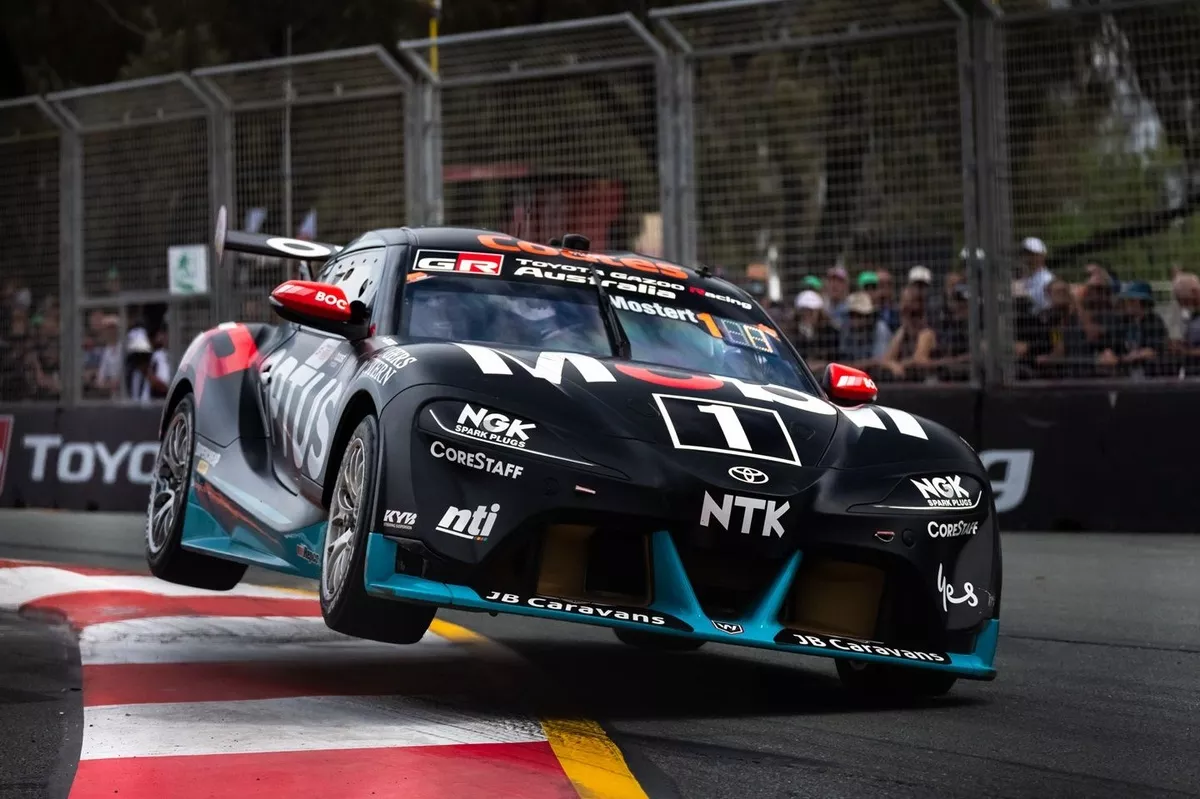
Supercars Gold Coast: Chaz Mostert dominates wet race for Walkinshaw Toyota
Subscribe and access Autosport.com with your ad-blocker.
From Formula 1 to MotoGP we report straight from the paddock because we love our sport, just like you. In order to keep delivering our expert journalism, our website uses advertising. Still, we want to give you the opportunity to enjoy an ad-free and tracker-free website and to continue using your adblocker.


Top Comments