


The no-ego Williams ace foiled by 90s F1’s technology push
Racing drivers tend to have deep pockets and short arms, but not Riccardo Patrese, who used to treat his mechanics to sumptuous post-season dinners. NIGEL ROEBUCK looks at the career of a true gentleman
A karting world champion in 1974 and winner of the 1976 European F3 Championship, Riccardo Patrese arrived in Formula 1 the next year with Shadow. He didn’t set the world alight, but showed considerable promise, and the following year – now with Arrows – really made his mark. Had his engine not blown in the closing laps, he would have won the South African GP. Invariably competitive, his best result was second to Niki Lauda in Sweden – but that day also brought Patrese a lot of bad press.
Patrese, rivals suggested, had brought F3 driving manners into F1, and they didn’t like it. At Anderstorp, the phlegmatic Ronnie Peterson was livid at the way Riccardo had kept him from passing.
Back then there was no permitted ‘one move’ in F1, and blocking – before Ayrton Senna recalibrated the ethics of motor racing – was considered cheap and underhand. “Any idiot can block,” said Gilles Villeneuve contemptuously, and his colleagues were of the same mind. They thought Patrese something of a brat.
“I think,” he told me, “that maybe I often used to behave like that in those days. Everyone thought I was arrogant, but actually I was shy. I was very young still, and didn’t know the other drivers very well. And I must admit, I was very intense.”
What seriously affected Patrese was the aftermath of the accident at Monza, which cost the life of Peterson. Even though blame lay plainly elsewhere, other drivers held him culpable for the disaster away from the start, and concluded this upstart needed to be taught a lesson. If his entry for the next race, Watkins Glen, were accepted, they said, they would not take part. Thus, they had him banned for a race.
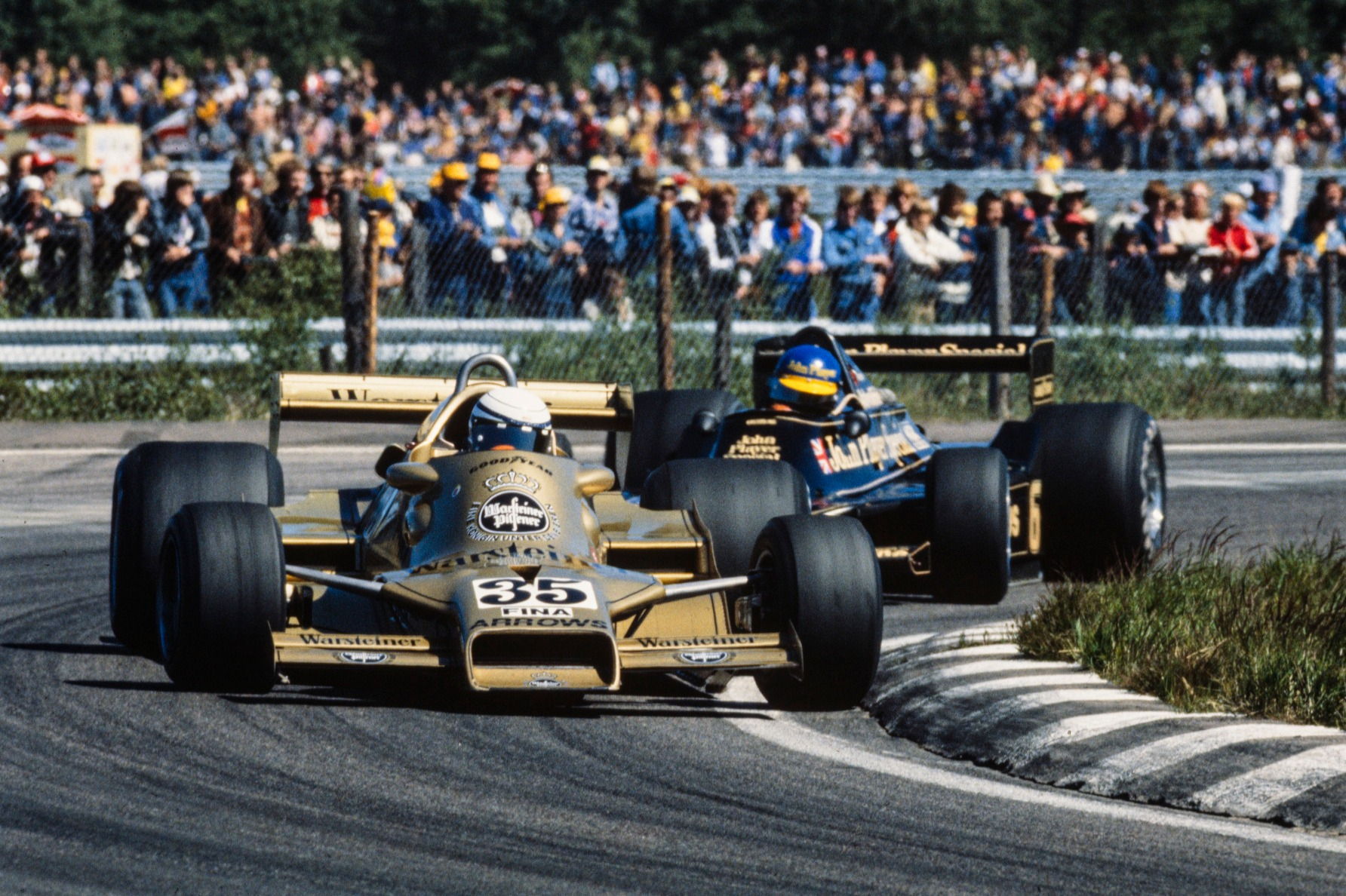
Riccardo Patrese defends from Ronnie Peterson, 1978 Swedish GP
Photo by: Motorsport Images
“It was because they didn’t like my attitude over the season, but by timing it when they did, it looked as if they were punishing me for the Monza accident. Psychologically, I had no problem with that, because I knew it hadn’t been my fault, but it took a long time to forget how they treated me.”
It had been a witch hunt, nothing less, and years later one of them told me that it was the only incident in his motorsport career of which he was truly ashamed.
Patrese stayed with Arrows far too long, until the end of 1981. Although Bernie Ecclestone had tried to get him to Brabham in 1979, Patrese was starry-eyed about Ferrari, and declined long contracts, so as to be free to accept 'the offer', endlessly promised, never delivered. Finally, in 1982 Riccardo committed himself to Brabham, winning his first grand prix at Monaco, and his second, at Kyalami, the following year. For 1984, though, Ecclestone unfathomably replaced Patrese with Teo Fabi, so Riccardo signed for Alfa Romeo. Two seasons in the wilderness followed.
"He was never a selfish man, which is rare in a racing driver, and his ego was under control – which is also rare" Patrick Head
“The cars were hopeless, and I was so angry that it started to affect my private life – I mean, I was not smiling at all! I remember one day saying to myself, ‘Riccardo, you have to do something’. It was a turning point in my life. I changed my approach, my mentality, everything – and I still don’t know how I did it.”
If Ecclestone has been close to few drivers, Patrese was one of them, and back he went to Brabham for two more years. “It was lucky that Bernie and I were friends – when he gave up being a team owner in 1987, he recommended me to Frank Williams.”
This was to be the most productive relationship of Riccardo’s career: “When I went to Williams, it was like a camera had finally come into focus.” Everyone in the team became very fond of him, not least Patrick Head.
“You’d call Riccardo up,” said Head, “ask him to test at a moment’s notice, and he’d say “fine, I’ll be there’. He was never a selfish man, which is rare in a racing driver, and his ego was under control – which is also rare...”

Patrick Head chats to Riccardo Patrese, 1990 US GP
Photo by: Colombo, Motorsport Images
Speaking of egos, in 1991 Patrese’s team-mate Nigel Mansell said this: “I take Riccardo’s speed this year as a great compliment to me – I’m the only one who can motivate him.” Had Patrese been inclined to return the back-handed compliment, he might have suggested that perhaps the motivation had been overdone: it was not until Silverstone that Nigel outqualified him.
Although the Williams-Renaults were not conspicuously reliable in 1991, Patrese had a fine season, with four poles and a couple of victories, in Mexico and Portugal. An abiding memory is of qualifying at Estoril.
Early in the session Patrese’s car blew up, but Mansell’s contract decreed the spare Williams was for his use alone, and it was not until the last five minutes, when Nigel clearly wouldn’t need it, that Riccardo was allowed to climb aboard.
There was no time to play with the set-up, but Patrese’s blood was up and, after a single warm-up lap, he shoved Senna, Berger and Mansell aside, and put himself on pole. “That was good, wasn’t it?” Head beamed, and Riccardo then won the race.
The following year, though, Williams went ‘active’, and although its performance advantage was considerable, now Patrese was rarely on par with Mansell. “I admit I prefer passive cars,” he said, “because they have so much more feel. Nigel either has more bravery, or less imagination, or both...”
Patrese finished second to Mansell in the championship, and then, when it seemed Williams would run Mansell and Prost in 1993, signed for Benetton. Within days Riccardo learned that Nigel was quitting F1 – that he could have stayed after all.
“That’s life, isn’t it?” he shrugged. “Of course I was sad, but I said, ‘No, Riccardo, if you have signed something – even given your word – that’s it’.” Unfortunately, Benetton behaved less honourably when it came to the second year of his contract: after a disappointing 1993 season, Patrese accepted his F1 career was over.

Patrese struggled with the active Williams FW14B in 1992 as Mansell romped to the title
Photo by: Motorsport Images
There were only six victories, fewer than might have been predicted, but I believe Riccardo got more pure pleasure from his racing life than most drivers I have known. Away from it, too, thanks to the divine Suzy and their three kids.
Patrese was never obsessed with money, which also stood him out from the crowd. “I know other drivers make much more, but I can make a good life on what I earn. Frank pays me $800,000, which I think is correct for a driver of my record.”
Riccardo was far from a typical driver of the 1990s, preferring Beethoven to George Michael, devoting himself – as well as to golf and skiing – to unusual hobbies, like collecting rare Marklin model trains. Yes, he kept an apartment in Monaco, but home was always Padua, where he was born.
You can learn a lot about a driver from talking to his mechanics, and Patrese they adored. F1 drivers are notoriously tardy when it comes to reaching for their wallets, but at the end of a season Riccardo would always treat his entire team to a memorable dinner. A consummate Italian gentleman, and a superb racing driver.
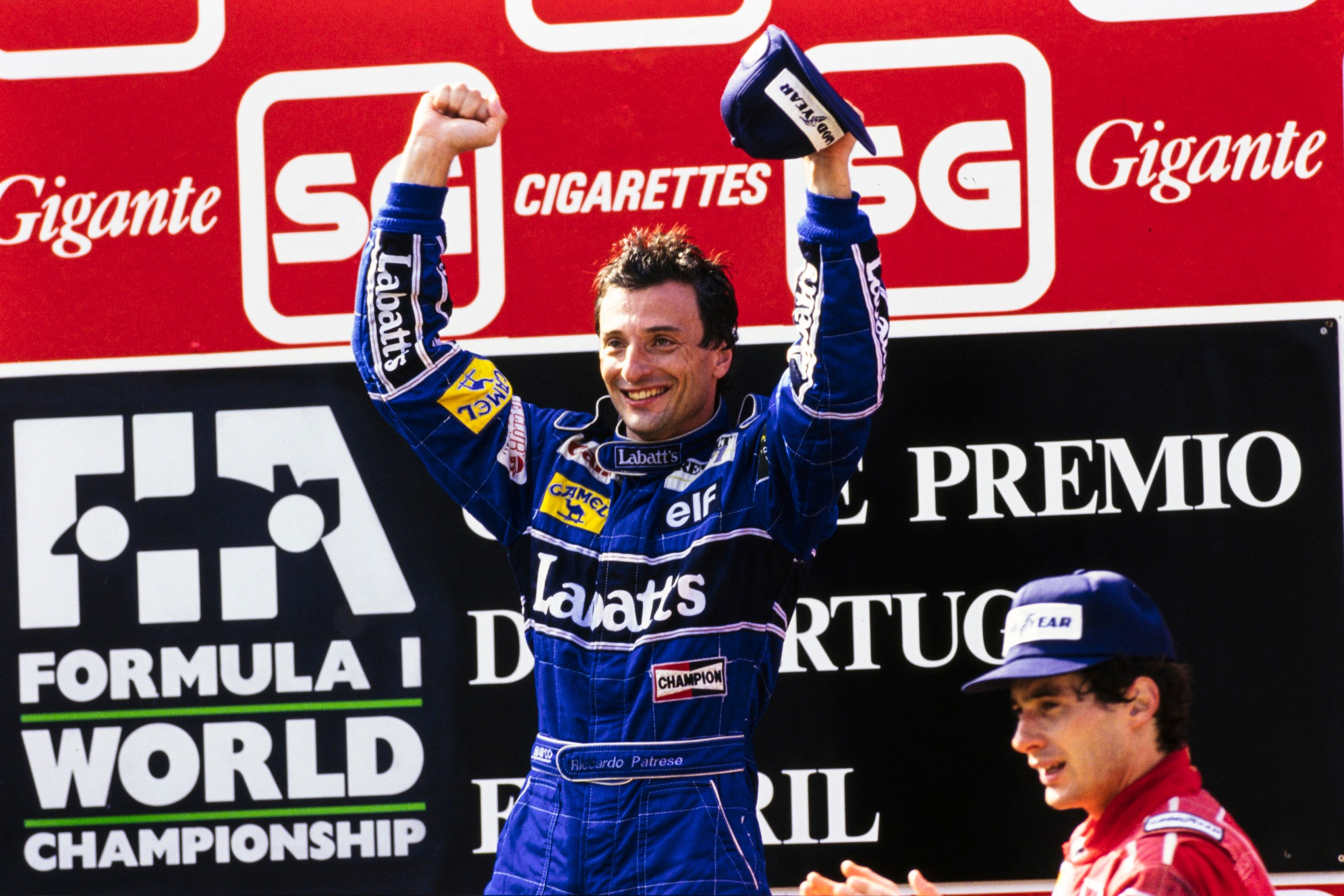
Riccardo Patrese celebrates victory in the 1991 Portuguese GP

How Ratzenberger beat the odds to realise his cruelly short-lived F1 dream

F1 uncovered: A weekend behind the scenes with a chief mechanic

When McLaren was pipped by Red Bull in a modern F1 classic

The big opportunity Sainz’s Williams switch affords to F1’s latest centurion

Inside the science of F1 fuel

How F1’s plan for rotating races could look in practice

The early decisions that set Sauber’s rookie for success

How F1 media coverage has evolved in line with its subject

Why McLaren considers Norris-Piastri Singapore clash so “serious”

What Max Verstappen will change after Red Bull’s poor F1 starts in Malaysia and Singapore

A "better job" or more engine power? Verstappen's Singapore pole unpicked

What we learned from the 2026 F1 Singapore GP sprint race and qualifying
Subscribe and access Autosport.com with your ad-blocker.
From Formula 1 to MotoGP we report straight from the paddock because we love our sport, just like you. In order to keep delivering our expert journalism, our website uses advertising. Still, we want to give you the opportunity to enjoy an ad-free and tracker-free website and to continue using your adblocker.


Top Comments