



The "neat" solution to spice up F1 strategy
The best Formula 1 action is delivered when uncertainty strikes and teams are forced into stick or twist strategy calls. Rather than artificially enforcing this through multiple pitstops, a clear solution is ready and waiting

Pierre Gasly's shock win at the Italian Grand Prix, and the incident-filled drama at Mugello last time out, helped us quickly erase the hangover from Spa that Formula 1 still throws up some disappointing Sunday afternoons.
Rewind just three races ago - which feels like a lifetime amid the intensity of F1's crazy triple triple-header run - and the paddock had left the Belgian GP pondering just why it had failed to deliver on one of its best tracks.
The dearth of action at the front, with Lewis Hamilton never being properly threatened by Valtteri Bottas, was further hampered by the lack of any strategic variation.
It proved once again that predictable one-stop races are never normally a good starting point for making a race a potential thriller. Let's not ignore the fact that Monza and Mugello were brought alive by safety car and red flag interventions.
PLUS: The other factor that helped to make an exciting Tuscan GP
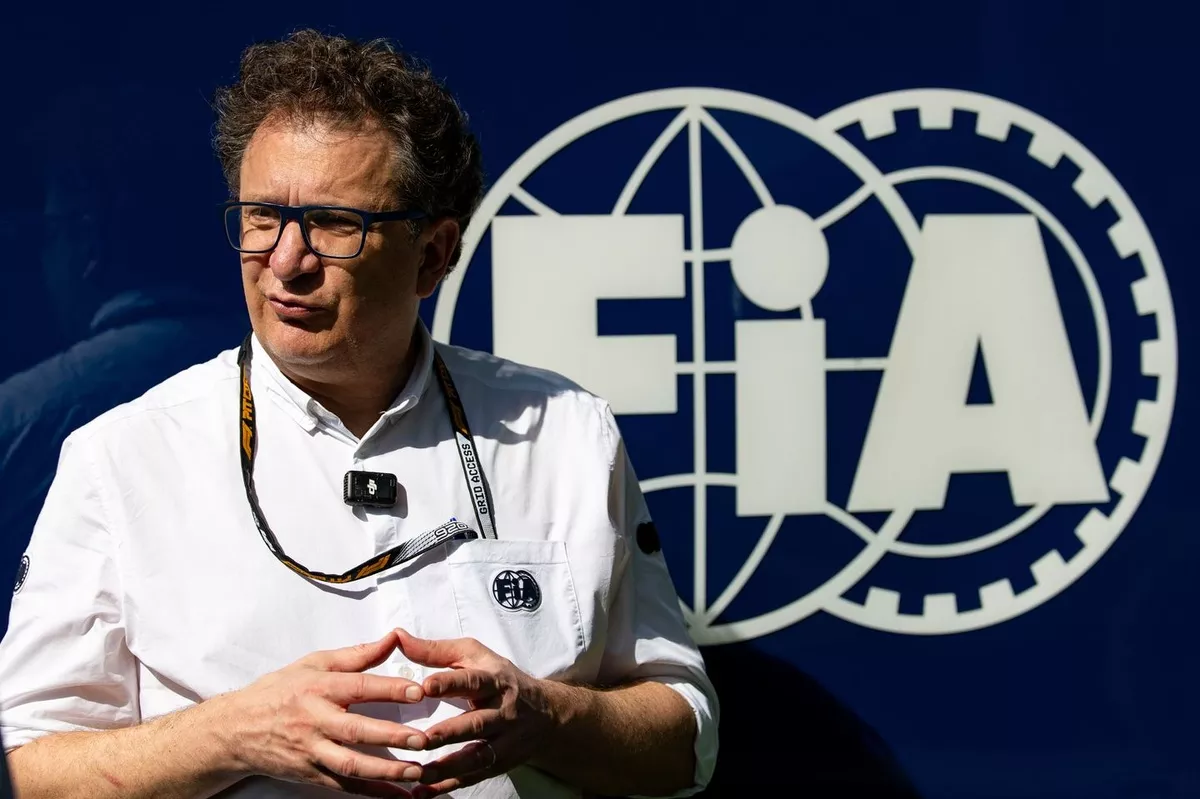
But amid renewed calls from some for F1 needing to do more to try to ensure that it moves away from predictable one-stoppers, race director Michael Masi is not so convinced about the need for change.
"I think it's probably a bit harsh connecting one-stop races and boring races, because I think we've seen some exciting one-stop races," he said, when asked if the FIA should lean on Pirelli a bit more to deliver on its target of two-stop races.
"We've also seen some boring two-stop races and some exciting two-stop races."

While Masi is right that not every two-stopper is a thriller, and not every one-stopper is dull, what that fails to take into account is how a two-stop race often changes the narrative and drama of how a grand prix plays out.
Two stops means more options for teams and drivers to try something different - an alternative compound, an aggressive undercut or a bold overcut - so if the race is not playing out in a way that would allow a normal overtaking move (which is pretty damn hard with these current cars), then at least there is still a way to gain positions further down the road.
PLUS: How F1 cars left Mugello with its own Eau Rouge paradox
Whereas a one-stop race may be effectively settled at the halfway distance, a two-stopper is at least alive until the final third. But while Pirelli is as eager as everyone to deliver a two-stopper each time, actually being able to guarantee such an outcome through tyre degradation is not so straightforward.
With F1 constantly bouncing between this utopian dream of regular two-stoppers, against the reality of the team preferences for a one-stopper, perhaps it is time that F1's rule makers looked at using the rule book to force hands
First of all, tyre choices are made many weeks in advance of races; and it can be hard to predict things like the weather, the downforce improvements that cars have had or factors like the rubbering in of the asphalt.
With the margins often so tight between a one and a two-stop strategy, a tyre pick that on Friday looks on course to deliver a perfect two-stop can be shifted to a tyre-saving one-stop if the clouds blow in and help improve degradation.
The other factor to take into account is that teams are not steering clear of two stops because they want to make the races boring. They are doing so simply because one fewer pitstop is faster. If you can avoid the 25-second time loss that comes from a pitstop, and instead opt to save 10 seconds by simply managing tyre life, then it is a no brainer.

This weekend's Russian GP looks set to be another weekend where Pirelli is doing all it can to try to deliver a two-stop - it is bringing its softest compound choice of the season so far - but knows full well the teams may well scupper those hopes.
As Pirelli racing manager Mario Isola said: "Sochi places relatively low demands on tyres, so a one-stop race should still be possible. The teams will work out during free practice if this is still the fastest way, which we expect to be a popular choice as teams tend to target one-stoppers whenever possible."
With F1 constantly bouncing between this utopian dream of regular two-stoppers, against the reality of the team preferences for a one-stopper, perhaps it is time that F1's rule makers looked at using the rule book to force hands.
The best solution is not just ordering teams to make two pitstops, but rather simply make it mandatory to use all three compounds of tyres in the races. Doing so would open up a much greater variation of tyre strategies; as drivers and teams would be forced to juggle a much bigger headache in terms of managing pace and time in the races.
Max Verstappen is one big name not won over by the idea though, because he felt it would not be great for drivers to be forced to run a tyre compound that may not be ideal.
"Sometimes you don't want to be on the softest or the hardest compound," he said. "I don't think using all three compounds is good. Sometimes you go to [places] like Silverstone, and you don't want to be running on the softest compound. Then you go to Barcelona, you don't want to be running on the hardest compound. So no, I don't see that happening."

But one of the factors that often throws up better races is when life is made more difficult for drivers and teams.
When races deliver jeopardy and uncertainty - just as the safety car and red flag rules turned Monza and Mugello on their head - so too the spectacle gets better when the tyre situation isn't perfect because teams then have to think on their feet.
Needing to run all three compounds would increase the intensity of Friday practice; as there would barely be enough laps for teams to feel comfortable that they could get enough data from running on all three compounds. That would open the door for a bit more uncertainty for Sunday.
Add to that the prospect of teams and drivers potentially being much more out of kilter on their strategy approach during each phase of the race compared to now. Do you burn the hard first and compromise yourself early for a faster middle stint, or go soft and aggressive early on to gain position?
"I think that could be kind of neat and kind of cool. Then you get people dividing them up differently through the stints, so I definitely think it would make it more exciting" Lewis Hamilton
Perhaps the best route to the chequered flag in going through the compounds may not be even be obvious until the closing stages of the race.
But best of all about the rule is that it doesn't turn F1 into a fake lottery like reverse grids would do, nor does it cost a fortune like changing car designs to help boost overtaking. Its effect on anyone's budget would be negligible.
F1 already makes up the set of tyres on a grand prix weekend and all unused tyres end up getting removed from their rims and destroyed afterwards. Therefore, being forced to use an extra compound would not increase budgets.

It would open the door for variation and perhaps even some smart tactics - like cycling through the worst tyre rapidly in the middle phase of the race or a safety car.
Sure, the teams and drivers may not like it, especially if they end up losing out when a rival has taken such a gamble. But for the spectacle, it would offer the chance for a giant-killing moment like Gasly had at Monza and it would remove forever the risk of a boring one-stopper.
World champion Lewis Hamilton is one who you could expect to be against any such move to add unpredictably, but was pretty open-minded about the idea of the three-compound rule when it was suggested to him recently.
"I think that could be kind of neat and kind of cool," he said. "Then you get people dividing them up differently through the stints, so I definitely think it would make it more exciting because in general you see those races, like [Spa] for example.
"If Max [Verstappen] had stopped, it would have been more exciting to see him come out on a fresh set of tyres to see if he could have caught up.
"But we are not forced to do those things so we can back off and bring the car home, which is not so exciting."
So F1, rather than head off down that unpopular route of trying to mix up Saturday with reverse grids that fans don't really want, make this simple change that could help spice up Sundays and make everyone happy.


Brundle awarded OBE in King’s New Year’s honours

The new rules dilemma that will define the 2025 F1 season

Verstappen issues Red Bull title warning in push for RB21 progress

Mercedes opens up on the factors that hurt Hamilton with the W15

How McLaren faced up to the misinformation, noise and distractions of being an F1 title challenger

Why Bottas is not letting the “worst-case scenario” end his F1 career

Jon Noble: An unfair perception or a genuine concern? Lifting the lid on Red Bull’s Tsunoda scepticism

Binotto on Audi's F1 reality check after finding team "frozen" with no plans

Why "crazy" power unit success is so meaningful for Red Bull - and for F1

McLaren targets Norris’ costly fuel system issue with Singapore F1 power unit fixes

How Ford is "hitting milestones" in preparation for WEC Hypercar assault

Audi F1 drivers reveal biggest engine limitation – and why they’re not worried
Subscribe and access Autosport.com with your ad-blocker.
From Formula 1 to MotoGP we report straight from the paddock because we love our sport, just like you. In order to keep delivering our expert journalism, our website uses advertising. Still, we want to give you the opportunity to enjoy an ad-free and tracker-free website and to continue using your adblocker.


Top Comments