


The F1 media favourite who lifted a broken Lotus
Graham Hill was nearly 30 when he made his Formula 1 debut. NIGEL ROEBUCK examines the life of a gifted racer whose talismanic personality defined an era
It was Monaco in 1958 that the name of Lotus first appeared at a grand prix and, when Colin Chapman made the move into Formula 1, one of his drivers was Graham Hill, who had made a name for himself in the company’s sportscars.
For Hill, already 29, it had been a long slog to motor racing’s top echelon, and his first two seasons, with unreliable and largely uncompetitive cars, prompted him to accept an offer from BRM for 1960. Although that proved to be the breakthrough year for Lotus, the move to BRM was the right one for Hill. By 1962, the team was right there, and Graham’s first victory, at Zandvoort, was followed by three more, enough to bring his first world championship.
Hill would stay with BRM until the end of 1966, winning at Monaco and Watkins Glen three times on the trot, but these were the years of Jim Clark and Lotus. When Chapman asked Hill to return, he accepted, reasoning the forthcoming 49, with Cosworth’s first F1 engine, the DFV, would be the thing to have in 1967.
PLUS: Graham Hill's 10 greatest races
He was on the mark. Although the four Lotus victories that year went to Clark, Hill was invariably a frontrunner, and in 1968 was obliged by circumstance to become Chapman’s main man. In April, Clark was killed in an F2 race and, when I think of Hill now, what first comes back is a BBC interview at the time of the tragedy.
Very occasionally there comes a racing driver whose personality transcends his job, and Graham was one such. Folk who cared little for racing saw him – like Bobby Charlton or Henry Cooper – as part of the tapestry of England. They had frequently seen him on TV, wolfish expression honed for the cameras, risque humour working more often than not.
What they saw now, though, was very different from the character they knew so well, his voice, always so firm, now light and quavery. How could this have happened to the world’s greatest driver? Clearly something on the car had failed, but Hill trod gently: “We don’t yet know what happened, but the indications are it may not have been his fault...”
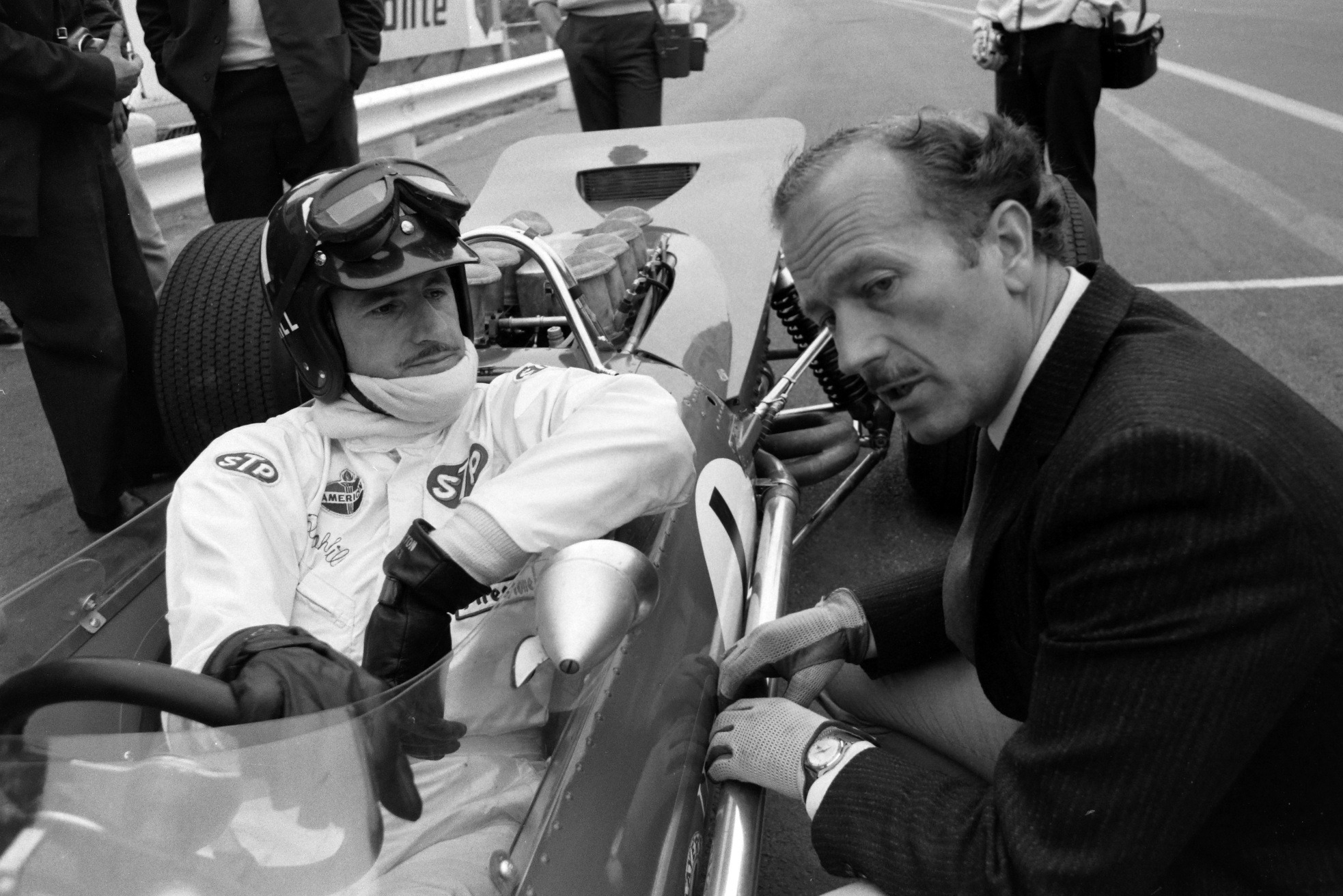
Hill carried Lotus after Clark's death, helping to bring a still mourning team founder Colin Chapman out of the shadows
Photo by: Motorsport Images
A month later – to the day – Mike Spence, too, was dead. Following the Clark tragedy, he had been drafted in to partner Hill and Joe Leonard in the Lotus turbine cars at Indianapolis and, during testing, crashed at Turn 1. Chapman, already devastated by the loss of Clark, briefly retreated altogether from racing.
Three days after Spence’s death, Hill was at Jarama to begin practice for the Spanish GP, the only representative of Team Lotus. When Chris Amon retired from the lead, Graham went on to a victory as crucial and timely as any man ever scored for his team. Twenty-six years on – in similar circumstances, following the death of Williams team-mate, Ayrton Senna – Hill’s son Damon also won in Spain.
Two weeks after Jarama, Graham triumphed for the fourth time at Monaco, and a further win in Mexico carried him to his second world championship. His final GP victory – Monte Carlo once again – came in 1969, but towards the end of the year he suffered dreadful leg injuries in an accident at Watkins Glen.
“I know bloody well I’m never going to win another grand prix, but I still love driving, and I think it’s up to me what I do. That’s the great thing about having your own team – you can sign yourself up for as long as you want!” Graham Hill
Already 40, Hill might have called time on his racing career; instead, he put his remarkable willpower to work, and over the winter forced himself back to some sort of fitness. When the 1970 season got underway, at Kyalami, he was on the grid, in Rob Walker’s Lotus, and he finished in the points.
There would be no more GP victories but, in 1971, now driving for Brabham, Graham won the International Trophy at Silverstone, and the following year shared the winning Matra with Henri Pescarolo at Le Mans. This, together with the Monaco wins, and an admittedly fortunate victory in the 1966 Indianapolis 500, made him the only man – to date – to achieve racing’s hallowed Triple Crown.
PLUS: How Hill completed motorsport's Triple Crown
Dropped by Brabham at the end of 1972, Hill was still not ready to quit, instead starting his own team, running first a Shadow, then a Lola, then ultimately a car bearing his own name. By now, though, he was strictly a backmarker, and I was one of many who hated to see him beaten by those he would once have flicked aside.

Hill scored points upon his return in 1970 with Rob Walker's Lotus 49
Photo by: Motorsport Images
When I asked Graham about it, he didn’t – to my surprise, for he wasn’t always genial – bite my head off.
“I know people say I’m humiliating myself, but what they mean is that I’m humiliating them!” he said. “They’ve supported me all these years, and now it embarrasses them I’m not winning any more.
“I know bloody well I’m never going to win another grand prix, but I still love driving, and I think it’s up to me what I do. That’s the great thing about having your own team – you can sign yourself up for as long as you want!”
The next two seasons, though, netted only a single championship point, and early in 1975 Hill was fortunate to escape unhurt from a practice accident at Kyalami. At the next race, Montjuich, he confined himself to running the team, but when his driver Rolf Stommelen crashed while leading, and broke his leg, Graham returned to the cockpit at Monaco.
Poignantly, in this place where he had won five times, Graham failed to qualify, and this proved to be his last appearance as a driver. At Silverstone he announced he would race no more, and would concentrate on running his team, which had hired the brilliant young Tony Brise.
Late on the frigid evening of Saturday, 29 November, there was a TV news flash about a light aircraft accident. According to reports, the aeroplane had been en route from Marseille to Elstree: to anyone in motor racing that meant ‘en route home from Ricard’.
My phone rang almost immediately. It was Chris Amon: “I think it’s Graham...” I had had the same thought, knowing the team had been testing at Paul Ricard that week, and was due back that night. Soon there came confirmation: in thick fog, the aeroplane had come down on a golf course, and none of the six on board had survived. The following morning it was every front page lead. A former world champion was gone; a future world champion had died with him.
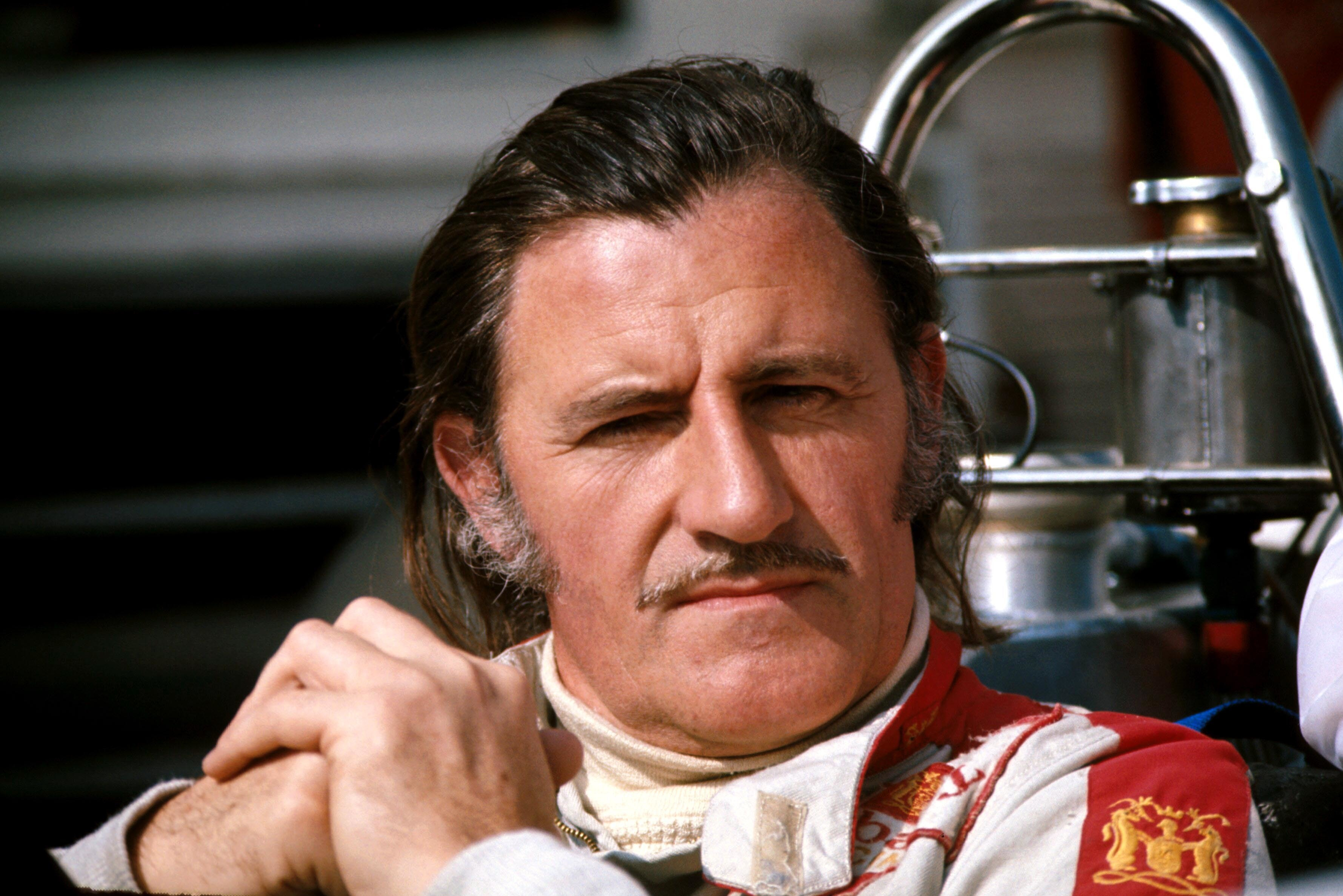
To the end, Hill remained passionate about competing - even though his results paled in comparison with his 1960s pomp
Photo by: Motorsport Images

How Ratzenberger beat the odds to realise his cruelly short-lived F1 dream

F1 uncovered: A weekend behind the scenes with a chief mechanic

When McLaren was pipped by Red Bull in a modern F1 classic

The big opportunity Sainz’s Williams switch affords to F1’s latest centurion

Inside the science of F1 fuel

How F1’s plan for rotating races could look in practice

The early decisions that set Sauber’s rookie for success

How F1 media coverage has evolved in line with its subject

Acosta's long road to his maiden MotoGP win

MotoGP Austrian GP: Acosta finally claims maiden win

Great debate: Which circuit should host the F1 2026 finale if the calendar has to change?

Live: MotoGP Austrian Grand Prix updates as it happens
Subscribe and access Autosport.com with your ad-blocker.
From Formula 1 to MotoGP we report straight from the paddock because we love our sport, just like you. In order to keep delivering our expert journalism, our website uses advertising. Still, we want to give you the opportunity to enjoy an ad-free and tracker-free website and to continue using your adblocker.


Top Comments