


New look shiny tyres among Pirelli's changes for F1 in 2019
Pirelli's Formula 1 tyres will have a shiny new look in 2019 as the result of a new production method being used to help get rid of imperfections


The extra glossy surface was apparent as F1's first pre-season test began at Barcelona this week.
The change in appearance is a consequence of Pirelli shifting its production to use a chrome mould, which has been done to help ensure its softest tyres have a better surface.
Pirelli's racing manager Mario Isola explained: "We are using new moulds that have a chrome treatment. We tested these for the first time last year in Formula 2.
"The reason why we introduced this technology is because the hypersoft last year and the C4/C5 [softest 2019 compounds], are very sticky and, when you vulcanise and cook the tyre, it is difficult for the mould sometime.
"You see small imperfections on the tread because of this adhesion between the compound and the moulds. With the new moulds, they are a lot better.
"They look nicer, in terms of technology it is better but the specification is the same that we used in Abu Dhabi [test] last year."
Isola said that the shiny surface did not mean there was any less grip when the new tyres were used for the first time.
"It is something that out of the pitlane will not change anything," he said.
"What could happen is that if the drivers fits a new set of tyres and they run slow laps, just because of the camber, they don't use the external side.
"So when they are back in the pit you will see the external side is still shining. But that is it."
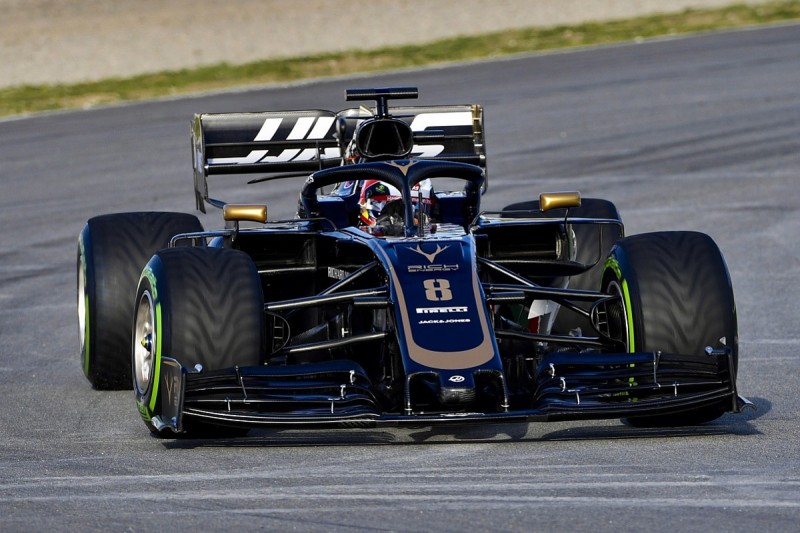
The shiny new look of the tyres is just one of several changes that Pirelli has made for the 2019 season.
It has reverted to just one intermediate and wet tyre this year, rather than having two options as there was in 2018.
A new compound for the intermediate has ensured a better working range to cover the full range of dry to full wet conditions, while the new construction and compound wet would be better able to resist aquaplaning in more extreme weather.
An original idea of restricting blanket heating of the front tyres to 80-degrees C has been abandoned, with Pirelli and teams agreeing to keep it at 100-degrees.
Isola explained: "We have decided to keep the maximum temp at the front at 100-degrees, while the temperature for the rear tyre is now down to 80-degrees.
"Talking to the teams in general, they were worried about possible issues with the front warm up because the front is a bit more tricky.
"With 80 degrees for the rear tyre, we have the opportunity to give them lower prescription in terms of pressure. Compared to last year's first test we have 2 psi less in the rear tyres."
F1's 2019 tyres will also have higher working ranges compared to last year in order to reduce the potential for overheating.
Share Or Save This Story


Brundle awarded OBE in King’s New Year’s honours

The new rules dilemma that will define the 2025 F1 season

Jon Noble: An unfair perception or a genuine concern? Lifting the lid on Red Bull’s Tsunoda scepticism

Why KTM's Red Bull Ring advantage is looking particularly potent in 2026

“Nothing is guaranteed” for Evans as WRC title race still open after Saudi Arabia cancellation

MotoGP Austrian Grand Prix: Acosta tops Practice as KTM chases home win

Cadillac F1 owners Mark Walter and TWG Global face class-action lawsuit
Subscribe and access Autosport.com with your ad-blocker.
From Formula 1 to MotoGP we report straight from the paddock because we love our sport, just like you. In order to keep delivering our expert journalism, our website uses advertising. Still, we want to give you the opportunity to enjoy an ad-free and tracker-free website and to continue using your adblocker.


Top Comments