



How the most deserving driver not racing in F1 is spending 2022
Oscar Piastri is a consecutive champion of F3 and F2, matching the achievements of Ferrari’s Charles Leclerc and Mercedes’ George Russell before they made their big breaks in F1. Yet Piastri is set for a year on the sidelines as Alpine’s reserve driver. What more can he do to break through, asks OLEG KARPOV?
“I feel I have done basically everything I can to try and prove myself,” reigning Formula 2 champion and Alpine’s reserve driver for this year Oscar Piastri tells GP Racing. “Mainly on the track, but I feel like I’ve proven myself off the track as well. I think the results speak for themselves, really. I don’t really think I have to add too much more.”
It’s impossible to argue otherwise. After winning the Formula Renault Eurocup in 2019, Piastri switched to Formula 3 for 2020 and took the title at his first attempt. Then he moved up to F2 and again claimed the crown in his rookie season. There’s really not much more to add.
Among the current Formula 1 drivers, only two can boast a similar CV. Charles Leclerc won GP3 at the first time of asking in 2016 and then claimed the F2 title the following year. George Russell effectively did the same across 2017 (GP3) and 2018 (F2). In 2022, both are drivers in top F1 teams, Ferrari and Mercedes respectively, and sit first and second in the points after the first three races.
There’s effectively just two main ways to reach modern Formula 1 for young drivers. If you’re young and talented, you can join an F1 junior programme and, should you impress in junior categories, you may be invited to continue your education in F1, within an affiliated team. Leclerc debuted in 2018 with Alfa Romeo, which was obliged to field a Ferrari-picked driver in one of its seats; Russell drove for Mercedes engine customer Williams.
Alpine, which brought Piastri into its junior fold two years ago, doesn’t have a B-team in Formula 1. And since its A-team’s roster is filled with a two-time world champion and a Frenchman with a long-term deal, the Australian has found himself on the substitutes bench.
There is a second way, and it’s arguably easier. You can simply ask your dad to buy you a seat. But that doesn’t really work for Piastri, for a couple of reasons.
“Firstly,” he smiles, “I think for me morally, I said from the beginning to myself, if I get to F1 I’m going to get there because I deserve to be there and not because my dad bought me a seat. That defeats the purpose in my eyes of being a professional racing driver because you’re not a professional if that’s the case. For me, morally, that was quite a major thing.

Piastri (left) is the Alpine F1 reserve this year playing understudy to Fernando Alonso and Esteban Ocon
Photo by: Alpine
“And secondly, we don’t have the funding to do that. I’m certainly not saying that we’re struggling or anything like that. My junior career has been more than expensive. For most people my junior career cost more than what I guess some people outside of motorsport can only dream of in some cases. So I’m really aware of how much money’s already been spent on me by firstly my family, as number one, Alpine as well, and various sponsors.
“So yeah, firstly, I don’t want to get to F1 because somebody has paid for me to be there, certainly my family anyway. I don’t think that’s right or fair on them. And secondly, even if I was OK with that, we wouldn’t be able to do it.”
Piastri, as he puts it, was “born to be a race driver” thanks to his family’s ties to the automotive industry in his native Australia.
"I guess a natural trait of mine is to pick things up quite quickly. Throughout my whole junior career, adaptability is one of my strengths. I don’t feel like I need quite as much time as some drivers" Oscar Piastri
“My mum’s dad and my dad’s dad were both mechanics,” he explains. “Being in that industry, they naturally followed motorsport. My dad then, I guess naturally from his dad, was interested in motorsport as well, but he was also never really involved. But his business is in the automotive business, car-tuning business. So I guess all the possibilities and potential was there to join motorsport. But I was the first one in the family to actually be involved.”
After a few successful seasons in Australian karting, Piastri faced the need to do what all of his fellow F1-dreaming compatriots end up having to do – pack his bags and leave for Europe. He did so in 2016, at the age of 15.
“I’d done a couple of races in Europe before that, but that year we decided to go for it fully,” he recalls. “I moved to the UK at the start of 2016 with my dad firstly, for the first six months, and my mum was back in Australia, looking after my sisters. They swapped roles a couple of times, but then, at the start of the school year, my dad basically said, ‘Of course I want to let you follow your dream, but I need to do my own work, I need to be able to support you.’”
Piastri went to a boarding school, which kept him busy on weekdays, and was racing on weekends.
“That was difficult at first,” he admits. “And of course not being able to see my mum or my sisters very often was difficult, all my friends back in Australia, but I think being more involved in the community and being involved at school helped to, I guess, integrate myself into life there.

Piastri spent his youth away from home to further his motorsport education in Europe, which helped him to grow up fast
Photo by: Alpine
“Being with a bunch of friends in boarding school, living together during the whole week, I think that made things much, much easier. I had people my own age to talk to and I had people around me and that kind of [racing] community around me.”
His subsequent results proved his relocation had been worth it. His single-seater career up to now comprises five seasons in five different cars – though Piastri did stay for two years in Formula Renault Eurocup, but it underwent a machinery change after his first campaign.
Throughout, being a quick learner allowed him to fight for podiums and wins from the word go, despite the strict testing limits in F3 and F2. As Piastri himself once pointed out, “excessive testing doesn’t really suit me”.
“I guess a natural trait of mine is to pick things up quite quickly,” he elaborates. “I mean, throughout my whole junior career… yes, I’ve had two years of Formula Renault, but there were two very different cars for those years. I think for me adaptability is one of my strengths. I don’t feel like I need quite as much time as some drivers.
“In F3, for example, we had three days of testing and then COVID hit, we had a massive break and moved straight back into the season. I think that time off and that break actually suited me quite nicely. And in some ways, I guess, the [last year’s] F2 calendar [with eight rounds spanning almost nine months] also suited me a bit, with the big breaks in between races.”
Inevitably he drew attention to himself. Now not only an Alpine junior, he was also managed by Mark Webber. They got to know each other through a fellow Australian, Simon Sostaric, a sports scientist and trainer who used to work with Webber – and with Piastri when he moved to Europe.
“When it got to the end of the Formula Renault [stint], where I was leading the championship at that point, and we were planning on going to F3 for the next year, things were getting more serious,” says Piastri. “We needed somebody to start managing me and taking care of my career really. We knew that Mark was managing Mitch Evans already, and also we had the mutual connection, Mark being Australian. And it was just a very good combination of factors, really.”
He adds: “I mean, I started properly following F1 in 2009. I remember perfectly, Brawn had a fluro-yellow car, which when you’re eight looks pretty cool, and of course, they were winning everything. But Mark and Red Bull were there as well, they had their dominant years after that. And Mark was at the front or winning. Even seeing ‘Mark Webber’ coming up on my phone, it was kind of like, ‘OK, that’s pretty cool’.

Piastri has gone from strength to strength since he started working with Webber in 2020, winning consecutive titles in F3 and F2
Photo by: Charles Coates / Motorsport Images
“So yeah, end of 2019, we started working together, officially 2020. It’s been a very good run from there. Firstly, he is my manager and deals with all the behind-the-scenes stuff, so all the paperwork, all the contracts, sorting out all that stuff. But also he’s obviously a very successful racing driver and had a successful career in F1, and also in sportscars. So I guess there’s that added element of driver knowledge and expertise to give as well.”
As Piastri himself has already done his talking on the track, it’s now Webber’s turn to make sure 2022 will be his protege’s only year on the bench. And while Piastri waits his turn, Alpine will be keeping him busy too. Piastri is set for a testing programme in older-generation F1 cars; he will also attend grands prix as reserve and, of course, work in the simulator. After all, even like this Piastri is a serious asset for the team – a lot of insiders say he is one of the best in the simulator.
“I guess, laptimes are the first benchmark for whoever thinks I’m good on the sim,” he smiles slyly. “In the junior categories it’s quite different, because we use it very much as a practice tool. Whereas F1 from the work I’ve done on the sim, there’s a very different philosophy of what the sim is used for. Firstly, because the models are so much more accurate than the junior models, and there’s so much more information available, it’s much more about developing the car, making sure the sim is as close to reality as possible.
“It’s really used as a development tool for the team and the car rather than focused on the driver. So I think that’s where it’s a very different mindset. Instead of just chasing outright laptimes, and being able to exploit a sim, you need to be able to firstly drive it sensibly and realistically, and be able to give the team useful feedback.”
"Especially for me this year, it’s not about making the car faster for me, it’s about making the team faster, and obviously Fernando and Esteban" Oscar Piastri
We will definitely see Piastri in a couple of practice sessions, as the regulations now oblige teams to provide grand prix weekend mileage to juniors. But most F1 Fridays he will likely spend back at base at Enstone, helping hone set-ups for the race drivers.
“Sometimes when I’ve been in the sim, I’ve driven Fernando’s setup, Esteban’s set-up,” he says, “and to me, it’s quite clear what each driver is chasing in set-up and where they need the car to turn better, turn worse, be more stable. At the end of the day, especially for me this year, it’s not about making the car faster for me, it’s about making the team faster, and obviously Fernando and Esteban.”
Piastri’s predicament is what F1 team bosses like calling “a good problem to have”, when they have more than two good drivers for their two seats. For Piastri himself the problem is real, though. Fernando Alonso is still damn good and is in no rush to end his F1 career. Esteban Ocon’s deal runs through 2024. And a B-team for Alpine doesn’t exactly seem to be on the horizon.
It’s not going to be easy for Webber to find his protege a drive. But there’s got to be a way. Because if any racing driver in the world deserves to join the F1 grid, it’s Oscar Piastri. It’s simply impossible to argue otherwise.

Piastri logged test miles in Alpine's 2021 car during last season's Abu Dhabi rookie test
Photo by: Jerry Andre / Motorsport Images

How Ratzenberger beat the odds to realise his cruelly short-lived F1 dream

F1 uncovered: A weekend behind the scenes with a chief mechanic

When McLaren was pipped by Red Bull in a modern F1 classic

The big opportunity Sainz’s Williams switch affords to F1’s latest centurion

Inside the science of F1 fuel

How F1’s plan for rotating races could look in practice

The early decisions that set Sauber’s rookie for success

How F1 media coverage has evolved in line with its subject

How Toyota destroyed the competition to seal the WEC crowns

McLaren retains Fornaroli as F1 reserve and hands him WEC programme for 2027

How Andrew Jordan realised his teenage rallycross dream

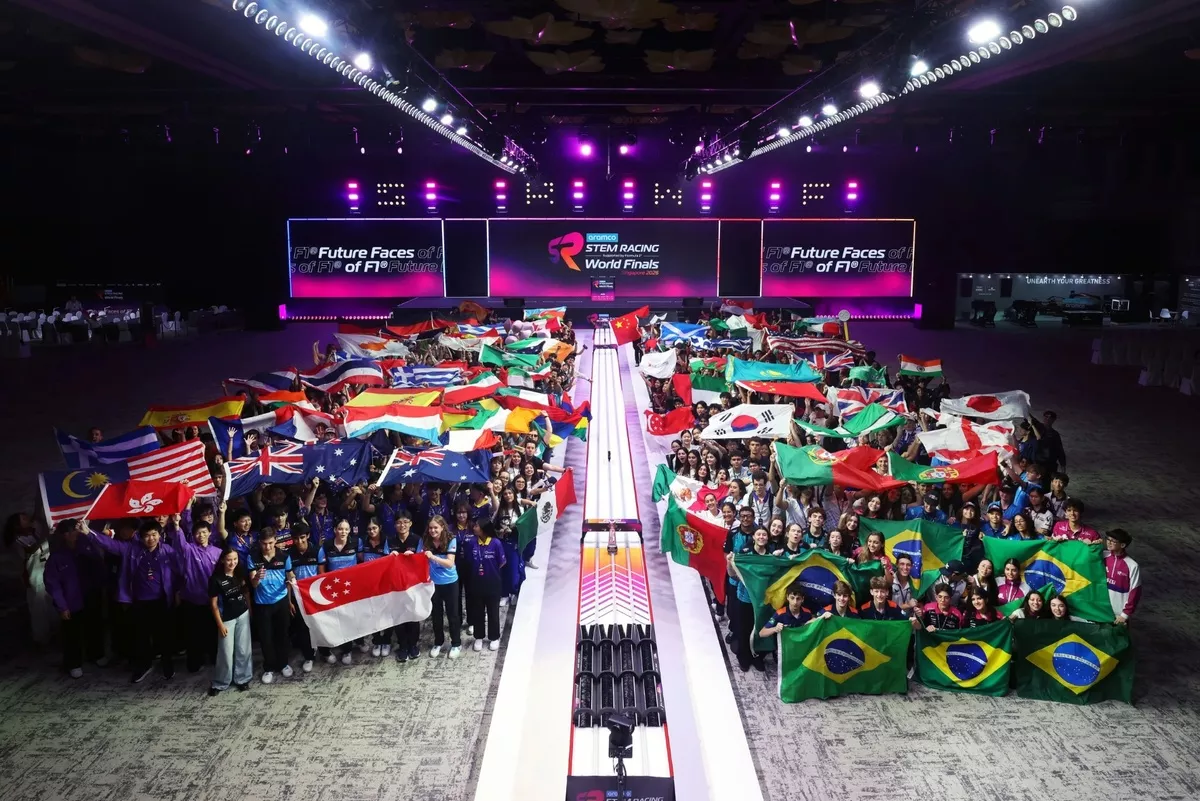
Inside the competition building F1’s future engineering talent
Subscribe and access Autosport.com with your ad-blocker.
From Formula 1 to MotoGP we report straight from the paddock because we love our sport, just like you. In order to keep delivering our expert journalism, our website uses advertising. Still, we want to give you the opportunity to enjoy an ad-free and tracker-free website and to continue using your adblocker.


Top Comments