



Ferrari headlines Hungary tech intrigue
While major developments are now limited as the 2017 rules approach, Ferrari's reaction to recent failures, Mercedes' secrecy and new items on the Red Bull and Manor were among the items catching the eye in the Hungaroring garages in practice
With so many Formula 1 teams turning their attention to 2017 preparations, Hungarian Grand Prix practice wasn't expected to produce much technical intrigue. And sure enough, new developments were thin on the ground - but the majority of outfits still had something of interest to try on their cars at the Hungaroring on Friday.
FERRARI - Tackling reliability weak points
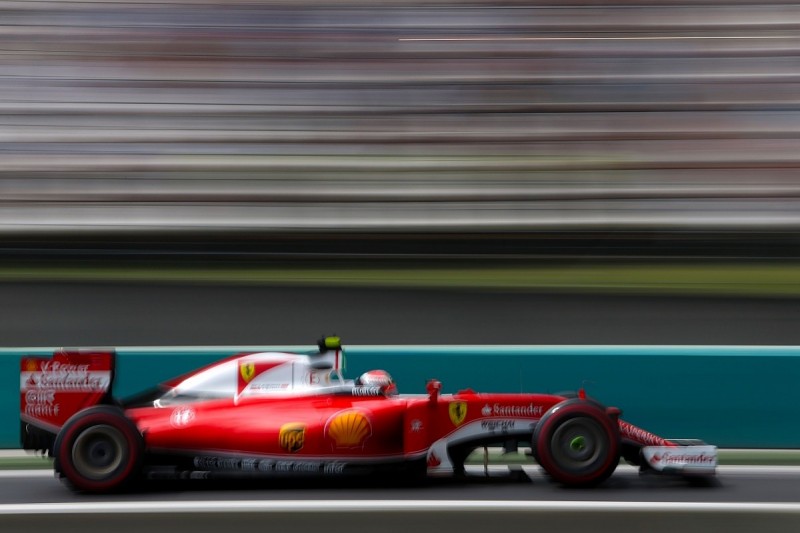
Aerodynamically the Ferrari wore both high downforce and Silverstone-spec parts on Friday.
The team conducted flex-tests on the front wing before formal scrutineering started, and also conduction flow viz tests on the rear wing in free practice.
That suggests that perhaps there were some modified parts fitted to the car that required these checks.
But the rear-end definitely had new mechanical items in the form of the turbo housing and gearbox.
When Ferrari suffered a turbo failure during Silverstone testing it is believed debris escaped the ballistic cover that shrouds the fast spinning turbo.
The turbo has been a weak point of the car all year, so the failures are a reliability concern, and the added weight of the new stronger cover now required is also a performance concern.
The gearbox has also proved troublesome on several occasions. It is reported the issues are due to the internals being stressed by movement from the casing.
Ferrari is like Mercedes in having a cartridge style gearbox, the gear cluster sitting wholly inside a titanium inner casing that then bolts inside a carbon fibre outer casing.
Deflection during cornering on this installation stresses the internals, leading to premature failure. A new updated gearbox is now fitted to Sebastian Vettel's car.
RED BULL - Monkey seat returns
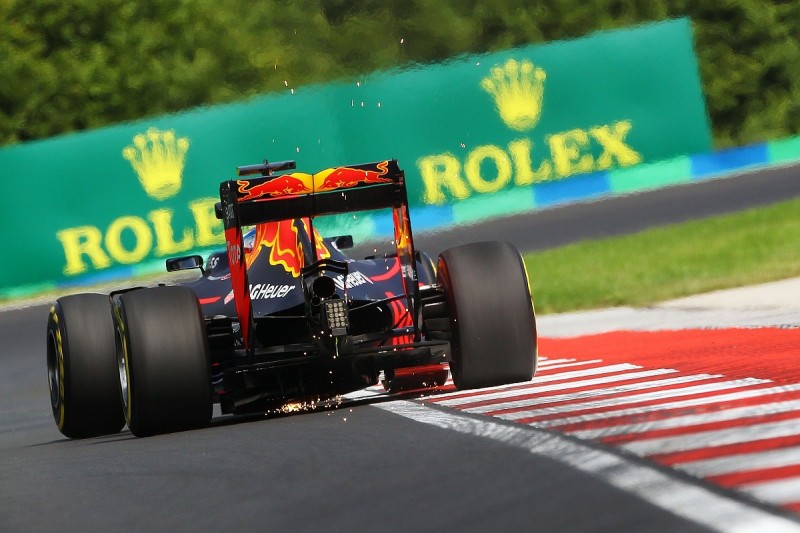
Red Bull's race by race development has recently consisted of such small geometry changes that they are not visible without direct 'before and after' comparison, so the arrival of an obviously new part is a novelty.
The team has finally fitted a monkey seat winglet to the RB12, something not seen on the car since early testing.
The winglet is fairly simple - mounted on two endplate stalks, placing the two elements directly above the exhaust to allow them to be influenced by the exhaust for a mild 'blown' effect.
This is the same philosophy most teams use. Although the blown effect is relatively small, it does help the winglet keep the airflow passing up from the diffuser to interact cleanly with the top rear wing.
The result is a more consistent downforce level, rather than the winglet adding any significant downforce itself.
MERCEDES - Trying something secret?
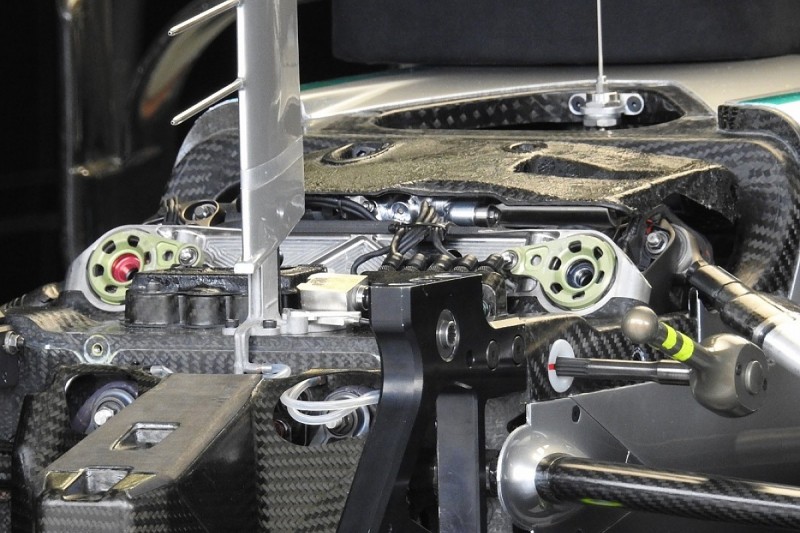
Outwardly there no updates on the W07 for the Hungaroring, instead its specification combines the myriad updates brought to Silverstone with an older array of high downforce parts.
But there was one variance to the usual specification spotted on Lewis Hamilton's car during free practice - a cover over the front suspension unit.
This wasn't present at Silverstone and hasn't been seen on Nico Rosberg's car this weekend.
The front heave unit fitted to the Mercedes is a complex part and sits exposed on top of the step in the front of the monocoque.
So the cover could be explained as a protective part, but as the vanity panel also covers the whole area there seems little point in the extra protection, especially for just one of the two cars.
It could be that the cover was concealing a development heave element. Mercedes tested a similar set-up late last year and was careful on that occasion to hide the unit from the media's cameras. The cover used on Friday suggests it might be doing the same again.
MANOR - Getting the cameras out of the way

A rare update to the Manor appeared at the Hungaroring, with the nose gaining stalk mounted FOM camera pods.
Introduced by Mercedes last year, these mount the camera as high as the rules allow and puts the turbulence it generates out of the way of the more important aero surfaces back along the car.
The set-up cleans up the airflow rather than significantly improving it.
One downside to the stalk mounts is the vibration the camera receives; this causes the team trouble if reliable TV pictures aren't available for the broadcasts.
TORO ROSSO - New cooling package
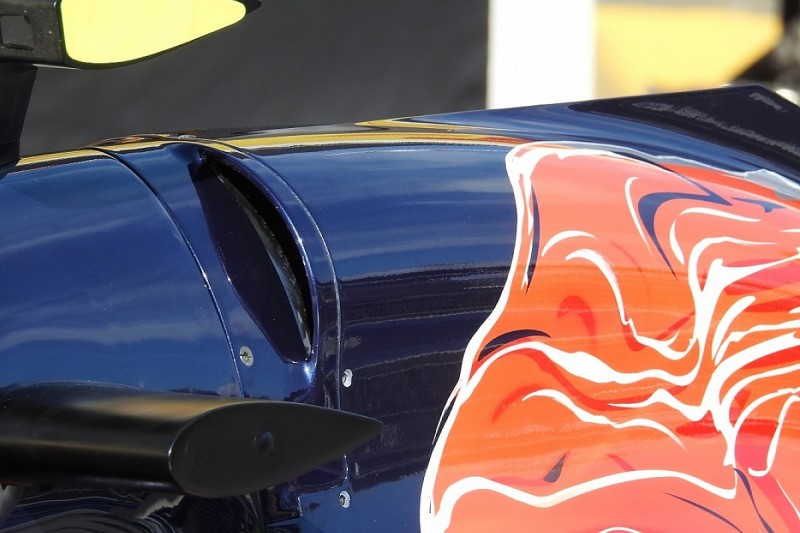
For Hungary's hotter conditions and low average speed, the cooling package tested at Silverstone was fitted to both STR11s.
This uses a revised engine cover with a rounded inlet behind the rollhoop feeding a long duct that passes back to a small cooler over the gearbox, most likely for ERS cooling.
To tackle the punishment the front left tyre gets around the Hungaroring, Toro Rosso adopted its usual trick of asymmetric front brake ducts. The front left gains more through-flow, avoiding the hot brakes to keep the wheel temperature lower and reducing the heat that passes into the overworked tyre.
McLAREN - Yet more slots
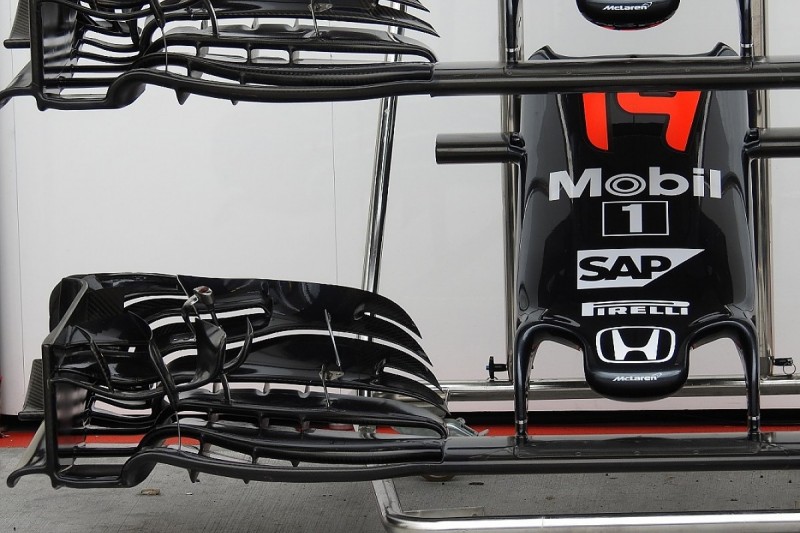
This weekend's minor revisions on the MP4-31 are even more slots on the front wing and more detail changes to the diffuser's centre Y100 flap.
The front wing changes in particular are an extension of previous wing updates. The inner tip of the flap that used to have a single slot is now doubled up so both elements of the flap gain a second slot.
This is typical of the 2016 trend of constantly playing with tiny add-on sections to the front wing.
WILLIAMS - Reassessing what it's already got
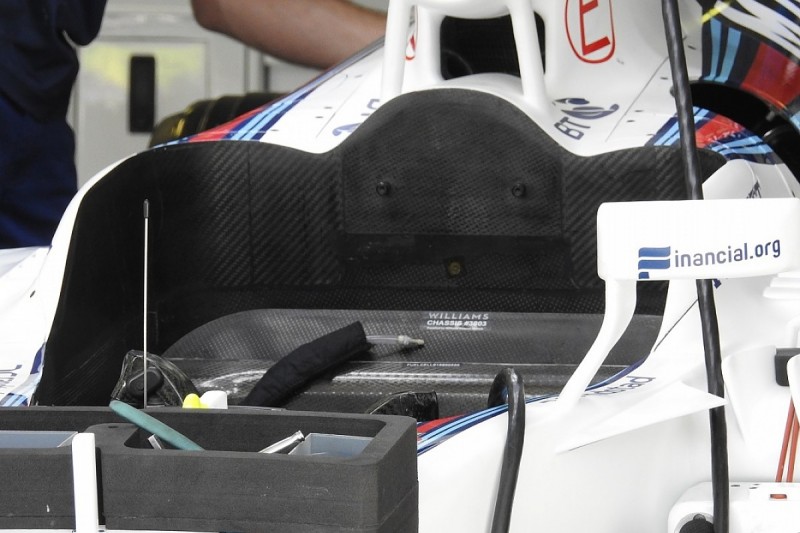
Williams spent Friday running back to back tests with its existing nose designs and all three front wing specifications used so far this year.
In terms of new parts, it initially only had new rear view mirror stalks available. But a late arriving new floor was tested on Valtteri Bottas's car in final practice on Saturday.
FORCE INDIA - Silverstone parts stay on
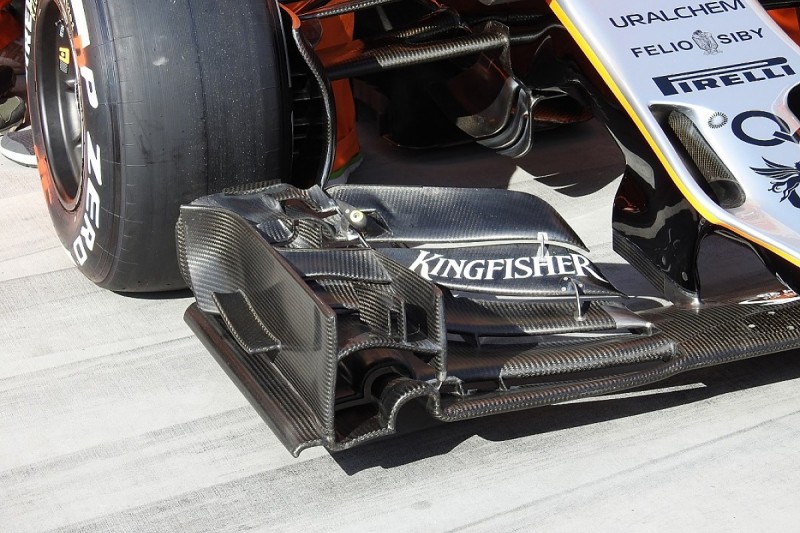
Like many teams Force India had development parts tried at Silverstone on the race car for the Hungaroring.
For the VJM07, that included a mildly revised front wing with reshaped endplates.
THE REST - Waiting for the future
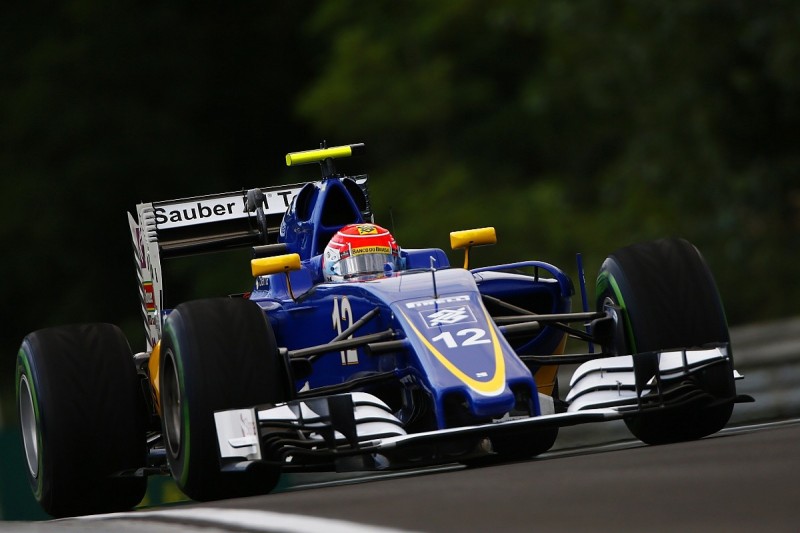
Completion of its crucial deal with new owner Longbow Finance was expected to prompt the appearance of long-awaiting new parts on the Sauber.
But the car appeared in Silverstone specification with its single pillar mounted rear wing with the complex endplates.
Renault and Haas have both made clear development on their current designs has now ceased to allow a greater focus on the 2017 car.
But there was a small tweak on Renault's RS16, which appeared with a single specification front wing - the most recent version of its 2016 designs running with a small winglet added to the cascade and the large r-shaped flag vanes dropped.
THE TRACK - New surface not too troublesome
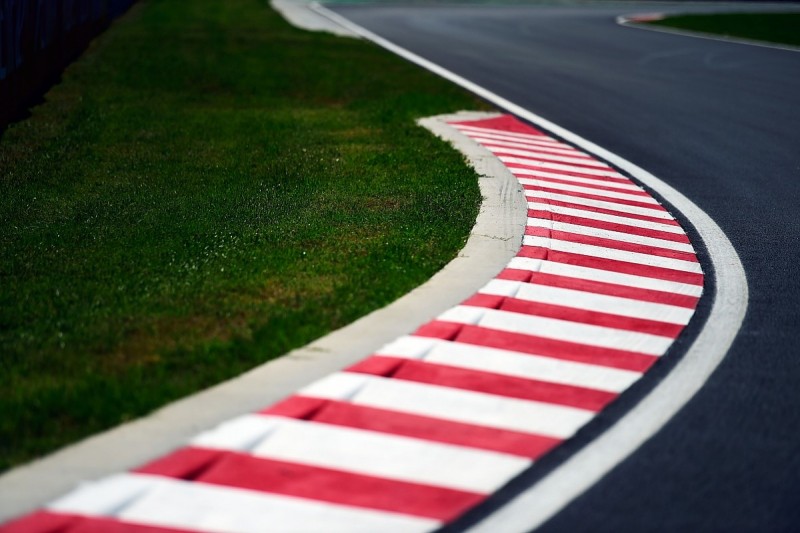
The Hungaroring throws a number of problems at the teams: tight turns with a lack of fast straights or corners, the heat and also for this year a new track surface and kerbs.
It's not quite Monaco tight, but the Hungaroring is very much a high downforce track, with drag costing little in lap time.
But the low speeds add to cooling issues, with the track sitting in a valley and high ambient temperatures the cars all need to run more cooling outlets to keep the power units cooled. Equally the brakes aren't repeatedly worked hard, but cooling is an issue here too.
This year the track has largely been relaid, the new asphalt smoothing out the bumps and the new kerbs lower and less harsh than the old format.
There was a fear the changes would lead to overheating tyres, causing blistering. But the worries proved to be unfounded in free practice, leaving the teams with good grip and mileage available from the softer of the tyre options.

The perfect Formula 1 car from 2016

F1's new development war has already begun

F1 teams still pushing with an eye on 2017

A glimpse at McLaren's 2017 work at Austin?

Engine oddities and aero tweaks at Suzuka

The unexpected technical upgrades at Sepang

Mercedes' suspension under the spotlight again

F1 teams' low downforce secrets

What Verstappen knew about Red Bull’s big upgrade when he signed his new F1 deal

Colapinto urges fans to stop online abuse: “You’re not helping me or my future”
Evans given a hero's homecoming after WRC title triumph

How an unspectacular showing in a kart race is such good reason to celebrate
Subscribe and access Autosport.com with your ad-blocker.
From Formula 1 to MotoGP we report straight from the paddock because we love our sport, just like you. In order to keep delivering our expert journalism, our website uses advertising. Still, we want to give you the opportunity to enjoy an ad-free and tracker-free website and to continue using your adblocker.


Top Comments