


Formula 1's other seismic rule changes
Rulemakers moving the goalposts is not new in Formula 1, and some have worked better than others. Here are some of the key changes

Autosport Retro
Telling the forgotten stories and unearthing the hidden gems from years gone by.
Throughout the annals of Formula 1 history, technical revolutions have not been uncommon – but eras have generally been defined by separate chassis and powertrain regulation changes. Seldom have both been altered at the same time. The 2026 formula defies that, with the aerodynamic design partially informed by the powertrain and hybrid revisions.
Since the new era (which we still need to decide on a name for – the electrification era? The active aero aeon?) means another shift in F1’s technical make-up, we felt it worthwhile to revisit the previous milestones in the championship’s engineering history…
1961: 1.5-litre engine formula
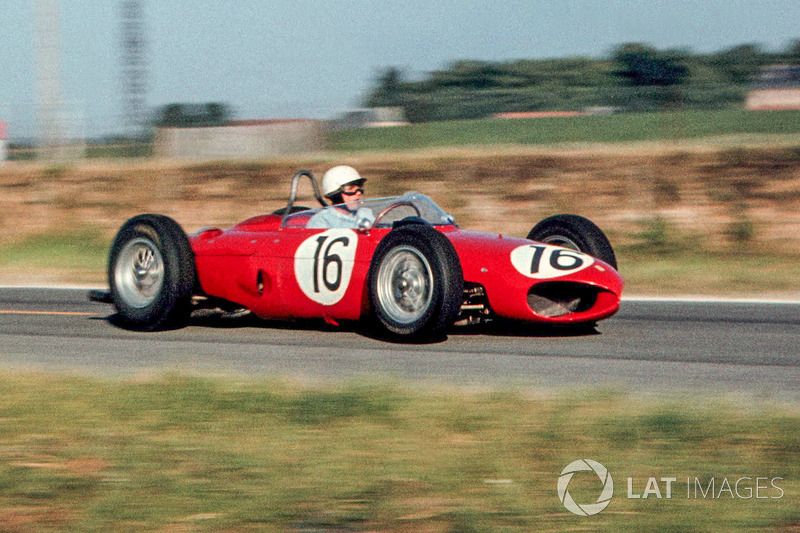
Ferrari seized the opportunity of the 1.5-litre formula, winning the constructors’ crown and drivers’ title for Hill
Photo by: Sutton Images
When it was communicated in late 1958 that Formula 1 would be moving away from 2.5-litre engines to the 1.5-litre formula used in Formula 2, it did so to raucous disagreement from almost everybody involved in the championship – particularly the British and Italian teams that made up the vast majority of the constructors.
The British contingent felt it could get the ruling overturned, and its hubris left the Anglocentric constructors exposed while the Italians, Ferrari in particular, refused to waste time sulking. Ferrari put together a version of its 1.5-litre V6 F2 engine for the start of 1961, while famed engine builder Carlo Chiti got to work on a 120-degree V-angle version to ensure a smoother power delivery.
In the ‘sharknose’ Ferrari 156, the combination was magical. The Prancing Horse romped to five wins in the seven points-paying races it entered and missed the Watkins Glen finale entirely. As such, it won the constructors’ championship over Lotus, and Phil Hill claimed the drivers’ title following the death of Wolfgang von Trips at Monza.
The British entrants, powered predominantly by Climax and BRM engines, found competitiveness in 1962 as the two engine builders prepared V8 units to tackle Ferrari’s early advantage. Maranello’s own implosion helped, with political machinations leading to Chiti fronting an en masse walkout to form ATS.
Ferrari found success again in 1964 with Mauro Forghieri’s 158. Climax and BRM engines won the other constructors’ titles – before F1 embarked on its ‘return to power’ in 1966.
1983: The end of F1’s first ground-effect era

Flat bottoms mandated for the 1983 season ended Formula 1’s first ground-effect era
Photo by: Cahier/Getty Images
After an initial attempt to clamp down on ground-effect aerodynamics had not been entirely successful in 1981, F1 chose to end the practice entirely for 1983 when cornering speeds were decided to have reached dangerous levels. All this as the deaths of Gilles Villeneuve and Riccardo Paletti, plus Didier Pironi’s career-ending accident at Hockenheim, contributed to the tragedy of 1982.
Hence, flat floors were mandated for 1983, meaning a visual change across the board with a range of shorter sidepod solutions and more reliance on front and rear wings for downforce. The volatility of the venturi tunnels was, thankfully, gone; a single damaged skirt or a tiny change in flow-field conditions was the main culprit in producing horrific accidents, such was the force of suction that the ground-effect pursuit had developed.
Flat bottoms helped push many of the top teams – McLaren, Williams and Lotus among them – towards turbo engines; the power deficit of the time-tested Ford Cosworth DFV could no longer be overcome with a better understanding of ground-effect aerodynamics.
Flat-bottomed cars remained in place for the next 40 years and, when ground-effect aerodynamics returned in 2022, it was done with considerable advancements in the field to minimise the risk of danger.
1989: Ban on turbos

New rules were aimed to encourage a variety of engines; Honda was one of the teams leading the V10 charge
Photo by: LAT/Getty Images
Attempts to create greater equivalence between turbocharged and atmospheric engines through the latter part of the 1980s, largely through boost pressure restrictions, were not entirely successful. Turbo engines were banned for the 1989 season to reduce the lack of parity and the escalating costs associated with them.
As such, everyone was required to run a 3.5-litre naturally aspirated engine from that point on. McLaren’s dominance in 1988 had been helped by Honda’s decision to keep running a turbocharged engine as the majority switched over to an ‘atmo’ powerplant.
The new rules led to engines of various shapes and sizes being produced by a range of manufacturers: Renault and Honda led the V10 charge; Ferrari and Lamborghini each built sonorous V12s; while Ford, Judd and Yamaha produced V8s. Even an unsuccessful W12 attempt found its way onto the entry list in 1990, when the tiny Life team rocked up with an engine that was around 200bhp down on the other engines of the time.
The naturally aspirated regulations changed a few times over the years: in 1995, the displacement was cut to three litres, and V10s were made mandatory in 2000 – although all manufacturers had gravitated towards a 10-cylinder format anyway. From 2006, the powertrain regulations changed once more to mandate 2.4-litre V8s, although Toro Rosso ran a rev-limited Cosworth V10 for the first season of those rules.
Although costs were cited as a fundamental reason behind the ban on turbos, manufacturers indulged in the same degree of profligacy with the atmospheric formula. As it had been in the turbo era, the FIA was relegated to playing whack-a-mole to maintain the illusion of parity, curbing the use of exotic materials and ‘jungle juice’ fuels throughout the two eras. It wasn’t until the introduction of caps on engine use, then design freezes after 2007, that costs truly started to come under control.
1994: Ban on driver aids

Active technology pioneer Williams initially struggled to adapt to the new regulations
Photo by: Sutton Images
There were concerns, many legitimate, that F1’s early-1990s pursuit of technological advancements had taken away much of the driving challenge. Indeed, the raft of driver aids – traction control, launch control and active suspension among them – had driven up costs and arguably dumped the competitive side of F1 into the hands of software engineers.
As a means to rekindle F1’s ‘purity’, driver aids were banned. Williams, which had stolen a march on the field with its advanced active cars in 1992 and 1993, struggled to adapt; the FW16 was aerodynamically unstable in its early form, and needed a raft of bodywork modifications to imbue the car with a degree of consistency.
Meanwhile, suspicions that Benetton had continued to use launch control intensified after the FIA had found the software in the team’s electronic control unit, hidden under Option 13, but could never prove that it had been activated…
After the deaths of Ayrton Senna and Roland Ratzenberger at Imola in 1994, Rubens Barrichello’s near-fatal injury in the same weekend, followed by Karl Wendlinger’s horror shunt in Monaco next time out, the FIA was compelled to introduce a raft of changes to slow down the cars. What followed was a cut in diffuser size, the addition of the plank to restrict the floor height, and a cut-out in the engine cover to reduce engine power.
While banning the raft of driver aids was probably a sensible move in of itself, the transition was poorly managed in retrospect.
1998: Narrow-track cars and grooved tyres

Grooved tyres were the most controversial element of the Mosley-inspired 1998 package of changes
Photo by: Steve Etherington / Motorsport Images
While many of the 1994 tweaks became enshrined in the rules for following seasons, albeit with more refined solutions than the ad-hoc nature of the changes, FIA president Max Mosley remained keen to slow the cars down further.
For 1998, F1 machines were made narrower by 200mm, the byproduct being that side-by-side action was theoretically more feasible. There was one further change that was a colossal source of discontent for the next decade: grooved tyres.
Although grooved dry tyres were not new to F1, and had been used throughout the 1950s and 1960s, the introduction of slicks in the 1970s heralded new levels of mechanical grip. To reduce the tyre contact patch and decrease speeds, the FIA had two options: make the tyres narrower, or introduce grooves.
It opted for the latter and hence produced a field of skittish cars, which drivers didn’t particularly enjoy at the start. Qualms aside, the reduced grip did at least punish mistakes, overconfidence or, in some cases, ineptitude.
After starting out with three grooves on the front tyres and four at the rear in 1998, F1 added a fourth groove to the fronts for the second year. And, in spite of the attempts to cut speeds, the grooved tyre era was one of the quickest as teams compensated with aerodynamics and V10s that approached 1000bhp by the end of the period.
2009: Aero cuts to improve racing

Brawn’s success with the double diffuser in 2009 an example of how to very effectively exploit a regulatory shake-up
Photo by: Glenn Dunbar / Motorsport Images
As aerodynamic sophistication reached new heights, winglets sprouted across the cars like an invasive species of plant. By 2008, few surfaces were left untouched by myriad flow conditioners or downforce generators.
So the FIA attempted to reduce the wake produced by the myriad aero parts by cutting most of them out entirely for 2009, and also redefined the size of the front and rear wings to improve car-to-car following.
Compared to the well-sculpted 2008 cars, the distinct visual difference in the 2009 formula was critically panned; the cars looked clunky, sure, but the sweeping changes also led to a major shake-up in the competitive order.
There were also two further changes, both of which informed the future direction of F1: the front wing also came equipped with a proto-DRS mode, although this was largely used to adjust front-end downforce mid-corner. KERS was also permitted for the first time, although only the manufacturer entities experimented with the system in its first year.
Brawn GP’s success demonstrated how the rules could be exploited – its double-diffuser and outwash front wing allowed the team to gather a comprehensive early advantage. The likes of Red Bull found further exploits, as the larger diffusers could be made more powerful with exhaust-blowing.
Since the regulations hadn’t demonstrated a clear surge in on-track overtaking, DRS was implemented in 2011 to reduce the quantity of processional races; Fernando Alonso might have preferred its arrival to come a race sooner…
2014: Turbo-hybrid era begins

Mercedes nailed the turbo-hybrid switch from the off with a power unit that delivered performance and reliability
Photo by: Charles Coates / Motorsport Images
F1 had planned to reintroduce turbocharged engines in 2014, as part of a drive to create a ‘greener’ formula that reduced the fuel consumption during a grand prix. This made Mercedes and Renault happy, since they were pursuing hybrid powertrains in their road car offerings, although the expense essentially precluded Cosworth from putting its own turbo-hybrid designs into production.
Initially planned to run to an inline-four engine arrangement, Ferrari successfully lobbied for it to be upscaled to a V6. The powertrains were augmented with the MGU-K and turbo-mounted MGU-H, although the sheer complexity of the new power units necessitated a long development process.
While Mercedes managed to produce a reliable and powerful system, Ferrari and Renault floundered through 2014 – although Renault’s early unreliability rather left the French marque some way off. And, when Honda joined the field the following season, it took four years for it to become competitive…
F1 hadn’t done a particularly good job of promoting the new powertrains. Unsurprisingly, the impressive efficiency figures hadn’t swayed the more raucous opposition, unequivocal in its support of a return to naturally aspirated cars.
Attempts to capture more sound from the turbo-hybrids were eventually successful with microphone placement and open wastegate tailpipes – a trial involving a conical ‘trumpet’ exit did nothing to endear the new engines to fans.
2017: Wider cars to increase speeds

Pursuit of greater speed resulted in wider cars and tyres – and, as many predicted, a deterioration in the racing
Photo by: Asanka Brendon Ratnayake / Anadolu Agency via Getty Images
In stark contrast to the earlier crusades against outright speed, F1’s management wanted the cars to be faster for 2017. The high rear wings were gone, replaced with a lower and wider geometry, and the width change for 1998 was reversed – cars would be 2000mm wide once again.
The bounding boxes for bargeboards were opened further, and the tyres were also widened to increase the mechanical grip available.
It was expected that F1 would be quite a bit faster, with a field of more attractive cars, but the caveat was that many assumed the rollback on aero changes would hurt the racing significantly.
Those predictions were pretty much spot on. The cars were quick, looked great, but the quality of racing was a sticking point. Assuming overtaking could be considered as a metric of on-track action, then the new rules cut this by about half, though the battle at the front now involved Ferrari and sometimes Red Bull as well as the two Mercedes.
After two seasons, F1 refined the formula and raised rear wings again; front wings were also simplified to reduce the outwash effect produced by clusters of winglets lining the endplates. Floor changes followed in 2021 after the rapidly rising levels of downforce had forced tyre supplier Pirelli to jack the pressures up significantly.
The 2019 changes largely undid a lot of the damage to the on-track product, especially when the convergent field over 2021 started to produce a vast variety of results. Most importantly, there was also a no-holds-barred title fight between two drivers in different teams.
2022: Return of ground effect

Highly strung cars of the new ground-effect generation notorious for their propensity for porpoising and bouncing
Photo by: Lars Baron
Originally planned for 2021, the return of ground effect was the result of a taskforce of engineers working for FOM who had set about creating a new aero formula that could service the on-track racing without the need for DRS.
They decided that returning to a ground-effect formula would be the way to do so, and heavily restricting the aero surfaces on top of the car was a response to the increasing outwash problem seen in F1 since 2009.
The impact of COVID delayed the rules by a year, and the unique requirements of the floor created great variance in some of the aero solutions seen at the start of the year. But the cars were highly strung and had to be incredibly stiff to ensure the aero platform worked. This led to all sorts of problems, porpoising and bouncing being the key obstacles.
Red Bull, once it had shed about 10kg of excess weight over 2022, stole a march on the other teams – but the field began to converge and McLaren ended the era on top of the pile. Meanwhile, Mercedes’ domination of the previous era did not translate into the ground-effect epoch; its experimental approach to the ruleset’s first year set it back.
Diminishing returns and circumventions of the rules’ aim to minimise the downforce loss of a chasing car had rather brought their usefulness to a natural end – and the switch to 2026’s all-new aero formula was partly driven by the powertrain requirements.
This article is one of many in the monthly Autosport magazine. For more premium content, take a look at the February 2026 issue and subscribe today.

Flat floors introduced for the 1983 season remained in place for the next 40 years
Photo by: Sutton Images


Singapore Grand Prix Driver Ratings 2026

What we learned from the 2026 F1 Singapore GP sprint race and qualifying

The political minefield set out by F1’s recent cost-cap grievances

What caused Mercedes' pace deficit at Sepang despite upgraded W17?

Three kings: F1's generational stars shone at Sepang

Bahrain Grand Prix in Malaysia Driver Ratings 2026

The slick tyre gamble that hurt McLaren and Ferrari's chances in Bahrain GP in Malaysia

The wide world of strategy options expected in F1's Bahrain GP in Malaysia

The not-so-obvious chance Leclerc missed to usurp Verstappen

Cheshire cats de la Roche and Musgrave grin after Silverstone Historic F3 thrillers

Dramatic Mini fight goes to the wire as Ovenden wins title by a point at Brands Hatch

How Ingram made his mark on the 2026 BTCC campaign – before going out with a bang
Subscribe and access Autosport.com with your ad-blocker.
From Formula 1 to MotoGP we report straight from the paddock because we love our sport, just like you. In order to keep delivering our expert journalism, our website uses advertising. Still, we want to give you the opportunity to enjoy an ad-free and tracker-free website and to continue using your adblocker.


Top Comments