


F1 eyes lighter, simpler and noisier engines
Formula 1’s future generation of cars could be based around lighter, simpler and noisier engines, says championship boss Stefano Domenicali.

With F1 committed to using fully sustainable fuels from 2026 rather than going down an all-electric route, thoughts are already being put towards what type of power unit the series could use further down the road.
And, with Domenicali having been clear recently that he wants to see car weight coming down, one area where significant mass could be reduced is with the hybrid power units, which currently incorporate heavy battery cells.
In an exclusive interview with Autosport, Domenicali laid out his vision for F1 to seriously consider an eventual change of approach for the power unit once the sustainable fuel rules have bedded down.
"If we can be effective in the study and production of sustainable fuel, we will be able to think about the next generation of power units, focusing on lightness,” he said.
“We want a competitive engine, with many horsepower and also with a great sound. 99.9% of people want to hear a Formula 1 sound on track again, and that's something we've put on the table.”
While F1 is continuing with turbo-hybrids from 2026, Domenicali thinks that potential changes in the direction of the automotive market over the next decade could allow a shift of focus for grand prix racing too.
“Today we are in a transition phase, where large manufacturers need to develop hybrid and electric technologies since they are part of their sales portfolio,” he said.
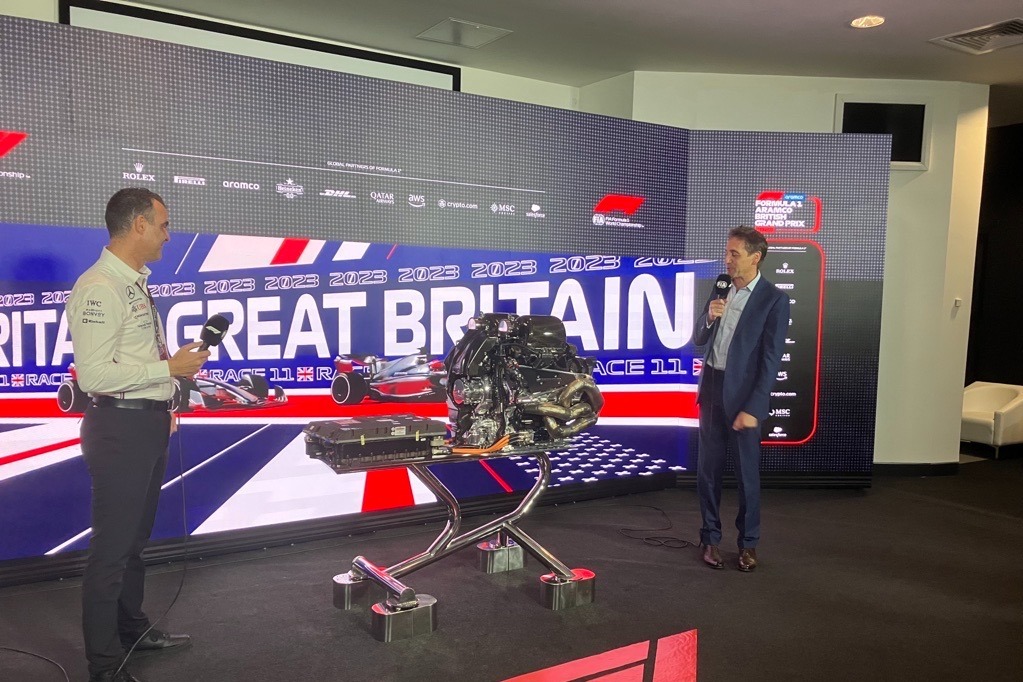
Mercedes showcased its power unit at the British Grand Prix
Photo by: Jonathan Noble
“But I believe if we do a good job with sustainable fuels, we will be able to have simplified engines in a few years with a lower impact on weight. It's something we'll soon start thinking about.”
Domenicali said it was in F1’s DNA to ‘lighten every component of the cars as much as possible’, even though he fully understood that car weight had had to increase also as the result of a drive to improve safety.
Speaking about the importance of the car weight factor, Domenicali said: “It is a very important issue.
“Over the years the weight of the cars has increased, and obviously no one questions what has been done on the safety front.
“But there has also been the development of new technologies and the subsequent adoption of batteries, an aspect that has led to an impact on the weight front.
“As Formula 1, we have to ask ourselves what we can accelerate in terms of development, and here the issue of sustainable fuels is fundamental. The perception and the market on this front are changing, and I think a very good choice was made when we first decided to take this path.
“We do not want to make technological wars against full electric mobility, as it is a technology that will have its own market.
“But we believe that Formula 1 can accelerate the possibility of having sustainable fuel at the right price, and this will be a great help for mobility in the absolute sense, including commercial vehicles, aviation, and the one that includes cars circulating in the world, which are about a billion and a half.
“It's a very important challenge for Formula 1, and I'm sure it will also help to bring together the vision of all the teams.”
Share Or Save This Story


Brundle awarded OBE in King’s New Year’s honours

The new rules dilemma that will define the 2025 F1 season

Jon Noble: An unfair perception or a genuine concern? Lifting the lid on Red Bull’s Tsunoda scepticism

Toyota-backed Tsuboi to make switch from Super Formula to F2

The five contenders to replace Ocon at Haas for F1 2027

What has changed in the new Marquez a year after finding “peace” with himself

Top five roles on Motorsport Jobs this week
Subscribe and access Autosport.com with your ad-blocker.
From Formula 1 to MotoGP we report straight from the paddock because we love our sport, just like you. In order to keep delivering our expert journalism, our website uses advertising. Still, we want to give you the opportunity to enjoy an ad-free and tracker-free website and to continue using your adblocker.


Top Comments