


Audi takes radical approach with 2026 sidepods in Bahrain F1 test
Bahrain offers first look at Audi's heavily sculpted sidepods, replacing the more conventional design from Barcelona


Gabriel Bortoleto, Audi F1 Team
Photo by: Joe Portlock / LAT Images via Getty Images
Autosport Explains
Our experts decode the most important stories in motorsport.
Audi's R26 has been augmented with a very different sidepod design for the start of Bahrain's Formula 1 testing ahead of the 2026 season, following the team's conventional approach to the Barcelona running.
First seen with an inlet with a minor overbite in the Barcelona shakedown, the sidepods used there took more of an inwashing approach - the rear edge of the sidepods had been tucked in, with a smoother upper surface.
The Swiss-German outfit has introduced something far more complex in terms of topography for Bahrain. Firstly, the inlets have had their geometry changed to a narrower, taller intake alongside the flanks of the chassis.
This then flares out, with a ramped undercut to bring the airflow towards the edges of the floor. Furthermore, the top surface has had a channel introduced to ease the passage of airflow to the rear of the car. Reducing the length of this pathway ensures that the flow loses less energy as it transitions to the top of the diffuser surface.
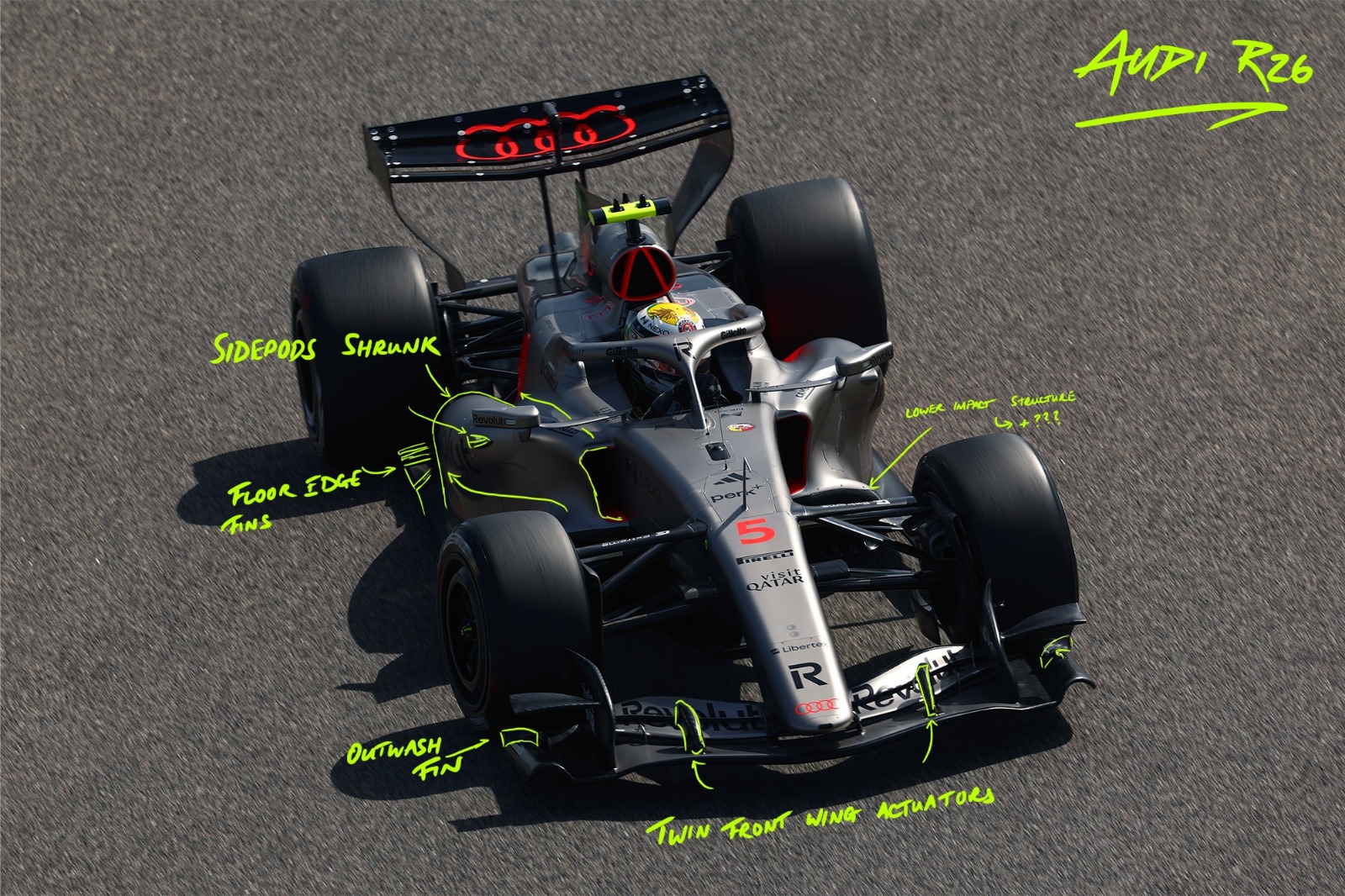
The sidepods have been shrink-wrapped around the two side impact structures, with a small blister seen next to the mirror mounting for the upper crash structure, and the aforementioned undercut ramp for the lower structure.
In addition to reducing the airflow's travel, the positioning of the inlets should safeguard the cooling against the variance produced by tyre wake. The turbulence shed by the front tyre can make it more difficult to maintain a consistent mass flow rate of air through the inlets, so moving them inboard should ensure less turbulence gets in.
This is useful during cornering too, as the sidepods themselves can take greater responsibility for dealing with any airflow shed from the tyre.
With the images and TV footage available, it's difficult to determine what Audi has done below the inlets; on first glance, it looked as though this may have been a way to induce a bargeboard-like outwash effect to moderate the flow to the floor and with the wake boards.
Autosport's subsequent visit to observe the R26 in the pitlane shows that the lower crash structure has been raised to open up the floor's leading edge. In theory, this could allow the team to run a little more ride height at the rear and retain a similar flow rate through the floor opening.
The image below shows the lower part of the sidepod, just behind the front suspension, with traces of remaining flow-vis paint following Audi's aero testing phase.
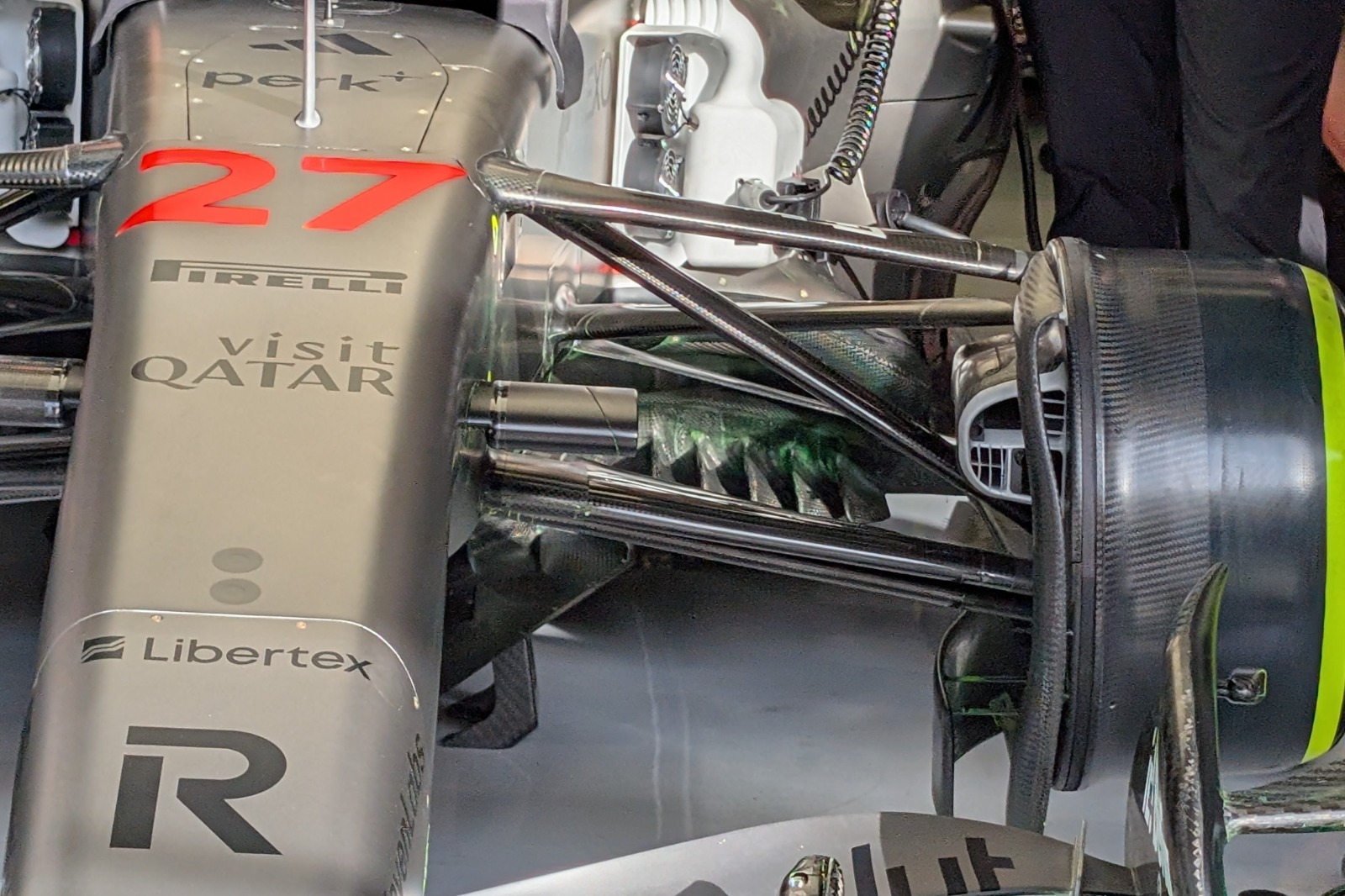
Photo by: Jake Boxall-Legge
There are further new elements to the Audi around the front wing. The team has opted for the twin active-aero actuators, rather than the central actuator under the nose. This allows the team to lower the nose without creating too much blockage from the actuator housing.
Outwashing fins also sit atop the front wing's vortex tunnels, which should allow for more interaction with the endplate winglets in turning airflow around the front tyres.

Share Or Save This Story


A strategic masterclass: How Antonelli put himself on the cusp of F1 title at the US GP

Leclerc and Hamilton's differing theories behind Ferrari's Austin qualifying disappointment

What we learned from Friday practice at the 2026 United States GP


Slater set for F1 practice debut with Audi in Mexico

What drives Bortoleto as his junior rivals hit new heights in F1

A look at McLaren and Audi's Baku F1 updates

Russell scrambling for answers after "not being quick enough" at US GP
A strategic masterclass: How Antonelli put himself on the cusp of F1 title at the US GP

The maths behind Antonelli becoming F1 world champion at Mexico GP

F1 United States GP: Antonelli dominates from pole - but forced to wait for title
Subscribe and access Autosport.com with your ad-blocker.
From Formula 1 to MotoGP we report straight from the paddock because we love our sport, just like you. In order to keep delivering our expert journalism, our website uses advertising. Still, we want to give you the opportunity to enjoy an ad-free and tracker-free website and to continue using your adblocker.


Top Comments