


New FIA crash assessment technology makes F1 debut
New rapid crash assessment technology from the FIA made its debut over the Brazilian Grand Prix weekend and is due to be rolled out beyond Formula 1


Full details of the new system will be presented at an FIA meeting next month but FIA Formula 1 medical delegates Ian Roberts and Alain Chantegret gave a brief outline to select media including Autosport in Brazil last weekend.
The basic premise is being able to send data to race control without using radio, and feeding back video, which is in its early stages.
It is a system that has been developed for more than a year and will not be restricted to F1.
Chantegret said: "In December we have a meeting in St Petersburg and will present a new technology that we started to use in Sao Paulo to have rapid assessment between the medical car and race control.
"It's a very, very important step for the safety."
Officials believe even if it only saves "10 or 20 seconds" of feeding back crucial data from the site of a crash it is a "fantastic opportunity".
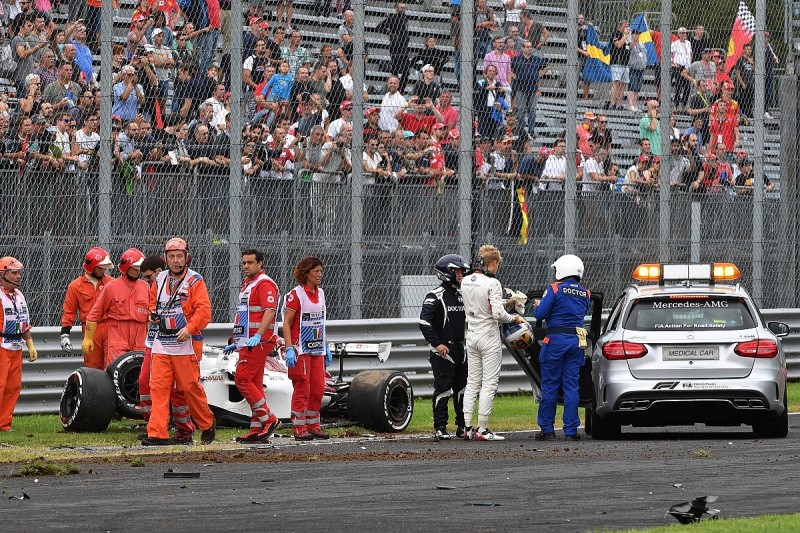
Roberts explained: "It allows race control to understand immediately what is happening at the accident site and so resources can be mobilised sooner.
"The medical centre can be put on standby for any particular reason.
"It enables things to move more quickly and reliably in terms of the information.
"This is about the quality of the information and if we can knock off 10 seconds or 20 seconds [it's good]."
While the enhanced method of assessing crash sites may be of limited value to F1, it will be used in other categories.
Rallying is targeted as an obvious discipline where the technology will be of great use.
"It's important on the circuit but I think it will be more important in rallying," said Chantegret.
"You can have the race control somewhere and have a crash 200km away, and with this device we can have the rapid assessment immediately.
"It's very important, we can go by satellite, and it's not necessary to go by car to see [what has happened]. It's a very big step."
Share Or Save This Story


The driver who can wreck F1's "super exciting" 2020 silly season

Red Bull's Verstappen now has basis for first F1 title challenge

Ferrari: Mick Schumacher a good candidate for seat in Formula 1

New WRC champion Evans relieved after “surreal” Sardinia title showdown

Solberg has no regrets after WRC title near-miss: “It hurts a lot”

How the Bahrain GP in Malaysia exposed Red Bull’s hidden resurgence

Why the Motegi tyre drama delivers a lesson MotoGP teams cannot ignore
Subscribe and access Autosport.com with your ad-blocker.
From Formula 1 to MotoGP we report straight from the paddock because we love our sport, just like you. In order to keep delivering our expert journalism, our website uses advertising. Still, we want to give you the opportunity to enjoy an ad-free and tracker-free website and to continue using your adblocker.


Top Comments