
How Porsche won a race everyone lost
A Porsche Le Mans 24 Hours victory, with Toyota suffering yet more heartbreak, had an all-too familiar feel. But a bizarre 2017 race shared nothing else with last year's

Toyota had the faster car and Porsche won the race, but that's where the similarities between the Le Mans 24 Hours this year and last end.
This was a race that was as bizarre as it was dramatic. Witness the hour or so lost to repairs by the the winning LMP1 prototype shared by Timo Bernhard, Earl Bamber and Brendon Hartley.
Or the 13-lap lead that the sister Porsche 919 Hybrid driven by Neel Jani, Nick Tandy and Andre Lotterer enjoyed with four hours to go. Or the mad 30 minutes in the small hours of Sunday morning when Toyota's hopes of victory evaporated for another year. Or the fact that an event as glorious and grand as Le Mans came close to having an overall winner from the secondary LMP2 prototype class.
There was admittedly no last-gasp heartbreak for Toyota like last year, no freak failure with six minutes to go that wrenched a first Le Mans victory from its grasp. But the pain felt by the Japanese manufacturer was no less intense this time around.
This was a race that it should have won. And the reasons for Toyota's failure to finally chalk up a first Le Mans victory after 30-plus years of trying were no less extraordinary than in its previous litany of near-misses.
Kamui Kobayashi, Mike Conway and Stephane Sarrazin were in something resembling control of the 85th edition of the French enduro as the clock struck midnight. They led by over a minute and had held sway at the front for the majority of the race. What's more, the latest version of the Toyota TS050 HYBRID had a clear edge over the Porsche in the cooler conditions of the night.
Then it all went wrong shortly before the end of the 10th hour of the race. A peculiar sequence of events contrived to send the #7 TS050 into retirement as Toyota found new and ever-more-bizarre ways of losing this event.
It all started with a safety car, an opportunity Toyota used to bring the car in to swap Conway for Kobayashi. The Japanese driver was stopped by a marshal and the red light at the end of the pitlane as he tried to rejoin the race, only to be waved onto the track.
Toyota instructed him to stop immediately and he did so just beyond the pitlane exit. One of the safety cars was coming and the team wanted to avoid a penalty. But when the crocodile had passed, Kobayashi rooted the clutch trying to get going again.

The modern breed of P1 prototypes leave their pitstalls in electric mode. Their combustion engines kick in as they rejoin the track proper and, in the case of the Toyota, the clutch is not designed to deal with the torque and power of its twin-turbo 2.4-litre V6 from standstill.
"Kamui was put in a position where he had to use the clutch with the combustion engine to start," explained Toyota Motorsport GmbH technical director Pascal Vasselon. "The clutch is not built for this. There was a succession of two or three [failed] starts, and the clutch was done."
The problem was that the TMG squad didn't realise this as Kobayashi completed a slow lap behind the safety car. But as soon as the course vehicle pulled in and full throttle was applied, the clutch gave up the ghost.
Without any drive from the direct-injection V6, Kobayashi tried to make it back to the pits on electric power. He stopped a couple of times over the course of a slow lap of the 8.47-mile Circuit de la Sarthe, but repeatedly got going again and was within sight of the pitlane when the last joule of charge from the Toyota's lithium-ion battery was exhausted. There was no option for him but to climb out of the car and retire.
Toyota's additional entry for Le Mans, the #9 car that team returnee Nicolas Lapierre shared with newcomers Jose Maria Lopez and Yuji Kunimoto, now became its main hope. Lapierre had struggled with damaged front bodywork in his opening stint, but with a new nose bolted on at the first round of pitstops, he was soon up to speed.
Le Mans rookies Lopez, who was particularly impressive, and Kunimoto were also on the pace. The #9 Toyota might have fallen off the lead lap after losing time in the pits while a malfunctioning illuminated light panel was attended to, but it was still in the hunt. As events turned out, this trio would have fully justified Toyota's decision to run three cars.
Lapierre then had the misfortune to be hit up the rear by Simon Trummer in the #25 Manor LMP2 Gibson when he got an unexpected fuel cut as he negotiated the Dunlop Curve. He was tapped into a spin through the gravel, but more significantly the initial impact damaged the left-rear wheel.
Flailing rubber from the disintegrating tyre as he drove back to the pits took out the gearbox hydraulics and an oil line, forcing Lapierre into all-electric mode just like Kobayashi. He too failed to make it around the long lap.

Toyota's bid for that elusive first Le Mans victory was now over. Its #8 car had long since been well and truly out of it after a failure of the front motor-generator unit in the eighth hour. Sebastien Buemi, Anthony Davidson and Kazuki Nakajima's car would spend a minute under two hours in the pits.
It rejoined 29 laps down on the leading sister car and 11 behind the Bernhard/Hartley/Bamber Porsche, which had also undergone a change of its electric motor. The difference was that problems with the hybrid system on the Toyota damaged the battery, which also needed changing.
The Porsche lost only 65 minutes after stopping in the fourth hour. By rights, the time spent in the garage should have left it with no chance of winning this race. And that's what the drivers thought when the car rolled back up the pitlane after it prolonged stop.
"It's frustrating because when I hopped back in the car, we were flying," said Hartley during the night. "We were the fastest car on the track. We've just got to keep pushing to try to get up to fourth or fifth to get some points."
The aspirations of Hartley and his co-drivers changed a couple of hours later when Toyota's victory hopes were derailed, but the race for them was still all about getting in front of the LMP2 hordes trailing the runaway Porsche.
And that changed again when Lotterer was asked to turn off the #1 Porsche's two-litre V4 turbo soon after starting his 318th lap just after 11am on Sunday. The engine had lost oil pressure and Lotterer, like his counterparts in the #7 and #9 Toyotas, tried to negotiate his way back to the pits on electric power.
Lotterer wouldn't make it either. He stopped short of Mulsanne Corner and Porsche wasn't about to try to get the car back at any cost.
"We thought it was terminal, which was why we didn't try too hard to bring it back," explained Porsche LMP1 team principal Andreas Seidl. "We needed a free track for #2 to make up the time. Every slow zone or safety car was going to cost us."

Porsche's calculations at one time suggested that it would only overhaul the P2 leader - otherwise known as the race leader on the Lotterer car's retirement - on the final lap of the race. It didn't quite turn out like that, but Bernhard and his team-mates had to push and push hard.
"I had mixed emotions when I saw the sister car drop out, but that's when I knew that we were fighting for the victory," said Hartley. "Over those three stints, I attacked as hard as I could because I had been told that it would be close."
It didn't turn out to be quite as close as expected. Bernhard passed the #38 Jackie Chan DC Racing ORECA-Gibson 07 shared by Oliver Jarvis, Ho-Pin Tung and Thomas Laurent, which had led the race for the best part of three hours, just before the end of the penultimate hour. It was a remarkable comeback in strange circumstances for Porsche.
The margin of victory was one lap and 25 seconds, so an extra few minutes spent in the pits would have resulted in a shock victory for a P2 car at Le Mans.
"We didn't know what the problem was so we changed the whole front end, including the suspension - the mechanics worked their socks off," explained Hartley. "We owe this victory to the team."
Hartley described last weekend's race as "brutal". It was brutal on the cars and drivers, as well as on the emotions of just about everyone involved. It was Toyota, once again, whose emotions suffered the most. This was another Le Mans lost.
The TS050 HYBRID was the quicker car, particularly in the cooler conditions of the night. The 919 Hybrids weren't far off the pace in the early running, but once the temperatures fell, the Toyotas began to stretch their legs.
"In the opening stints we had less of an advantage," explained Vasselon. "We have really started to pull a gap when it became a bit cooler."
Porsche was all too aware of its disadvantage in cooler conditions.
"The race was like we expected: we were competitive in hot conditions and in the night they pulled away," said Seidl. "We went into the race thinking that we had to try to hang in there during the night and then have a car that was still in good shape for when the higher temperatures came again on Sunday morning."
The pace of the #8 Toyota, particularly with Buemi at the wheel, in the latter stages of the race suggested that Porsche might have struggled.
Toyota was out of it by the time the temperatures topped 30 degrees again, but the drivers of the only Porsche left in the race after midday on Sunday were still pushing hard.
They just weren't chasing a manufacturer whose Le Mans curse struck again.


How Toyota destroyed the competition to seal the WEC crowns

When Can-Am made its controversial comeback

WEC Barcelona: Genesis secures maiden series pole from Toyota

How Ford is "hitting milestones" in preparation for WEC Hypercar assault

How Porsche Penske finally broke its Petit Le Mans duck

Why there’s no perfect solution to the WEC safety car conundrum

How an “informed gamble” enabled Toyota to beat Alpine in the Fuji 6 Hours

The hope for Lola’s comeback and what it could mean

How Toyota destroyed the competition to seal the WEC crowns

McLaren retains Fornaroli as F1 reserve and hands him WEC programme for 2027

How Andrew Jordan realised his teenage rallycross dream
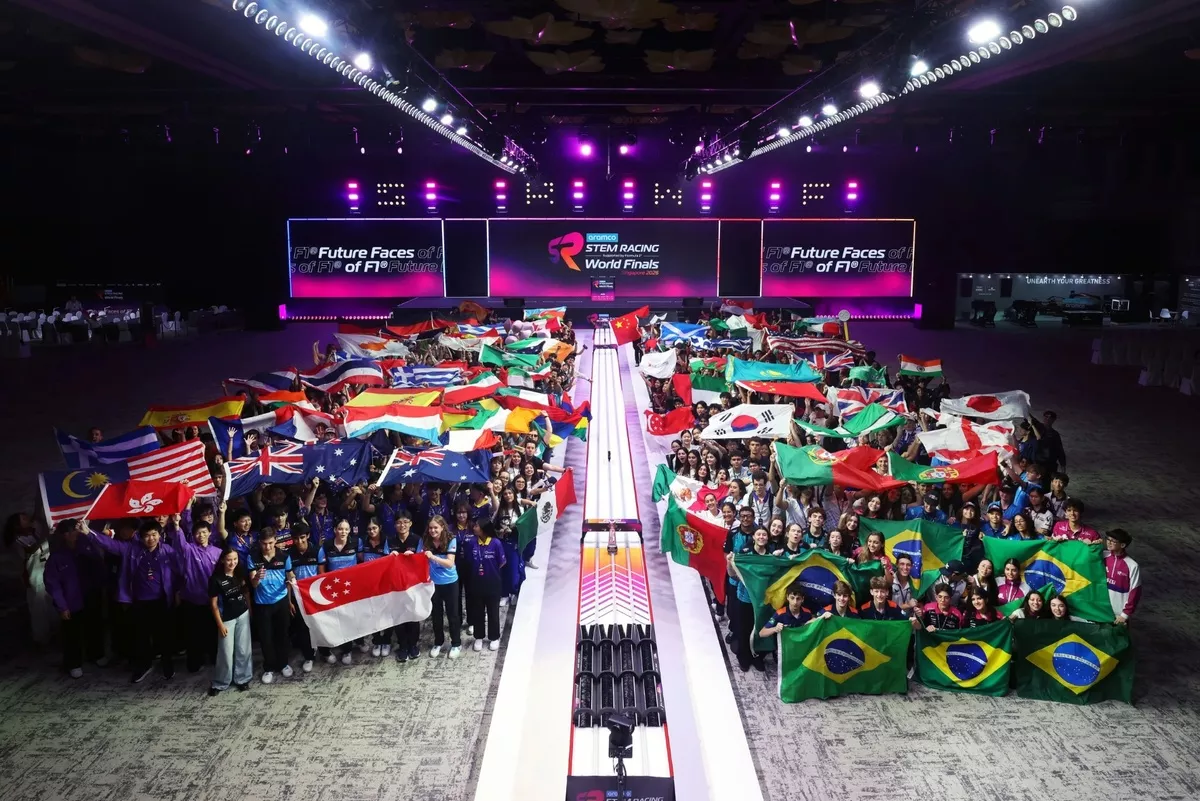
Inside the competition building F1’s future engineering talent
Subscribe and access Autosport.com with your ad-blocker.
From Formula 1 to MotoGP we report straight from the paddock because we love our sport, just like you. In order to keep delivering our expert journalism, our website uses advertising. Still, we want to give you the opportunity to enjoy an ad-free and tracker-free website and to continue using your adblocker.


Top Comments