


Hamilton says KERS less useful in race
Lewis Hamilton believes the advantage that KERS has given him at the Italian Grand Prix will not be so great in Sunday's race


The Kinetic Energy Recovery System played a big part in helping Hamilton grab pole position for McLaren at Monza, but the few tenths per lap benefit it delivered in qualifying will be less of a help in the main event.
With only three heavy braking zones per lap at Monza, Hamilton believes that there is not enough chance to fully charge the KERS units during a lap.
"I think in the race clearly at the start it will be an advantage, but this isn't a great place for recovering the energy," he explained. "So probably after five laps maybe you will run out of energy and then you will have to charge it up for a few laps and the same again.
"Most other circuits you can use it every single lap, and I am pretty sure here we will run out - so consistency will be a bit difficult for us. But for overtaking it will be beneficial."
Although there is heavy braking for the first and second chicanes, Hamilton's team-mate Heikki Kovalainen says that the nature of braking is not ideal for charging KERS.
"We are limited by the torque of the recovery motor rather than the braking distance," he explained. "So we are pulling very high torque under braking and that is the limiting factor.
"If we don't use it for a lap we can charge it back up, but if you don't use it 100 per cent every lap we can maintain 80 per cent every single lap. That is the sort of trade off. If you save 20 percent every lap you can use it everywhere."
Share Or Save This Story


Brundle awarded OBE in King’s New Year’s honours

The new rules dilemma that will define the 2025 F1 season

Jon Noble: An unfair perception or a genuine concern? Lifting the lid on Red Bull’s Tsunoda scepticism


'Senior moment' or breakdown of trust? The implications of Hamilton's Singapore GP meltdown

Ferrari explains Hamilton’s failed Singapore GP gamble
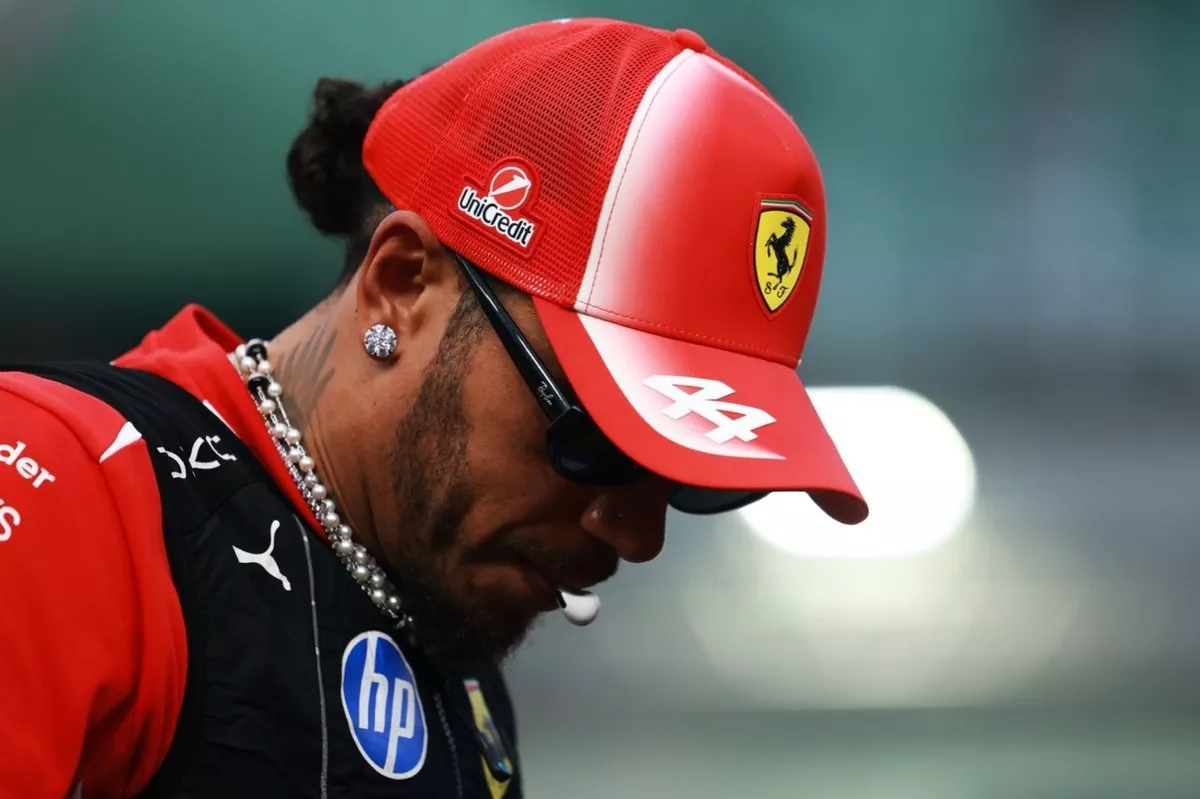
Hamilton takes blame for poor Singapore GP strategy call

How Toyota destroyed the competition to seal the WEC crowns

McLaren retains Fornaroli as F1 reserve and hands him WEC programme for 2027

How Andrew Jordan realised his teenage rallycross dream

Inside the competition building F1’s future engineering talent
Subscribe and access Autosport.com with your ad-blocker.
From Formula 1 to MotoGP we report straight from the paddock because we love our sport, just like you. In order to keep delivering our expert journalism, our website uses advertising. Still, we want to give you the opportunity to enjoy an ad-free and tracker-free website and to continue using your adblocker.


Top Comments