


Bernie Ecclestone calls for 1000bhp V8 engines for Formula 1
Formula 1 supremo Bernie Ecclestone has renewed calls for a return to V8 engines, claiming it is "urgently" needed and that they could be boosted to 1000bhp


Ecclestone has long been sceptical about the benefits of the new hybrid V6 turbo regulations, and has often spoken out against the noise the new power units make.
Amid ongoing concerns about declining audiences, Ecclestone believes a quick fix to F1's problems would be to introduce revised V8s that produce 1000bhp.

"We need to go back to engines whose costs are more reasonable, and we need to intervene with maximum urgency," Ecclestone said in an interview with Gazzetta dello Sport.
When it was suggested that it would be wrong to change engine rules so soon after the introduction of the turbos, Ecclestone replied: "Why? Going back to a Formula 1 with naturally aspirated engines and KERS, while setting precise constraints, would drastically reduce costs and would be convenient for those already in F1 and for those would like to enter it.
"We'd just need to take the old V8 engines and modify them by increasing displacement to bring power output near 1000bhp.
"People would return, the show would return, sponsors would return."
Ecclestone suggests that the move to hybrid engines has contributed to the fall in audiences by creating fan disinterest.
"F1 isn't just technology, but enjoyment too," he said. "We need to think about who buys a ticket, goes in the grandstands and wants to see a great sporting spectacle.
"It's money doing the rounds: the public pays for tickets, the organisers cash in and pay us, who then forward the money to the teams together with TV rights.
"But if TV audiences shrink and the public at GPs do too, then it becomes a problem."
Although previous attempts to get teams to agree to a V8 return have been blocked, Ecclestone has suggested he will take up the matter with Ferrari chairman Sergio Marchionne.
When asked if he had spoken to Marchionne yet, Ecclestone said: "No, but I intend to do it as soon as possible."
Translation by Michele Lostia
AUTOSPORT SAYS...
Ecclestone has long campaigned against the turbo V6 engines - but to suggest a return to V8s last used in 2013 would save costs is a pretty big leap of faith.
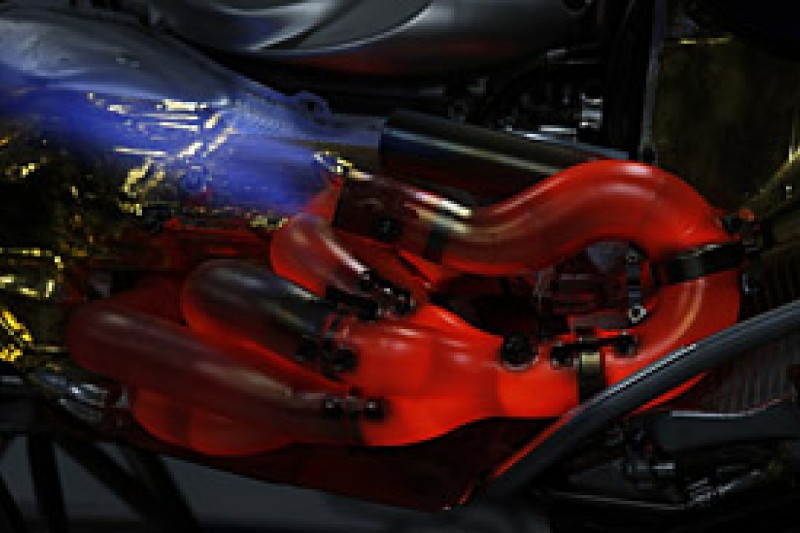
It is not simply a case of brushing off some old V8 engines sat at the back of factories and going off racing again.
Manufacturers would have to recalibrate facilities and retune their manufacturing processes to get V8 engine production going again.
Furthermore, it will be just as expensive as the current rules to work to a set of regulations that will deliver 1000bhp V8s.
With any major engine change unlikely to happen before 2017, engine makers would also be forced to run hugely expensive parallel development programmes for 18 months - pushing on with the V6s while also getting the V8s sorted.
Teams would also be forced to design all-new cars for the return of V8s. The current 100kg fuel limit means tanks are smaller nowadays, and no longer big enough to hold the petrol needed for the old engines to last a whole race.
Ecclestone is clearly facing a tough juggling act relating to the new engine rules.
The power units are causing trouble at the back of the grid for the small teams that have been hurt by the huge increase in supply costs.
At the front there are woes too - because the limited development scope of the complex technology has left Red Bull and Renault contemplating F1 exits.
Ripping up the engine rulebook may appear to be an easy way out of those troubles, but it is not a realistic solution to F1's problems because they run far deeper than simply what is in the back of the cars.
Share Or Save This Story


Brundle awarded OBE in King’s New Year’s honours

The new rules dilemma that will define the 2025 F1 season

Jon Noble: An unfair perception or a genuine concern? Lifting the lid on Red Bull’s Tsunoda scepticism

WRC Sardinia: Neuville snatches lead from Fourmaux as Hyundai remains on top

Why Verstappen’s unusual run plan highlights F1 teams’ biggest challenge in Malaysia

What we learned from Friday practice at the 2026 Bahrain GP in Malaysia

Why ‘Mr Formula E’ has called time on his racing career
Subscribe and access Autosport.com with your ad-blocker.
From Formula 1 to MotoGP we report straight from the paddock because we love our sport, just like you. In order to keep delivering our expert journalism, our website uses advertising. Still, we want to give you the opportunity to enjoy an ad-free and tracker-free website and to continue using your adblocker.


Top Comments