


The squandered potential of a 70s F1 underdog
A podium finisher in its first outing but then never again, the BRM P201 was a classic case of an opportunity squandered by disorganisation and complacency, says STUART CODLING
David Coulthard once declared 'potential' a word which should be banned from motor racing, for the belief in it – the pursuit of it – has sent many a competitor down an insurmountable blind alley. The BRM P201 certainly had potential and, indeed, had Niki Lauda been behind the wheel – as he was initially contracted to be – perhaps it might have recorded more than one podium finish and arrested the quixotic British team’s slide towards oblivion. 'Perhaps' being a companion word for 'potential'.
BRM was beginning to enter its death throes as 1974 beckoned. Formed nearly three decades earlier by pre-war ace Raymond Mays as a British engineering prestige project, aiming to emulate the German domination of top-level motor racing in the 1930s, it was a peculiar enterprise which too often fell far short of its lofty ambitions.
It epitomised the belief in 'potential': its first F1 car fell so far short of the mark that the whole project had nearly come to an end as early as 1952, saved only by the ongoing largesse of a key investor, the industrialist Sir Alfred Owen. Further failures led to an ultimatum from Owen when his investment passed the million-pound mark at the turn of the 1960s, briefly yielding an improvement in the F1 team’s fortunes – a world championship for Graham Hill in 1962 – before BRM tied itself in competitive knots while trying to establish itself as a self-sufficient engineering consultancy.
When Sir Alfred suffered a serious stroke in 1969, effective control over BRM passed to his sister Jean and her husband, Louis Stanley – a fascinating character who had been attending grands prix with BRM since 1959, acting as Sir Alfred’s eyes and ears on the factory floor, and who would preside over its eventual demise. It was said of ‘Big Lou’ that his fan club could comfortably be accommodated in a telephone kiosk. He styled himself as Britain’s answer to Enzo Ferrari and had a fondness for receiving business visitors at his offices in semi-darkness.
A sometime journalist and author, managing director of the Dorchester Hotel, and supposedly the son of a cotton trader from the Wirral, Stanley remains one of motor racing’s abiding enigmas. In recent years his stepdaughter Bobbie Neate wrote a searing exposé of Stanley’s life which included graphic revelations of child abuse – physical and sexual – and a compelling argument that he was the illegitimate son of Herbert Asquith, raised in secret and shielded by the establishment.
While Stanley was also the honorary secretary of the Grand Prix Drivers Association and a supporter of Jackie Stewart’s safety campaign, funding a mobile medical unit at grands prix in the wake of Stewart’s horrific accident at Spa in 1966, his is an exceedingly problematic legacy to weigh.
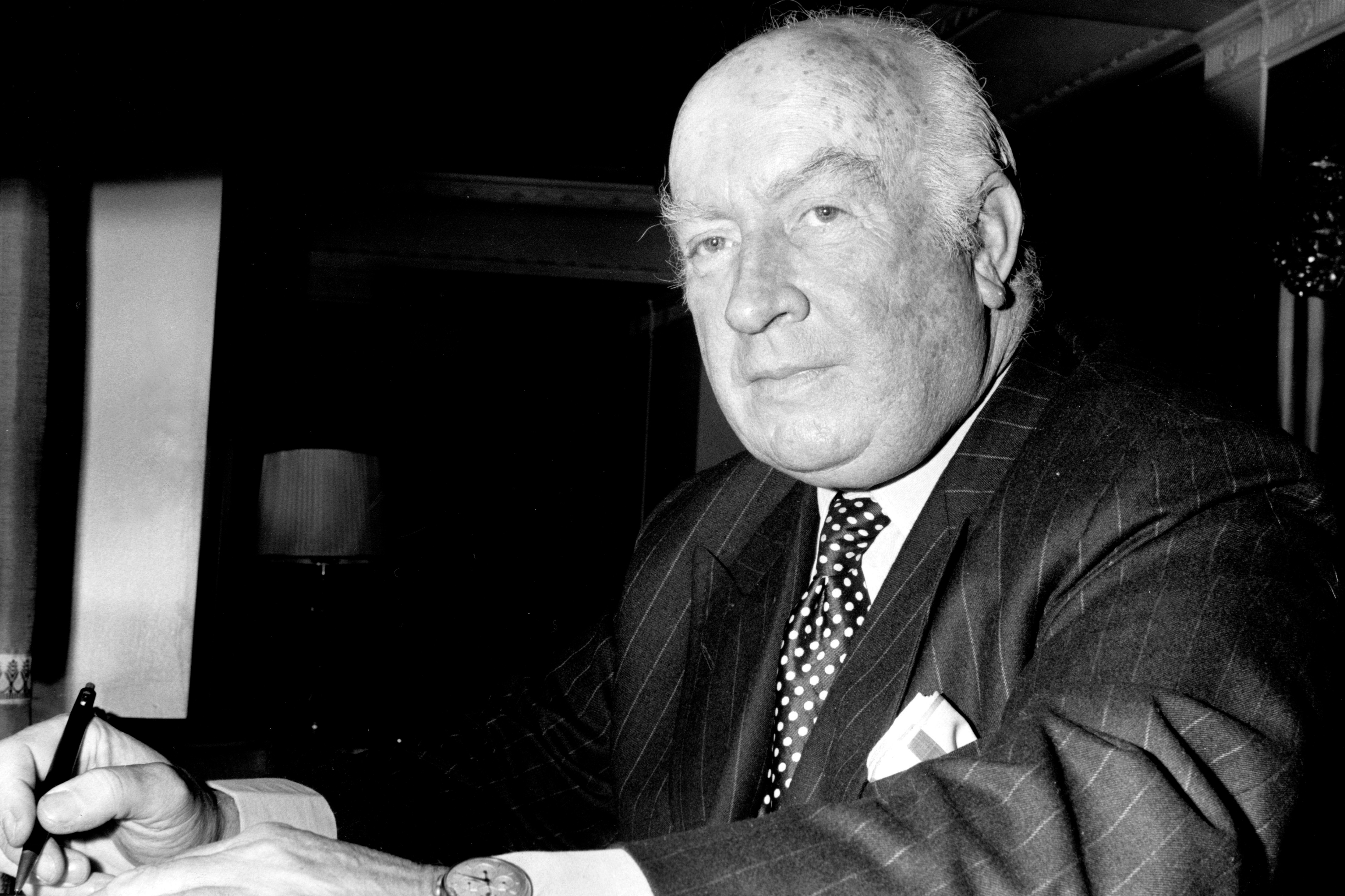
BRM patron Stanley was a complex character, prone to exaggeration
Photo by: Motorsport Images
Stanley’s preference when entertaining prospective drivers was to do so at the Dorchester rather than the BRM facility in Bourne, Lincolnshire. During these meetings – according to Lauda – Stanley would arrange to be called away to answer an urgent phone call which, he would explain upon his return, was the engineering department informing him they had found another 20bhp while trialling some new component.
If only such progress was genuinely being made, and with such urgency. BRM’s V12, originally a ‘Plan B’ concept for the 3-litre era which was hurried into service when Plan A (the flawed H16) was a humiliating failure, stubbornly refused to respond to development. Ex-Bentley and Coventry Climax engineer Walter Hassan, brought in as a consultant in 1972, later described in his memoir Climax in Coventry a scene of inertia, internal red tape and not-invented-here syndrome.
“I am not trying to make excuses, either for myself or for BRM, when I say changes agreed in 1972 were still not fitted to the cars at the start of the 1975 season,” he said.
Tony Southgate, the ex-Lola and Eagle designer recruited in 1969 to oversee the next generation of BRM cars would also recall wearily how rather too much effort was focused on showing off and justifying the company’s comprehensive engineering facilities rather than on car performance, to the ultimate detriment of laptime since the cars were often overly complicated and overweight.
In 1973 Stanley signed Clay Regazzoni and Vern Schuppan to drive, but couldn’t resist the cash being offered by Jean-Pierre Beltoise and Lauda (then considered an unimpressive rich-kid pay driver), and found himself committed to another multi-car effort he couldn’t sustain
Southgate’s P153 and P160 chassis were generally competitive but often unreliable – mostly, if not always, because of the engine. Besides being larger, heavier and less powerful (unless, of course, you were speaking to Louis Stanley) than Ford’s Cosworth-built DFV V8, it was also considerably thirstier – to the tune of requiring up to 40 litres more fuel on board at the start of a race. Neither was it strong enough to act as a fully stressed member of the chassis, requiring a subframe.
PLUS: The last hurrah for a former British F1 superpower
BRM overstretched its resources on track too, frequently entering third cars, sometimes even a fourth, if a driver approached bearing enough cash. For the 1971 US GP BRM ran five cars with sufficient satisfaction (even ‘fifth man’ John Cannon, a CanAm regular, got to the finish in what would be his only world championship F1 start) to try to make a habit of it.
But the monies attracted were insufficient to cover the genuine operational costs; breakages were simply patched up, blown engines ‘fixed’ rather than replaced, leading to mounting inconsistencies in performance.
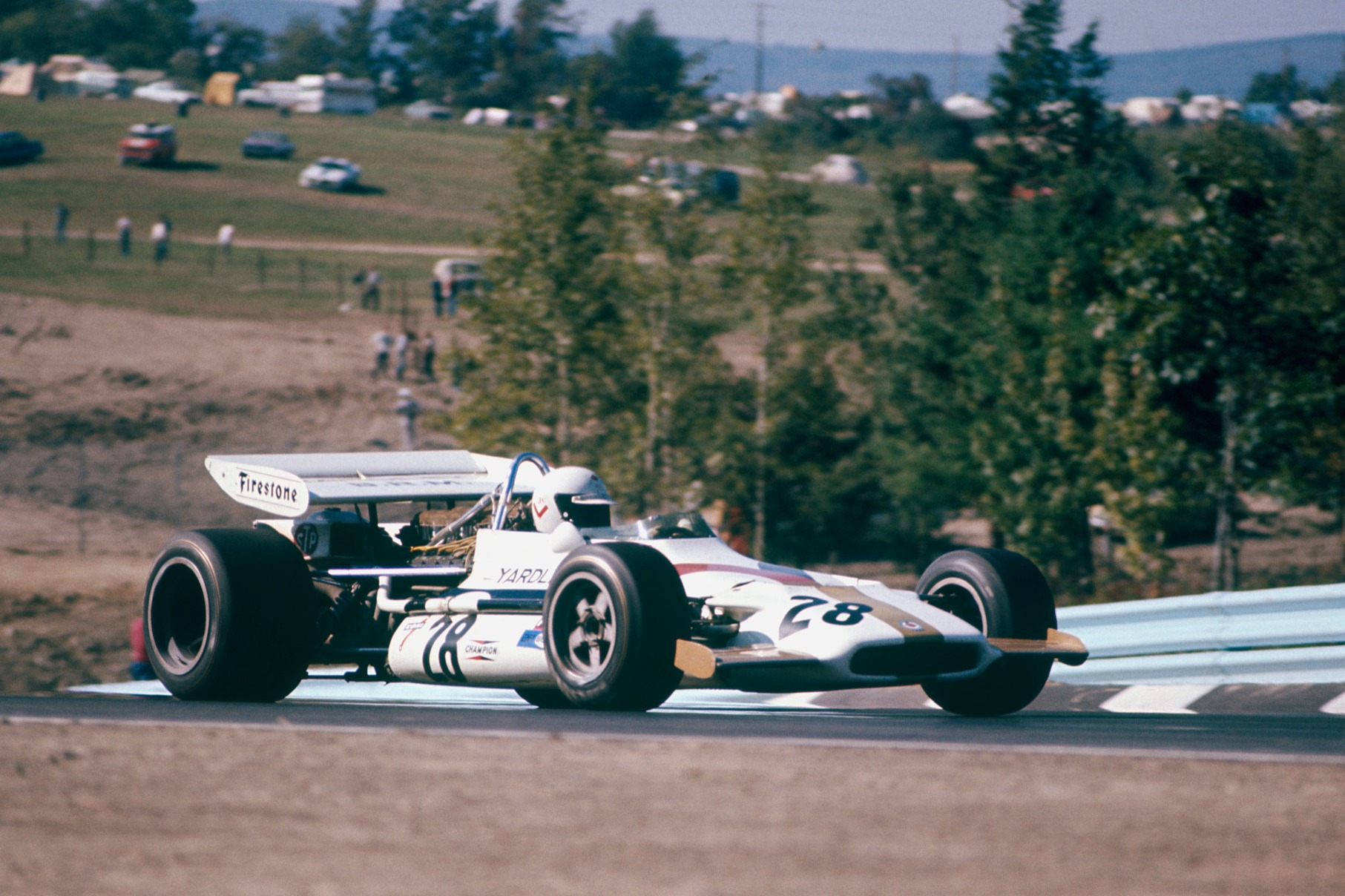
BRM overstretched its resources, running a fifth car for John Cannon at Watkins Glen in 1971
Photo by: Motorsport Images
As such, rather than building to a peak as Stanley secured Marlboro sponsorship to replace Yardley, BRM continued to flounder. In 1973 Stanley signed Clay Regazzoni and Vern Schuppan to drive, but couldn’t resist the cash being offered by Jean-Pierre Beltoise and Lauda (then considered an unimpressive rich-kid pay driver), and found himself committed to another multi-car effort he couldn’t sustain – especially when Lauda’s money ran out.
If the Austrian hadn’t proved so quick, and so impressive at setting up the cars, he might not have lasted until the end of the season… instead, he soldiered on through many mechanical retirements and arranged a contract with Ferrari for 1974 which proved the making of him. Beltoise secured one win, in the rain at Monaco.
PLUS: Ranking F1's greatest wet-weather drives
Southgate having departed to join Shadow, Mike Pilbeam returned to BRM to develop the cars as well as numerous peculiar side projects including a proposed snowmobile. Pilbeam naturally gravitated towards Lauda and the two began to discuss concepts which would shape what became the all-new P201. But relationships between team, drivers and sponsor deteriorated such that Lauda, Regazzoni and Marlboro all took their leave at the end of the season.
As such the P201 wore Motul sponsorship which Stanley had poached from the F2 outfit Rondel Racing, run by Ron Dennis and Neil Trundle and aspiring to join the 1974 F1 grid with a car bankrolled by the French oil company. Henri Pescarolo – also a Motul-backed driver – joined alongside Francois Migault to form an all-French line-up for the majority of the season.
Besides the different livery, Pilbeam’s chassis was a clear philosophical departure from Southgate’s Coke-bottle shapes. Its trapezoidal hips were a nod to both weight distribution and developments in the understanding of aerodynamics; such shapes were believed to lose less downforce while the car was in yaw.
Gordon Murray’s Brabham BT42 had set the tone but Pilbeam, as Murray would do with the BT44, located the radiators at the side rather than in the nose, lending the P201 a slightly more bulbous appearance. In details such as its inboard front brakes the P201 followed Lotus thinking, hardly surprising since Pilbeam had worked on the genre-defining 72. A shorter wheelbase than the P201’s predecessors conveyed additional agility despite the weight and bulk of the V12.
Former Coventry Climax man Peter Windsor-Smith, alongside Hassan, worked on a revised V12 with a different bore/stroke ratio, lighter pistons and new cylinder heads, but neither the car nor the engine were ready for the start of the season. Indeed, the engine wouldn’t see service until the Belgian GP at Nivelles, and the drivers preferred the old one.
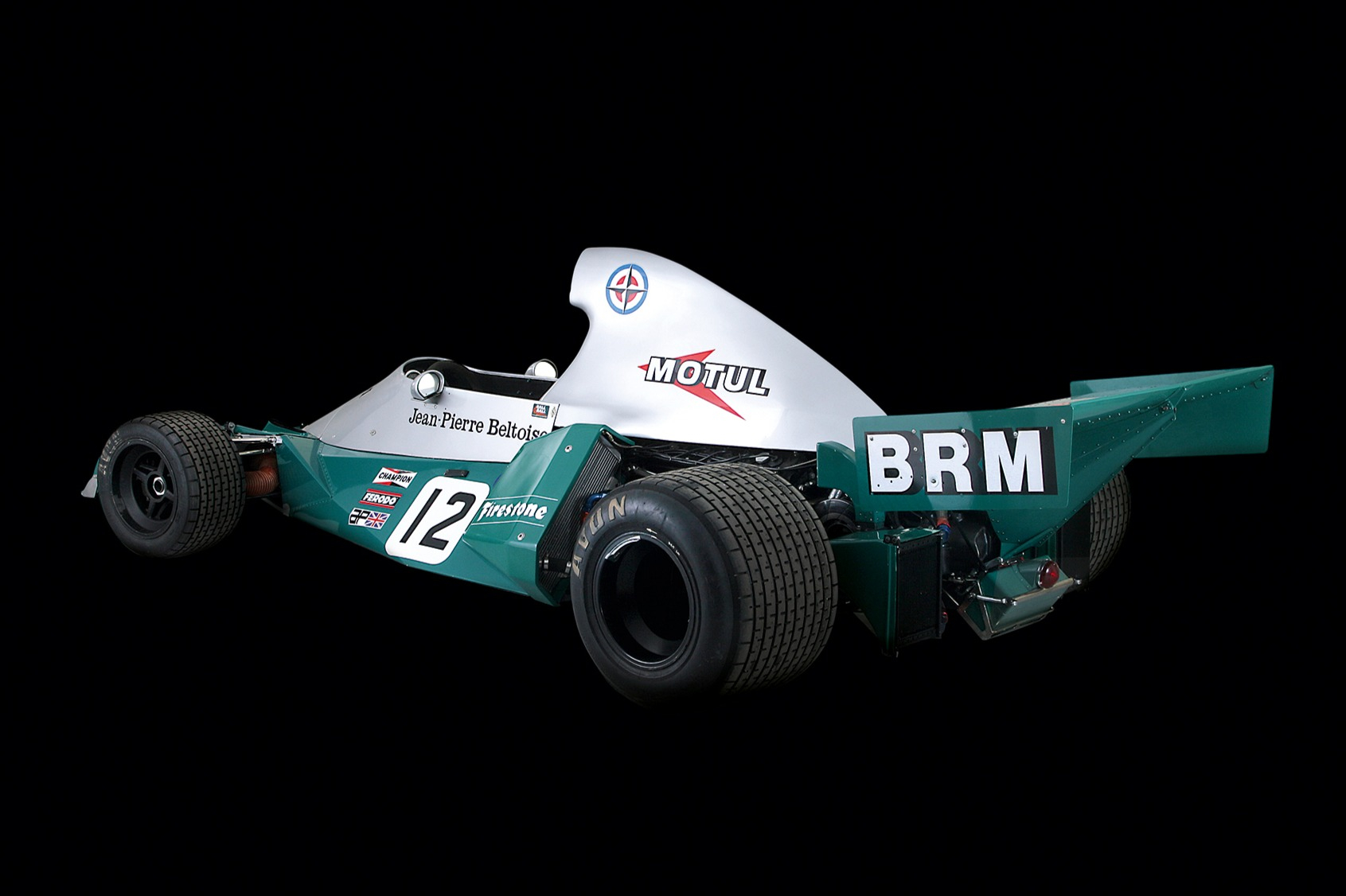
Pilbeam's P201 was a departure from Southgate's philosophy, with side-mounted radiators inspired by the Lotus 72
Photo by: James Mann/GP Racing
Beltoise qualified a humble 11th on the P201’s debut in round three, the South African Grand Prix at Kyalami. But the team made an interesting discovery: the P201 was so kind to its tyres, thanks in part to the inboard brakes not sending constant temperature spikes through the wheels, that it could probably handle a race distance on Firestone’s qualifying rubber.
Come race day Beltoise stealthed his way through the pack as others ahead tangled, shunted or had to back off to preserve tyres. With an eye on the temperature gauge (the team had cut back radiator shrouds after encountering overheating in practice), Beltoise bided his time until mid-race, picking off the works McLaren of Denny Hulme, the Tyrrells of Patrick Depailler and Jody Scheckter, then the other works-run McLarens of Emerson Fittipaldi and Mike Hailwood to move into fourth.
Most impressively, given the V12’s indifferent power output, Beltoise pulled off each pass without taking a slipstream from the car in front, so critical was the engine temperature.
Nimble but pegged back by that outdated engine, ‘finger trouble’ and BRM’s strained finances, it registered just two more finishes in a season which went south in retirements brought on by electrical and transmission problems, and tired and repeatedly patched engines letting go
When engine problems eliminated the Ferraris of Regazzoni and Lauda, only Carlos Reutemann’s BT44 lay ahead – but well ahead, an insurmountable margin. Beltoise took the flag in second place, 33.94s in arrears but three laps ahead of 15th-placed Migault and six ahead of 18th-placed Pescarolo in their elderly P160s.
A puddle of water under Beltoise’s P201 in the paddock bore testament to a holed radiator which would have put him out had the race lasted a few more laps.
Sadly the P201 would never deliver on the promise of this debut. Nimble but pegged back by that outdated engine, ‘finger trouble’ and BRM’s strained finances, it registered just two more finishes in a season which went south in retirements brought on by electrical and transmission problems, and tired and repeatedly patched engines letting go.
Goodyear out-developed Firestone, nullifying BRM’s ability to use the softest tyres available. Thus the P201’s potential was squandered.
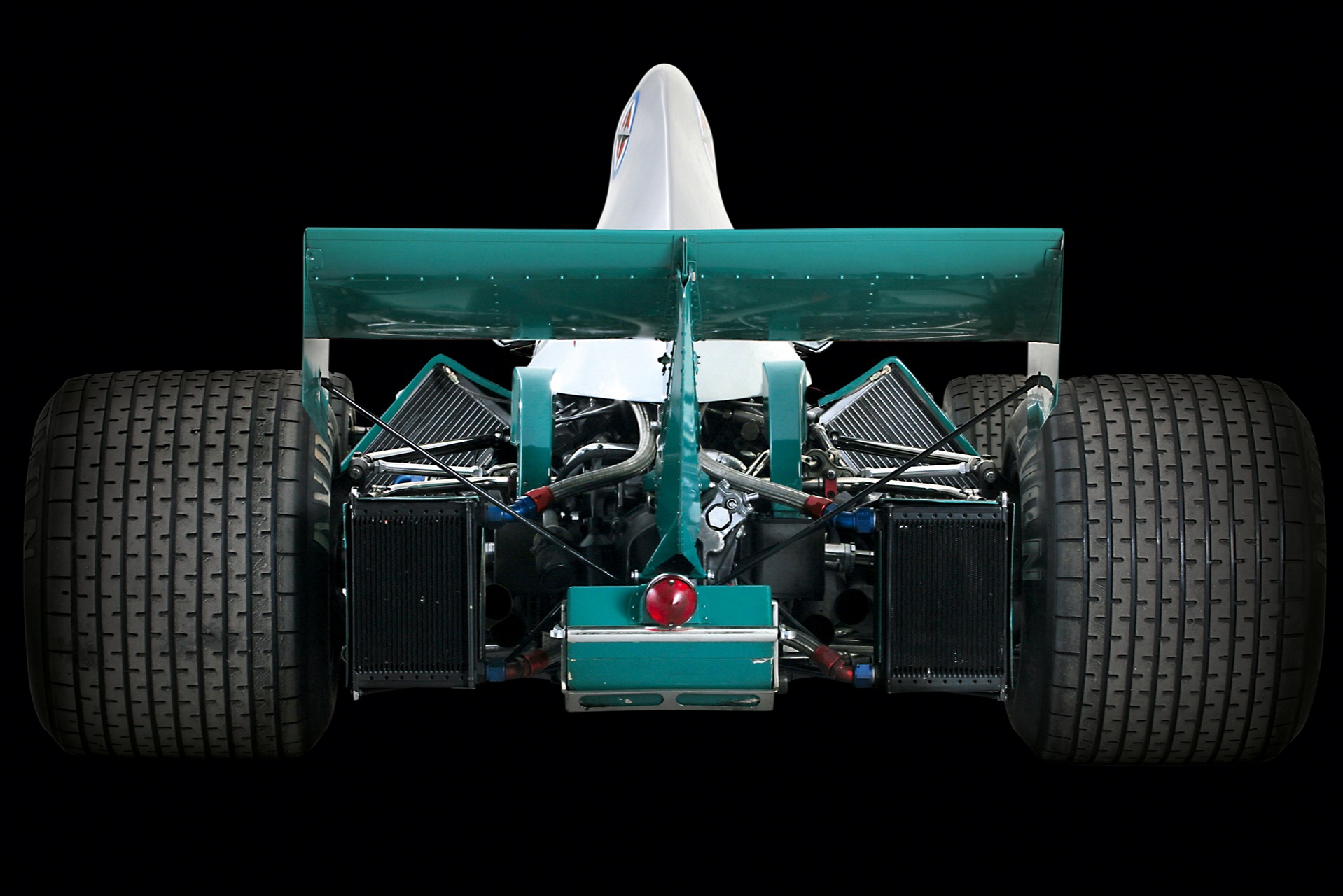
Engines were frequently patched rather than properly rebuilt, and often failed
Photo by: James Mann/GP Racing
Motul kissed off BRM at the end of the year and the Owen industrial group also pulled its backing. Stanley kept the lights on – just about – until 1977, generally with second-string drivers, and the P201 endured an inglorious end to its career when Larry Perkins puttered across the line in a three-year-old car running on 10 cylinders at the 1977 South African GP, scene of the model’s rather more impressive maiden outing.
And there you have BRM in a nutshell: for all its potential, not always firing on all cylinders.
RACE RECORD
Starts: 33
Wins: 0
Poles: 0
Fastest laps: 0
Podiums: 1
Championship points: 8
SPECIFICATION
Chassis: Aluminium monocoque
Suspension: Double wishbones with coil springs/dampers front and rear
Engine: 60-degree naturally aspirated V12
Engine capacity: 2998cc
Power: 450bhp @ 11,000 rpm
Gearbox: Five-speed manual
Brakes: Discs front and rear
Tyres: Firestone (1974), Goodyear
Weight: 585kg
Notable drivers: Jean-Pierre Beltoise, Henri Pescarolo, Francois Migault, Chris Amon
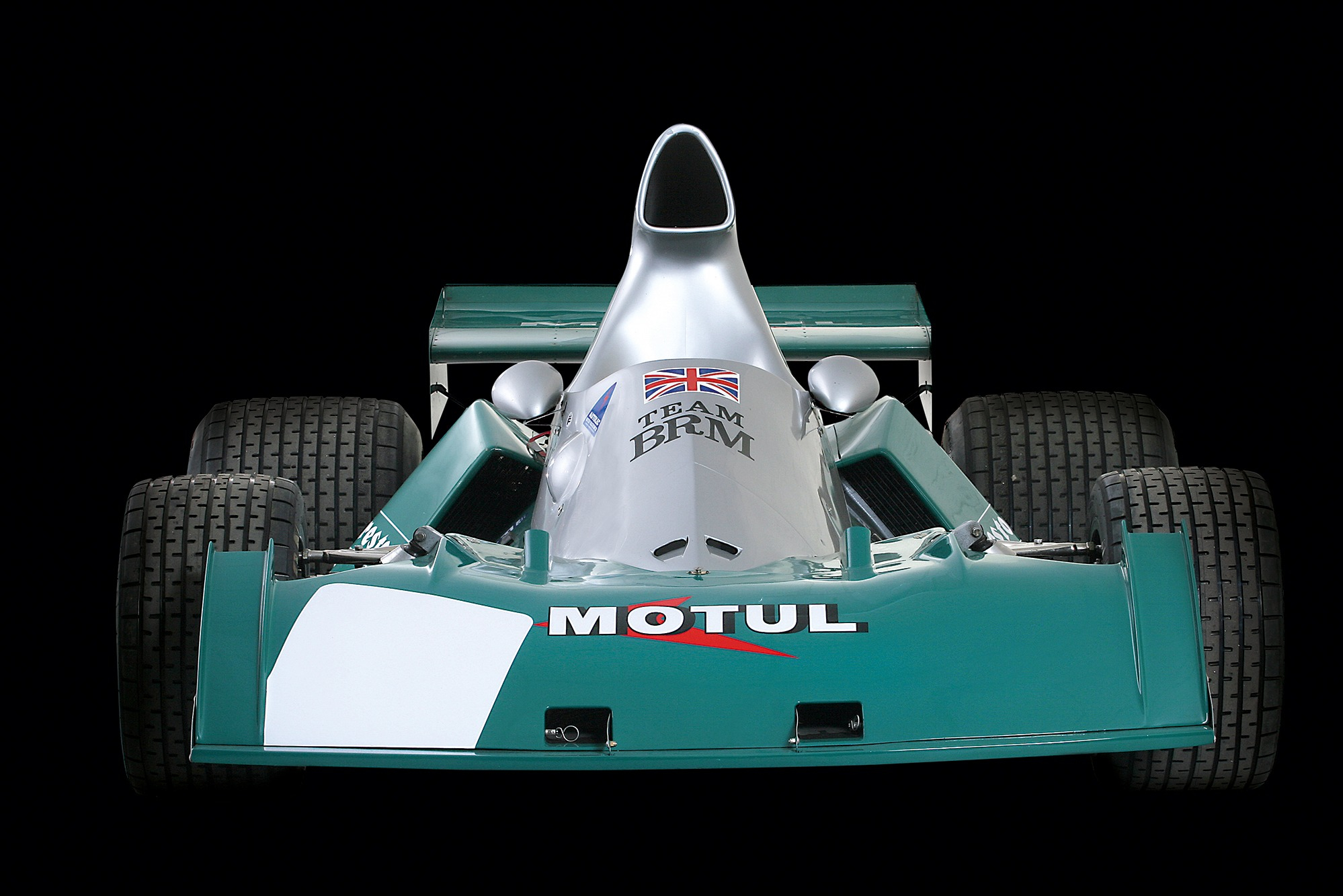
P201 never lived up to its initial promise at Kyalami
Photo by: James Mann/GP Racing

How Ratzenberger beat the odds to realise his cruelly short-lived F1 dream

F1 uncovered: A weekend behind the scenes with a chief mechanic

When McLaren was pipped by Red Bull in a modern F1 classic

The big opportunity Sainz’s Williams switch affords to F1’s latest centurion

Inside the science of F1 fuel

How F1’s plan for rotating races could look in practice

The early decisions that set Sauber’s rookie for success

How F1 media coverage has evolved in line with its subject

Why being "very adaptive" gave Norris the edge over Piastri at US GP

Smyth makes Formula Ford Festival history as he wins despite clash with team-mate Murray

Taken for a ride? The less heralded flaw of the 2026 F1 regulations

Sainz set for Rally1 outing in latest gen WRC car
Subscribe and access Autosport.com with your ad-blocker.
From Formula 1 to MotoGP we report straight from the paddock because we love our sport, just like you. In order to keep delivering our expert journalism, our website uses advertising. Still, we want to give you the opportunity to enjoy an ad-free and tracker-free website and to continue using your adblocker.


Top Comments