


From the Ferrari brains trust to Autosport
Engineer Rodi Basso has had a colourful career in motorsport that started under the bridge at Fiorano. Now the ex-Ferrari and Red Bull man is bringing Formula 1 technical analysis to Autosport, he reflects on his time in two of its best outfits
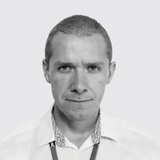
It was a chance encounter with Michael Schumacher that fired Rodi Basso's passion for motor racing and set him on the road to working at the pinnacle of the sport, for Ferrari and then for Red Bull as they reached the height of their powers. Not that he knew it was Schumacher at the time.
An aerospace engineer by training, Basso had been working in Washington as a consultant for NASA, designing data acquisition systems for satellites. Like any Italian, he saw Ferrari as not just a second national religion, but also a crucible of engineering excellence.
"I wasn't such a motorsport fan before I started but it was more for the technical, the engineering side that took me into this environment," he says.
"I had four interviews with Ferrari. The first was with a guy from HR, and he talked for quite a long time, explaining what they were looking for. Then he asked me to recap what the job was about. I said, 'Basically, you're looking for a technical interface for the driver'. He seemed very happy with this and jumped on the phone to my next interviewer.
"My second interview was at Fiorano, Ferrari's test track. As I was walking under the bridge one of the Formula 1 cars was going over the top of it. I could hear the V10 screaming and roaring over my head. It was incredible - the thrill coming from the vibration, the sound, all the senses. I said to myself, 'OK, I need to concentrate and focus because I really want this job'.
"Afterwards I asked the guy interviewing me who the driver was, and he said it was Michael Schumacher. Well, even if I wasn't too much into motorsport at this time, I knew who he was - everybody knew Michael..."

This was 2000, just as Schumacher was embarking on his - and Ferrari's - remarkable run of five consecutive drivers' championships. The 'brains trust' of technical director Ross Brawn and chief designer Rory Byrne, with team principal Jean Todt and president Luca di Montezemolo shielding them from the more grotesque elements of company politics, had thrashed the design, manufacturing and operational sides of Ferrari into shape and turned it into a winning machine.
For his fourth and final interview that summer, the 26-year-old Basso was grilled by Todt himself.
"I'm told he was interviewing all the people," Basso recalls. "He wanted to check, especially the people who would be working at the track, that they had the right attitude for the job.
"You need to think like a sportsperson. It's not your body in terms of what's making the majority of the effort, it's about getting into the psychology of the driver and understanding what's best to get him up and running from the moment they arrive" Rodi Basso
"So he was asking the usual stuff about my strengths and weaknesses, and then he said, 'This world [Formula 1] is an incredible world. You can really grow and develop yourself as a person and as an engineer, but it's important to be humble. Humility is a key value in this world.'
"I often think back to this because he was right. In the world of motorsport there's a lot of glitter and champagne, very superficial stuff that can distract you and make you miss the important stuff. As an engineer or mechanic you have to keep that in mind because you've got the life of the driver in your hands."
Like all its rivals in this era of unrestricted testing, Ferrari maintained a separate full-time test team that enabled Schumacher, Rubens Barrichello and Luca Badoer to beat around Fiorano - and other European circuits - day in, day out, evaluating the latest innovations and developing a greater understanding of the Bridgestone tyres.
The result was a period of absolute supremacy only recently surpassed by Mercedes. It was this organisation Basso joined as a performance engineer in August 2000 after finishing his NASA contract and moving back to Italy.
"It was an incredibly steep learning curve," he says, "because I'd trained as an aerospace engineer and I had to learn a lot about vehicle dynamics and how to measure and understand the aerodynamics on a race car.

"Even if you're a mechanical engineer or whatever, a racing car is something apart. Now there are courses you can take, institutions to attend, that give you some grounding in motorsport engineering, but in those days you could only learn by being in the environment. And nothing compares to being at the track, or being in a design office, and being really hands on."
With a full-time staff in the region of 80 people, Ferrari's test squad was essentially a parallel operation to the race team. While Badoer shouldered the majority of the mileage, Schumacher was famous for his voracious appetite for testing. Apart from all the travel involved, one of the key reasons for maintaining separate teams was the tremendous difference between the two disciplines, as Basso learned when he received his call-up to the race team in late 2002.
"It's not the atmosphere, the pressure of being in a race environment, or even the sheer number of people," says Basso. "In testing - on track or the dyno - you're working in a very experimental environment.
"It's a scientific process built on repeatability, so you need to be very disciplined in planning, and having your rituals and best practices in understanding how to test new items without jeopardising other tests. You're building an understanding of what makes an impact on performance and reliability.
"During a race weekend it's about the psychological, strategic and sporting elements, and having the trust with the driver. You're looking to extract the maximum potential of the car based on the knowledge you built through testing. Here you don't want to make too many changes to the car, not just because track time is limited, but because for the driver one of the key aspects is predicting what the car is going to do.
"It's a completely different mind game - and here the game is where the driver has to be managed. You support your driver to understand where he was stronger and where he was weaker [than his team-mate], and when it was because of his driving and when it was because of the car. That's where you become a competitive engineer.
"You need to think like a sportsperson. The tools are different - it's not your body in terms of what's making the majority of the effort, it's about getting into the psychology of the driver and understanding what's best to get him up and running from the moment they arrive. That's what I found fascinating in my work."
When Barrichello's race performance engineer decided to step back because he wanted to travel less, Basso got the nod to take his place. His first race was the 2002 Italian Grand Prix at Monza in the closing straight of a season in which Ferrari had been utterly unbeatable - Schumacher had long since claimed the drivers' title, in France, race 11 of 17, and Ferrari had secured the constructors' championship two rounds later, in Hungary.

While there was theoretically nothing left to play for, Ferrari's competitive drive was relentless - plus, of course, there was the urge to win at home.
Its main rival throughout the season had been Williams BMW - more on account of Munich grunt than Grove grip, it must be said - and to that end Ferrari brought a new qualifying specific engine to Monza. In this era of excess-all-areas, a team could use as many engines as it pleased during a race weekend.
Nevertheless, Juan Pablo Montoya put his Williams on pole, and team-mate Ralf Schumacher would have been alongside him on the front row but for a mistake on his fastest lap. Michael Schumacher therefore split the Williams drivers, with Barrichello fourth on the grid.
"There was this philosophy of pushing all of us try to find one millimetre of advantage because when you put everyone's contribution together, that's where you get hundreds of metres" Rodi Basso
On race day Barrichello passed Michael at the Rettifilo on the opening lap as the Williams drivers disputed the lead, then moved to the front when both BMW-engined cars expired in a haze of oil smoke.
"There are so many engineers who never win in F1," says Basso. "So for me, as an Italian, to be part of the winning team at Monza was the best way to start my race career. There was for sure a special feeling but I was telling myself to keep my feet on the ground. 'Rodi', I said to myself, 'you're f****** lucky'."
Being part of the race team gave Basso a new and deeper insight into the mindset required to elevate Ferrari to the position it now occupied. This was a team unable to pause and reflect on its success. There was always more performance to find, tantalisingly out of reach: nothing was unimprovable, only unimproved.
"I'd say my biggest piece of luck [in my career] is to start where things were working brilliantly," Basso says. "The benchmark that I had, in terms of motorsport, but also in general, as a professional and in business, was being really at the peak, dealing with incredible people.
"In a race team the vertical is there, but it's very short. So in 2002 I was already in meetings with people like Jean Todt, Ross Brawn, Rory Byrne, Luca di Montezemolo, massive people, and I was only 27-28.

"You had the feeling of having the right and the duty to ask for the best. A faster computer. A better algorithm to manage a particular system on the car. And on the car itself - can we make the hubs lighter? There was this philosophy of pushing all of us try to find one millimetre of advantage because when you put everyone's contribution together, that's where you get hundreds of metres.
"In some phases of the championship we had our struggles, sometimes with reliability because we were pushing the limits too much. But even then, in the debrief, Ross Brawn would say, 'Guys, we know we have a fast car, but maybe it's not as fast as it could be.
"Let's imagine it's in the middle of this table, and each of us has to think on how to improve by a tenth of a second for each bit we're managing. If we do this, we get into seconds of advantage.' For me, this is the highest expression of system engineering and team spirit.
"Before this era, I was told one of the biggest problems at Ferrari was that everyone had his own back yard, this piece of territory he was protecting, even trying to hide what was happening there, and never pushing the limits because they didn't want to make too much trouble.
"Whereas when you start breaking up these barriers across the departments and make everyone feel like part of a system, that's when you get the best out of your team."
In December 2005 Basso moved to Red Bull, lured by the prospect of reporting to Adrian Newey and experiencing a new working culture. This was a team very much in flux, having experienced a revolving door of senior management and design talent during its days as Jaguar Racing.
At Ferrari, 2005 had been a fallow year, largely because its long-established design philosophy of optimising the car around multiple pitstops was disadvantageous during a season in which tyre changes were outlawed. But Red Bull's first season was even worse as the RB1, a boxy carry-over design from the Jaguar era, failed to record a podium even with the experienced David Coulthard at the wheel.

Basso joined as Coulthard's performance engineer with a remit that included everything from performance analysis to vehicle dynamics simulations, electronic systems development, and liaising between the race engineering group and the design group led by Newey.
All of these groups were in transition as the newcomers, led by Red Bull-appointed team principal Christian Horner, sought to flush out the sub-optimal working practices that had made the outfit a serial underachiever throughout the Jaguar Racing era.
The 2006 and 2007 seasons became an extended battle as the operational crew got to grips with the Ferrari-engined RB2, the last of the non-Newey designs, and the design and production groups were brought to heel by their new and demanding technical guru. Every aspect of the team's operations had to change.
"2006 was generally a year of misery but David was a joy to work with, such a gentleman but also a very focused and determined competitor" Rodi Basso
"This was a fascinating time because pretty much all the engineers were changing," says Basso. "There were people coming from all the teams in the pitlane and I could see the different approaches they brought in terms of how to design the car, build it, set it up, and manage the vehicle dynamics. It was an incredible learning curve.
"On top of this, the first car I worked on [RB2] had a lot of problems. One example is the power steering. At Ferrari you almost forgot we had it, the level of quality was so high - you just put it in the car and it was working.
"At Red Bull every power steering unit had different characteristics - sometimes more assistance, sometimes less, sometimes more assistance when steering in one direction than the other. Oh my! I had to go into the deepest detail of how the power steering was made to understand the characteristics and when we had a good one or a bad one - and how to make sure we got a predictable behaviour in the car."
Newey has spoken of the many challenges he encountered when he first moved to Red Bull, chief of which was stamping out not-invented-here syndrome. Having invested time in understanding the RB2, he quickly moved to abandon onward development of it in the summer of 2006 to focus on an all-new design. But initially the flurry of new ideas meant higher stress levels throughout the organisation.

"I remember the leadership of Christian and Adrian with the greatest respect," says Basso. "All their decision-making was sound. Adrian is a genius, constantly pushing the limits of what's possible, and sometimes it was overwhelming in terms of the amount of new stuff he wanted to test.
"To follow him you had to really focus because he was always six months ahead of everyone else. But he was also very open, like Rory and Ross at Ferrari, listening to everyone and encouraging contributions from all the people in the team. And he loved to get involved at the track, checking the performance and talking to the drivers to understand the car."
Coulthard wrung a single podium finish out of the RB2, at Monaco. The transition process proved to be a protracted one as Red Bull's build quality continued to fall short: the first chassis to bear Newey's authorial stamp, the RB3, was intermittently quick but also fragile. So too was the 2008 RB4, though by then Red Bull had established itself as best of the rest behind McLaren and Ferrari.
"These years taught me that you don't only have to design a good car," says Basso. "To progress from the midfield to join the top teams you have to be good at designing, simulating and correlating how the car behaves on the track with your models. That's a big task in itself.
"Then there's the production quality, which is not to be taken for granted. You have to be able to get it to a certain level and be repeatable, where your cars have the same level of quality, and then you can take them to the race track and find the limits of their performance.
"I remember there were huge changes and investment, not just in the CFD and modelling capacity to reduce the windtunnel time, but also in the production department itself. Unfortunately the car disassembling itself on the track was part of the pain and the joy. But I remember the taste of that first podium in Monaco.
"2006 was generally a year of misery but David was a joy to work with, such a gentleman but also a very focused and determined competitor. He would arrange for me and his race engineer to be worked on by his own chiropractor, at his expense, to make sure we were as fit and sharp as he was! And he was incredibly good at Monaco. Especially coming out from the Rascasse, he had a specific line he was taking that gave him a lot of time over the competition.

"So while it was a tough journey, it was worth it for the lessons and for the joy of that first podium in Monaco - from having joined a team that was at the pinnacle [Ferrari] to another that was starting again from a blank sheet of paper. Yes, it was definitely worth it."
Moving on from F1, Basso worked as a coordinator for A1GP, overseeing the race engineering of the entire grid, and co-founded (with ex-F1 engineer Anton Stipinovich) Allinsports, a racing simulator company that offers virtual driver training - a growth area now that track testing across most categories is restricted.
With a view to expanding his brief to straddle the engineering and business worlds, he's also worked for the innovation wing of parts company Magneti Marelli and latterly for McLaren Applied Technologies before founding a new start-up.
"I wanted to look at the same world from another angle," Basso says. "Motorsport business management and development. I keep the same mindset of a performance engineer while working on the business: data-driven, and not to have any bars.
"Yes, there are boundaries, but you push beyond them. That's what makes ours such a fascinating business."


'Senior moment' or breakdown of trust? The implications of Hamilton's Singapore GP meltdown

Why Verstappen's dominance left rivals scrabbling for alternatives in Singapore

A "better job" or more engine power? Verstappen's Singapore pole unpicked

FIA reveals "human error" caused latest software glitch in Singapore sprint qualifying

F1 Singapore GP live commentary and updates - Verstappen takes sprint pole

F1 Singapore GP live commentary and updates - Verstappen wins sprint while McLarens collide

F1 Singapore GP live commentary and updates - Verstappen on pole

LIVE: F1 Singapore GP - Verstappen dominates to victory from Leclerc, nightmare for Hamilton

Colapinto urges fans to stop online abuse: “You’re not helping me or my future”

Evans given a hero's homecoming after WRC title triumph

How an unspectacular showing in a kart race is such good reason to celebrate

Lights, Camara, action: How Haas picked F1's latest rookie for 2027
Subscribe and access Autosport.com with your ad-blocker.
From Formula 1 to MotoGP we report straight from the paddock because we love our sport, just like you. In order to keep delivering our expert journalism, our website uses advertising. Still, we want to give you the opportunity to enjoy an ad-free and tracker-free website and to continue using your adblocker.


Top Comments