


Ferrari counting on piston innovation and 3D printing for F1 2017
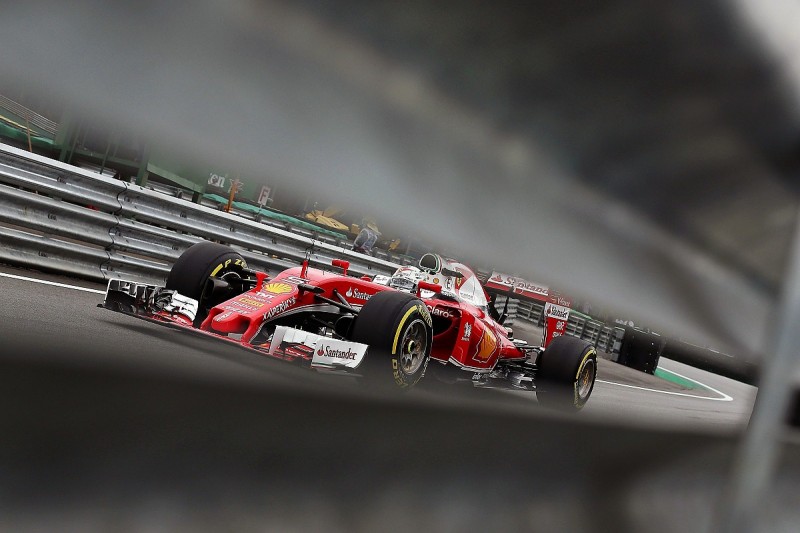
Ferrari is counting on 3D printing technology for an innovative piston design it believes could produce be a major boost for its 2017 Formula 1 engine


Having failed to match its bold 2016 pre-season predictions, this year Ferrari's efforts are taking place under a shroud of secrecy - ordered by president Sergio Marchionne.
Development of the 668 project is well advanced, and it is on schedule to make its public debut with a filming day at Fiorano and online launch on February 24.
The power unit initially fitted for testing is likely to be just a first step.
Engine department chief designer Sassi Lorenzo and Enrico Gualteri, responsible for assembly, are hoping to finalise bold changes that technical director Mattia Binotto, who transferred from the engine team, expects to be a major breakthrough.
Combustion is tipped to be the main focus, with the chamber set for a considerable increase in pressure thanks to the latest work on the Turbulent Jet Ignition System.
It is suggested that a new micro-injector design from Magneti Marelli will help ensure the perfect flame for the ignition chamber to increase performance, but also minimise fuel use.
The changes will put the engine under tremendous forces - with 400 bar pressure possible plus a big increase in temperature that can be a threat to reliability.
To meet its targets, Ferrari is having to revolutionise its approach to engine design
It is now testing a novel piston design concept that uses a new steel alloy.
Although the FIA limits the materials manufacturers can use, Ferrari is looking to move away from the common practice of aluminium.
Aluminium alloys are lighter than steel allows, but they have less ability to resist deformation and not break in extreme temperatures.
To help Ferrari's quest for the right alloy, Maranello engineers are evaluating the latest 3D printing technologies - known in the industry as Additive Manufacturing.
Using this technique allows engineers to build up thin layers on material one at a time, so it is possible to create complex shapes that have not been possible before using traditional casting and machining methods.
The degree of freedom that comes from 3D printing, allied to the speed of production, has opened up a new frontier of design development for something that was once limited to prototyping plastic parts for windtunnel models.
The use of materials such as steel alloys - which in normal casting processes would be unsuitable for the production of an F1 piston - can now be considered because it is no longer necessary to manufacture full surfaces.
Honeycomb designs are possible and bring the advantage of strength without the drawback of weight.
While Ferrari is unlikely to be alone in looking at this technology, Binotto is hoping to get the performance improvements on track as soon as possible - potentially the start of the season.
Share Or Save This Story


Ferrari to introduce new F1 fuel and engine updates in Austria

FIA scraps F1 straight mode in Monaco GP – here's what that means for the pecking order

Aprilia opens new development path in MotoGP at Jerez test


Hamilton takes "full responsibility" for disappointing Belgian GP

Hamilton keeps F1 Belgian GP fourth-place finish as mechanic escapes unhurt

Why Leclerc’s battle of the brakes has left him trailing his Ferrari team-mate

The big British GP chance F1 almost missed

What Alonso needs from Aston Martin and F1 as career decision looms

Why nationality should be 'no factor' as Haas considers Fornaroli and Camara for F1 2027

F1 drivers raise concerns over 'self-learning' power units – what's going on?
Subscribe and access Autosport.com with your ad-blocker.
From Formula 1 to MotoGP we report straight from the paddock because we love our sport, just like you. In order to keep delivering our expert journalism, our website uses advertising. Still, we want to give you the opportunity to enjoy an ad-free and tracker-free website and to continue using your adblocker.


Top Comments