


Williams: Rival Formula 1 teams better at exploiting rules
Rival Formula 1 teams are better than Williams at exploiting the regulations, concedes its technical chief Pat Symonds

F1's technical regulations have been overhauled for 2017, creating faster, wider cars with bigger tyres.
Major rules overhauls can often give teams scope to find an edge by exploiting grey areas.
Symonds admits Williams could struggle on this front, as other teams have the capacity to focus more on finding advantages within the rules.
"That's something that is part of our jobs and some teams are very aggressive at it and very good at it, more so, for example, that we are at Williams," he said.
"We seem to be working flat-out just doing what we need to do.
"But I know that other teams do have people with that fundamental job to look at everyone else's cars and see what they can see that's wrong with them and then look at the rules over and over again to see how you can exploit them.
"But when I say exploit, I don't mean cheat or anything like that. They think 'I know that's what he meant [in the regulation wording], but what has he said?'.
"Quite often they are not the same thing."
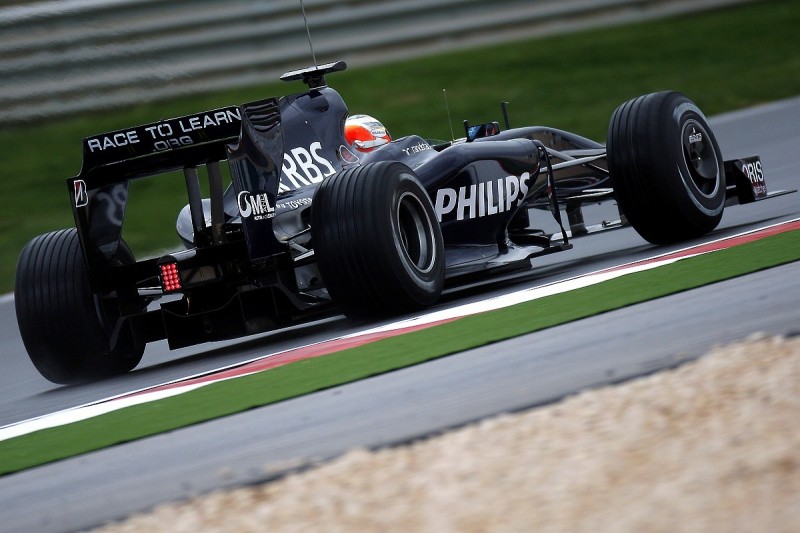
When F1 last made major changes to its aerodynamic regulations in 2009, Williams was among the teams that found a loophole that allowed them to run what became known as 'double diffusers'.
As it became clear the double diffuser offered an advantage and would not be outlawed, those without it had to develop their own version.
Since that era, windtunnel use has been limited to just 65 runs per week.
Symonds believes teams will therefore find it harder to catch up if they miss a trick in the 2017 rules.
"We only got windtunnel tyres for this car at the end of February so it's been quite a short gestation period compared to the 2009 car," he said.
"We were working on the 2009 car a lot longer.
"The big difference in 2009 is that we were running windtunnels 24/7 and Toyota was running two windtunnels 24/7.
"Now every single team does 65 runs a week, that's it, and that does make things different to the 2009 situation.
"It means that if someone has made a breakthrough, it's harder to catch up."
Share Or Save This Story


Did Bianchi have potential to become F1 world champion?

Autosport 75: Kubica's road to recovery and beyond

Autosport 75: When Red Bull had its own intra-team fight like Norris vs Piastri


Azerbaijan GP was a step forward for upgraded Williams - but real test is still to come

Chadwick joins exclusive list after Williams F1 test

How Alonso scored ninth at Zandvoort - and how Albon lost a similar payday

Why Honda secretly introduced its second F1 ADUO upgrade in Madrid

As Mercedes looks to deal F1 2026 knockout blow, will its driver fight reignite?

Toyota-backed Tsuboi to make switch from Super Formula to F2

The five contenders to replace Ocon at Haas for F1 2027
Subscribe and access Autosport.com with your ad-blocker.
From Formula 1 to MotoGP we report straight from the paddock because we love our sport, just like you. In order to keep delivering our expert journalism, our website uses advertising. Still, we want to give you the opportunity to enjoy an ad-free and tracker-free website and to continue using your adblocker.


Top Comments