


Ferrari's 2015 F1 engine gains tipped to improve grand prix pace
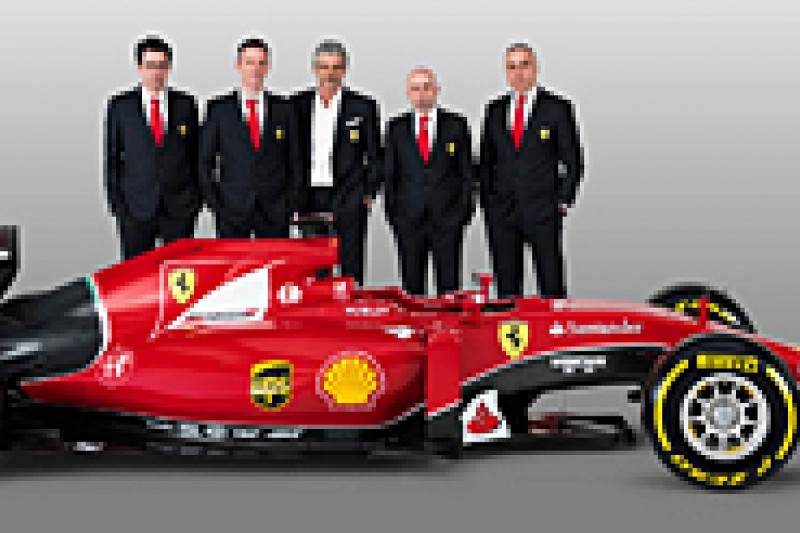
Ferrari believes there will be a better balance between its Formula 1 qualifying and race performance in 2015 due the major design overhaul for the SF15-T


Comprehensive engine changes have featured in Ferrari's winter efforts, and technical director James Allison believes a big step forward will be that its race form will no longer be compromised by its power unit being unable to recover as much energy as its rivals.
"We had a number of issues with last year's engine and power unit," explained Allison.
| FERRARI SF15-T LAUNCH |
| New Ferrari F1 design unveiled |
| Ferrari sets two-win target for 2015 |
| Vettel hails straightforward Raikkonen |
 |
"Early on in the season the power delivery was not particularly sophisticated and quite tough for the drivers to get the type of throttle response that they wanted.
"It was improved a lot during the season and we take that a step further for the SF15-T.
"A definite weakness of last year's car was that the amount of electrical energy that we were able to recover from the turbo was not really good enough for producing competitive power levels during the race.
"It was one of the reasons Ferrari's qualifying performance was relatively stronger than race performance last year.
"We have tried to change the architecture of the engine to make it a better compromise between qualifying and racing performance."
TOKENS WELCOME
The FIA agreed earlier this month that development tokens could be used at any point over the campaign, rather than all pre-season, and Allison thinks this will help too.
"When you are coming from a position like we are, of attempting to recover a gap in performance between our car and some of the opposition, it is quite galling to have an idea for how you might improve your car but to not be able to do so because the regulations freeze a certain part of the design for a whole season," he said.
"It is frustrating seeing something on the shelf that can deliver more performance.
"It is good to have the flexibility we enjoy in 2015 to keep that development programme going through the year.
"It will allow us, if we do a good job, to develop stronger and faster than we would otherwise."
IMPROVED COOLING AND AERO
After calling the pace difference between Ferrari and Mercedes "unacceptably large", Allison says a lot of effort has also gone into aerodynamics.
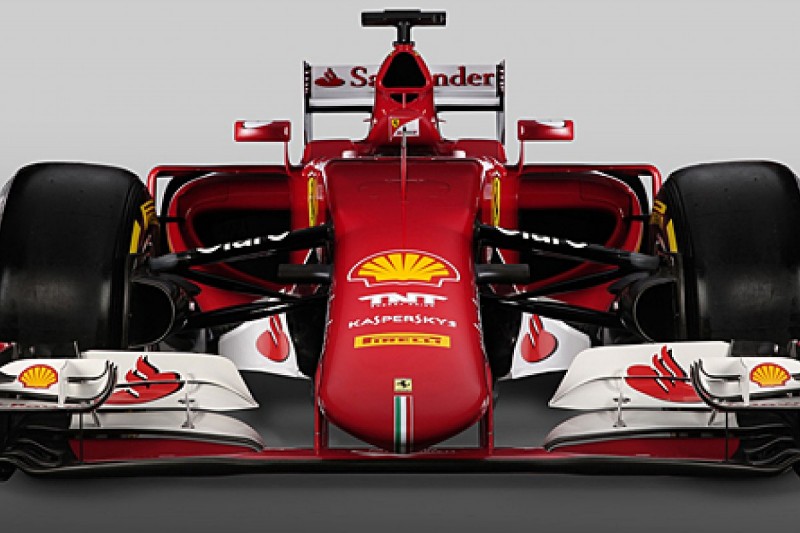
The rear of the car is much more tightly packaged, and there has been considerable work on improving cooling efficiency.
"The back of the car is something that is noticeably different to the 2014 car, where we have been successful in pulling the bodywork much tighter to everything under the skin," he said.
"That has been done through a lot of work, not just in the windtunnel, but also in the design part of the company to try to find radiator designs that were fundamentally more efficient.
"So for every square centimetre of radiator, we were able to extract more cooling than last year and therefore able to close the car down at the back as a consequence."
Share Or Save This Story


Brundle awarded OBE in King’s New Year’s honours

The new rules dilemma that will define the 2025 F1 season

Jon Noble: An unfair perception or a genuine concern? Lifting the lid on Red Bull’s Tsunoda scepticism


Ferrari not yet switching focus to 2027 F1 car

Russell and Hamilton concede F1 2026 title chances as Antonelli dominates

Hamilton and Vasseur recall GP2 title and 'most impressive race ever', 20 years on

Ferrari not yet switching focus to 2027 F1 car

The verdict on the WRC Rally Chile tyre solution

Top five roles on Motorsport Jobs this week

Quartararo explains why Yamaha relationship has strained ahead of Honda move
Subscribe and access Autosport.com with your ad-blocker.
From Formula 1 to MotoGP we report straight from the paddock because we love our sport, just like you. In order to keep delivering our expert journalism, our website uses advertising. Still, we want to give you the opportunity to enjoy an ad-free and tracker-free website and to continue using your adblocker.


Top Comments